How Process Safety Consultants Help Industries Reduce Operational Risks Through Advanced Hazard Assessment Methods

Ammonia Storage Safety Case Study: Preventing a Major Leak Through Early Detection and Emergency Response
July 10, 2026
Fire Safety Audit Mistakes That Industries Often Overlook and How to Correct Them Before an Emergency Occurs
July 16, 2026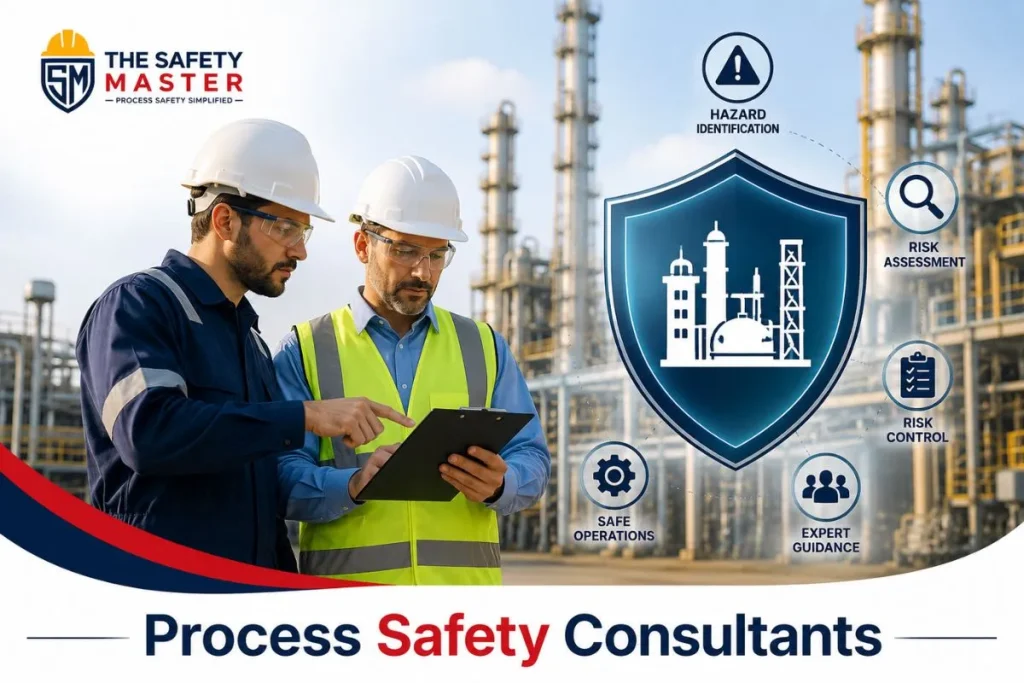
Industrial facilities operate with complex processes, hazardous chemicals, high-pressure systems, and critical equipment. Even a small mistake can lead to accidents, production losses, environmental damage, and financial setbacks. This is why Process Safety Consultants play a vital role in helping industries identify, assess, and control operational risks before they become major incidents.
Modern industries are increasingly relying on advanced technologies such as Process hazard analysis software to evaluate process risks, improve compliance, and strengthen workplace safety. By combining expert knowledge with digital tools, process safety consultants help organizations build safer and more reliable operations.
Understanding the Role of Process Safety Consultants
Process Safety Consultants are specialists who help organizations prevent incidents involving hazardous materials, chemical reactions, equipment failures, and operational deviations. Their primary goal is to identify hazards and establish effective risk control measures.
These consultants work across various industries, including:
- Oil and Gas
- Chemical Manufacturing
- Petrochemicals
- Pharmaceuticals
- Power Plants
- Food Processing
- Fertilizer Industries
- Mining Operations
Their expertise helps companies comply with regulations while maintaining safe and efficient operations.
Why Operational Risk Management Matters
Operational risks can arise from various sources, including:
- Human errors
- Equipment malfunction
- Process deviations
- Chemical leaks
- Fire and explosion hazards
- Mechanical failures
- Poor maintenance practices
- Inadequate safety procedures
Without proper hazard assessment, these risks can escalate into serious incidents. Effective process safety management helps industries reduce these risks while improving productivity and business continuity.
Common Consequences of Poor Risk Management
Safety Risks
Workers may face injuries, exposure to hazardous substances, burns, or fatalities.
Environmental Damage
Chemical releases and emissions can impact surrounding communities and ecosystems.
Financial Losses
Accidents often result in production downtime, legal penalties, equipment replacement costs, and reputational damage.
Regulatory Non-Compliance
Organizations may face fines and legal action if they fail to meet safety standards.
Advanced Hazard Assessment Methods Used by Process Safety Consultants
Modern hazard assessment involves a structured approach to identifying and mitigating risks. Consultants use several advanced methodologies to evaluate process safety performance.
Hazard Identification Studies (HAZID)
HAZID is often the first step in identifying potential hazards within a facility.
Key activities include:
- Identifying hazardous materials
- Reviewing operational procedures
- Evaluating process conditions
- Understanding potential accident scenarios
The findings provide a foundation for further detailed risk analysis.
Hazard and Operability Study (HAZOP)
HAZOP is one of the most widely used process safety techniques.
Objectives of HAZOP
- Identify process deviations
- Determine possible causes
- Assess potential consequences
- Recommend corrective actions
Consultants conduct systematic reviews of process systems using guidewords and multidisciplinary team discussions.
Benefits of HAZOP
- Improved process understanding
- Enhanced safety controls
- Reduced operational disruptions
- Better regulatory compliance
Layer of Protection Analysis (LOPA)
LOPA is a semi-quantitative risk assessment method that evaluates the effectiveness of existing safeguards.
Key Components
Initiating Events
Events that trigger potential incidents.
Independent Protection Layers
Safety barriers designed to prevent or mitigate incidents.
Risk Reduction Evaluation
Assessment of whether existing safeguards provide adequate protection.
LOPA helps organizations prioritize investments in safety improvements.
Quantitative Risk Assessment (QRA)
QRA uses mathematical models to evaluate risk levels associated with industrial processes.
What QRA Evaluates
- Fire scenarios
- Explosion impacts
- Toxic gas releases
- Fatality risks
- Asset damage potential
The results support informed decision-making and strategic safety planning.
How Process Hazard Analysis Software Improves Safety
Modern industries are increasingly adopting Process hazard analysis software to streamline hazard identification and risk evaluation activities.
This software helps organizations:
- Conduct HAZOP studies efficiently
- Maintain risk assessment records
- Track action items
- Improve team collaboration
- Generate compliance reports
Advantages of Process Hazard Analysis Software
Faster Assessments
Digital workflows significantly reduce study preparation and documentation time.
Better Data Management
All hazard assessment data can be stored and retrieved from a centralized platform.
Improved Accuracy
Automated calculations minimize human errors during risk analysis.
Enhanced Compliance
Organizations can maintain complete documentation for audits and regulatory inspections.
The use of Process hazard analysis software enables industries to conduct more consistent and reliable risk assessments.
The Importance of Advanced Risk Management Software
Risk management is no longer limited to spreadsheets and manual calculations. Organizations are now using Advanced risk management software to strengthen safety programs.
Features of Advanced Risk Management Software
Risk Register Management
Centralized tracking of identified risks and mitigation measures.
Incident Tracking
Recording and analyzing incidents, near misses, and safety observations.
Compliance Monitoring
Tracking regulatory requirements and audit findings.
Analytics and Reporting
Generating actionable insights through dashboards and reports.
Action Management
Assigning responsibilities and monitoring corrective actions.
By leveraging Advanced risk management software, organizations gain greater visibility into operational risks and safety performance.
Strengthening Compliance Through Process Safety Management Software
Maintaining compliance with process safety regulations requires extensive documentation and continuous monitoring.
This is where Process safety management software becomes valuable.
Key Functions of Process Safety Management Software
Management of Change (MOC)
Tracks process modifications and evaluates associated risks.
Mechanical Integrity
Monitors equipment inspection and maintenance programs.
Employee Training
Maintains training records and competency assessments.
Audit Management
Supports internal and external safety audits.
Documentation Control
Ensures critical safety information remains updated and accessible.
Organizations using Process safety management software can establish stronger safety cultures while reducing compliance gaps.
How Stature Risk Management Software Supports Operational Excellence
Many industries are exploring advanced digital platforms such as Stature risk management software to improve risk visibility and decision-making.
Benefits of Stature Risk Management Software
Real-Time Risk Monitoring
Provides immediate insights into emerging operational risks.
Integrated Safety Data
Combines information from multiple departments into a unified platform.
Improved Decision Making
Helps management prioritize risk mitigation activities.
Performance Measurement
Tracks key risk indicators and safety performance metrics.
Continuous Improvement
Supports ongoing risk reduction initiatives across the organization.
The adoption of Stature risk management software helps organizations move from reactive safety management to proactive risk prevention.
Digital Transformation in Process Safety
The industrial sector is rapidly embracing digital technologies to enhance safety performance.
Emerging Technologies Used by Consultants
Artificial Intelligence
AI helps identify patterns in safety data and predict potential failures.
Predictive Analytics
Supports proactive maintenance and risk prevention strategies.
Cloud-Based Platforms
Enable real-time collaboration across multiple facilities.
Digital Twins
Create virtual models of industrial processes for risk simulation.
Automated Reporting
Improves documentation accuracy and reduces administrative workload.
These technologies allow consultants to deliver more accurate and data-driven safety recommendations.
Benefits of Hiring Process Safety Consultants
Organizations that work with experienced consultants gain several advantages.
Reduced Operational Risks
Comprehensive hazard assessments identify vulnerabilities before incidents occur.
Improved Regulatory Compliance
Consultants ensure adherence to industry standards and legal requirements.
Enhanced Process Reliability
Risk reduction measures improve equipment and process performance.
Lower Incident Rates
Proactive safety programs reduce workplace accidents and near misses.
Cost Savings
Preventing incidents helps avoid costly downtime, fines, and asset damage.
Stronger Safety Culture
Employees become more engaged in safety initiatives and risk awareness.
Best Practices for Effective Hazard Assessment
To maximize the value of hazard assessment programs, organizations should:
Conduct Regular Risk Reviews
Operational conditions change over time and require periodic reassessment.
Involve Cross-Functional Teams
Different perspectives improve hazard identification accuracy.
Use Digital Safety Tools
Technology enhances consistency and efficiency.
Monitor Corrective Actions
Risk mitigation measures should be tracked until completion.
Promote Continuous Learning
Organizations should regularly update safety knowledge and training programs.
Conclusion
Industrial safety requires a proactive and systematic approach to risk management. Through advanced hazard assessment methods such as HAZOP, LOPA, QRA, and HAZID, Process Safety Consultants help organizations identify potential risks before they result in serious incidents.
Modern solutions like Process hazard analysis software, Advanced risk management software, Process safety management software, and Stature risk management software further strengthen safety programs by improving risk visibility, compliance, and operational performance.
As industries continue to embrace digital transformation, partnering with experienced Process Safety Consultants remains one of the most effective strategies for reducing operational risks, protecting employees, ensuring compliance, and achieving long-term operational excellence.