A Step-by-Step Guide to Behaviour Based Safety Implementation in Africa for Frontline Worker Protection

How to Achieve Behavior-Based Safety Implementation in UAE to Eliminate Workplace Hazards
November 24, 2026How Professional BBS Implementation Services in Saudi Arabia Can Dramatically Reduce Workplace Accidents
November 24, 2026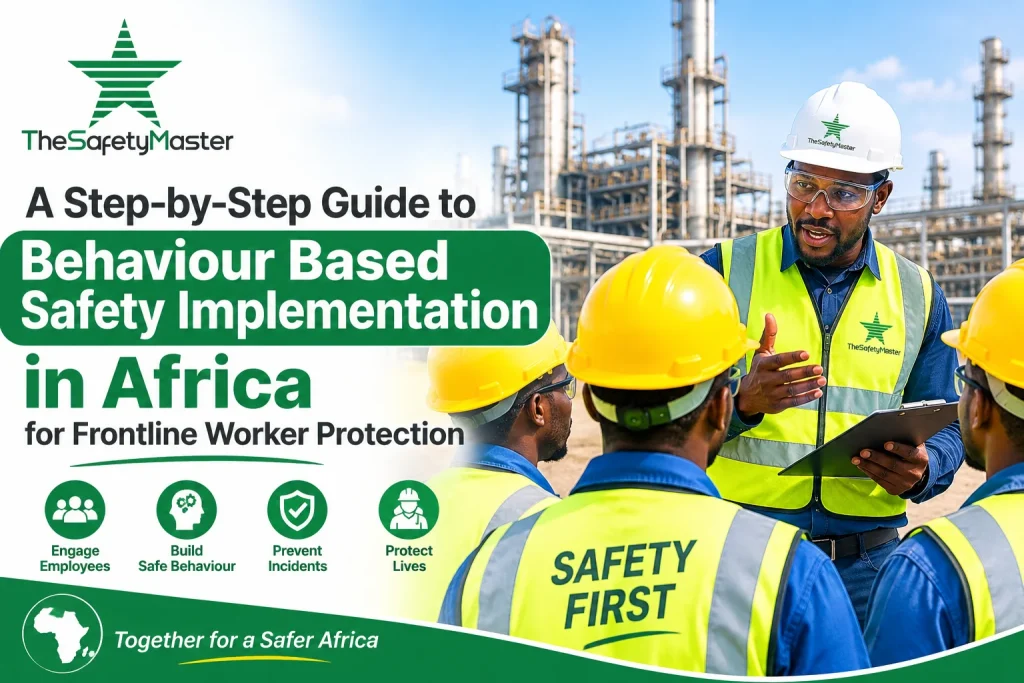
Modern industrial operations require comprehensive safety management strategies that go beyond physical engineering controls and basic regulatory compliance. Across mining, oil and gas, manufacturing, construction, and agriculture, frontline workers routinely operate in dynamic environments where split-second decisions dictate operational outcomes. Behaviour Based Safety Implementation in Africa offers a structured approach to identifying at-risk actions, reinforcing safe habits, and cultivating a proactive safety culture across diverse workforces.
The Safety Master delivers specialized technical advisory, workforce engagement strategies, and safety management frameworks tailored to regional industrial demands. This comprehensive guide details how industrial organizations can execute a successful Behaviour Based Safety (BBS) program to protect frontline workers.
Understanding Behaviour Based Safety in the African Industrial Context
Behaviour Based Safety is an evidence-backed methodology focused on human behavior as a primary driver of occupational health and safety performance. Traditional safety management relies heavily on reactive metrics such as Lost Time Injury Frequency Rates (LTIFR) or incident reports. BBS shifts the focus upstream by monitoring day-to-day actions, identifying root behavioral triggers, and reinforcing safe practices before accidents happen.
 +-------------------------------------------------------+
 | TRADITIONAL VS. BBS FOCUS |
 +-------------------------------------------------------+
 | Traditional Safety: [Incident] ---> [Investigation] |
 | (Reactive Focus) |
 +-------------------------------------------------------+
 | Behaviour Based: [Behavior] ---> [Intervention] |
 | (Proactive Focus) (Observe) (Feedback) |
 +-------------------------------------------------------+
The ABC Model of Behavior
At the core of BBS methodology is the ABC model:
- Activators (Antecedents): Factors that trigger a specific behavior (e.g., safety policies, standard operating procedures, weather conditions, tools, or verbal instructions).
- Behavior: The observable action performed by the frontline worker (e.g., attaching a safety harness, bypassing a machine guard, or wearing correct personal protective equipment).
- Consequences: Events following the behavior that increase or decrease the likelihood of its repetition (e.g., peer praise, saved time, reprimand, or injury).
Step-by-Step Behaviour Based Safety Implementation Framework
Executing a successful BBS system requires strategic leadership, structured observation protocols, and ongoing data-driven refinement. The Safety Master utilizes a seven-step implementation model engineered to adapt to multi-lingual, cross-cultural workplace environments across Africa.
[Phase 1: Readiness & Leadership Commitment]
 │
 ▼
[Phase 2: Custom Checklist Development]
 │
 ▼
[Phase 3: Steering Committee & Champion Training]
 │
 ▼
[Phase 4: Peer-to-Peer Observation Rollout]
 │
 ▼
[Phase 5: Real-Time Feedback Execution]
 │
 ▼
[Phase 6: Data Analytics & Root Cause Analysis]
 │
 ▼
[Phase 7: System Refinement & Recognition]
Step 1: Organizational Readiness Assessment and Leadership Commitment
Before introducing field observation checklists, corporate leadership and site management must establish alignment:
- Executive Buy-In: Secure explicit commitment from C-suite executives and plant directors to allocate resources and adopt a non-punitive philosophy.
- Safety Culture Evaluation: Conduct perception surveys to evaluate baseline trust between frontline operators and management.
- No-Blame Guarantee: Formally declare that standard BBS observations will focus on system improvement and safety coaching rather than disciplinary actions.
Step 2: Developing Tailored Behavioral Checklists
Generic checklists rarely capture site-specific operational risks. The Safety Master assists organizations in building custom observation tools that reflect specific site dynamics:
Critical Action Identification
Analyze historical incident logs, near-miss reports, and Job Safety Analyses (JSA) to determine high-risk critical behaviors.
Concise Checklist Design
Limit checklists to critical, easily observable actions (typically 10 to 15 items per department) covering:
- Body position and ergonomics
- Use of Personal Protective Equipment (PPE)
- Tool and equipment condition
- Lockout/Tagout (LOTO) adherence
- Work environment housekeeping
Step 3: Establishing the Steering Committee and Training Champions
A cross-functional BBS Steering Committee ensures program governance. This committee should include frontline workers, union representatives, safety officers, and line supervisors.
Selector Criteria for Champions
Select respected peer leaders from the floor to act as BBS Observers.
Observer Skill Development
Train observers in:
- Objective behavioral observation techniques
- Non-confrontational communication skills
- Root-cause evaluation techniques
- Data logging and trend entry
Step 4: Rolling Out Peer-to-Peer Safety Observations
Peer-to-peer execution reduces worker anxiety compared to top-down managerial audits.
- Pre-Observation Notice: Observers inform work groups when standard 10-to-15-minute observations are conducted.
- Visual Data Capture: Observers note safe behaviors and at-risk actions without taking names or employee IDs.
- Operational Frequency: Maintain consistent observation intervals (e.g., two to three observations per worker weekly) to build statistically reliable baseline data.
Step 5: Delivering Real-Time Constructive Feedback
Feedback must occur immediately after the observation to reinforce safe habits effectively:
- Start with Positive Reinforcement: Acknowledge specific safe actions observed during the task.
- Discuss At-Risk Behaviors Collaboratively: Ask open-ended questions like, “What made it difficult to secure that safety latch while carrying out the assembly?”
- Identify Systemic Barriers: Determine if environmental constraints, ill-fitting PPE, missing tools, or time pressures contributed to the shortcut.
- Gain Mutual Agreement: Agree on immediate corrective actions and safer methods for future tasks.
Step 6: Data Analytics, Trend Identification, and Root Cause Mapping
BBS observations produce valuable data on everyday field operations.
- Data Centralization: Input observation metrics into centralized safety intelligence software.
- Barrier Analysis: Categorize at-risk behaviors into underlying systemic causes (e.g., poor equipment design, inadequate training, or conflicting production goals).
- Targeted Action Plans: Address top operational barriers during monthly management reviews.
Overcoming Key Challenges in African Industrial Contexts
+--------------------------+----------------------------------+------------------------------------+
| Challenge Area | Common Operational Hurdle | Targeted Strategic Solution |
+--------------------------+----------------------------------+------------------------------------+
| Cultural Diversity | Language & literacy variations | Visual checklists & vernacular fit |
| Fear of Retaliation | Misinterpretation as spying tool | Strict anonymity & zero discipline |
| Production Pressure | Skipping safety for output goals | Integrated micro-observations |
| Management Inconsistency | Supervisors prioritizing targets | Leadership coaching & KPI metrics |
+--------------------------+----------------------------------+------------------------------------+
Navigating Workforce Diversity and Communication Dynamics
African industrial workplaces often integrate multi-lingual operations with varying literacy levels across remote regions.
- Visual Checklists: Replace text-heavy observation sheets with visual icons, graphical checklists, and localized mobile interfaces.
- Vernacular Engagement: Conduct feedback discussions and training modules in local languages to ensure complete comprehension.
Addressing the Misconception of “Blaming the Worker”
A common pitfall in safety initiatives is blaming individual workers for systemic failures.
- Focus on Systemic Causes: Use BBS data to identify underlying issues such as broken tools, missing supplies, or unworkable procedures.
- Strict Anonymity Policies: Ensure observation records omit employee names to maintain trust across the workforce.
Measuring Success: Key Metrics and Long-Term Value
To evaluate the return on investment (ROI) of Behaviour Based Safety Implementation in Africa, track both leading and lagging performance indicators:
Leading Metrics
- Observation Frequency: Total observations completed versus target plans.
- Participation Rate: Percentage of trained workforce actively conducting observations.
- Percent Safe Index: Formula calculating overall safe behavior adoption across sites:
Percent Safe Index=(Total Safe Behaviors ObservedTotal Behaviors Observed (Safe + At-Risk))×100\text{Percent Safe Index} = \left( \frac{\text{Total Safe Behaviors Observed}}{\text{Total Behaviors Observed (Safe + At-Risk)}} \right) \times 100Percent Safe Index=(Total Behaviors Observed (Safe + At-Risk)Total Safe Behaviors Observed)×100
- Action Item Closure Rate: Percentage of systemic barriers resolved within designated timeframes.
Lagging Metrics
- First-Aid Incident Reduction: Decreases in minor workplace injuries over 6 to 12 months.
- Near-Miss Reporting Volume: Spikes in voluntary near-miss logs reflecting improved safety awareness.
- LTIFR and OSHA Recordables: Sustained reductions in major injuries over 24 to 36 months.
Partnering with The Safety Master for BBS Excellence
Successful Behaviour Based Safety Implementation in Africa requires specialized knowledge of local regulatory environments, regional cultural nuances, and operational realities. The Safety Master provides comprehensive support across every phase of implementation, including:
- Site-Specific Safety Culture Diagnostics: In-depth evaluations of organizational safety climate.
- Customized BBS Courseware and Workshops: Training tailored for executives, supervisors, steering committees, and frontline workers.
- Software Integration & Analytics Setup: Deploying user-friendly tracking systems for high-volume observation data.
- Ongoing Auditing and Performance Support: Regular audits to maintain program momentum and continuous improvement.
Transforming workplace safety culture requires moving beyond static policies to actively shape daily habits. By partnering with The Safety Master, industrial facilities can implement structured BBS systems that protect frontline workers, lower operational risk, and build sustainable safety performance across operations in Africa.