An In-Depth Analysis of LOPA & SIL Study for the Process Industry in India: Ensuring Safety and Reliability

Uncovering Potential Hazards: The Role of Electrical Safety Audits in Improving Workplace Safety in Indian Manufacturing Industries
November 23, 2024
The Vital Importance of Regular Electrical Safety Audits in Indian Manufacturing Facilities
November 26, 2024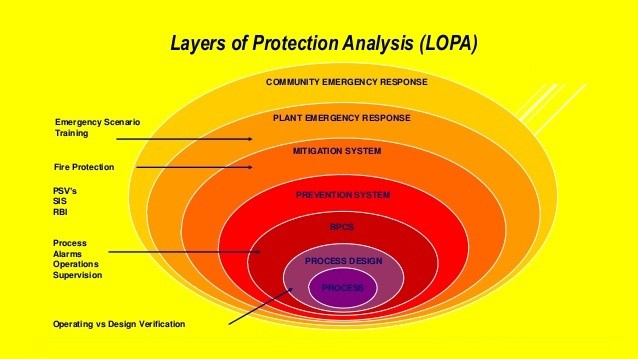
Understanding LOPA & SIL Study in Process Safety
LOPA, SIL Study, and The Safety Master play an important role in helping process industries identify hazards, evaluate protection layers, and improve operational safety. In industries handling hazardous chemicals, flammable materials, high pressures, or complex processes, systematic risk assessment is essential for protecting people, assets, and the environment.
What Is LOPA (Layer of Protection Analysis)?
Definition and Purpose of LOPA
LOPA, or Layer of Protection Analysis, is a structured risk assessment technique used to evaluate hazardous scenarios and determine whether existing independent protection layers are adequate to reduce risk.
How LOPA Works
A LOPA study generally involves:
- Identifying hazardous scenarios
- Assessing initiating events
- Evaluating consequences
- Identifying independent protection layers (IPLs)
- Assessing the effectiveness of safeguards
- Determining whether additional risk reduction is required
Importance of Independent Protection Layers
Independent Protection Layers are safeguards designed to prevent an initiating event from developing into a serious consequence or to reduce the severity of an incident.
What Is a SIL Study?
Meaning of Safety Integrity Level
SIL stands for Safety Integrity Level. It is a measure of the required performance of a safety instrumented function (SIF) in reducing process risk.
SIL Levels Explained
SIL is commonly categorized into four levels:
- SIL 1: Lowest level of risk reduction
- SIL 2: Moderate risk reduction
- SIL 3: High risk reduction
- SIL 4: Very high risk reduction, generally associated with highly hazardous applications
The required SIL should be determined through a systematic risk assessment rather than selected arbitrarily.
Difference Between LOPA and SIL Study
LOPA vs. SIL Assessment
LOPA primarily evaluates hazardous scenarios and the effectiveness of independent protection layers. A SIL assessment uses the risk reduction requirements identified through the analysis to determine the required safety integrity of a safety instrumented function.
How LOPA and SIL Work Together
LOPA can help determine whether the existing protection layers adequately control risk. Where additional risk reduction is required, a Safety Instrumented Function may be assigned a target SIL.
Key Components of a LOPA & SIL Study
Hazard Identification
The first step is identifying credible hazardous scenarios that may arise from process deviations, equipment failures, or human and operational factors.
Risk Assessment
Each scenario is evaluated according to its potential consequences and likelihood to determine the level of risk.
Safeguard and IPL Analysis
Existing safeguards are reviewed to determine whether they qualify as independent protection layers and whether they provide sufficient risk reduction.
Safety Instrumented Functions
Safety Instrumented Functions are evaluated to determine the required safety performance and associated SIL target.
Probability of Failure on Demand
Reliability calculations may consider the probability that a safety function will fail when it is required to operate.
How to Conduct a LOPA & SIL Study
Step 1: Define the Scope
Clearly establish the process units, equipment, scenarios, and objectives covered by the study.
Step 2: Form a Multidisciplinary Team
A competent team may include professionals from process engineering, instrumentation, operations, maintenance, and process safety.
Step 3: Identify Hazard Scenarios
HAZOP, PHA, FMEA, and other hazard identification techniques can provide the scenarios that require further LOPA assessment.
Step 4: Identify Initiating Events and Consequences
Determine the initiating causes and potential consequences associated with each scenario.
Step 5: Identify Independent Protection Layers
Review existing safeguards and determine which ones meet the requirements of independent protection layers.
Step 6: Determine the Required Risk Reduction
Evaluate whether existing safeguards provide adequate risk reduction and identify any remaining risk.
Step 7: Determine the Required SIL
Where a Safety Instrumented Function is required, establish the appropriate SIL target using a recognized methodology.
Step 8: Document Recommendations
Document assumptions, calculations, safeguards, SIL targets, recommendations, and actions requiring follow-up.
Benefits of LOPA & SIL Study for Process Industries
Improved Process Safety
LOPA and SIL studies provide a systematic approach to identifying and managing process risks.
Better Protection Against Major Accidents
Evaluating multiple protection layers can help organizations identify weaknesses before they contribute to a major incident.
Improved Reliability
Properly designed and maintained safety functions can contribute to more reliable plant operations.
Better Risk-Based Decision Making
The study helps organizations prioritize safety improvements based on identified risk rather than relying only on general assumptions.
Support for Process Safety Management
LOPA and SIL assessments can form an important part of a broader process safety management framework.
Applications of LOPA & SIL Study in India
Chemical Manufacturing Plants
Chemical facilities can use LOPA and SIL studies to assess risks associated with hazardous reactions, toxic materials, pressure systems, and process deviations.
Oil & Gas Industry
Refineries, terminals, and oil and gas processing facilities can apply these techniques to evaluate high-consequence scenarios.
Petrochemical Industry
LOPA and SIL studies can support the assessment of fire, explosion, overpressure, and loss-of-containment scenarios.
Pharmaceutical Industry
Pharmaceutical manufacturing processes involving hazardous chemicals and automated systems can benefit from structured protection-layer analysis.
Challenges in Conducting LOPA & SIL Studies
Data Quality and Availability
Reliable process, equipment, failure-rate, and operational data are important for meaningful assessments.
Expert Judgment
LOPA studies require experienced multidisciplinary teams because scenario selection, safeguard independence, and consequence assessment can involve professional judgment.
Resource Requirements
Detailed studies require adequate time, competent personnel, documentation, and technical resources.
Maintaining Safety Integrity
A SIL target alone does not guarantee safety. The required safety performance must be maintained through appropriate design, testing, maintenance, and management throughout the lifecycle.
Best Practices for LOPA & SIL Study
Use Accurate Process Information
Ensure that P&IDs, process descriptions, cause-and-effect diagrams, operating procedures, and relevant technical information are current.
Involve the Right Experts
Include appropriate representatives from engineering, operations, instrumentation, maintenance, and process safety.
Clearly Document Assumptions
All important assumptions, data sources, safeguards, and decisions should be recorded.
Follow Recognized Standards
SIL-related activities should be performed using appropriate recognized standards and methodologies, such as IEC 61511 and relevant industry practices.
Review Studies Periodically
LOPA and SIL assessments should be revisited when significant process, equipment, control-system, or operational changes occur.
Role of LOPA & SIL Study in Process Safety Management
Integrating LOPA and SIL studies into process safety management allows organizations to connect hazard identification, risk assessment, safety instrumented functions, maintenance, and continuous improvement.
A well-integrated approach can help organizations identify risk gaps and make informed decisions about additional safeguards and safety-system performance.
Why Choose The Safety Master for LOPA & SIL Study?
The Safety Master provides process safety consultancy services, including LOPA and SIL Study support. Its service portfolio includes LOPA, SIL Study, QRA Study, HAZOP-related services, PSM implementation, and other process safety solutions.
Organizations can use professional process safety expertise to systematically assess hazards, evaluate protection layers, and develop practical recommendations suited to their operations.
Conclusion
LOPA and SIL studies are valuable tools for managing risk in India’s process industries. By systematically identifying hazardous scenarios, evaluating independent protection layers, and determining appropriate safety integrity requirements, organizations can strengthen process safety and operational reliability.
For businesses looking for professional support in risk assessment and process safety, The Safety Master can help develop and implement appropriate LOPA and SIL Study solutions for industrial applications.
FAQs
1. What is LOPA in process safety?
LOPA stands for Layer of Protection Analysis. It is a structured risk assessment method used to evaluate hazardous scenarios and determine whether independent protection layers provide sufficient risk reduction.
2. What is a SIL Study?
A SIL Study evaluates the required Safety Integrity Level of a Safety Instrumented Function based on the amount of risk reduction needed for a hazardous scenario.
3. What is the difference between LOPA and SIL?
LOPA analyzes hazardous scenarios and evaluates the effectiveness of independent protection layers. SIL assessment determines the required integrity level of a safety instrumented function when additional risk reduction is needed.
4. What are the four SIL levels?
The four SIL levels are SIL 1, SIL 2, SIL 3, and SIL 4. They represent increasing levels of required risk reduction and safety integrity.
5. Why is LOPA important for the process industry?
LOPA helps process industries systematically evaluate risks, review existing safeguards, identify protection gaps, and support informed risk-reduction decisions.
6. When should a LOPA and SIL Study be conducted?
These studies may be conducted during process design, modification, safety-system development, or when significant changes in process conditions, equipment, or control systems require reassessment.
7. Which industries can benefit from LOPA & SIL Study?
Chemical, petrochemical, oil and gas, pharmaceutical, energy, and other process industries handling hazardous materials or complex processes can benefit from these studies.
8. What standards are commonly associated with SIL assessment?
IEC 61511 is a key standard associated with functional safety and safety instrumented systems in the process industry. Other applicable standards and company requirements may also need to be considered.