Complete Guide to Hazardous Area Classification: Standards, Zones, and Best Practices for Industrial Safety

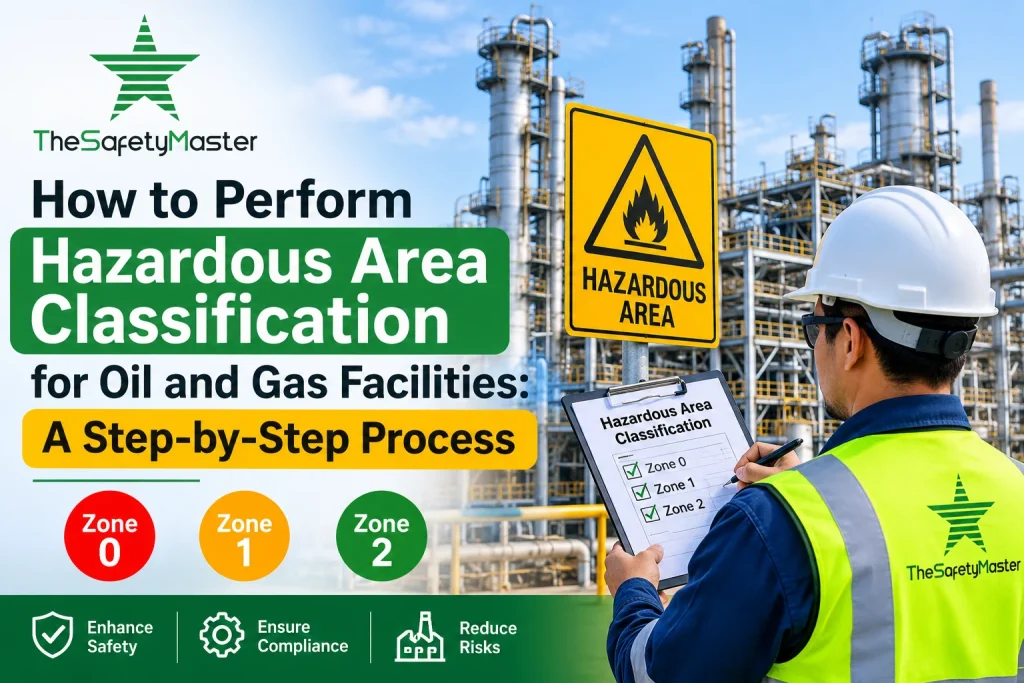
How to Perform Hazardous Area Classification for Oil and Gas Facilities: A Step-by-Step Process
November 25, 2026
HAZOP Study Best Practices: Guide to Node Selection and Parameter Deviation
November 25, 2026Industrial workplaces such as oil and gas plants, chemical factories, petroleum refineries, pharmaceutical units, and manufacturing facilities often handle flammable gases, vapours, liquids, and combustible dust. These materials can create dangerous conditions when they come into contact with an ignition source.
Hazardous Area Classification is an important safety process that helps identify locations where explosive atmospheres may occur during normal operations or under specific abnormal conditions. It helps industries select suitable electrical equipment, control ignition sources, and reduce the possibility of fires and explosions.
A proper classification system also supports industrial safety management and regulatory compliance. The Safety Master provides industrial safety and risk management solutions to help organisations identify workplace hazards and improve operational safety.
What Is Hazardous Area Classification?
Hazardous Area Classification is the process of identifying and dividing industrial locations into specific zones based on the likelihood and duration of an explosive atmosphere.
An explosive atmosphere can develop when flammable gases, vapours, mists, or combustible dust mix with air in suitable concentrations.
The main purpose of this process is to identify areas where special precautions are necessary to prevent ignition.
Main Objectives of Hazardous Area Classification
The important objectives include:
- Identifying locations where explosive atmospheres may occur.
- Evaluating the release of flammable gases and vapours.
- Identifying potential ignition sources.
- Selecting suitable electrical and mechanical equipment.
- Reducing fire and explosion risks.
- Supporting compliance with applicable safety standards.
- Protecting workers, equipment, and industrial facilities.
A detailed classification study helps organisations develop a safer working environment and improve their overall process safety performance.
Understanding Hazardous Area Zones
Hazardous areas are divided into different zones according to the frequency and duration of an explosive atmosphere. The zone system depends on whether the hazard involves gases and vapours or combustible dust.
Gas and Vapour Hazardous Zones
Zone 0
Zone 0 is an area where an explosive gas atmosphere is present continuously, for long periods, or frequently.
Examples:
- Inside storage tanks containing flammable liquids.
- Inside certain process vessels.
- Internal sections of equipment containing flammable gases.
Zone 1
Zone 1 is an area where an explosive gas atmosphere is likely to occur occasionally during normal operations.
Examples:
- Areas near filling and discharge points.
- Locations around pump seals.
- Areas near sampling points and process connections.
Zone 2
Zone 2 is an area where an explosive gas atmosphere is not likely to occur during normal operations. If it occurs, it will exist only for a short period.
Examples:
- Areas surrounding Zone 1 locations.
- Locations near flanged connections.
- Areas around equipment handling flammable materials.
Combustible Dust Hazardous Zones
Dust hazards are classified separately because combustible dust can form explosive clouds when suspended in air.
Zone 20: An area where combustible dust clouds are present continuously, frequently, or for long periods.
Zone 21: An area where combustible dust clouds are likely to occur occasionally during normal operations.
Zone 22: An area where combustible dust clouds are not likely to occur during normal operations but may occur for a short period.
Examples include grain processing plants, flour mills, coal handling facilities, and powder manufacturing units.
Important Hazardous Area Classification Standards
Industries must follow recognised international standards when identifying hazardous locations and selecting equipment.
IEC 60079 Standards
The IEC 60079 series provides important requirements for equipment and installations used in explosive atmospheres.
Important standards include:
- IEC 60079-10-1: Classification of areas containing explosive gas atmospheres.
- IEC 60079-10-2: Classification of areas containing combustible dust.
- IEC 60079-14: Electrical installations design, selection, and erection.
- IEC 60079-17: Inspection and maintenance of electrical installations.
These standards help organisations establish suitable protection measures for hazardous locations.
11 —+1
ATEX Standards
ATEX is a European framework for equipment and workplace safety in potentially explosive atmospheres.
It includes two important directives:
- ATEX 2014/34/EU: Requirements for equipment and protective systems intended for potentially explosive atmospheres.
- ATEX 1999/92/EC: Minimum requirements for improving the safety of workers exposed to explosive atmosphere risks.
NEC and NFPA Standards
The National Electrical Code (NEC), particularly Article 500 and Article 505, provides requirements for electrical installations in hazardous locations in the United States.
NFPA standards also support fire and explosion prevention in industrial facilities.
Organisations should select standards according to their country, industry, project requirements, and applicable regulations.
Step-by-Step Process for Hazardous Area Classification
A systematic approach helps industries identify hazardous locations and select appropriate safety controls.
Step 1 – Identify Flammable Materials
Start by identifying all flammable gases, vapours, liquids, and combustible dust present in the facility.
Collect information about:
- Chemical properties.
- Flash points.
- Auto-ignition temperatures.
- Lower and upper explosive limits.
- Gas and vapour density.
- Combustible dust characteristics.
Step 2 – Identify Potential Release Sources
Identify equipment and locations where flammable materials may escape.
Common release sources include:
- Storage tanks.
- Pumps and compressors.
- Pipelines and valves.
- Flanges and connections.
- Loading and unloading points.
- Process vessels.
Step 3 – Evaluate Ventilation Conditions
Ventilation plays an important role in reducing the concentration of flammable gases and vapours.
Evaluate natural and mechanical ventilation, airflow direction, enclosed spaces, and possible gas accumulation points.
Step 4 – Determine Hazardous Zones
Based on the release frequency, duration, material properties, and ventilation conditions, determine the appropriate hazardous area zone.
The assessment should also establish the extent and boundaries of each hazardous area.
Step 5 – Select Suitable Equipment
Select electrical and mechanical equipment that is suitable for the classified zone, gas or dust group, temperature class, and required equipment protection level.
Step 6 – Prepare Classification Drawings
Prepare detailed hazardous area classification drawings showing:
- Hazardous zone boundaries.
- Equipment locations.
- Release sources.
- Classified areas.
- Equipment protection requirements.
Step 7 – Review and Update the Study
Review the classification whenever significant changes occur in plant design, chemical properties, process conditions, equipment, or ventilation arrangements.
Equipment Selection for Hazardous Areas
Selecting suitable equipment is essential for preventing ignition in potentially explosive environments.
Common equipment used in hazardous areas includes:
- Explosion-proof electrical motors.
- Flameproof junction boxes.
- Intrinsically safe instruments.
- Certified lighting systems.
- Gas detection equipment.
- Explosion-protected control panels.
- Suitable cable glands and electrical fittings.
Important Equipment Protection Concepts
Flameproof Protection (Ex d): Equipment enclosure is designed to withstand an internal explosion and prevent flame propagation to the surrounding atmosphere.
Intrinsic Safety (Ex i): Electrical energy is limited to prevent ignition under specified conditions.
Increased Safety (Ex e): Additional construction measures reduce the possibility of excessive temperatures, sparks, and arcs.
Dust Protection (Ex t): Equipment enclosure provides protection against combustible dust ingress and excessive surface temperatures.
Always verify equipment certification, markings, installation conditions, and suitability for the classified area.
Best Practices for Industrial Hazardous Area Safety
Following good safety practices helps organisations reduce explosion risks and maintain compliance.
Important recommendations include:
- Conduct regular hazardous area classification assessments.
- Maintain updated hazardous area drawings.
- Use certified electrical equipment.
- Perform regular inspection and maintenance.
- Install suitable gas detection systems.
- Provide hazardous area safety training to employees.
- Control hot work through a permit-to-work system.
- Maintain proper ventilation.
- Prevent combustible dust accumulation.
- Review classification after plant modifications.
Common Industries Requiring Hazardous Area Classification
Hazardous Area Classification is important across several industrial sectors, including:
- Oil and gas production facilities.
- Petroleum refineries.
- Chemical manufacturing plants.
- Pharmaceutical industries.
- Paint and coating industries.
- Food processing facilities.
- Fertiliser manufacturing plants.
- Coal and grain handling facilities.
Each industry requires a classification study based on its specific materials, processes, equipment, and operating conditions.
Benefits of Professional Hazardous Area Classification Services
Professional classification services help organisations identify potential explosion hazards and develop effective prevention strategies.
Key benefits include:
- Improved workplace safety.
- Reduced fire and explosion risks.
- Better electrical equipment selection.
- Improved regulatory compliance.
- Reduced equipment damage.
- Better maintenance planning.
- Increased operational reliability.
- Improved employee confidence.
The Safety Master supports organisations with industrial safety, risk assessment, process safety, and consultancy solutions. A structured approach to hazardous area assessment helps businesses strengthen their safety management systems and protect critical industrial assets.
Conclusion
Hazardous Area Classification is an essential part of industrial safety management, especially in facilities handling flammable gases, vapours, liquids, and combustible dust. Understanding hazardous zones, international standards, equipment protection methods, and classification procedures helps organisations reduce ignition risks and create safer working environments.
Regular assessments, proper equipment selection, employee training, and updated classification drawings are important for maintaining long-term safety performance.
The Safety Master helps industries improve workplace safety through professional risk management, process safety consultancy, and industrial safety solutions. Implementing an effective Hazardous Area Classification system is an important step towards safer and more reliable industrial operations.