Comprehensive Fire Risk Assessment Checklist for Industrial & Commercial Buildings

How to Select the Right Process Hazards Analysis Method for Industrial Operations
October 12, 2026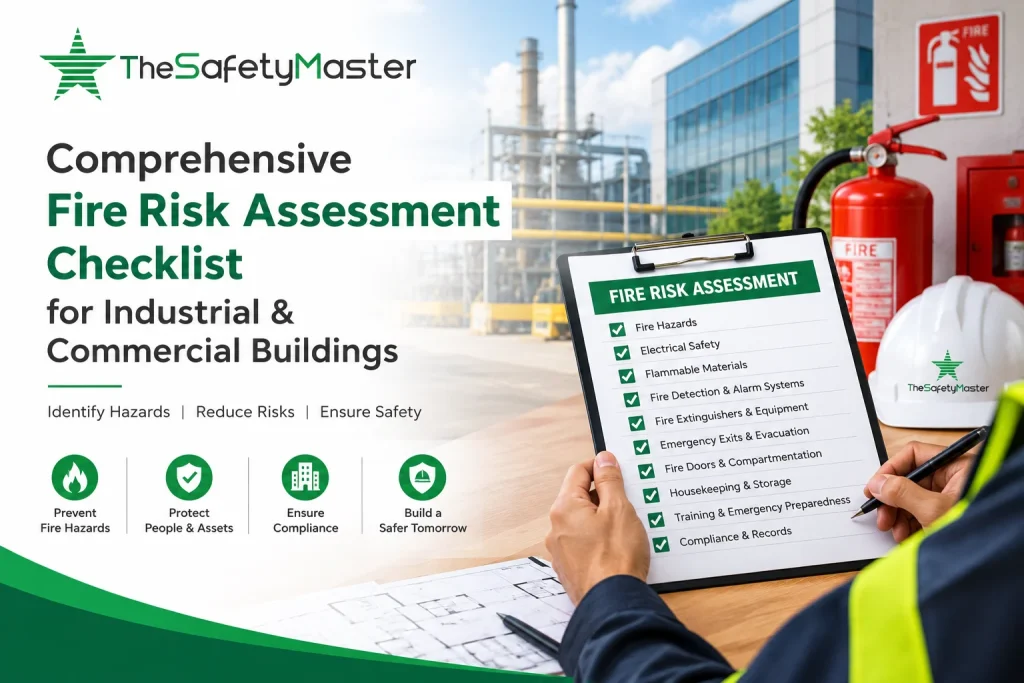
Fire safety is important for every industrial and commercial building. Factories, warehouses, offices, shopping malls, hotels, hospitals, and manufacturing units may face fire risks due to electrical faults, flammable materials, hot work, poor storage, and unsafe working practices. A small fire can cause serious injuries, property damage, business losses, and environmental harm.
A Comprehensive Fire Risk Assessment Checklist for Industrial & Commercial Buildings helps businesses identify fire hazards, understand possible risks, and take suitable safety measures. It also helps safety teams inspect fire protection systems, emergency exits, alarms, extinguishers, and evacuation arrangements.
The Safety Master supports organisations with fire safety audits, risk assessments, and safety consulting services to improve workplace protection. A systematic fire risk assessment can help businesses identify unsafe conditions before they lead to an emergency.
What Is a Fire Risk Assessment?
A fire risk assessment is a systematic process used to identify fire hazards, evaluate the people and property that may be affected, and decide which control measures are required.
The assessment checks how a fire could start, how quickly it could spread, and whether people can escape safely during an emergency.
Main Objectives of a Fire Risk Assessment
- Identify possible sources of fire and ignition.
- Check combustible and flammable materials.
- Inspect electrical installations and equipment.
- Review fire alarms and detection systems.
- Check extinguishers, hydrants, and sprinkler systems.
- Inspect emergency exits and evacuation routes.
- Identify risks to employees, visitors, contractors, and other occupants.
- Recommend corrective actions to reduce fire risks.
- Maintain records of inspections and safety improvements.
Why Industrial and Commercial Buildings Need Fire Risk Assessments
Industrial buildings may contain chemicals, fuels, combustible dust, machinery, and high-temperature equipment. Commercial buildings may have large numbers of visitors, electrical equipment, kitchens, storage areas, and complex escape routes.
A fire risk assessment helps both types of buildings understand their specific risks and select suitable preventive measures.
Comprehensive Fire Risk Assessment Checklist for Industrial & Commercial Buildings
The following checklist can be used as a starting point for a workplace fire safety inspection. The final checklist should be adapted to the building layout, activities, fire hazards, occupancy, and applicable legal requirements.
1. Fire Hazards and Ignition Sources
The first step is to identify anything that could start a fire.
- Check electrical panels, wiring, sockets, and extension leads.
- Inspect machinery, motors, and electrical equipment for overheating.
- Identify open flames, hot surfaces, and spark-producing equipment.
- Check welding, cutting, grinding, and other hot-work activities.
- Inspect boilers, furnaces, ovens, and heating systems.
- Identify smoking areas and check compliance with smoking controls.
- Inspect kitchens and cooking equipment in commercial buildings.
- Check battery charging stations and battery storage areas.
- Identify combustible dust in industrial processes.
- Check whether fire hazards are recorded and controlled.
2. Flammable and Combustible Materials
Improper storage of combustible materials can increase the speed and severity of a fire.
- Check the storage of flammable liquids and gases.
- Ensure chemicals are stored according to their safety requirements.
- Inspect gas cylinders for damage, leaks, and secure positioning.
- Keep combustible waste away from ignition sources.
- Check the storage of paper, cardboard, plastics, textiles, and packaging.
- Maintain suitable separation between incompatible chemicals.
- Ensure flammable liquid containers are properly labelled.
- Check ventilation in areas where flammable vapours may collect.
- Inspect warehouses for excessive combustible material storage.
- Ensure waste is removed regularly and safely.
3. Electrical Fire Safety
Electrical faults are an important fire risk in factories, offices, warehouses, and commercial premises.
- Inspect electrical panels for damage and overheating.
- Check that distribution boards are accessible and properly labelled.
- Ensure electrical equipment is maintained by competent persons.
- Check for exposed wires and damaged cables.
- Avoid overloaded sockets and unsafe temporary connections.
- Inspect earthing and protective devices.
- Check the condition of electrical equipment in wet or hazardous areas.
- Review electrical inspection and maintenance records.
- Ensure defective equipment is isolated and repaired.
- Check that electrical rooms are free from unnecessary combustible materials.
4. Fire Detection and Alarm Systems
Fire alarms and detection systems help occupants receive early warnings.
- Check smoke and heat detectors for damage.
- Ensure detectors are suitable for the working environment.
- Inspect manual call points and ensure they are accessible.
- Test fire alarm systems according to the maintenance schedule.
- Confirm that alarms can be heard or otherwise perceived throughout occupied areas.
- Check alarm coverage in offices, warehouses, production areas, and other relevant spaces.
- Ensure alarm panels show normal operating conditions.
- Review testing and maintenance records.
- Check that employees understand the alarm signal.
- Ensure faults are reported and corrected promptly.
5. Fire Extinguishers and Firefighting Equipment
Suitable firefighting equipment should be available where required and kept ready for emergency use.
- Check the number and location of fire extinguishers.
- Ensure extinguisher types match the identified fire hazards.
- Inspect pressure indicators, seals, hoses, and visible damage where applicable.
- Check inspection and servicing dates.
- Ensure extinguishers are easy to see and access.
- Keep firefighting equipment free from obstructions.
- Inspect fire hose reels and hydrants where installed.
- Check pumps and water supplies according to the maintenance plan.
- Verify sprinkler systems are maintained and available for service.
- Ensure trained personnel understand when and how to use firefighting equipment safely.
6. Emergency Exits and Evacuation Routes
Safe escape routes are essential for reducing injuries during a fire.
- Check that emergency exits are clearly marked.
- Ensure escape routes remain free from obstructions.
- Confirm that exit doors can be opened safely from the escape side.
- Check emergency exit doors for damage and correct operation.
- Inspect stairways, corridors, and final exits.
- Ensure fire doors close correctly and are not improperly wedged open.
- Check emergency lighting along escape routes.
- Ensure evacuation signs are visible.
- Review evacuation arrangements for people who need assistance.
- Confirm that assembly points are identified and communicated.
7. Fire Compartmentation and Building Protection
Fire-resistant construction can slow the spread of fire and smoke.
- Inspect fire doors and their closing mechanisms.
- Check fire-resistant walls and ceilings for visible damage.
- Identify unsealed openings around cables, pipes, and ducts.
- Check that fire stopping is suitable and intact.
- Inspect protected staircases and escape corridors.
- Check fire dampers where installed.
- Ensure building alterations have not affected fire protection measures.
- Review fire separation between hazardous storage and occupied areas.
- Inspect penetrations through fire-rated walls.
- Arrange specialist inspections when fire protection defects are suspected.
8. Industrial Machinery and Process Safety
Industrial operations may involve high-risk equipment and processes that require additional controls.
- Inspect machines for overheating and unusual operating conditions.
- Check ventilation and dust extraction systems.
- Review hot-work permits and fire watch arrangements.
- Check safe shutdown procedures for equipment.
- Inspect fuel supply lines and connections.
- Check process temperatures and pressure controls where relevant.
- Review procedures for handling flammable gases and liquids.
- Inspect dust collectors and extraction equipment for fire or explosion hazards.
- Check static electricity controls where combustible atmospheres may occur.
- Verify that emergency shutdown systems are maintained where required.
9. Housekeeping and Storage Safety
Good housekeeping helps reduce fire loads and keeps escape routes usable.
- Keep walkways, corridors, and exits clear.
- Remove waste and unused packaging regularly.
- Avoid storing materials near electrical panels.
- Keep combustible materials away from hot equipment.
- Maintain suitable storage arrangements in warehouses.
- Check that storage does not obstruct sprinklers or detectors.
- Keep flammable materials in designated storage areas.
- Prevent waste accumulation near machinery.
- Maintain safe separation between storage and ignition sources.
- Ensure cleaning materials are stored correctly.
10. Emergency Preparedness and Employee Training
Employees must understand how to respond when a fire occurs.
- Display emergency contact information.
- Provide fire safety training appropriate to job responsibilities.
- Train designated fire wardens or emergency response personnel.
- Conduct evacuation drills at suitable intervals.
- Explain alarm signals and evacuation procedures.
- Ensure contractors and visitors receive relevant emergency information.
- Maintain emergency response procedures.
- Identify people who may need help during evacuation.
- Check communication arrangements for emergencies.
- Record drill results and correct identified weaknesses.
11. Commercial Building-Specific Fire Safety Checks
Commercial buildings may have risks linked to public access, kitchens, crowded spaces, and changing occupancy.
- Inspect kitchens, cooking appliances, and extraction systems.
- Check storage rooms and waste collection areas.
- Ensure public corridors and exits remain clear.
- Review fire safety arrangements for events and high occupancy.
- Check emergency arrangements for lifts and escalators.
- Inspect fire doors in offices, hotels, hospitals, and retail premises.
- Confirm that contractors follow site fire safety rules.
- Review arrangements for visitors and people with disabilities.
- Check fire protection in server rooms and electrical rooms.
- Ensure building management teams maintain inspection records.
12. Fire Safety Records and Legal Compliance
Fire safety records help demonstrate that the organisation monitors and manages identified risks.
- Maintain a written fire risk assessment.
- Record identified hazards and affected areas.
- Document existing control measures.
- Record recommended corrective actions.
- Assign responsibility and completion dates.
- Maintain fire alarm and extinguisher service records.
- Keep electrical inspection and maintenance reports.
- Record evacuation drills and training.
- Review the assessment after significant changes, incidents, or identified deficiencies.
- Verify applicable local fire safety rules, building requirements, and industry-specific standards.
Legal duties depend on the country, building type, and activities. In India, the assessment should consider applicable state fire service requirements, local building and fire safety rules, and relevant National Building Code provisions where applicable.
Fire Risk Assessment Template
A fire risk assessment template provides a consistent way to record hazards, evaluate risks, and track corrective actions. Organisations can prepare a template in Word or Excel according to their site requirements.
A useful fire risk assessment template should contain the following fields:
| Field | Details to Record |
|---|---|
| Building information | Site name, address, building type |
| Assessment details | Assessment date and assessor |
| Fire hazard | Source of ignition or combustible material |
| People at risk | Employees, visitors, contractors, and others |
| Existing controls | Alarms, extinguishers, fire doors, and procedures |
| Risk rating | Likelihood, severity, and risk level |
| Required action | Recommended additional control |
| Responsible person | Person or department assigned |
| Target date | Planned completion date |
| Status | Open, in progress, or completed |
| Review date | Date for the next assessment or review |
Sample Fire Risk Assessment Entry
| Hazard | Existing Control | Further Action |
|---|---|---|
| Overloaded electrical socket | Routine visual checks | Remove unsafe connections and arrange competent inspection |
| Flammable liquid storage | Designated storage area | Verify ventilation, segregation, and spill controls |
| Blocked emergency exit | Exit signage installed | Remove obstruction and introduce routine checks |
| Defective fire door | Door installed | Repair the door and verify self-closing operation |
Risk ratings should follow the organisation’s approved assessment method. The assessor should consider both the likelihood of a fire and the potential consequences rather than assigning ratings without evidence.
Free Comprehensive Fire Risk Assessment Checklist for Industrial & Commercial Buildings
A free fire risk assessment checklist can help safety officers, facility managers, business owners, and EHS professionals conduct an initial inspection.
The checklist can be prepared as a printable document or spreadsheet and organised into sections covering fire hazards, electrical safety, fire protection systems, escape routes, storage, training, and documentation.
How to Use a Free Checklist
- Identify the building areas that need inspection.
- Walk through each area and record visible hazards.
- Check the condition of fire protection systems and emergency routes.
- Record existing controls and any missing safeguards.
- Assign risk levels using an approved assessment method.
- Give each corrective action to a responsible person.
- Set target dates and track completion.
- Review the checklist after changes, incidents, or significant findings.
A generic checklist is a useful starting point, but it should not replace a competent, site-specific assessment. High-risk industrial sites may need specialist input for combustible dust, flammable atmospheres, chemical storage, process equipment, and fire protection engineering.
Comprehensive Fire Risk Assessment Checklist for Industrial & Commercial Buildings 2022
A checklist published in 2022 may still contain useful inspection topics, such as ignition sources, combustible materials, emergency exits, fire alarms, extinguishers, and evacuation procedures.
However, businesses should not assume that a 2022 checklist automatically meets current requirements. Building layouts, business activities, occupancy, equipment, and applicable regulations may have changed.
Before using an older checklist:
- Confirm that the legal references are still applicable.
- Update the building and occupancy details.
- Add new equipment, processes, and storage areas.
- Check current maintenance and testing requirements.
- Review any changes to emergency exits or fire protection systems.
- Include lessons from previous incidents and fire drills.
- Verify that all identified corrective actions are complete.
A current assessment should reflect the actual building and its present risks, not simply reproduce an older checklist.
HSE Fire Risk Assessment Template (Word)
The UK Health and Safety Executive (HSE) and other UK fire safety authorities provide guidance and resources relevant to workplace fire safety. The appropriate resource depends on the type of premises and the applicable UK jurisdiction.
For a Word-based fire risk assessment template, use official guidance as a starting point and check whether the document is designed for your building type.
The assessment should cover:
- Potential fire hazards and ignition sources.
- People who may be affected.
- Existing preventive and protective measures.
- Emergency arrangements and escape routes.
- Required corrective actions.
- Assessment and review records.
Important: UK HSE and fire safety guidance is not automatically the legal standard for buildings in India. Indian businesses should check the requirements that apply to their state, local authority, building type, and industrial activities.
Common Fire Risk Assessment Mistakes
Even when a checklist is available, important risks can be missed if the assessment is incomplete.
Common mistakes include:
- Using a generic checklist without inspecting the actual site.
- Ignoring hidden fire hazards in electrical rooms and storage areas.
- Failing to check fire doors and escape routes.
- Recording hazards without assigning corrective actions.
- Using outdated templates without reviewing legal requirements.
- Assuming that installed fire equipment is always operational.
- Ignoring contractors, visitors, and people who need evacuation assistance.
- Failing to update the assessment after major changes.
- Not verifying that completed corrective actions are effective.
The Safety Master can help organisations review workplace hazards, assess fire safety arrangements, and identify practical improvements through professional safety assessment services.
Benefits of a Professional Fire Risk Assessment
A professional fire risk assessment provides a structured review of the hazards and controls within a building.
Key benefits include:
- Better hazard identification: Identifies fire sources and unsafe conditions.
- Improved employee safety: Supports safer evacuation and emergency planning.
- Protection of property: Helps reduce the potential impact of fire.
- Improved maintenance: Highlights defects in alarms, extinguishers, and other systems.
- Clear corrective actions: Assigns responsibility and priorities for improvements.
- Better documentation: Supports safety management and applicable compliance needs.
- Reduced business disruption: Helps organisations prepare for fire emergencies.
The Safety Master provides safety-related consulting and assessment support to help businesses strengthen their fire prevention measures and improve workplace safety.
Conclusion
A Comprehensive Fire Risk Assessment Checklist for Industrial & Commercial Buildings is a practical tool for identifying fire hazards, reviewing fire protection systems, and improving emergency preparedness. Regular inspections of electrical installations, flammable materials, machinery, fire alarms, extinguishers, fire doors, and escape routes can help organisations identify problems before an emergency occurs.
Free checklists, fire risk assessment templates, and older resources such as 2022 assessment documents can provide a useful starting point. However, every assessment should be updated to reflect the building’s current conditions, applicable legal requirements, and specific operational risks.
The Safety Master helps organisations strengthen workplace safety through fire risk assessments, safety audits, and risk management support. A site-specific assessment, followed by timely corrective action and regular review, is an important part of protecting employees, visitors, assets, and business operations.