Complete Guide to Behaviour Based Safety Implementation in Singapore for Workplace Accident Reduction

Professional BBS Implementation Services in Thailand for Industrial Safety Management
November 24, 2026
Transform Workplace Safety Culture with BBS Implementation Services in Malaysia
November 24, 2026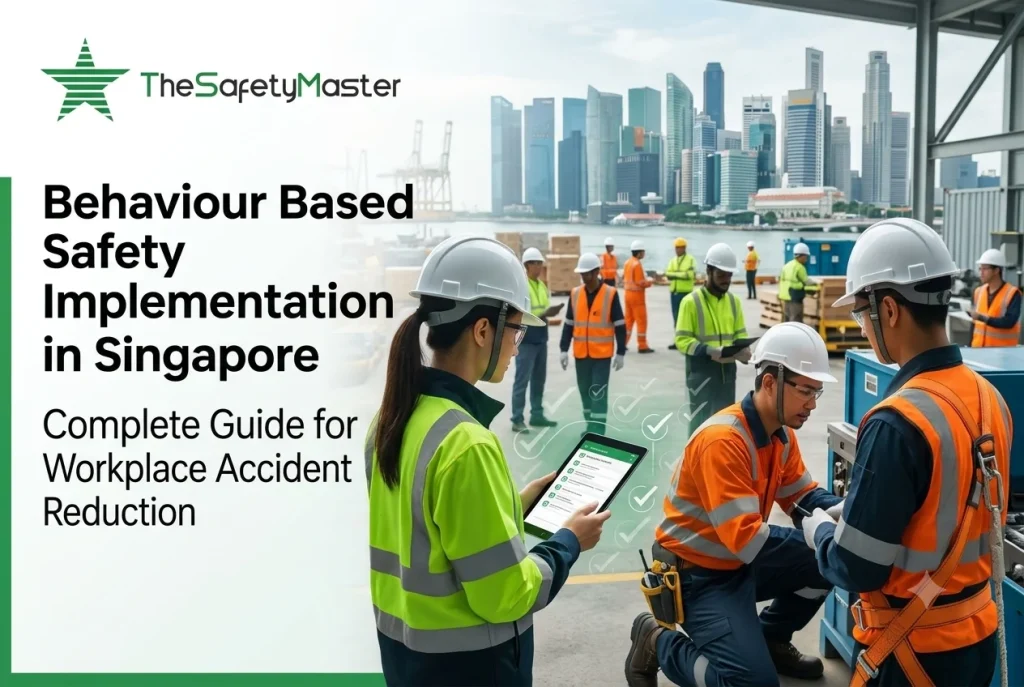
Workplace safety in Singapore operates within a strict regulatory framework managed by the Ministry of Manpower (MOM) under the Workplace Safety and Health (WSH) Act. Despite stringent engineering controls and well-documented Safe Work Procedures (SWPs), incidents continue to occur across high-risk industries like construction, process manufacturing, oil and gas, and logistics.
Studies show that up to 80–90% of workplace incidents stem from unsafe acts or systemic behavioral choices rather than machinery failure alone. Achieving a zero-harm environment requires moving beyond engineering controls and procedural compliance. Successful Behaviour Based Safety Implementation in Singapore provides the proactive structure needed to transform company culture and drastically lower accident rates.
Partnering with The Safety Master enables organizations across Singapore to deploy customized Behaviour Based Safety (BBS) frameworks that bridge the gap between written safety policies and front-line practices.
Understanding Behaviour Based Safety (BBS)
What is Behaviour Based Safety?
Behaviour Based Safety (BBS) is a scientific methodology that applies principles of behavioral psychology to workplace safety.Rather than reacting after an incident occurs, BBS evaluates real-time, observable employee behaviors to correct risky habits before they result in injuries or near-misses.
ResearchGate+ 1
The ABC Model of Behavioural Psychology
At the core of every BBS process implemented by The Safety Master is the ABC Model:
ResearchGate
- Activators (A):Events, instructions, signage, or training that precede a behavior and signal what is expected.iFluids Engineering
- Behaviour (B):The direct, observable action taken by the worker (e.g., wearing proper PPE, using a safety harness, securing a ladder).iFluids Engineering
- Consequences (C): Events following the behavior that determine whether the action will be repeated. Positive consequences (such as peer recognition) reinforce safe habits, while immediate constructive feedback helps eliminate at-risk behaviors.www.tal.sg
┌─────────────────┐ ┌─────────────────┐ ┌─────────────────┐
│ Activators │ ───► │ Behaviour │ ───► │ Consequences │
│ (Training, SWPs)│ │ (Safe/Unsafe) │ │ (Praise/Feedback)│
└─────────────────┘ └─────────────────┘ └─────────────────┘
Why Singapore Workplaces Require a Dedicated BBS Framework
Singapore’s WSH 2028 Strategy emphasizes ownership of safety outcomes, culture building, and reducing workplace injury rates. Relying strictly on traditional enforcement, inspections, or punitive measures often leads to unreported near-misses and under-the-radar compliance.
+--------------------------------+----------------------------------------+
| Traditional Safety Management | Behaviour Based Safety (BBS) |
+--------------------------------+----------------------------------------+
| Relies on lagging metrics | Focuses on leading indicators |
| (Accident/Injury rates) | (Observation frequency, safe act ratio)|
+--------------------------------+----------------------------------------+
| Top-down compliance enforcement| Employee-led peer coaching and support |
+--------------------------------+----------------------------------------+
| Punitive or blame-oriented | Positive reinforcement & barrier removal|
+--------------------------------+----------------------------------------+
| Focuses on mechanical/site rules| Focuses on observable human habits |
+--------------------------------+----------------------------------------+
Integrating a BBS framework aligns directly with Singapore’s WSH Council guidance on Behavioural Observation and Intervention (BO&I), enabling companies to lower incident rates and improve safety culture maturity.
Core Pillars of a Successful BBS Program
To drive sustained workplace accident reduction, The Safety Master builds BBS frameworks around six primary pillars:
1. Management Commitment & Leadership Visibility
Leadership must actively support the program by providing resources, attending safety briefings, and recognizing positive safety metrics rather than enforcing blame.
The Safety Master
2. Tailored Behavioural Checklists
Checklists must remain concise (10–12 focus items) and target specific, high-risk tasks relevant to your operational environment (e.g., Working at Heights, Lockout/Tagout, Machine Guarding, Chemical Handling).
3. Peer-to-Peer Peer Coaching
Trained observers conduct non-confrontational observations, offering immediate positive reinforcement for safe acts and constructive coaching for at-risk behaviors.
4. Continuous Data Collection & Analytics
Observation metrics are compiled to track leading indicators, enabling safety teams to spot trends, target systemic hazards, and refine operational procedures.
The Safety Master
Step-by-Step Behaviour Based Safety Implementation in Singapore
Deploying Behaviour Based Safety Implementation in Singapore requires a structured, multi-phase roadmap customized to local industry needs and WSH regulations.
 PHASED BBS ROADMAP
 ┌─────────────────────────────────────────────────────────┐
 │ Phase 1: Baseline Assessment & Organizational Readiness │
 └────────────────────────────┬────────────────────────────┘
 ┌─────────────────────────────────────────────────────────┐
 │ Phase 2: Critical Behaviour Identification & Checklists │
 └────────────────────────────┬────────────────────────────┘
 ┌─────────────────────────────────────────────────────────┐
 │ Phase 3: Observer Training & Peer Coaching Rollout │
 └────────────────────────────┬────────────────────────────┘
 ┌─────────────────────────────────────────────────────────┐
 │ Phase 4: Data Analytics, Feedback & Continuous Growth │
 └─────────────────────────────────────────────────────────┘
Phase 1: Baseline Assessment & Readiness Audit
Before launching a BBS process, The Safety Master conducts a comprehensive safety culture assessment and review of past incident data, near-miss logs, and existing SWPs. This step identifies behavioral gaps and establishes baseline performance metrics.
ResearchGate
Phase 2: Identifying Critical Behaviours & Designing Checklists
Not all behaviors carry equal risk. Implementation teams pinpoint critical actions that historically cause injuries.
- Target Areas:Body positioning, line-of-fire hazards, PPE usage, tool selection, and permit compliance.iFluids Engineering
- Checklist Design:Checklists are kept simple, mobile-friendly, and task-specific so field workers can complete them without operational friction.C2D Prévention
Phase 3: Observer Training & Peer Coaching
The success of BBS relies on how observations and interventions are handled on the floor.The Safety Master trains supervisors, safety advocates, and frontline personnel on:
- Conduct non-confrontational, objective observations.The Safety Master
- Deliver immediate, positive reinforcement for safe behaviors.www.tal.sg
- Engage in constructive dialogues to discover why an at-risk behavior occurred (e.g., poor tool design, fatigue, time pressure) rather than assigning fault.www.tal.sg
Phase 4: Data Analysis, Corrective Action, & Systemic Improvement
Observation data is recorded and analyzed to identify organizational barriers. If workers take shortcuts because an approved safety tool is difficult to access, management resolves the systemic roadblock rather than reprimanding the worker.
Key Performance Indicators (KPIs) for BBS Success
Tracking the right metrics ensures your BBS program yields measurable accident reduction over time.
Leading Indicators
- Observation Frequency: Total observations completed per department per month.
- Participation Rate: Percentage of workforce actively participating as observers or feedback recipients.
- Safe-to-At-Risk Ratio: Percentage of observed safe behaviors versus at-risk practices.
- Action Item Closure Rate: Speed at which management removes systemic hazards identified during observations.
Lagging Indicators
- Total Recordable Incident Rate (TRIR)
- Lost Time Injury Frequency Rate (LTIFR)
- Near-Miss Reporting Volume
How The Safety Master Supports Your BBS Journey
Implementing an effective, culture-transforming BBS program requires expertise, specialized training models, and ongoing execution support. The Safety Master offers end-to-end consulting services tailored to industrial, construction, process, and logistics operations in Singapore:
The Safety Master
- Safety Perception & Culture Audits: Benchmark your organization’s current safety maturity level.
- Customized BBS Framework Development: Build site-specific observation checklists, procedures, and governance structures.
- Interactive Observer Training Workshops: Train frontline teams in constructive feedback, hazard recognition, and peer coaching techniques.
- Digital Observation & Analytics Systems: Streamline data collection and turn observation reports into actionable management insights.
- Continuous Safety Leadership Mentoring:Assist leadership teams in building long-term, non-punitive safety cultures.The Safety Master
Contact The Safety Master today to implement a robust Behaviour Based Safety framework that protects your workforce and drives continuous workplace accident reduction.