Transform Workplace Safety Culture with BBS Implementation Services in Malaysia

Complete Guide to Behaviour Based Safety Implementation in Singapore for Workplace Accident Reduction
November 24, 2026
How to Achieve Behavior-Based Safety Implementation in UAE to Eliminate Workplace Hazards
November 24, 2026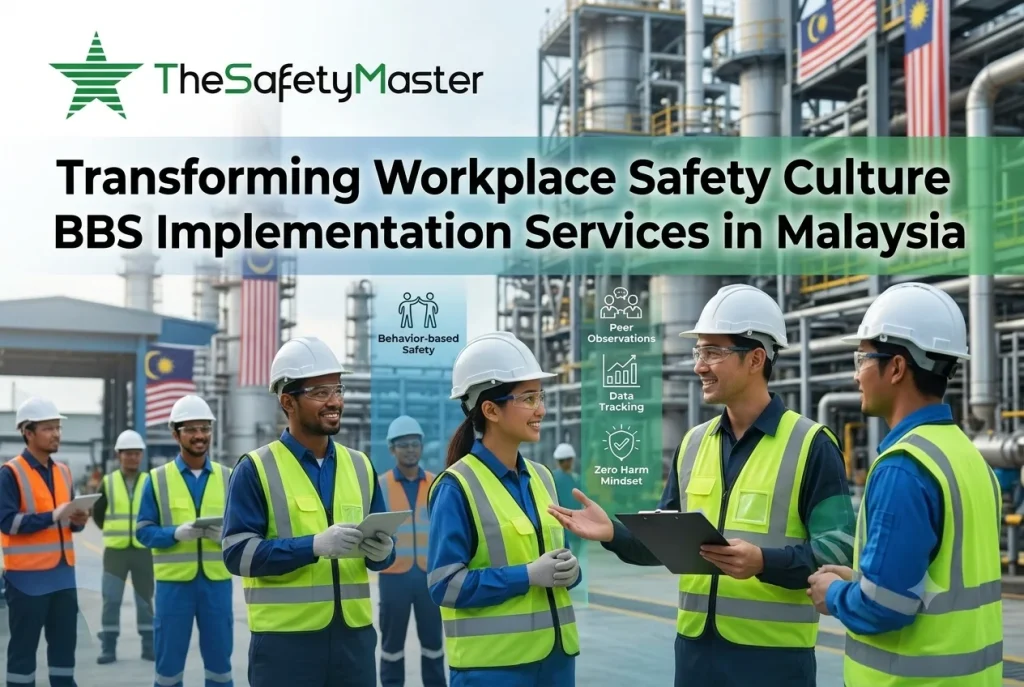
Workplace safety is no longer just about meeting statutory regulations—it is about cultivating an environment where safe choices are second nature. While traditional safety programs focus heavily on physical safeguards, hardware, and engineering controls, human error and unsafe acts remain leading causes of industrial incidents. To bridge this gap, forward-thinking organizations are turning to BBS Implementation Services in Malaysia to create lasting behavioral change, reduce accidents, and foster a proactive safety culture across operations.
By partnering with experts like The Safety Master, businesses across Malaysia—from oil and gas hubs in Kerteh and Miri to manufacturing clusters in Penang, Selangor, and Johor—can transform their safety performance through structured, human-centric interventions.
Understanding Behavior-Based Safety (BBS)
What is Behavior-Based Safety?
Behavior-Based Safety (BBS) is an operational approach aimed at improving workplace safety by focusing on human behavior. It applies the principles of behavioral science to identify, measure, and modify daily habits, routines, and actions on the shop floor or field environment.
Unlike traditional compliance-driven methods that rely solely on top-down policing, BBS works by engaging employees at all levels. It focuses on observing work practices, encouraging positive reinforcement for safe behaviors, and systematically addressing the root causes of unsafe choices before they manifest as injuries or loss.
The Science Behind Human Behavior in Safety
The foundation of BBS rests on the ABC Model of Behavior:
+--------------------+ +--------------------+ +--------------------+
| Antecedents (A) | ---> | Behavior (B) | ---> | Consequences (C) |
| (Triggers/Rules) | | (Actions Taken) | | (Outcomes/Rewards) |
+--------------------+ +--------------------+ +--------------------+
- Antecedents (A): The conditions, procedures, signals, or environments that prompt a behavior (e.g., safety signs, SOPs, toolbox talks).
- Behavior (B): The observable action taken by a worker (e.g., wearing personal protective equipment, holding handrails, performing a proper lockout-tagout).
- Consequences (C): The outcomes that follow a behavior, which determine whether that action will be repeated in the future (e.g., peer recognition, saved time, reprimand).
Studies show that consequences—particularly immediate and positive ones—have a significantly higher influence on repeated human behavior than antecedents alone. The Safety Master designs BBS frameworks that optimize this dynamic, ensuring safe behaviors are consistently acknowledged and reinforced.
Why Malaysian Industries Need BBS Implementation Services
Navigating the Malaysian Regulatory and Industrial Landscape
Malaysia’s industrial framework, backed by the Department of Occupational Safety and Health (DOSH) and governed by the Occupational Safety and Health Act (OSHA), enforces stringent safety standards. However, compliance with statutory requirements alone does not guarantee a zero-accident workplace.
As Malaysia continues to expand high-consequence industries—such as petrochemicals, semiconductor manufacturing, palm oil processing, logistics, and heavy construction—the complexity of operations demands a safety strategy centered on human reliability.
Moving Beyond Engineering Controls to Human Factors
While engineering safeguards and safety equipment form the first line of defense, human decisions ultimately govern operational outcomes. A worker skipping a pre-use checklist, bypassing an interlock to save time, or failing to use fall protection during a quick task can bypass physical barriers.
Implementing structured BBS Implementation Services in Malaysia allows companies to directly address the human element, ensuring that safety systems are supported by a proactive workforce culture.
Core Components of Effective BBS Implementation
1. Leadership Alignment and Commitment
A successful BBS transformation starts from the top. Senior management and site leaders must view BBS not as a short-term campaign, but as an essential business methodology. The Safety Master facilitates executive workshops to align leadership goals, establish visible management commitment, and define measurable safety objectives.
2. Peer-to-Peer Safety Observations
At the core of any BBS system is non-punitive, peer-to-peer safety observation. Trained employee observers conduct regular, unobtrusive checks using custom checklists tailored to specific job functions. These observations capture real-time data on both safe practices and exposed risks.
3. Constructive Feedback and Positive Reinforcement
Observation without immediate, constructive feedback yields limited results. Observers are trained to deliver positive feedback on safe practices on the spot, while engaging workers in collaborative discussions regarding identified risks. This non-confrontational approach builds trust and encourages continuous self-correction.
4. Data-Driven Safety Decision Making
BBS generates valuable leading indicator data. By tracking observation records, organizations can identify safety trends, recurring unsafe habits, and systemic operational hurdles before incidents happen.
Traditional Safety Metrics (Lagging) Behavior-Based Safety Metrics (Leading) Lost Time Injury Frequency Rate (LTIFR) Number of Peer Observations Conducted Total Recordable Incident Rate (TRIR) Ratio of Safe vs. Unsafe Behaviors Observed Near-Miss Incident Reports On-the-Spot Feedback Sessions Completed Workers’ Compensation Claims Safety At-Risk Behavior Resolution Rate
Step-by-Step BBS Implementation Roadmap by The Safety Master
Transforming an organization’s safety culture requires a structured, phased methodology. The Safety Master provides end-to-end guidance tailored to the operational realities of Malaysian enterprises.
Phase 1: Diagnostic Assessment & Culture Evaluation
 │
 ▼
Phase 2: Custom Framework & Checklist Development
 │
 ▼
Phase 3: Leadership & Observer Training Workshops
 │
 ▼
Phase 4: Site Rollout & Peer Observation Launch
 │
 ▼
Phase 5: Data Analytics & Continuous Culture Improvement
Phase 1: Diagnostic Assessment and Culture Baseline
Before introducing new frameworks, The Safety Master evaluates the site’s existing safety culture, past incident trends, and operational workflows. This baseline assessment identifies organizational readiness, communication barriers, and specific high-risk activity zones.
Phase 2: Customizing the BBS Framework
Every workplace possesses unique risks and cultural dynamics. The Safety Master customizes the observation tools, critical behavior lists (CBLs), and reporting channels to fit your facility—whether an offshore platform, an automated manufacturing floor, or a construction site.
Phase 3: Comprehensive Observer and Steering Committee Training
Empowering internal champions is essential for long-term program sustainability. Training modules cover:
- Principles of behavior modification and the ABC Model.
- How to conduct objective, non-threatening observations.
- Communication techniques for delivering active feedback.
- Standardized data logging and trend analysis procedures.
Phase 4: Field Rollout and Coaching
The BBS framework is launched across targeted site departments. The Safety Master provides hands-on field mentoring, accompanying observers during initial rounds to fine-tune their observation skills and ensure data collection integrity.
Phase 5: Analytics, Review, and Continuous Refinement
Data collected from observations is logged into analytical tools to reveal root causes of unsafe acts, such as inadequate tools, rushing, fatigue, or confusing procedures. Management uses these insights to optimize site controls, update training protocols, and maintain positive momentum.
Key Benefits of Implementing BBS with The Safety Master
Drastic Reduction in Workplace Incidents
By systematically addressing unsafe behaviors—the underlying driver of over 80% of industrial accidents—organizations experience a measurable drop in near-misses, first-aid cases, and lost-time injuries.
Cultivation of an Inclusive Safety Culture
BBS breaks down line-management hierarchy barriers by involving workers directly in safety ownership. Employees transition from passive policy followers into active participants who actively safeguard their peers.
Enhanced Productivity and Operational Efficiency
Safe environments foster efficient operations. By identifying and eliminating at-risk workarounds, organizations streamline workflows, reduce equipment downtime caused by improper use, and improve overall operational quality.
Sustainable Compliance with Malaysian Standards
A strong behavioral safety program complements existing management standards such as ISO 45001 and strengthens compliance with DOSH requirements, establishing your brand as an industry leader in workplace safety.
Partnering with The Safety Master for BBS in Malaysia
Overcoming cultural barriers, language differences across multi-national workforces, and initial resistance to change requires proven expertise.
As a trusted partner in industrial safety consultancy, The Safety Master brings extensive hands-on experience in customizing BBS Implementation Services in Malaysia. From initial culture diagnostics to full-scale enterprise execution, The Safety Master ensures your behavioral safety program delivers measurable, long-term cultural transformation.
Transform Your Workplace Safety Culture Today
Empower your workforce to choose safety every day. Partner with The Safety Master to deploy customized BBS Implementation Services in Malaysia and turn your zero-harm vision into reality.