Warehouse Safety: Protect People, Materials and Operations

Reasons You Should Conduct Regular Safety Audits
May 2, 2022
What is HAZOP? Hazard and Operability Study
May 7, 2022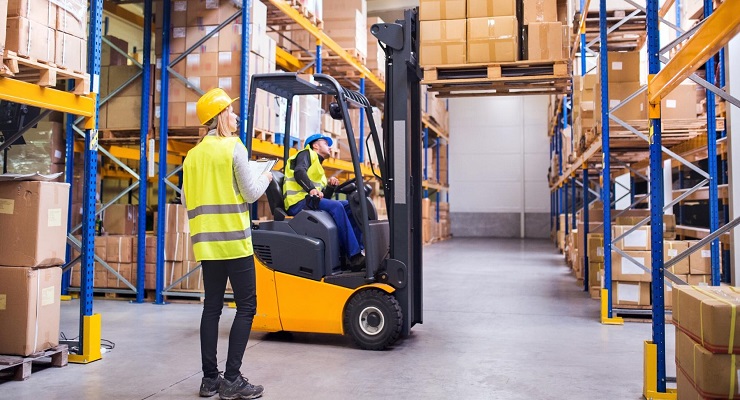
Warehouse Safety is essential for protecting workers, preventing property damage, maintaining smooth operations, and reducing workplace incidents. Warehouses are busy environments where forklifts, racks, conveyors, loading docks, vehicles, chemicals, electrical systems, and manual handling activities operate together.
A well-designed warehouse safety program helps identify hazards before they cause injuries or operational losses. Common warehouse risks include forklift accidents, falling materials, slips and trips, manual handling injuries, fires, electrical hazards, chemical exposure, machinery-related injuries, and falls from height.
The Safety Master helps organizations strengthen warehouse safety through practical safety assessments, training, risk management, audits, and implementation support. Our approach focuses on identifying workplace hazards and establishing effective controls that support safer and more reliable warehouse operations.
What Is Warehouse Safety?
Warehouse safety refers to the systems, procedures, training, equipment, and controls used to protect employees, visitors, materials, equipment, and facilities within a warehouse.
A strong warehouse safety system covers activities such as receiving, unloading, storage, picking, packing, material movement, loading, dispatch, maintenance, and emergency response.
According to OSHA, major warehouse hazards include powered industrial trucks, ergonomics, material handling, hazardous chemicals, slips and falls, and automation or robotics.
Why Is Warehouse Safety Important?
Warehouses often operate at a fast pace, with people and equipment moving continuously. Poor housekeeping, incorrect stacking, inadequate training, damaged racks, or unsafe forklift operation can quickly result in serious incidents.
Effective Warehouse Safety helps organizations:
- Prevent workplace injuries and accidents
- Protect employees and visitors
- Reduce forklift and material-handling incidents
- Prevent falling-object and rack-collapse hazards
- Improve fire and emergency preparedness
- Reduce equipment and property damage
- Improve housekeeping and workplace organization
- Support regulatory and safety compliance
- Improve operational efficiency
- Build a stronger safety culture
The major point is that warehouse safety should not be treated only as a compliance requirement. It should become part of everyday warehouse operations.
Common Warehouse Safety Hazards
Forklift and Powered Industrial Truck Hazards
Forklifts are widely used for transporting and storing materials, but improper operation can result in collisions, struck-by incidents, overturns, and crushing injuries.
Forklift Safety Controls
- Allow only trained and authorized operators to operate forklifts.
- Conduct pre-use inspections.
- Maintain safe operating speeds.
- Separate pedestrians and vehicles where practical.
- Keep loads stable and within equipment capacity.
- Maintain visibility while transporting materials.
- Keep forks lowered when travelling without a load.
- Maintain adequate clearance around racks and structures.
Regular forklift training, inspection, and supervision are important components of a warehouse safety program.
Material Storage and Racking Hazards
Incorrectly stacked materials can fall and injure workers or damage products. Overloaded or damaged storage racks can also create serious collapse hazards.
Safe Storage Practices
- Display rack load-capacity information.
- Inspect racks regularly for damage.
- Isolate damaged racks until they are assessed and repaired.
- Keep heavy materials on lower or middle levels where appropriate.
- Stack materials securely.
- Do not exceed rack capacity.
- Keep aisles and access routes clear.
- Use suitable rack protection against vehicle impacts.
OSHA recommends inspecting and maintaining shelving and racking, preventing unstable stacking, and ensuring storage capacities are not exceeded.
Loading Dock Safety
Loading and unloading areas can expose workers to vehicle movement, falling materials, dock edges, trailer movement, and forklift hazards.
Loading Dock Controls
- Keep dock edges clearly identified.
- Maintain dock plates and levelers.
- Prevent unauthorized pedestrian access.
- Use wheel chocks or other appropriate vehicle restraint systems.
- Maintain good lighting.
- Keep dock areas free from obstructions.
- Establish clear communication between drivers and warehouse personnel.
Manual Handling and Ergonomic Hazards
Workers may repeatedly lift, lower, push, pull, bend, reach, or carry materials. These activities can contribute to back, shoulder, muscle, and other musculoskeletal injuries.
Ergonomic Controls
- Reduce unnecessary manual lifting.
- Use mechanical handling equipment where practical.
- Store frequently handled materials at suitable heights.
- Use correct lifting techniques.
- Avoid excessive twisting and awkward postures.
- Provide appropriate training.
- Rotate tasks where appropriate to reduce repetitive strain.
Ergonomic risks such as heavy lifting, bending, overhead reaching, pushing, pulling, awkward postures, and repetitive work are recognized warehouse hazards.
Slips, Trips and Falls
Oil, water, packaging materials, uneven surfaces, damaged flooring, cables, and poorly arranged materials can create slip and trip hazards.
Housekeeping Controls
- Keep aisles clean and unobstructed.
- Remove waste and packaging promptly.
- Clean spills immediately.
- Repair damaged floors.
- Maintain adequate lighting.
- Clearly mark pedestrian routes.
- Keep emergency exits accessible.
Conveyor and Machinery Safety
Conveyors and automated equipment improve material movement but can create caught-in, entanglement, pinch-point, and struck-by hazards.
Conveyor Safety Measures
- Install suitable machine guarding.
- Protect accessible moving parts.
- Provide emergency stop systems where required.
- Keep hands and clothing away from moving parts.
- Follow safe maintenance procedures.
- Implement Lockout/Tagout (LOTO) where applicable.
- Train employees before they operate or maintain equipment.
Chemical and Hazardous Material Safety
Some warehouses store chemicals, fuels, cleaning products, paints, gases, or other hazardous materials. Poor storage or handling can result in exposure, fire, spills, or incompatible chemical reactions.
Chemical Safety Controls
- Maintain an inventory of hazardous chemicals.
- Provide Safety Data Sheets (SDS).
- Use appropriate labels.
- Store incompatible chemicals separately.
- Provide suitable PPE.
- Train employees on chemical hazards.
- Maintain spill-response arrangements.
- Establish emergency procedures.
Where hazardous chemicals are present, effective hazard communication, labeling, SDS access, and worker training are important safety controls.
Fire Safety in Warehouses
Warehouses can contain large quantities of combustible packaging, stored products, chemicals, electrical equipment, and other fire loads. Fire prevention and emergency preparedness should therefore be integral to warehouse safety.
Important Fire Safety Measures
- Conduct regular fire risk assessments.
- Maintain fire detection and alarm systems.
- Provide suitable fire extinguishers.
- Maintain sprinkler and fire protection systems where installed.
- Keep emergency exits unobstructed.
- Maintain emergency lighting and exit signs.
- Control ignition sources.
- Maintain electrical systems properly.
- Keep combustible materials away from ignition sources.
- Conduct emergency drills and fire safety training.
Emergency routes should remain clearly identified, adequately lit, and free from obstruction.
Electrical Safety in Warehouses
Electrical equipment, temporary connections, damaged cables, overloaded circuits, and poor maintenance can create shock and fire hazards.
Electrical Safety Practices
- Inspect electrical equipment before use.
- Repair damaged cables and equipment.
- Keep electrical panels accessible.
- Do not use electrical-panel areas for storage.
- Ensure proper grounding.
- Avoid unauthorized electrical modifications.
- Use suitable electrical equipment for the environment.
- Conduct periodic inspections and maintenance.
Personal Protective Equipment in Warehouse Safety
PPE should be selected based on the hazards identified through risk assessment.
Depending on the warehouse activity, PPE may include:
- Safety helmets
- Safety shoes
- High-visibility clothing
- Safety gloves
- Safety glasses
- Hearing protection
- Respiratory protection where required
- Fall-protection equipment for applicable work-at-height activities
PPE should complement engineering and administrative controls rather than replace effective hazard elimination or control measures.
Warehouse Safety Training
Employees should understand the hazards associated with their jobs and know how to work safely.
Recommended Warehouse Safety Training
Forklift Safety Training
Covers safe forklift operation, inspection, load handling, pedestrian awareness, and workplace traffic controls.
Manual Handling and Ergonomics Training
Helps employees understand safe lifting, pushing, pulling, and material-handling techniques.
Fire Safety Training
Teaches employees about fire prevention, emergency procedures, evacuation, and appropriate extinguisher use.
Emergency Response Training
Prepares workers to respond to incidents such as fire, chemical spills, injuries, equipment failures, and other emergencies.
LOTO Training
Employees involved in maintenance or servicing should understand hazardous-energy control procedures applicable to their equipment.
Warehouse Safety Inspection Checklist
Regular inspections can help identify unsafe conditions before they become incidents.
A warehouse safety inspection should review:
- Forklift condition
- Forklift operating practices
- Pedestrian routes
- Loading docks
- Storage racks
- Material stacking
- Aisle conditions
- Housekeeping
- Emergency exits
- Fire extinguishers
- Fire alarm systems
- Electrical installations
- Conveyor guarding
- Chemical storage
- PPE compliance
- Emergency preparedness
- Lighting and ventilation
- Work-at-height activities
- LOTO practices
- Safety signage
The Safety Master can help organizations develop practical inspection and audit systems based on their warehouse activities and identified risks.
How to Improve Warehouse Safety
Improving warehouse safety requires continuous identification, assessment, control, and monitoring of risks.
Step 1: Identify Hazards
Identify hazards associated with people, equipment, materials, processes, and the workplace environment.
Step 2: Assess the Risks
Evaluate the likelihood and potential severity of each hazard and prioritize significant risks.
Step 3: Implement Controls
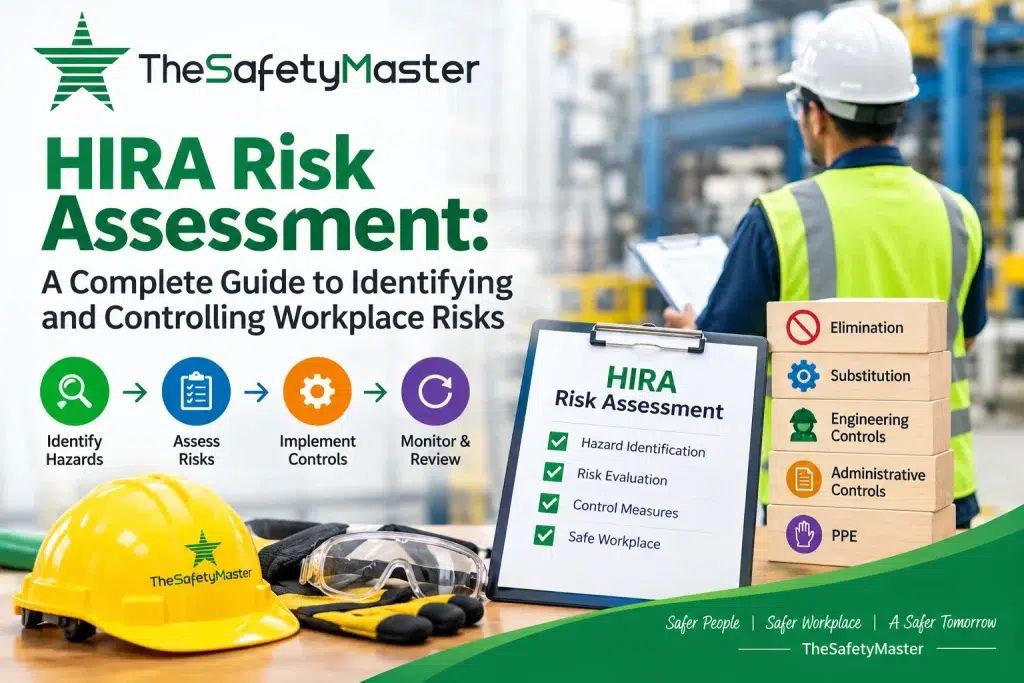
Apply appropriate controls using the hierarchy of controls, prioritizing elimination and engineering solutions before relying on administrative controls and PPE.
Step 4: Train Employees
Provide job-specific safety training and ensure employees understand procedures and emergency requirements.
Step 5: Inspect and Monitor
Conduct routine inspections, safety observations, audits, and equipment checks.
Step 6: Review and Improve
Investigate incidents and near misses, identify root causes, and continuously improve safety controls.
Warehouse Safety Services by The Safety Master
The Safety Master provides professional safety consulting, training, audits, risk assessment, and implementation support for organizations seeking to improve workplace safety.
Our services can support warehouse and logistics operations through:
- Warehouse safety audits
- Risk assessment and hazard identification
- Forklift safety training
- Material handling safety
- Fire safety assessment
- Emergency preparedness
- Safety training
- LOTO safety
- Workplace safety inspections
- Safety management system support
- Incident investigation and corrective actions
Our safety professionals can assess existing practices, identify gaps, and recommend practical controls to strengthen warehouse safety performance.
Benefits of a Strong Warehouse Safety Program
A properly implemented warehouse safety program can provide both safety and business benefits.
For Employees
- Safer working conditions
- Better hazard awareness
- Reduced exposure to workplace risks
- Improved emergency preparedness
- Better understanding of safe work practices
For Organizations
- Fewer workplace incidents
- Reduced downtime
- Better protection of assets
- Improved operational reliability
- Stronger safety culture
- Better compliance management
- Improved employee confidence
Conclusion
Effective Warehouse Safety requires more than safety signs and PPE. It requires a systematic approach to hazard identification, risk assessment, engineering controls, safe operating procedures, employee training, inspections, emergency planning, and continuous improvement.
From forklift operations and material storage to fire protection, manual handling, chemicals, electrical systems, and machinery, every warehouse activity should be evaluated for potential risks.
The Safety Master supports organizations in developing practical and sustainable safety solutions that help protect people, assets, and business operations. A proactive warehouse safety program can help organizations move from reacting to incidents toward preventing them.
Frequently Asked Questions About Warehouse Safety
Q-What is warehouse safety?
Warehouse safety is the systematic approach used to identify and control hazards associated with warehouse operations. It includes safe material handling, forklift operation, storage and racking, fire safety, housekeeping, chemical safety, electrical safety, emergency response, training, and workplace inspections.
Q-What are the most common warehouse safety hazards?
Common hazards include forklift and vehicle movement, falling materials, unstable storage racks, manual handling, slips and trips, falls, loading docks, conveyors, machinery, chemicals, electrical equipment, fire hazards, and poor housekeeping. OSHA identifies powered industrial trucks, ergonomics, material handling, chemicals, slips/falls, and automation among important warehouse hazards.
Q-Why is forklift safety important in a warehouse?
Forklifts can cause serious struck-by, crushing, collision, and overturn incidents when they are improperly operated. Operator training, pre-use inspections, safe speeds, load control, pedestrian segregation, and proper maintenance are important elements of forklift safety.
Q-How can warehouse accidents be prevented?
Warehouse accidents can be reduced by identifying hazards, conducting risk assessments, maintaining equipment, keeping storage areas organized, training employees, enforcing safe work procedures, providing suitable PPE, inspecting workplaces regularly, and investigating incidents and near misses.
Q-What PPE is required in a warehouse?
PPE depends on the hazards and activities present. Common examples include safety footwear, helmets, gloves, high-visibility clothing, eye protection, hearing protection, and respiratory or fall-protection equipment where required.
Q-What is a warehouse safety inspection?
A warehouse safety inspection is a systematic review of workplace conditions and practices to identify unsafe conditions and behaviors. It may cover forklifts, racks, housekeeping, fire protection, electrical systems, emergency exits, PPE, chemicals, conveyors, loading docks, and other warehouse activities.
Q-How often should a warehouse safety inspection be conducted?
The frequency should be based on the warehouse’s hazards, operations, equipment, incident history, regulatory requirements, and organizational procedures. High-risk equipment and critical safety systems may require more frequent checks, while formal safety audits can be scheduled periodically.
Q-How does The Safety Master help with warehouse safety?
The Safety Master supports organizations through safety audits, risk assessments, training, inspections, emergency preparedness, material-handling safety, forklift safety, and other safety consulting services. The objective is to identify gaps and develop practical controls suited to the organization’s operations.
Q-What is the major objective of warehouse safety?
The main objective is to prevent injuries, incidents, property damage, and operational disruption by identifying hazards and controlling risks before they cause harm. A strong warehouse safety system protects workers while supporting reliable and efficient operations.