Mitigating Fire Risks in the Rising Electric Vehicle Manufacturing Sector in India

Reducing Risk, Ensuring Success: Prioritizing Forklift Safety Training in India
October 5, 2023
Compliance with BIS 14489 Safety Audit Guidelines: A Crucial Step towards Preventing Accidents and Injuries in Industries
October 6, 2023
India’s electric vehicle (EV) manufacturing sector is growing rapidly. EV manufacturing includes battery cells and packs, electrical systems, charging equipment, motors, electronic components, plastics, adhesives, lubricants, and other materials. These processes can introduce different types of fire and electrical hazards.
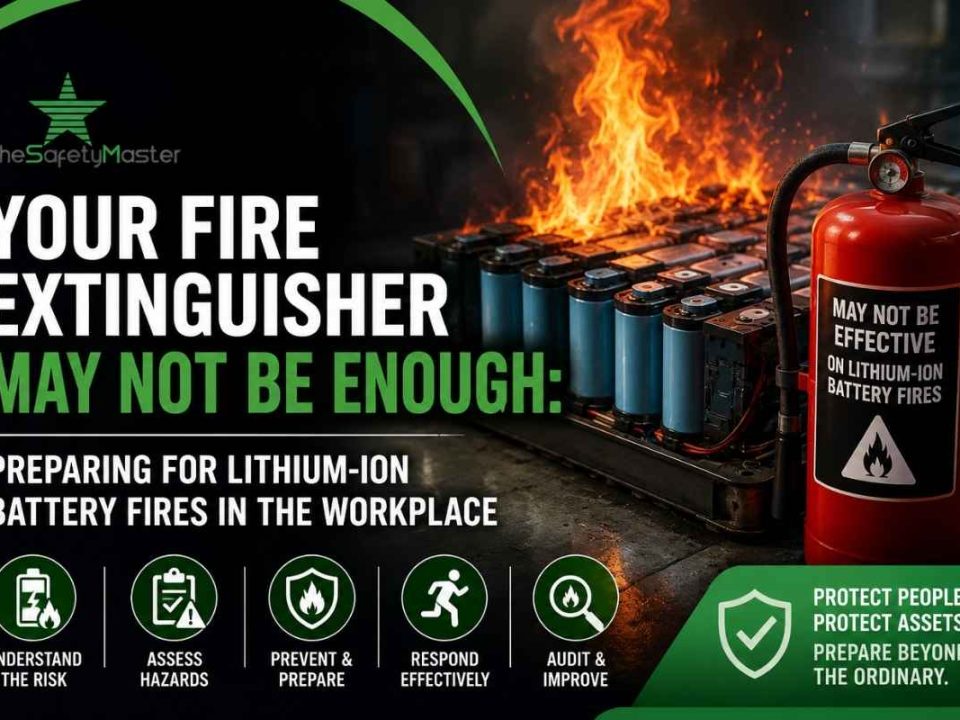
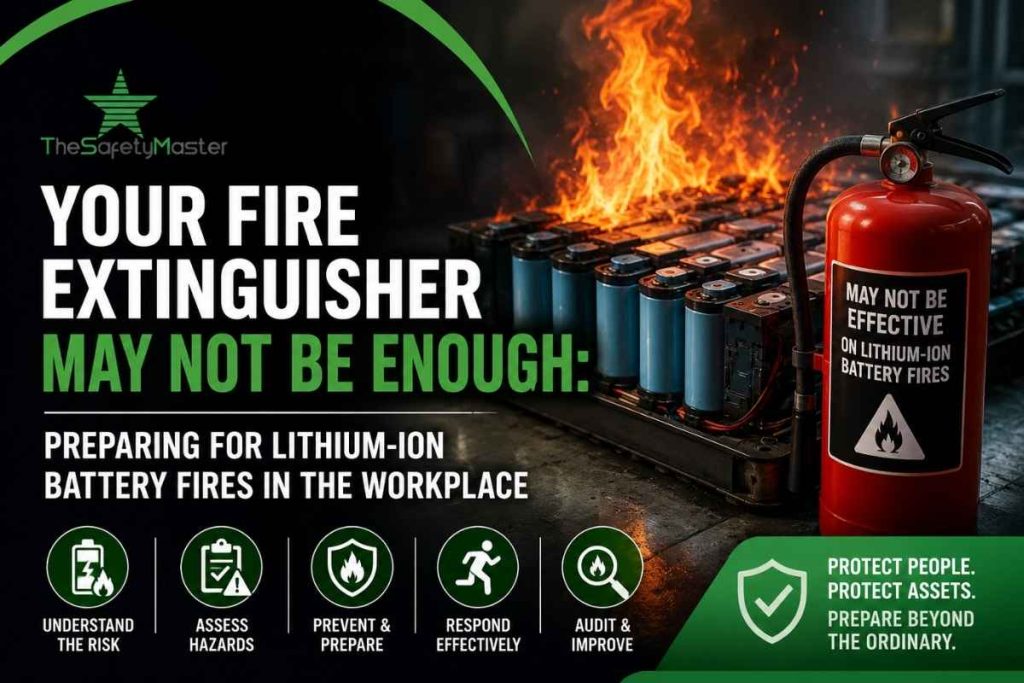
One of the major concerns is the use of lithium-ion batteries. Battery damage, electrical faults, overheating, manufacturing defects, or improper charging can contribute to thermal runaway and fire. NFPA identifies electrical, mechanical, thermal, and other forms of battery abuse as possible failure factors.
For EV manufacturers, fire prevention should therefore be part of the complete manufacturing process rather than something considered only after an incident. The Safety Master supports organizations in identifying hazards, improving fire protection measures, and strengthening workplace safety practices.
Understanding Fire Risk in Electric Vehicle Manufacturing
EV manufacturing facilities can contain several high-energy and combustible materials. Battery production and assembly areas require particular attention because lithium-ion battery failure can result in thermal runaway.
Thermal runaway is a chain reaction in which a battery cell generates excessive heat and the temperature continues to rise. Depending on the failure conditions, this can result in fire, venting of gases, smoke, and propagation to nearby cells.
NFPA documentation notes that battery thermal runaway can be associated with electrical failure, mechanical damage, or excessive heat. Battery vent gases can also contain flammable and hazardous components.
Therefore, manufacturers should consider both fire prevention and fire propagation control when designing EV production facilities.
Major Fire Hazards in EV Manufacturing Plants
Lithium-Ion Battery Thermal Runaway
Lithium-ion batteries contain significant stored electrical and chemical energy. A damaged, defective, overheated, or improperly handled cell can develop into a thermal runaway event.
Important risk factors include:
- Internal short circuits
- Overcharging
- Excessive temperature
- Physical impact or crushing
- Manufacturing defects
- Poor battery assembly
- Damaged cells
- Incorrect storage conditions
- Electrical faults
Battery failure can also result in cascading thermal runaway from one cell to another.
Electrical Fire Hazards
EV manufacturing plants use extensive electrical infrastructure, including high-voltage systems, battery testing equipment, charging systems, motors, control panels, and automated machinery.
Potential electrical hazards include:
- Short circuits
- Overloaded circuits
- Damaged cables
- Loose connections
- Poor grounding
- Faulty electrical equipment
- Improper installation
- Insulation failure
Regular electrical inspections, preventive maintenance, and thermographic inspections can help identify developing problems before they become serious incidents.
Flammable and Combustible Materials
EV manufacturing may involve adhesives, solvents, lubricants, sealants, plastics, packaging materials, and other combustible products.
Poor storage or uncontrolled use of these materials can increase the fire load of a facility.
Manufacturers should maintain suitable storage areas, control ignition sources, provide adequate ventilation, and keep incompatible materials appropriately separated.
Battery Charging and Testing Areas
Battery charging and testing operations require special attention because charging and discharging can increase the risk of thermal events.
Charging areas should be designed with suitable electrical protection, monitoring, ventilation, emergency procedures, and separation from other operations based on the specific hazards identified through risk assessment.
Fire Risk Assessment for EV Manufacturing Facilities
A detailed Fire Risk Assessment can help identify hazards before they result in an incident.
The assessment should consider the complete manufacturing process, including:
- Raw material storage
- Battery cell handling
- Battery module and pack assembly
- Battery charging and testing
- Electrical equipment
- Chemical and combustible material storage
- Production machinery
- Warehouse operations
- Charging infrastructure
- Emergency response arrangements
The assessment should also consider the potential consequences of fire, smoke, toxic gases, battery propagation, evacuation difficulties, and damage to critical equipment.
Effective Fire Prevention Strategies
Improve Battery Handling and Storage
Battery cells and packs should be handled according to the manufacturer’s safety requirements and the facility’s risk assessment.
Good practices include:
- Inspecting batteries before use
- Separating damaged or suspect batteries
- Preventing physical impact
- Controlling storage conditions
- Maintaining suitable housekeeping
- Restricting unauthorized handling
- Establishing procedures for abnormal battery conditions
Strengthen Electrical Safety
Electrical safety should be integrated into the plant’s fire prevention program.
Manufacturers should consider:
- Periodic electrical inspections
- Preventive maintenance
- Proper earthing and bonding
- Protection against overload and short circuits
- Inspection of cables and connections
- Thermography where appropriate
- Testing of protective devices
- Controlled access to high-voltage areas
Indian EV safety requirements have also been strengthened around battery and related systems, including protection against overcharge/discharge, over-current, short circuits, and over-temperature conditions.
Install Early Fire Detection Systems
Early detection can provide valuable time for emergency response.
Depending on the risk and facility design, manufacturers may consider:
- Smoke detection
- Heat detection
- Flame detection
- Gas detection
- Thermal imaging
- Battery monitoring systems
- Fire alarm systems
Detection systems should be selected according to the specific hazards and environmental conditions of each area.
Provide Suitable Fire Protection Systems
Fire protection should be designed according to the identified hazards, building characteristics, battery quantities, process conditions, and applicable requirements.
The overall system may include:
- Automatic fire detection
- Fire alarm systems
- Automatic suppression systems
- Hydrant systems
- Sprinkler systems where suitable
- Portable fire extinguishers
- Emergency lighting
- Fire water arrangements
- Clearly marked emergency exits
Battery fires can present unusual suppression and re-ignition challenges. NFPA notes that water can be effective for cooling and controlling EV battery fires, while the quantity and application requirements may differ substantially from conventional vehicle fires.
Importance of Thermal Monitoring
Thermal monitoring can be useful for identifying abnormal temperature conditions in battery-related operations and electrical equipment.
Thermal imaging may help identify:
- Hot electrical connections
- Overloaded components
- Abnormal battery temperatures
- Heating in electrical panels
- Equipment overheating
- Uneven thermal conditions
Where thermal monitoring is used, alarm limits and response procedures should be established in advance.
Emergency Response Planning for Battery Fires
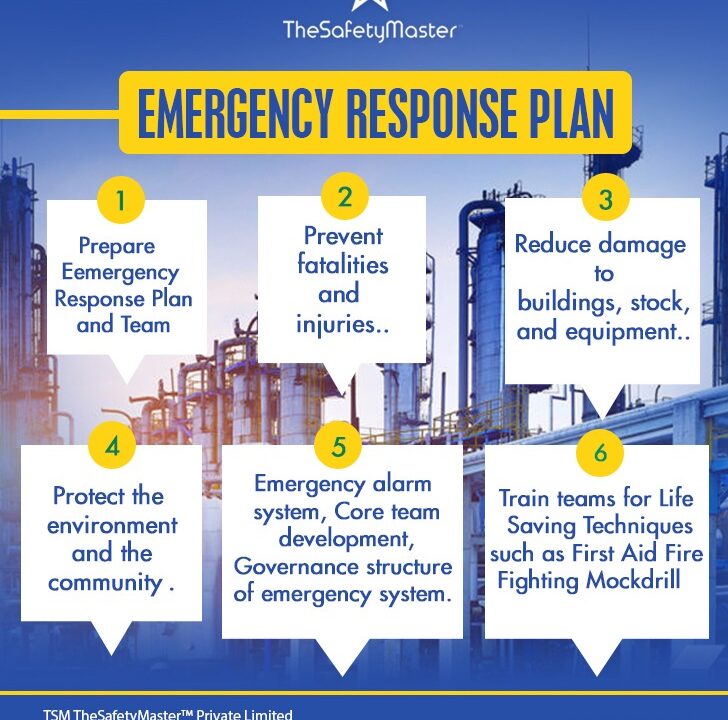
An EV manufacturing facility should have a documented emergency response plan for battery-related incidents.
The plan should define:
- Alarm activation procedures
- Emergency shutdown procedures
- Evacuation routes
- Emergency assembly areas
- Fire department communication
- Battery isolation procedures
- Roles and responsibilities
- First responder actions
- Smoke and gas hazards
- Re-entry requirements
Lithium-ion battery incidents can continue to present thermal hazards even after visible flames have reduced. Appropriate monitoring and incident-control procedures are therefore important.
Role of Employee Training
Technology alone cannot provide complete fire protection. Employees should understand the hazards associated with batteries, electrical systems, chemicals, and manufacturing equipment.
Training can cover:
- Battery handling safety
- Electrical safety
- Fire prevention
- Fire extinguisher awareness
- Emergency evacuation
- Incident reporting
- Chemical handling
- PPE requirements
- Emergency response
- Damaged battery identification
Regular drills can help employees understand how to respond quickly during an emergency.
Regular Fire Safety Inspections and Audits
A one-time assessment is not enough for a continuously changing manufacturing facility.
Regular inspections and Fire Safety Audits can help identify:
- Blocked emergency exits
- Defective fire equipment
- Poor housekeeping
- Electrical hazards
- Improper chemical storage
- Damaged cables
- Missing safety signs
- Inadequate emergency access
- Fire protection system deficiencies
- Gaps in emergency procedures
The findings should be documented, assigned to responsible persons, and tracked until corrective actions are completed.
Fire Safety Checklist for EV Manufacturing
An EV manufacturing fire safety checklist can include:
- Battery storage conditions
- Battery charging areas
- Thermal monitoring
- Electrical panels
- High-voltage equipment
- Cable condition
- Earthing and bonding
- Fire detection systems
- Fire alarm systems
- Fire extinguishers
- Hydrant and sprinkler systems
- Emergency exits
- Chemical storage
- Housekeeping
- Emergency lighting
- Evacuation plans
- Employee training
- Fire drills
- Emergency response procedures
- Periodic safety audits
Building a Strong Fire Safety Culture
Fire safety should become part of everyday manufacturing operations.
Management should encourage employees to report unsafe conditions, investigate near misses, maintain equipment properly, and follow established operating procedures.
A strong safety culture also means reviewing incidents and corrective actions instead of treating safety as a one-time compliance activity.
For growing EV manufacturing facilities, combining Fire Risk Assessment, electrical safety, battery safety, employee training, fire protection engineering, emergency planning, and periodic audits can provide a more systematic approach to fire-risk management.
How The Safety Master Can Support EV Manufacturing Safety
The Safety Master can help organizations evaluate workplace and process-related hazards through structured safety assessments, fire audits, risk assessments, electrical safety services, and other safety management solutions.
For EV manufacturing facilities, a safety program can be developed around the specific risks associated with battery handling, electrical systems, combustible materials, charging operations, production processes, storage areas, and emergency response.
A facility-specific assessment is important because fire protection requirements can vary according to the battery technology, process design, quantity of stored energy, building layout, materials, and operating conditions.
Conclusion
The growth of electric vehicle manufacturing in India brings new opportunities as well as new safety challenges. Lithium-ion batteries, electrical systems, charging operations, combustible materials, and high-energy processes require careful hazard identification and control.
Manufacturers can reduce fire risk by combining proper battery handling, electrical safety, early detection, suitable fire protection, thermal monitoring, employee training, emergency planning, and regular inspections.
A proactive approach helps manufacturers protect employees, equipment, production continuity, and facilities while supporting the continued development of India’s EV manufacturing sector. The Safety Master can assist organizations in developing practical safety and risk-management measures suited to their specific industrial environment.
FAQs
1. Why is fire safety important in EV manufacturing?
Fire safety is important because EV manufacturing involves lithium-ion batteries, electrical equipment, charging operations, combustible materials, and other processes that can create fire hazards.
2. What is the main battery-related fire hazard in EV manufacturing?
One major hazard is thermal runaway, where excessive heat can trigger a chain reaction inside a battery cell or pack and potentially lead to fire and propagation.
3. How can EV manufacturing companies reduce fire risks?
Companies can reduce risks through battery safety procedures, electrical inspections, proper storage, early detection, suitable fire protection systems, employee training, emergency planning, and regular fire safety audits.
4. What causes thermal runaway in lithium-ion batteries?
Thermal runaway can be associated with electrical failure, mechanical damage, excessive heat, overcharging, internal defects, or other forms of battery abuse.
5. Is a Fire Risk Assessment necessary for an EV manufacturing plant?
A Fire Risk Assessment can help identify battery, electrical, chemical, storage, process, and emergency-response hazards and determine appropriate risk-control measures.
6. What should an EV manufacturing fire safety checklist cover?
It should cover battery storage and handling, charging areas, electrical systems, fire detection, fire protection equipment, emergency exits, chemicals, housekeeping, training, fire drills, and emergency response.
7. Why are regular fire safety audits important?
Regular audits can identify new hazards, equipment deficiencies, housekeeping problems, changes in processes, and gaps in emergency preparedness before they contribute to an incident.
8. What safety standards apply to EV batteries in India?
India has established and updated requirements for EV batteries and related systems. Government information references requirements under standards such as AIS-156 and AIS-038, while BIS has also published lithium-ion battery safety standards.
9. Can thermal imaging help in EV manufacturing safety?
Yes. Thermal imaging can help identify abnormal heat conditions in suitable electrical and battery-related applications. It should be used as part of a broader inspection and monitoring program.
10. How can The Safety Master help EV manufacturing companies?
The Safety Master can support organizations with fire risk assessment, fire safety audits, electrical safety assessments, process safety, training, and other workplace safety services designed around site-specific hazards.