Your Fire Extinguisher May Not Be Enough: Preparing for Lithium-Ion Battery Fires in the Workplace

EHS Audit Checklist: A Complete Practical Guide to Workplace Safety Compliance (Free Template)
June 11, 2026
Why Every High-Risk Industry in India Needs a Behavior-Based Safety Consultant in 2026
June 19, 2026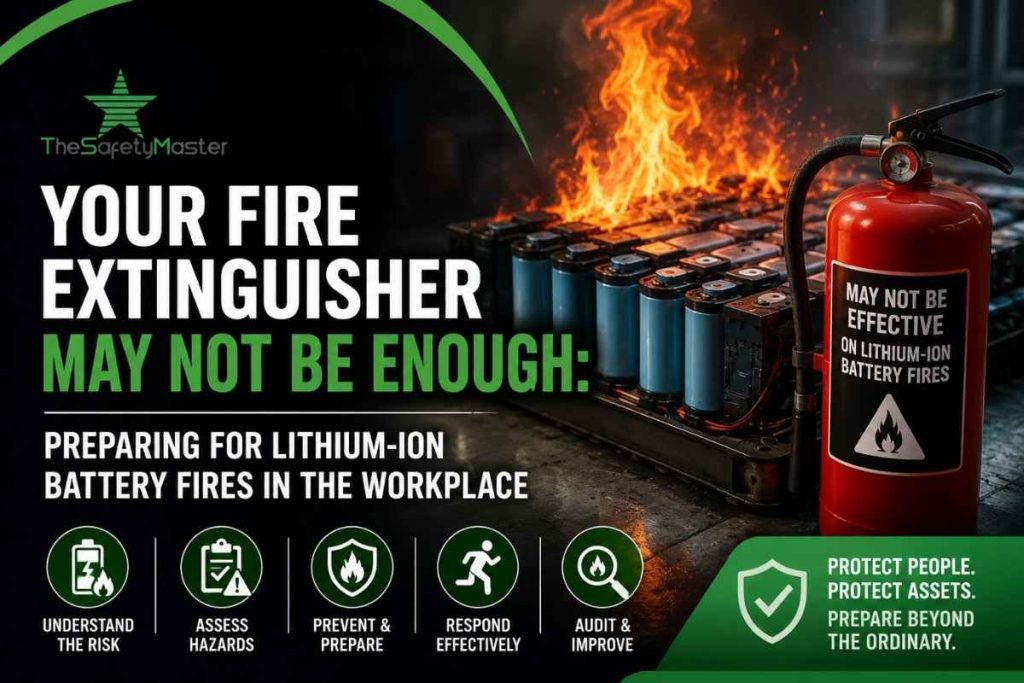
Introduction
Lithium-ion batteries have become an essential part of modern life. They power smartphones, laptops, electric vehicles (EVs), forklifts, power tools, energy storage systems, and many other devices used in workplaces today. While these batteries offer efficiency and convenience, they also introduce a growing fire risk that many organizations are not fully prepared to handle.
Traditional fire protection systems and standard fire extinguishers may not always be effective against lithium-ion battery fires. As industries increasingly adopt battery-powered equipment, understanding these unique fire hazards has become a critical part of workplace safety management.
Organizations must take proactive steps to identify, assess, and control battery-related risks before a serious incident occurs.
Understanding Lithium-Ion Battery Fires
Lithium-ion batteries store large amounts of energy in a compact space. When damaged, overcharged, improperly stored, exposed to extreme temperatures, or manufactured with defects, these batteries can enter a dangerous condition known as thermal runaway.
Thermal runaway occurs when a battery cell generates excessive heat that triggers a chain reaction within the battery pack. This process can result in:
- Rapid temperature increase
- Release of toxic and flammable gases
- Fire and explosion
- Re-ignition even after the fire appears extinguished
Unlike conventional fires, lithium-ion battery fires can continue to generate heat internally, making them difficult to control and extinguish.
Why Traditional Fire Extinguishers May Not Be Enough
Many workplaces rely on standard fire extinguishers as their primary fire protection measure. While these extinguishers remain essential, they may not fully address the challenges posed by lithium-ion battery incidents.
A battery fire can continue to produce heat deep within its cells even after visible flames are extinguished. This hidden heat can cause the battery to reignite hours or even days later.
Some common challenges include:
High Heat Generation
Lithium-ion battery fires can reach extremely high temperatures that exceed those found in many conventional workplace fires.
Toxic Gas Release
Burning batteries release hazardous gases such as hydrogen fluoride and other toxic substances that can pose serious health risks to employees and emergency responders.
Risk of Re-Ignition
Even after a fire appears under control, damaged battery cells may continue reacting internally, leading to unexpected flare-ups.
Complex Fire Behavior
Battery packs often contain multiple interconnected cells. A fire in one cell can quickly spread to adjacent cells, increasing the severity of the incident.
Because of these factors, workplaces must develop specialized emergency response plans for lithium-ion battery hazards.
Industries Facing the Highest Risk
Several industries are experiencing increased exposure to lithium-ion battery fire risks.
Manufacturing Facilities
Battery-powered equipment, automated guided vehicles, and industrial tools are becoming common in manufacturing operations.
Warehouses and Logistics Centers
Electric forklifts and battery charging stations create potential ignition sources if not managed properly.
Commercial Buildings
Employees routinely use laptops, mobile devices, power banks, and backup power systems containing lithium-ion batteries.
Renewable Energy Facilities
Energy storage systems used alongside solar and wind power installations contain large battery banks that require specialized fire protection measures.
Electric Vehicle Operations
Organizations operating EV fleets must address battery charging, storage, and emergency response procedures.
Conducting a Proper Risk Assessment
Effective prevention starts with a detailed hazard identification and risk assessment process.
A structured approach such as HIRA in Safety Audit helps organizations identify battery-related hazards, evaluate associated risks, and implement suitable control measures.
Key areas to evaluate include:
- Battery storage locations
- Charging stations
- Ventilation systems
- Emergency access routes
- Fire detection systems
- Employee training requirements
- Waste battery disposal procedures
Regular assessments ensure that changing workplace conditions do not introduce new hazards.
Best Practices for Preventing Lithium-Ion Battery Fires
Store Batteries Correctly
Batteries should be stored in cool, dry, and well-ventilated areas away from combustible materials.
Avoid exposing batteries to:
- Direct sunlight
- Excessive heat
- Moisture
- Physical damage
Use Approved Charging Equipment
Always use chargers recommended by the manufacturer.
Improper charging practices are one of the leading causes of battery failures and thermal runaway incidents.
Inspect Batteries Regularly
Damaged batteries should be removed from service immediately.
Warning signs include:
- Swelling
- Leakage
- Cracks
- Unusual odors
- Excessive heat generation
Implement Safe Disposal Procedures
Discarded batteries can still pose significant fire hazards.
Organizations should establish dedicated collection and disposal processes that comply with local regulations.
Train Employees
Employees should understand:
- Battery fire warning signs
- Safe charging practices
- Emergency response procedures
- Evacuation requirements
Well-trained personnel can help prevent minor issues from escalating into major incidents.
Emergency Response Planning for Battery Fires
Every workplace should have a documented emergency response plan specifically addressing lithium-ion battery fires.
The plan should include:
Early Detection Measures
Advanced fire detection systems can identify abnormal temperature increases before a fire develops.
Emergency Isolation Procedures
Employees should know how to safely disconnect charging equipment and isolate affected batteries when appropriate.
Evacuation Protocols
Clear evacuation routes and assembly points must be established and communicated to all personnel.
Coordination with Fire Services
Local emergency responders should be informed about battery storage areas and potential hazards within the facility.
Post-Incident Monitoring
Since battery fires can reignite, damaged batteries should be monitored for an extended period after an incident.
The Role of Fire Audits in Battery Safety
Many organizations focus on traditional fire hazards while overlooking emerging battery-related risks.
A professional Fire Audit Service in India can help identify vulnerabilities within existing fire protection systems and determine whether current controls are adequate for lithium-ion battery hazards.
Fire audits typically evaluate:
- Fire detection systems
- Suppression equipment
- Storage practices
- Emergency preparedness
- Compliance with applicable standards
- Employee awareness programs
Regular audits help organizations stay ahead of evolving fire risks.
Building Competency Through Specialized Safety Training
As battery technologies continue to evolve, organizations need professionals who understand complex hazard analysis techniques.
Advanced process safety programs such as the Best HAZOP Training Services help safety professionals develop the skills required to identify and mitigate potential risks in high-hazard operations, including those involving battery storage and energy systems.
Continuous learning enables organizations to improve their safety culture and strengthen risk management capabilities.
Conclusion
Lithium-ion batteries are transforming workplaces across industries, but they also introduce fire risks that cannot be managed through traditional approaches alone. Standard fire extinguishers remain an important part of workplace fire protection, but they may not be sufficient to address the unique challenges associated with battery fires.
Organizations must adopt a comprehensive strategy that includes risk assessments, proper storage practices, employee training, emergency response planning, and regular fire audits. By proactively addressing lithium-ion battery hazards, businesses can protect their people, assets, and operations while ensuring compliance with modern safety requirements.
As battery-powered technologies continue to expand, preparing today can prevent devastating incidents tomorrow.