EHS Audit Checklist: A Complete Practical Guide to Workplace Safety Compliance (Free Template)

Fire Risks in EV Charging Stations: What Every Facility Must Know
June 8, 2026
Your Fire Extinguisher May Not Be Enough: Preparing for Lithium-Ion Battery Fires in the Workplace
June 17, 2026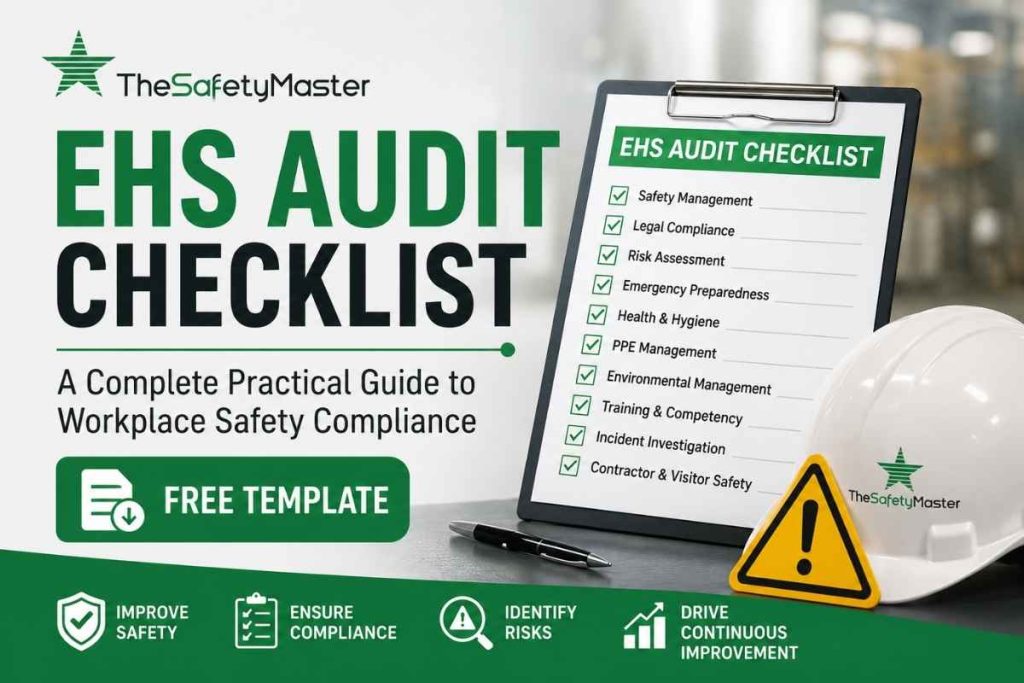
Workplace safety is no longer just a regulatory requirement. It has become a critical business priority that directly impacts employee well-being, operational efficiency, brand reputation, and legal compliance. Organizations across industries are increasingly focusing on Environmental, Health, and Safety (EHS) management systems to identify risks, prevent incidents, and maintain a safe working environment.
One of the most effective ways to evaluate workplace safety performance is through regular EHS audits. However, conducting an audit without a structured checklist can result in missed hazards, incomplete assessments, and compliance gaps.
This guide explains what an EHS audit checklist is, why it matters, what it should include, and how organizations can use it to strengthen workplace safety programs. A free EHS audit checklist template is also included to help safety professionals get started.
What Is an EHS Audit?
An Environmental, Health, and Safety (EHS) audit is a systematic evaluation of workplace practices, policies, procedures, and conditions to determine whether an organization complies with applicable regulations and internal safety standards.
The purpose of an EHS audit is not merely to identify non-compliance. It is designed to uncover risks, improve safety performance, prevent accidents, and promote continuous improvement across operations.
EHS audits are commonly conducted in manufacturing facilities, construction sites, warehouses, chemical plants, power generation facilities, healthcare institutions, and corporate workplaces.
Why Is an EHS Audit Checklist Important?
A well-designed checklist ensures consistency and thoroughness during audits. It provides auditors with a structured approach to evaluate every critical aspect of workplace safety and environmental management.
Benefits of using an EHS audit checklist include:
- Improved regulatory compliance
- Better hazard identification
- Reduced workplace incidents and injuries
- Enhanced employee safety awareness
- Consistent audit processes across locations
- Easier tracking of corrective actions
- Stronger safety culture
Organizations that conduct regular audits using standardized checklists are often better prepared for regulatory inspections and certification assessments.
Key Components of an Effective EHS Audit Checklist
An EHS audit checklist should cover all major areas that influence workplace health, safety, and environmental performance.
1. Safety Management System
Review whether the organization has established and implemented a formal safety management system.
Checklist items may include:
- Availability of documented safety policies
- Defined safety objectives and targets
- Management commitment to safety
- Safety responsibilities assigned to employees
- Periodic management reviews
- Incident reporting procedures
2. Legal and Regulatory Compliance
Verify compliance with relevant occupational health, safety, and environmental regulations.
Audit areas include:
- Statutory licenses and permits
- Compliance records
- Inspection reports
- Regulatory documentation
- Environmental clearances
- Safety certifications
3. Hazard Identification and Risk Assessment
Every workplace should have a process to identify hazards and evaluate risks.
Check for:
- Risk assessment records
- Hazard registers
- Control measures implementation
- Periodic risk reviews
- High-risk activity assessments
Many organizations also conduct specialized assessments and employee competency programs such as HAZOP Training in India to improve hazard identification capabilities and process safety management.
4. Emergency Preparedness and Response
Emergency readiness is a crucial part of any EHS audit.
Evaluate:
- Emergency response plans
- Evacuation procedures
- Assembly points
- Firefighting equipment
- Mock drill records
- Emergency contact lists
Organizations operating in high-risk environments should also consider periodic Fire Safety Audit service in India to identify fire hazards, evaluate protection systems, and improve emergency preparedness.
5. Workplace Health and Hygiene
Assess employee health protection measures.
Review:
- Occupational health monitoring
- Medical examination records
- Drinking water quality
- Sanitation facilities
- Ventilation systems
- Noise exposure controls
- Indoor air quality management
6. Personal Protective Equipment (PPE)
Ensure employees have access to appropriate protective equipment.
Checklist points:
- PPE availability
- PPE condition and maintenance
- Employee training on PPE usage
- Compliance monitoring
- Replacement procedures
7. Environmental Management
Environmental performance is a core component of EHS auditing.
Assess:
- Waste management practices
- Hazardous waste disposal
- Air emission controls
- Water management systems
- Spill prevention measures
- Environmental monitoring records
8. Training and Competency
Employees must possess the knowledge and skills necessary to perform their work safely.
Audit items include:
- Safety induction records
- Job-specific training
- Refresher training schedules
- Emergency response training
- Contractor safety training
- Competency assessments
9. Incident Investigation and Corrective Actions
A mature safety culture focuses on learning from incidents.
Verify:
- Incident reporting systems
- Investigation procedures
- Root cause analysis reports
- Corrective action tracking
- Near-miss reporting mechanisms
- Lessons learned communication
10. Contractor and Visitor Safety
Contractors often face significant workplace risks.
Review:
- Contractor induction processes
- Permit-to-work systems
- Contractor safety evaluations
- Visitor management procedures
- Access control measures
Free EHS Audit Checklist Template
Below is a simple checklist structure that can be adapted to your workplace:
| Audit Area | Yes | No | Observation |
|---|---|---|---|
| Safety policy available | □ | □ | |
| Risk assessments completed | □ | □ | |
| Emergency procedures documented | □ | □ | |
| Fire extinguishers inspected | □ | □ | |
| PPE available and used | □ | □ | |
| Employee training completed | □ | □ | |
| Incident reporting system active | □ | □ | |
| Waste management procedures followed | □ | □ | |
| Emergency drills conducted | □ | □ | |
| Corrective actions closed out | □ | □ |
This template can be expanded based on industry-specific risks and regulatory requirements.
Common Mistakes During EHS Audits
Many organizations conduct audits but fail to achieve meaningful improvements because of avoidable mistakes.
Common issues include:
- Treating audits as a compliance exercise only
- Using outdated checklists
- Ignoring employee feedback
- Failing to verify corrective actions
- Conducting audits infrequently
- Focusing only on documentation
- Overlooking contractor activities
Effective audits should evaluate both documented systems and actual workplace practices.
Best Practices for Successful EHS Audits
To maximize audit effectiveness:
- Develop a customized checklist for your industry
- Use qualified auditors
- Involve employees during inspections
- Focus on root causes rather than symptoms
- Prioritize high-risk areas
- Track corrective actions until closure
- Analyze audit trends over time
- Conduct periodic follow-up assessments
When audits become part of an organization’s continuous improvement process, they deliver long-term safety and operational benefits.
Conclusion
An EHS audit checklist is one of the most valuable tools for maintaining workplace safety, ensuring compliance, and driving continuous improvement. It helps organizations identify hazards before they cause incidents, strengthen safety controls, and create a safer working environment for employees and contractors.
Whether you operate a manufacturing facility, construction site, warehouse, office, or process plant, implementing regular EHS audits with a structured checklist can significantly improve your overall safety performance. By making audits a proactive practice rather than a reactive response, organizations can reduce risks, enhance compliance, and build a strong safety culture.
Frequently Asked Questions
What is the full form of an EHS audit?
EHS stands for Environmental, Health, and Safety. An EHS audit is a systematic assessment of workplace practices, procedures, and compliance requirements related to environmental protection, employee health, and occupational safety.
What should an EHS audit checklist include?
A comprehensive EHS audit checklist should cover safety management systems, legal compliance, hazard identification, emergency preparedness, workplace health, PPE management, environmental controls, employee training, incident investigation, and contractor safety management.
Is an HSE audit checklist different from an EHS audit checklist?
In most organizations, HSE (Health, Safety, and Environment) and EHS (Environmental, Health, and Safety) audits serve the same purpose. The terminology may vary by industry or region, but both focus on evaluating workplace safety, employee health, and environmental performance.
How often should an EHS audit be conducted?
The frequency depends on industry risks, legal requirements, and organizational policies. High-risk industries may conduct audits quarterly, while many organizations perform comprehensive EHS audits annually with periodic internal inspections throughout the year.
Who should carry out an EHS audit?
EHS audits should be conducted by qualified safety professionals, trained internal auditors, external consultants, or third-party auditing experts who possess knowledge of applicable regulations, industry standards, and workplace risk management practices.