Hazardous Area Classification Methodology Explained

HAZOP Training Benefits: Strengthening Process Safety in High-Risk Industries
July 24, 2026
Why Digitech AI Based Safety Management Software Is Transforming Workplace Safety in 2026
July 29, 2026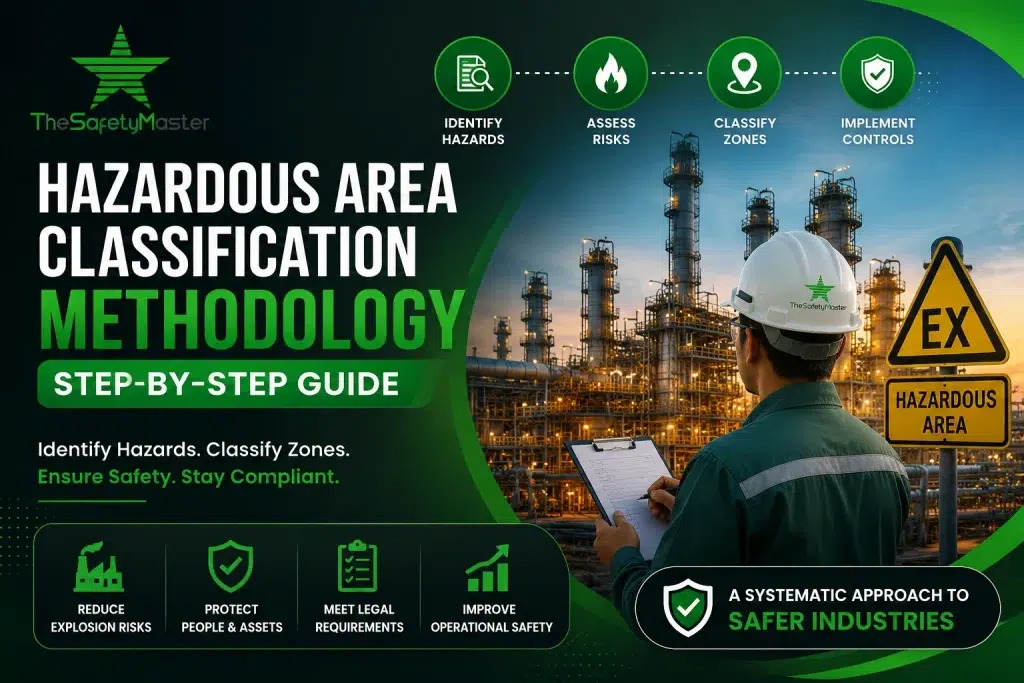
Industrial facilities that handle flammable gases, vapors, combustible dust, or hazardous chemicals must identify and control areas where an explosive atmosphere may occur. A proper Hazardous Area Classification (HAC) study helps organizations recognize these risks, select suitable equipment, and implement effective safety measures to prevent fires and explosions. It is also a key requirement for meeting national and international safety standards.
While understanding the different classes and zones of hazardous area classification is essential, industries also need a structured methodology to determine where hazardous zones exist and how extensive they are. This guide explains the complete Hazardous Area Classification methodology step by step.
What is Hazardous Area Classification Methodology?
Hazardous Area Classification methodology is a systematic process used to identify locations where flammable gases, vapors, mists, or combustible dusts may create an explosive atmosphere. The study evaluates the likelihood and duration of hazardous conditions and classifies areas into different zones.
The objective is to:
- Prevent ignition sources from causing explosions
- Select suitable electrical and mechanical equipment
- Protect employees and assets
- Ensure regulatory compliance
- Improve overall process safety
A properly executed HAC study forms an important part of any organization’s risk management strategy.
Why is Hazardous Area Classification Important?
Incorrect classification can lead to serious accidents, equipment failures, production losses, and legal consequences. Industries such as oil and gas, chemical manufacturing, pharmaceutical plants, fuel terminals, LNG facilities, LPG bottling plants, paint manufacturing units, and solvent storage facilities rely heavily on accurate hazardous area classification.
Proper classification helps organizations:
- Reduce explosion risks
- Improve worker safety
- Meet statutory compliance
- Reduce insurance liabilities
- Support safe plant design
- Enhance emergency preparedness
For facilities handling flammable substances, following recognized hazardous area classification standards is essential for maintaining safe operations.
Step 1: Collect Process Information
The first stage involves gathering all necessary plant information before beginning the study.
Typical documents include:
- Process Flow Diagrams (PFD)
- Piping and Instrumentation Diagrams (P&ID)
- Equipment layout drawings
- Plot plans
- Material Safety Data Sheets (SDS)
- Chemical inventory
- Operating pressures
- Operating temperatures
- Ventilation details
Understanding the properties of every hazardous material is critical before identifying potential release points.
Step 2: Identify Hazardous Materials
The next step is identifying materials capable of forming explosive atmospheres.
These may include:
- LPG
- LNG
- Hydrogen
- Methane
- Acetylene
- Petrol
- Diesel vapors
- Ethanol
- Solvents
- Ammonia
- Industrial gases
Properties evaluated include:
- Flash point
- Auto ignition temperature
- Lower Explosive Limit (LEL)
- Upper Explosive Limit (UEL)
- Vapor density
- Gas group
- Temperature class
Each property directly affects the extent of hazardous zones.
Step 3: Identify Sources of Release
Every location where hazardous substances can escape into the atmosphere is known as a source of release.
Common examples include:
- Storage tanks
- Pumps
- Compressors
- Valves
- Flanges
- Sampling points
- Pipe joints
- Pressure relief valves
- Loading and unloading stations
Each release source is evaluated based on its frequency and operating conditions.
Step 4: Determine the Grade of Release
Once release sources are identified, they are categorized into different grades.
Continuous Release
Hazardous material is released continuously or for long periods.
Examples include:
- Open vents
- Tank breathing systems
Primary Release
Hazardous material is released during normal plant operation.
Examples include:
- Pump seals
- Sampling operations
Secondary Release
Hazardous material is released only under abnormal operating conditions.
Examples include:
- Leaking flanges
- Damaged gaskets
- Mechanical failures
Understanding the grade of release helps determine the final hazardous zone classification.
Step 5: Evaluate Ventilation
Ventilation plays an important role in limiting the formation of explosive atmospheres.
The assessment considers:
- Natural ventilation
- Mechanical ventilation
- Air change rate
- Airflow direction
- Obstructions
- Building layout
Better ventilation often reduces the extent of hazardous zones.
Step 6: Determine Hazardous Zones
Using the release characteristics and ventilation assessment, engineers assign hazardous zones.
Typical gas zones include:
- Zone 0
- Zone 1
- Zone 2
Understanding the classes and zones of hazardous area classification helps ensure that equipment is selected appropriately for each location.
Step 7: Select Suitable Equipment
After classification, only certified equipment suitable for the identified zone should be installed.
Equipment may include:
- Explosion-proof motors
- Flameproof lighting
- Intrinsically safe instruments
- Hazardous area junction boxes
- Cable glands
- Control panels
- Gas detectors
Improper equipment selection is one of the leading causes of ignition in hazardous areas.
Step 8: Prepare Hazardous Area Classification Drawings
The final study includes drawings that clearly identify hazardous zones across the facility.
Typical deliverables include:
- Zone layout drawings
- Equipment location drawings
- Plot plans
- Classification reports
- Design assumptions
- Calculation sheets
- Equipment recommendations
These documents become valuable references during plant expansion, maintenance, audits, and inspections.
Industry Applications
Hazardous Area Classification methodology is widely applied across multiple industries.
Oil and Gas Facilities
Refineries, offshore platforms, and storage terminals contain numerous flammable materials that require detailed zone classification.
LPG Bottling Plants
Facilities handling LPG require specialized studies because of continuous filling, storage, and transfer operations. Organizations operating these facilities should follow best practices outlined in Hazardous Area Classification for Gas Filling Plants in India.
Chemical Manufacturing Plants
Chemical industries deal with multiple hazardous substances, making proper classification essential for safe operations. Workers should also understand chemical exposure risks and implement appropriate control measures.
Hazardous Chemical Storage
Storage and transportation activities introduce additional risks that should be addressed through proper engineering controls and safe operating procedures. Organizations should also adopt best practices for hazardous chemical transportation safety to minimize the likelihood of accidental releases.
Integrating Hazard Identification with Hazardous Area Classification
Hazardous Area Classification should never be performed as a standalone activity. It works best when integrated with broader risk assessment techniques such as HIRA (Hazard Identification and Risk Assessment).
A HIRA study helps identify operational hazards, evaluate potential consequences, and prioritize risk reduction measures before incidents occur. Combining HIRA with Hazardous Area Classification provides a more comprehensive approach to process safety and regulatory compliance.
Importance of Training
Even the best Hazardous Area Classification study cannot prevent accidents if employees do not understand hazardous environments.
Proper training enables personnel to:
- Recognize hazardous locations
- Understand explosion risks
- Follow safe work practices
- Select appropriate equipment
- Respond effectively during emergencies
Organizations should invest in Hazardous Area Classification Training along with Hazardous Chemical Safety Training to build a strong safety culture.
Employees working with confined spaces or chemical storage should also understand the dangers posed by asphyxiants, which can deprive the body of oxygen without warning.
Additionally, organizations should conduct regular Hazardous Waste Management Audits to ensure that hazardous materials are handled, stored, and disposed of safely throughout their lifecycle.
Conclusion
Hazardous Area Classification methodology provides a structured framework for identifying explosion hazards and protecting industrial facilities. From collecting process data and identifying release sources to evaluating ventilation and selecting certified equipment, every step contributes to reducing the likelihood of catastrophic incidents.
When combined with comprehensive risk assessments, employee training, hazardous chemical management, and regular safety audits, Hazardous Area Classification becomes a powerful tool for preventing accidents and ensuring regulatory compliance. Organizations that invest in systematic Hazardous Area Classification studies not only safeguard their workforce but also improve operational reliability, asset protection, and long-term business sustainability.
Frequently Asked Questions
What is Hazardous Area Classification methodology?
Hazardous Area Classification methodology is a systematic process used to identify areas where explosive atmospheres may occur and classify them into appropriate hazardous zones for safe equipment selection and risk control.
What information is required before conducting a Hazardous Area Classification study?
Engineers typically review P&IDs, process flow diagrams, equipment layouts, chemical inventories, safety data sheets, operating conditions, and ventilation details before beginning the study.
Why is ventilation important in Hazardous Area Classification?
Proper ventilation reduces the concentration of flammable gases or vapors, which can decrease the size and severity of hazardous zones.
Which industries require Hazardous Area Classification?
Industries such as oil and gas, chemical manufacturing, pharmaceuticals, fuel storage terminals, LNG and LPG facilities, mining, paint manufacturing, and solvent handling commonly require Hazardous Area Classification studies.
How often should Hazardous Area Classification be reviewed?
The study should be reviewed whenever there are significant plant modifications, changes in operating conditions, new equipment installations, process changes, or periodically as part of the organization’s process safety management program.