HAZOP Training Benefits: Strengthening Process Safety in High-Risk Industries

Behavior-Based Safety Consultant: A Complete Guide to Building a Safer Workplace
July 23, 2026
Hazardous Area Classification Methodology Explained
July 25, 2026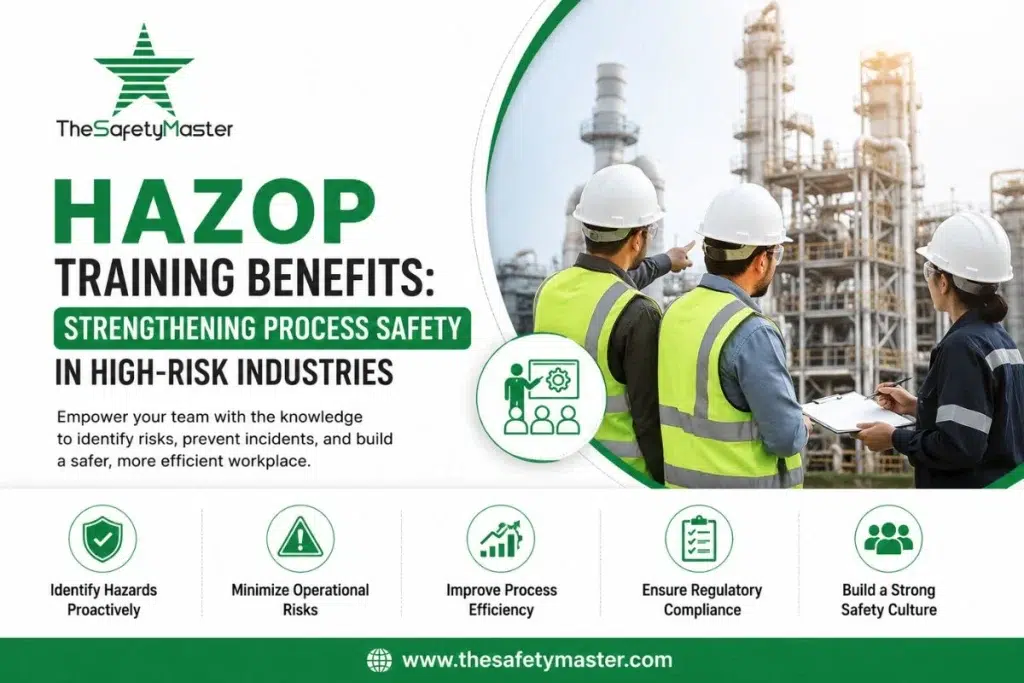
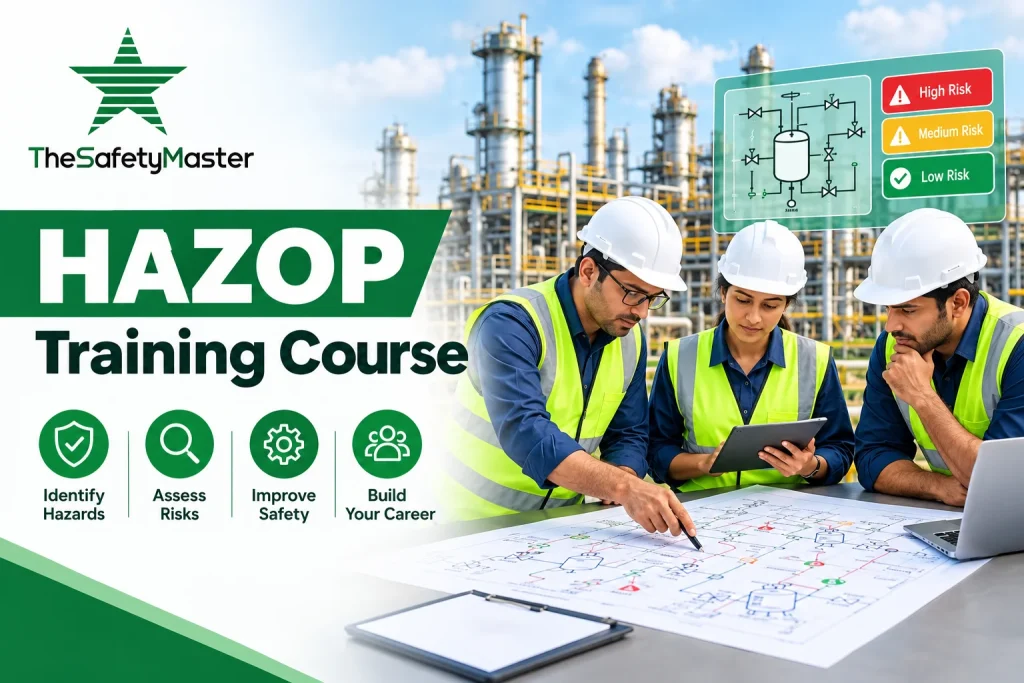
HAZOP Training is one of the most effective ways to improve process safety in industries where hazardous chemicals, high-pressure systems, and complex operations are involved. From oil and gas to pharmaceuticals, every high-risk industry must identify potential hazards before they become serious incidents. The Safety Master provides industry-focused HAZOP Training that helps engineers, operators, supervisors, and safety professionals understand how to conduct a HAZOP study, identify process deviations, and implement practical risk control measures. With the support of an experienced HAZOP Consultant, organizations can strengthen their safety culture, improve compliance, and reduce operational risks.
Why HAZOP Training Is Essential for High-Risk Industries
High-risk industries operate with processes that involve flammable materials, toxic chemicals, high temperatures, and high pressures. Even a small operational deviation can lead to equipment damage, environmental pollution, production loss, or catastrophic accidents.
A well-designed HAZOP Training program teaches professionals how to identify these risks before they lead to failures. Employees learn structured hazard identification techniques and develop the confidence to participate in safety reviews and process improvement initiatives.
Companies that invest in regular training create safer workplaces while reducing downtime and operational losses.
Understanding the Purpose of HAZOP
Hazard and Operability Study (HAZOP) is a structured and systematic risk assessment technique used to identify hazards and operational issues in industrial processes.
Rather than reacting to incidents after they occur, HAZOP focuses on prevention by examining every section of a process and identifying possible deviations from normal operating conditions.
The primary objectives include:
- Identifying process hazards
- Improving plant reliability
- Preventing equipment failures
- Protecting employees and assets
- Ensuring regulatory compliance
- Supporting continuous process improvement
Key Benefits of HAZOP Training
Builds Strong Process Safety Knowledge
One of the biggest advantages of HAZOP Training is that it provides employees with a strong understanding of process safety principles.
Participants learn:
- Process hazards
- Risk assessment techniques
- Safety terminology
- Process deviations
- Control measures
- Emergency preparedness
This knowledge helps reduce human error and improves decision-making during operations.
Improves Hazard Identification Skills
The success of every HAZOP study depends on accurately identifying hazards.
Training teaches participants how to:
- Analyze process flow diagrams
- Review P&IDs
- Apply guide words correctly
- Identify abnormal operating conditions
- Evaluate potential consequences
This structured approach improves the quality of safety reviews.
Supports Regulatory Compliance
Many industries must comply with national and international safety standards.
Proper HAZOP Training helps organizations meet requirements under:
OSHA Process Safety Management (PSM)
Companies handling hazardous chemicals must perform structured hazard analysis.
IEC and International Standards
Many global organizations require documented process hazard analysis during project design and operation.
Industry Best Practices
Training ensures employees understand internationally accepted safety methodologies.
Reduces Human Error
Human error remains one of the leading causes of industrial accidents.
Training improves:
- Operational awareness
- Communication
- Decision-making
- Risk recognition
- Safe operating practices
Employees become more confident in identifying unsafe conditions before they escalate.
Enhances Team Collaboration
A successful HAZOP study requires collaboration between multiple departments.
Training encourages communication among:
- Process engineers
- Operations teams
- Instrumentation engineers
- Mechanical engineers
- Maintenance personnel
- Safety professionals
This multidisciplinary approach leads to better hazard identification.
Industries That Benefit from HAZOP Training
Oil and Gas
Oil refineries, offshore platforms, and petrochemical plants manage highly hazardous processes.
Training helps prevent:
- Explosions
- Gas leaks
- Fire incidents
- Equipment failures
Chemical Manufacturing
Chemical plants involve complex reactions and hazardous materials.
HAZOP helps identify:
- Reaction hazards
- Pressure build-up
- Toxic releases
- Mixing errors
Pharmaceutical Industry
Pharmaceutical facilities require strict process control.
Training supports:
- Product quality
- Batch consistency
- Worker safety
- Regulatory compliance
Power Plants
Power generation facilities manage steam systems, boilers, and turbines.
Training reduces risks associated with:
- High-pressure systems
- Cooling systems
- Fuel handling
- Equipment reliability
Food and Beverage Industry
Modern food processing plants use automated systems and chemical cleaning processes.
HAZOP improves:
- Production safety
- Utility systems
- Process reliability
- Worker protection
Fertilizer and Petrochemical Plants
These facilities manage highly reactive chemicals and continuous processes.
Training minimizes:
- Process deviations
- Toxic exposure
- Fire hazards
- Equipment damage
What Participants Learn During HAZOP Training
Understanding Process Flow
Participants learn how industrial processes operate from start to finish.
Reading Engineering Documents
Training includes practical understanding of:
- Piping and Instrumentation Diagrams (P&IDs)
- Process Flow Diagrams (PFDs)
- Equipment layouts
Guide Words and Deviations
Participants understand how guide words are used during a HAZOP study.
Examples include:
- No
- More
- Less
- Reverse
- Part Of
- As Well As
These guide words help identify possible process deviations.
Risk Ranking
Training explains how to evaluate:
- Likelihood
- Severity
- Existing safeguards
- Risk priority
Recommendations
Participants learn how to recommend practical corrective actions that reduce risk while maintaining productivity.
Role of a HAZOP Consultant in Training Programs
An experienced HAZOP Consultant plays a critical role in delivering effective training.
Their responsibilities include:
Conducting Practical Sessions
Real industrial examples improve understanding.
Leading Workshops
Interactive discussions help participants apply concepts to actual plant operations.
Sharing Industry Experience
Consultants explain lessons learned from real incidents and previous safety studies.
Improving HAZOP Study Quality
Experienced trainers ensure teams follow structured methodologies correctly.
How HAZOP Training Improves Safety Culture
Organizations with trained employees develop stronger safety cultures.
Benefits include:
- Better reporting of hazards
- Increased employee participation
- Improved communication
- Greater accountability
- Continuous improvement mindset
When employees understand process risks, safety becomes part of everyday operations rather than a compliance requirement.
Best Practices for Successful HAZOP Training
Conduct Regular Refresher Programs
Safety knowledge should be updated regularly.
Use Real Plant Examples
Practical learning increases retention.
Include Cross-Functional Teams
Multiple departments bring valuable perspectives during discussions.
Combine Theory with Practical Exercises
Simulation-based learning improves understanding.
Document Learning Outcomes
Organizations should maintain records of participant competency and future improvement plans.
Why Choose The Safety Master for HAZOP Training
The Safety Master provides comprehensive HAZOP Training programs designed for industries handling hazardous processes. Our experienced HAZOP Consultant team delivers practical training using real industrial case studies, interactive workshops, and internationally accepted methodologies. We also assist organizations with complete HAZOP study services, Process Safety Management, risk assessments, and safety compliance to help build safer and more reliable industrial operations.
Conclusion
Investing in HAZOP Training is an investment in operational excellence, employee safety, and business continuity. Organizations that train their teams to conduct and participate in an effective HAZOP study are better equipped to identify hazards, reduce risks, and maintain regulatory compliance. With expert guidance from The Safety Master and experienced HAZOP Consultant professionals, businesses can strengthen their process safety systems, improve operational reliability, and create a safer working environment for everyone.
Frequently Asked Questions (FAQs)
1. What is HAZOP Training?
HAZOP Training is a structured program that teaches professionals how to identify process hazards, evaluate operational risks, and participate effectively in a HAZOP study.
2. Who should attend HAZOP Training?
Process engineers, production managers, safety officers, maintenance engineers, project engineers, instrumentation engineers, plant supervisors, and operations personnel can benefit from HAZOP Training.
3. Why is HAZOP important in high-risk industries?
HAZOP helps identify process deviations before they cause accidents, equipment failures, environmental damage, or production losses.
4. What does a HAZOP Consultant do?
A HAZOP Consultant facilitates HAZOP studies, guides multidisciplinary teams, recommends risk reduction measures, and provides training to improve process safety performance.
5. Which industries require HAZOP Training?
Industries such as oil and gas, chemical manufacturing, pharmaceuticals, petrochemicals, power generation, fertilizers, food processing, and specialty chemicals commonly require HAZOP Training.