Fire Safety Audit: Complete Guide for Industrial and Commercial Buildings

Fire Safety Audit Checklist: Essential Points for Effective Fire Safety Inspection
August 13, 2026Process Safety Management: A Complete Guide to PSM, 14 Elements, Training & Industrial Safety
August 20, 2026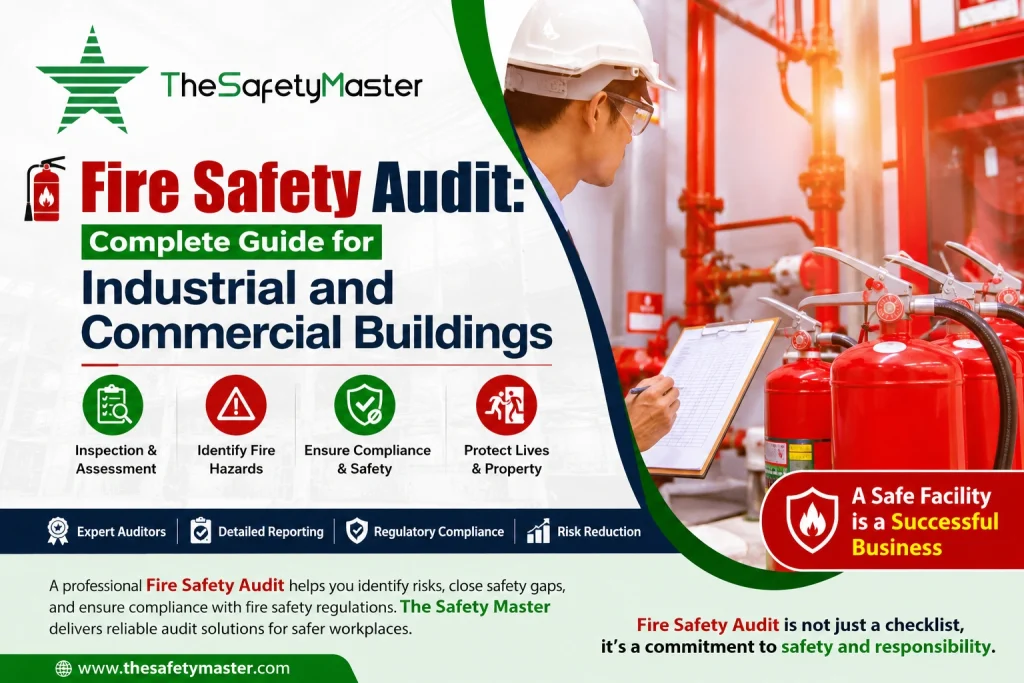
A Fire Safety Audit is a systematic inspection of a building, workplace, or industrial facility to identify fire hazards, evaluate fire protection systems, and check compliance with applicable fire safety requirements. For industrial and commercial buildings, regular fire safety audits help reduce fire risks, protect employees and visitors, safeguard property, and improve emergency preparedness. The Safety Master provides professional safety solutions to help organizations strengthen their overall fire safety management.
What Is a Fire Safety Audit?
A Fire Safety Audit is a detailed examination of a facility’s fire prevention and protection arrangements. It evaluates whether the building has suitable fire detection, firefighting, emergency evacuation, electrical safety, and fire prevention measures.
The audit generally examines:
- Fire hazards and ignition sources
- Fire detection and alarm systems
- Fire extinguishers and hydrant systems
- Sprinkler and suppression systems
- Emergency exits and evacuation routes
- Emergency lighting and signage
- Electrical installations
- Fire pumps and water storage
- Emergency response procedures
- Fire safety training and drills
- Housekeeping and storage practices
- Maintenance and inspection records
The main objective is not simply to identify existing problems but to recommend practical corrective actions that can reduce the probability and impact of a fire.
Why Is Fire Safety Auditing Important?
Industrial and commercial buildings may contain electrical equipment, combustible materials, chemicals, machinery, fuel, packaging materials, or other potential ignition and fuel sources.
A fire safety audit helps organizations identify weaknesses before they result in an emergency.
Major Benefits of a Fire Safety Audit
1. Identifies Fire Hazards
Auditors can identify unsafe storage, overloaded electrical systems, blocked exits, combustible waste, inadequate separation, and other potential hazards.
2. Improves Fire Protection
The audit evaluates whether fire extinguishers, alarms, hydrants, sprinklers, pumps, and other systems are available, accessible, and appropriately maintained.
3. Supports Regulatory Compliance
A systematic audit can help organizations identify gaps against applicable fire safety regulations, building requirements, standards, and internal safety procedures.
4. Protects Employees and Visitors
Proper emergency exits, evacuation procedures, alarms, and firefighting arrangements can help people respond quickly during a fire emergency.
5. Reduces Property and Business Losses
Effective fire prevention and protection measures can reduce the potential damage to buildings, equipment, inventory, and business operations.
Fire Safety Audit for Industrial Buildings
Industrial facilities often have more complex fire risks than ordinary commercial premises. Manufacturing processes may involve high temperatures, flammable substances, pressure systems, combustible dust, chemicals, fuel, and heavy electrical loads.
Key Areas to Inspect
Manufacturing and Production Areas
Check machinery, heating equipment, process hazards, combustible materials, electrical installations, ventilation, and ignition sources.
Chemical and Flammable Material Storage
Review storage arrangements, container conditions, segregation, ventilation, spill control, ignition-source control, and appropriate fire protection.
Electrical Systems
Inspect electrical panels, cables, switchgear, temporary connections, earthing, overloading risks, and maintenance records.
Warehouses
Evaluate stacking arrangements, aisle access, combustible storage, separation distances, housekeeping, smoking controls, and fire protection coverage.
Utility Areas
Boiler rooms, generator rooms, compressor rooms, fuel storage areas, and other utility zones should receive particular attention because they may contain significant ignition or fuel hazards.
Fire Safety Audit for Commercial Buildings
Commercial buildings such as offices, shopping centres, hotels, restaurants, warehouses, hospitals, and business complexes have different occupancy and fire risk profiles.
Important Commercial Building Audit Areas
Emergency Exits
Emergency exits should be clearly identified, accessible, adequately maintained, and free from unnecessary obstruction.
Fire Alarm and Detection
Auditors should verify the condition, coverage, testing, maintenance, and accessibility of fire alarm and detection systems.
Fire Extinguishers
Inspectors should check extinguisher type, suitability, location, accessibility, identification, inspection status, and maintenance.
Emergency Lighting and Signage
Emergency lighting and exit signs should help occupants identify evacuation routes during power failure or smoke conditions.
Evacuation Arrangements
The audit should review evacuation plans, assembly points, emergency procedures, occupant awareness, and fire drill records.
Fire Safety Audit Process: Step-by-Step
A professional audit normally follows a structured process.
1. Pre-Audit Planning
Collect relevant information about the facility, including:
- Building layout
- Occupancy details
- Process information
- Fire protection drawings
- Previous audit reports
- Maintenance records
- Emergency plans
- Relevant statutory documents
2. Site Inspection
The auditor physically examines the facility and compares actual conditions with required safety arrangements.
3. Hazard Identification
Potential ignition sources, fuel sources, unsafe conditions, and weaknesses in fire protection are identified.
4. Fire Protection System Assessment
Fire alarms, extinguishers, hydrants, sprinklers, fire pumps, hose reels, detection systems, and other relevant systems are assessed.
5. Emergency Preparedness Review
The auditor evaluates emergency response plans, evacuation procedures, fire drills, training, communication arrangements, and assembly points.
6. Documentation Review
Inspection certificates, testing records, maintenance reports, training records, and previous corrective actions are reviewed.
7. Risk Evaluation
Identified findings are prioritized according to their potential impact and urgency.
8. Audit Report
A detailed report should explain the findings, risk level, evidence, recommended corrective actions, and responsible areas.
9. Corrective Action and Follow-Up
Organizations should implement corrective actions and verify that identified gaps have been effectively closed.
Fire Safety Audit Checklist
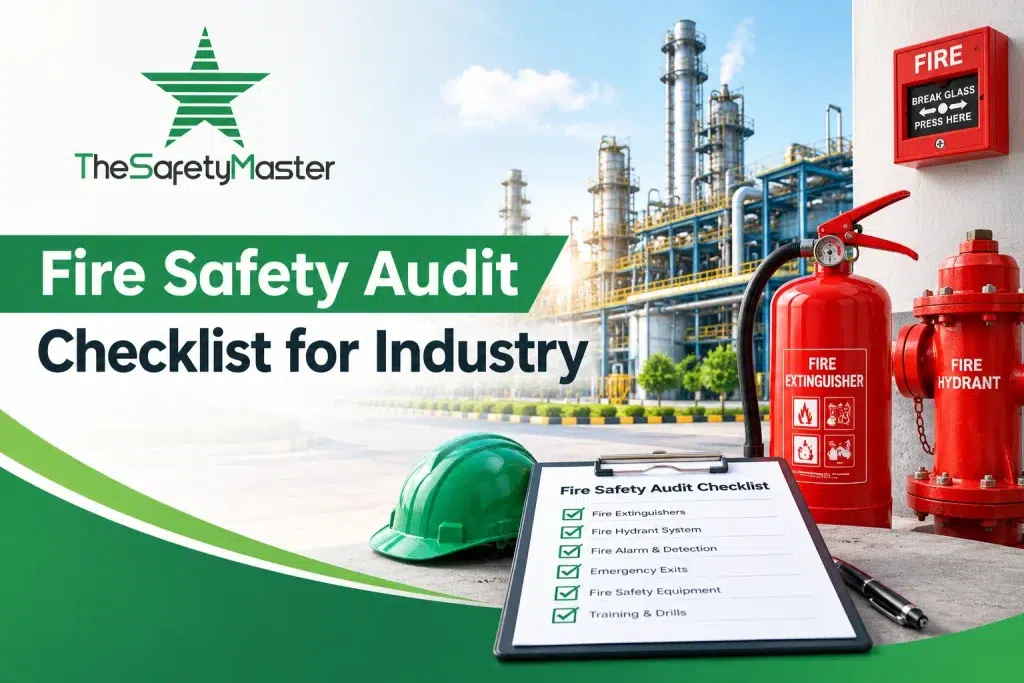
A basic audit checklist can include the following areas:
Building and Housekeeping
- Combustible waste is properly controlled.
- Storage areas are organized.
- Fire exits remain unobstructed.
- Emergency access routes are maintained.
- Smoking restrictions are implemented where required.
Fire Extinguishers
- Correct extinguisher types are available.
- Extinguishers are accessible.
- Units are properly identified.
- Inspection and maintenance are current.
- Damaged or discharged units are addressed.
Fire Alarm System
- Fire alarm panels are functional.
- Detectors are appropriately maintained.
- Manual call points are accessible.
- Alarm testing is documented.
- Audible and visual notification arrangements are adequate.
Hydrant and Sprinkler Systems
- Fire pumps are maintained.
- Water storage arrangements are adequate.
- Hydrant equipment is accessible.
- Sprinkler systems are maintained.
- Valves are appropriately controlled and identified.
Emergency Preparedness
- Emergency plans are available.
- Evacuation routes are communicated.
- Assembly points are identified.
- Employees receive fire safety training.
- Fire drills are conducted and recorded.
Common Fire Safety Audit Findings
Some frequently observed findings include:
Blocked Emergency Exits
Materials, equipment, furniture, or inventory can obstruct escape routes.
Poor Housekeeping
Accumulated combustible waste can increase fire load and fire spread potential.
Improper Electrical Connections
Overloaded circuits, damaged cables, loose connections, and unauthorized modifications can increase fire risk.
Inadequate Fire Extinguisher Placement
An extinguisher may be technically available but ineffective if it is inaccessible, incorrectly selected, or poorly maintained.
Poor Storage Practices
Combustible materials stored close to ignition sources can create significant fire hazards.
Inadequate Emergency Training
Employees may not know how to raise an alarm, use firefighting equipment, or evacuate safely.
How Often Should a Fire Safety Audit Be Conducted?
The appropriate frequency depends on the type of facility, occupancy, fire risk, regulatory requirements, changes in operations, and previous audit findings.
A Fire Safety Audit should also be considered after:
- Major process changes
- Building modifications
- Significant changes in occupancy
- Installation of new equipment
- Fire incidents or near misses
- Changes in stored materials
- Significant changes to fire protection systems
Organizations should follow the frequency required by applicable local regulations and their risk management system.
How to Prepare for a Fire Safety Audit
Before an audit, organizations can:
- Review previous audit findings.
- Close outstanding corrective actions.
- Check fire equipment inspection records.
- Test emergency systems according to approved procedures.
- Keep exits and access routes clear.
- Review emergency response plans.
- Verify employee training records.
- Conduct housekeeping inspections.
- Check electrical maintenance records.
- Ensure relevant documents are readily available.
Fire Safety Audit Report: What Should It Include?
A professional audit report should be clear and action-oriented.
Recommended Report Structure
Executive Summary
Provides a brief overview of the facility’s fire safety condition.
Scope and Methodology
Explains what areas, systems, documents, and activities were reviewed.
Audit Findings
Lists identified deficiencies with supporting observations or evidence.
Risk Classification
Findings can be prioritized according to organizational risk criteria, such as critical, high, medium, or low.
Corrective Action Recommendations
Each significant finding should have a practical recommendation.
Action Plan
The organization can assign responsibility and target completion dates for corrective actions.
Conclusion
Summarizes the overall fire safety performance and priority improvements.
Fire Safety Audit: Complete Guide for Industrial and Commercial Buildings PDF
Organizations often search for a Fire safety audit complete guide for industrial and commercial buildings PDF to use as a reference during inspections, training, and internal safety reviews.
A PDF guide can be useful for maintaining a structured reference covering audit preparation, inspection areas, fire protection systems, emergency preparedness, documentation, and corrective actions. However, a generic PDF should not replace a site-specific professional audit because fire risks vary significantly between facilities.
Fire Safety Audit: Complete Guide for Industrial and Commercial Buildings Free
If you are looking for a Fire safety audit complete guide for industrial and commercial buildings free, you can use free educational resources and basic checklists to understand the audit process and prepare your facility.
However, free checklists generally provide only a starting point. A professional audit should consider the building design, occupancy, processes, fire load, hazardous materials, installed fire protection systems, applicable requirements, and site-specific risks.
Role of The Safety Master in Fire Safety
The Safety Master helps organizations improve workplace safety through professional safety consulting, audits, training, risk management, and safety-related solutions.
A structured approach can help organizations move beyond simply checking fire equipment and instead develop a stronger fire prevention and emergency preparedness system.
Best Practices for Effective Fire Safety Management
For better results, organizations should:
- Conduct periodic fire risk assessments.
- Maintain firefighting equipment.
- Keep emergency exits clear.
- Control ignition sources.
- Maintain good housekeeping.
- Train employees regularly.
- Conduct emergency drills.
- Maintain inspection and maintenance records.
- Investigate fire incidents and near misses.
- Track corrective actions until closure.
- Review fire safety arrangements after major changes.
FAQs About Fire Safety Audit
Q-What is a Fire Safety Audit?
A Fire Safety Audit is a systematic examination of a building, workplace, or industrial facility to identify fire hazards and assess the effectiveness of fire prevention, detection, protection, and emergency response measures.
Q-Why is a Fire Safety Audit important?
It helps identify fire hazards, evaluate fire protection systems, improve emergency preparedness, support compliance, and reduce potential risks to people, property, and business operations.
Q-What is checked during a Fire Safety Audit?
Typical areas include fire extinguishers, fire alarms, hydrants, sprinklers, fire pumps, emergency exits, electrical systems, emergency lighting, housekeeping, storage, evacuation procedures, training, and maintenance records.
Q-Is a Fire Safety Audit mandatory?
Requirements vary according to the building type, location, occupancy, applicable laws, regulations, and authority requirements. Organizations should verify the requirements applicable to their facility.
Q-How often should a Fire Safety Audit be conducted?
There is no single frequency suitable for every facility. The schedule should consider legal requirements, risk level, occupancy, operational changes, previous findings, and the organization’s safety management system.
Q-Can I get a Fire Safety Audit complete guide for industrial and commercial buildings free?
Free guides and checklists can help with basic understanding and preparation. However, a site-specific professional audit is recommended for identifying facility-specific hazards and evaluating installed fire protection systems.
Q-What is included in a Fire Safety Audit report?
A report generally includes the audit scope, methodology, observations, identified deficiencies, risk priorities, photographs or evidence where appropriate, recommendations, and corrective action requirements.
Q-Who should conduct a Fire Safety Audit?
A competent and appropriately qualified fire safety professional or audit team should conduct the audit, considering the complexity and risk profile of the facility.
Conclusion
A Fire Safety Audit is an important part of protecting people, property, equipment, and business continuity in industrial and commercial buildings. A proper audit should cover fire hazards, fire protection systems, emergency exits, electrical safety, housekeeping, evacuation arrangements, training, documentation, and corrective actions. Whether you are using a Fire safety audit complete guide for industrial and commercial buildings PDF or searching for a Fire safety audit complete guide for industrial and commercial buildings free, remember that a generic guide cannot replace a site-specific assessment. The Safety Master can help organizations develop a structured approach to fire safety, identify important gaps, and strengthen their overall workplace safety management.