Fire Risk Assessment in Chemical Plants: Identifying, Evaluating and Controlling Fire Hazards

Industrial Fire Safety Audit: A Technical Framework for Identifying Critical Fire Risks
September 4, 2026
Process Safety Leading & Lagging Indicators
September 7, 2026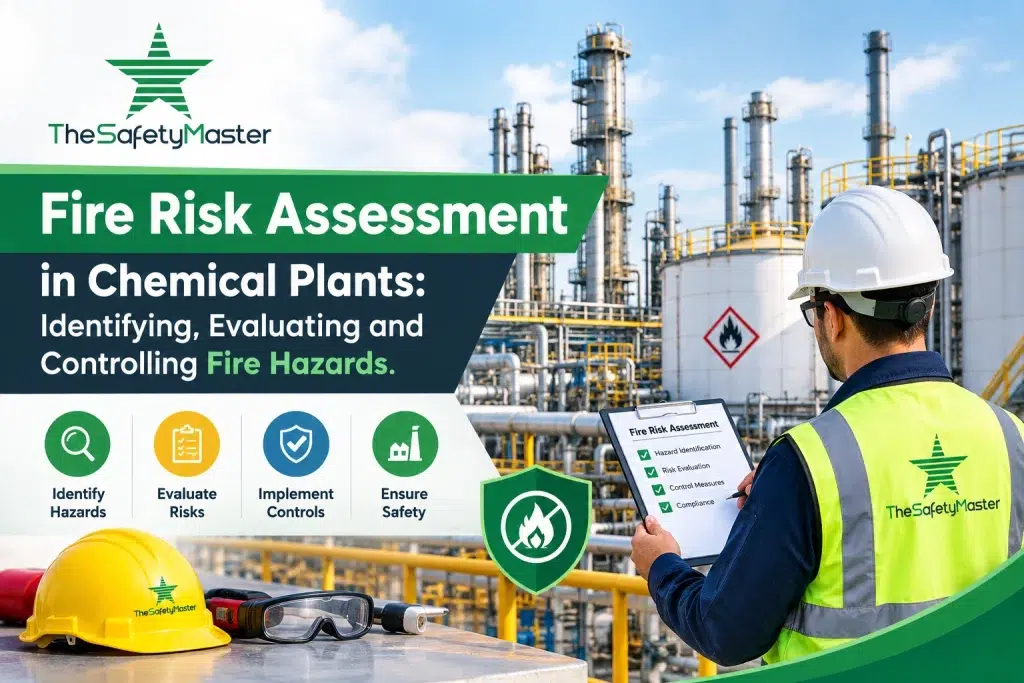
Chemical plants handle flammable liquids, combustible materials, hazardous chemicals, gases, and high-temperature processes. These conditions can create serious fire and explosion risks if hazards are not properly identified and controlled. A systematic Fire Risk Assessment helps chemical industries understand potential fire hazards, evaluate the level of risk, and implement suitable preventive and protective measures.
A well-conducted assessment does more than identify existing problems. It helps organizations strengthen fire prevention systems, improve emergency preparedness, protect employees and assets, and support regulatory compliance. The Safety Master provides safety and risk-management expertise that can help organizations develop practical approaches to identifying and controlling workplace fire hazards.
What Is a Fire Risk Assessment in a Chemical Plant?
A Fire Risk Assessment is a systematic process used to identify potential sources of ignition, combustible materials, fire hazards, and conditions that could allow a fire to start or spread.
In chemical plants, the assessment considers the entire operation, including raw-material storage, production processes, pipelines, tanks, electrical equipment, warehouses, utilities, maintenance activities, and emergency systems.
The objective is to answer three important questions:
- What could cause a fire?
- How serious could the consequences be?
- What controls are required to prevent or limit the fire?
Why Is Fire Risk Assessment Important in Chemical Plants?
Chemical fires can escalate rapidly because many chemicals are flammable, reactive, or capable of producing hazardous vapors. A small ignition source can potentially develop into a major incident when combustible materials and oxygen are present.
An effective assessment can help organizations:
- Identify fire and explosion hazards
- Reduce ignition sources
- Control combustible and flammable materials
- Evaluate fire protection systems
- Improve emergency response
- Protect employees and equipment
- Reduce property and production losses
- Identify gaps in existing controls
- Support safety and regulatory requirements
Major Fire Hazards in Chemical Plants
Chemical facilities can contain several types of fire hazards. Identifying them correctly is the first stage of effective risk management.
Flammable and Combustible Liquids
Solvents, fuels, hydrocarbons, and other flammable liquids can create significant fire risks. Leaks, spills, and improper storage can allow vapors to accumulate and reach an ignition source.
Key Control Measures
- Use suitable storage containers and tanks.
- Control leaks and spills quickly.
- Provide appropriate ventilation.
- Separate incompatible materials.
- Keep ignition sources away from flammable areas.
Flammable Gases
Chemical processes may involve gases such as hydrogen, methane, propane, or other flammable substances. Gas leaks can create explosive atmospheres.
Key Control Measures
Gas detection systems, leak testing, ventilation, isolation systems, and appropriate emergency shutdown arrangements should be considered according to the process hazard.
Electrical Equipment
Electrical faults can become ignition sources in areas containing flammable gases, vapors, or combustible dust.
Common Electrical Fire Risks
- Overloaded circuits
- Damaged cables
- Poor electrical connections
- Faulty equipment
- Inadequate maintenance
- Unsuitable electrical equipment in hazardous areas
Hot Work
Welding, cutting, grinding, and other hot-work activities can generate sparks and high temperatures.
Hot Work Controls
Chemical plants should establish a controlled hot-work procedure that may include:
- Permit-to-work systems
- Area inspection
- Removal or protection of combustible materials
- Gas testing where required
- Fire watch
- Suitable firefighting equipment
- Post-work monitoring
How to Conduct a Fire Risk Assessment in a Chemical Plant
A structured assessment makes it easier to identify hazards and prioritize corrective actions.
Step 1: Identify Fire Hazards
Start by inspecting the facility and identifying:
- Ignition sources
- Flammable substances
- Combustible materials
- Potential leaks
- Hot surfaces
- Electrical hazards
- Chemical reactions
- Storage hazards
- Maintenance activities
Step 2: Identify People at Risk
The assessment should consider everyone who may be affected by a fire.
This can include:
- Employees
- Contractors
- Visitors
- Maintenance personnel
- Emergency responders
- Workers operating in high-risk areas
Consider Vulnerable Situations
Special attention should be given to people working alone, employees unfamiliar with the facility, and personnel working in areas where evacuation may be difficult.
Step 3: Evaluate the Risk
Once hazards have been identified, evaluate the likelihood of a fire and the potential consequences.
A simple risk-ranking approach can consider:
Likelihood × Consequence = Risk Level
The organization can then prioritize high-risk scenarios for immediate action.
Step 4: Review Existing Fire Controls
The assessment should determine whether current controls are adequate.
These may include:
- Fire alarms
- Fire detection systems
- Fire extinguishers
- Hydrant systems
- Automatic sprinklers
- Fire suppression systems
- Emergency exits
- Fire-resistant construction
- Gas detection
- Emergency shutdown systems
- Firewater systems
Step 5: Identify Additional Controls
Where existing controls are insufficient, additional measures should be recommended.
Controls should prioritize prevention and engineering solutions rather than relying only on personal protective equipment.
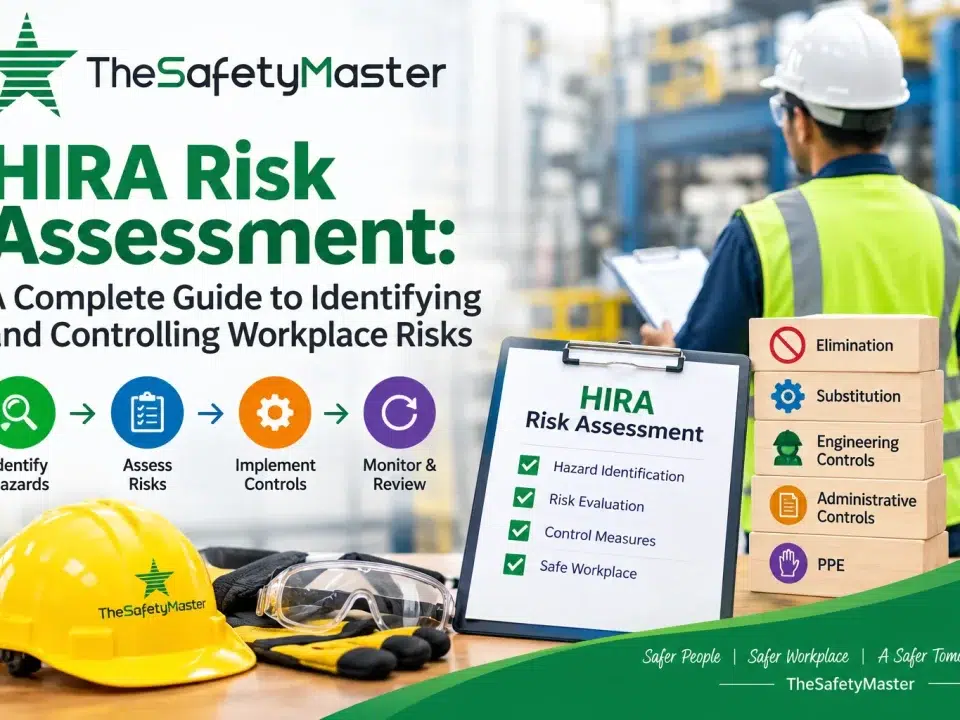
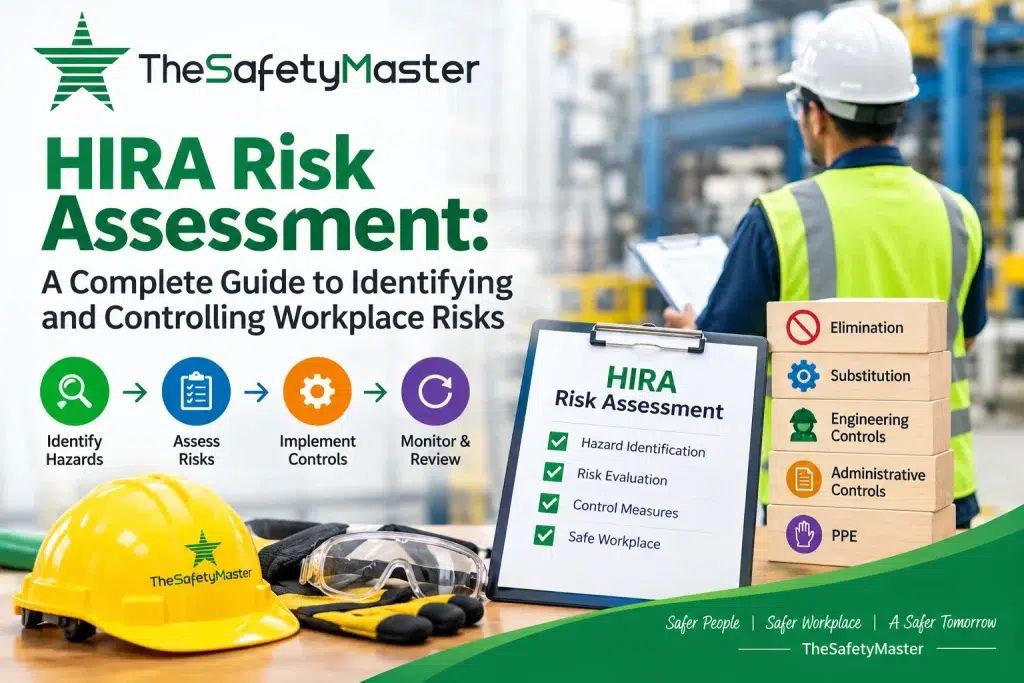
Hierarchy of Controls for Fire Hazards
The hierarchy of controls can help chemical plants determine the most effective way to reduce fire risks.
Elimination
Remove the fire hazard wherever reasonably practicable.
Substitution
Replace a highly flammable substance or process with a less hazardous alternative where technically feasible.
Engineering Controls
Examples include:
- Automatic fire detection
- Fire suppression systems
- Ventilation
- Gas detection
- Process isolation
- Explosion protection
- Fire-resistant barriers
Administrative Controls
These can include:
- Permit-to-work procedures
- Inspection schedules
- Maintenance programs
- Emergency drills
- Safety training
- Operating procedures
Personal Protective Equipment
PPE can provide an additional layer of protection, but it should not be the only control for significant fire hazards.
Fire Protection Systems in Chemical Plants
Fire protection systems should be selected based on the hazards and characteristics of the facility.
Fire Detection and Alarm Systems
Early detection can provide valuable time for evacuation, process shutdown, and emergency response.
Fire Extinguishers
Portable extinguishers should be selected according to the types of fires that could occur in a particular area.
Fire Hydrant and Hose Systems
Hydrant systems can provide firefighting water for emergency response and should be properly inspected, maintained, and accessible.
Automatic Fire Suppression
Depending on the hazard, facilities may use systems such as water-based suppression, foam systems, dry chemical systems, or other engineered suppression technologies.
System Selection
The appropriate system depends on factors such as:
- Chemical properties
- Fire scenario
- Process conditions
- Equipment layout
- Required protection level
- Applicable standards and regulations
Fire Risk Assessment for Chemical Storage Areas
Chemical storage areas require particular attention because large quantities of hazardous substances may be concentrated in one location.
Important Assessment Points
Check:
- Chemical compatibility
- Storage quantities
- Container condition
- Tank integrity
- Ventilation
- Spill containment
- Separation distances
- Ignition sources
- Fire detection
- Emergency access
- Firefighting provisions
Proper segregation of incompatible chemicals is also essential because certain chemical combinations can produce heat, toxic gases, or other dangerous reactions.
Emergency Preparedness and Response
A Fire Risk Assessment should connect directly with the site’s emergency response arrangements.
Emergency Evacuation
Chemical plants should provide clearly identified and accessible emergency escape routes.
Emergency Shutdown
Where applicable, emergency shutdown systems should be evaluated to determine whether processes can be safely isolated during an incident.
Fire Drills
Regular drills help employees understand:
- Alarm procedures
- Evacuation routes
- Assembly points
- Emergency communication
- Roles and responsibilities
Emergency Response Team
Chemical facilities should establish appropriate emergency response responsibilities and provide suitable training and equipment.
Common Fire Risk Assessment Mistakes
Even when assessments are conducted, certain weaknesses can reduce their effectiveness.
Ignoring Process Changes
Changes to chemicals, equipment, production capacity, or processes can introduce new hazards.
Focusing Only on Fire Equipment
Having extinguishers and alarms does not eliminate the underlying causes of fire.
Poor Housekeeping
Chemical residues, waste, packaging, and combustible materials can increase fire risk.
Inadequate Maintenance
Poorly maintained electrical equipment, pumps, valves, tanks, and fire protection systems can create additional hazards.
Not Updating the Assessment
The assessment should be reviewed when significant changes occur and periodically according to the organization’s risk-management process.
Benefits of Professional Fire Risk Assessment
A professionally conducted assessment can provide chemical plants with a structured understanding of their fire hazards.
Key benefits include:
- Better hazard identification
- Improved risk prioritization
- Stronger fire prevention
- Improved emergency preparedness
- Reduced potential losses
- Better maintenance planning
- Improved safety awareness
- Identification of compliance gaps
Why Choose The Safety Master?
The Safety Master focuses on workplace safety, risk management, and process safety. For chemical and industrial facilities, a practical assessment should go beyond simply completing a checklist.
A strong approach considers the facility’s processes, hazardous materials, equipment, storage arrangements, ignition sources, existing safeguards, emergency systems, and potential consequences.
Organizations can use the findings to develop corrective actions and continuously improve their fire prevention and protection systems.
Conclusion
A chemical plant can contain multiple interacting fire hazards, from flammable liquids and gases to electrical equipment, hot work, storage systems, and process operations. A systematic Fire Risk Assessment helps organizations identify these hazards, evaluate their potential consequences, and establish appropriate controls.
The most effective approach combines hazard identification, engineering controls, safe operating procedures, inspection and maintenance, employee training, emergency preparedness, and suitable fire protection systems. By regularly reviewing fire risks and acting on identified gaps, chemical plants can create safer working environments and reduce the likelihood and impact of fire incidents.
The Safety Master can support organizations in strengthening their safety and risk-management practices through structured, practical approaches to industrial safety.
Frequently Asked Questions
Q-What is a Fire Risk Assessment in a chemical plant?
A Fire Risk Assessment is a systematic examination of a chemical plant to identify fire hazards, evaluate their likelihood and potential consequences, and determine appropriate preventive and protective controls.
Q-Why is Fire Risk Assessment important for chemical industries?
Chemical plants may handle flammable liquids, gases, combustible materials, and hazardous processes. A proper assessment helps identify ignition sources and weaknesses in fire prevention, protection, and emergency response systems.
Q-What are common fire hazards in chemical plants?
Common hazards include flammable liquids and gases, chemical leaks, electrical faults, hot work, combustible materials, static electricity, process equipment, storage areas, and inadequate housekeeping.
Q-How often should a Fire Risk Assessment be conducted?
There is no single interval suitable for every facility. The assessment should be reviewed periodically and whenever significant changes occur, such as changes to processes, chemicals, equipment, facility layout, or operating conditions.
Q-Who should conduct a Fire Risk Assessment?
It should be conducted by a competent person or qualified safety professional with appropriate knowledge of fire hazards, chemical processes, risk assessment, and applicable requirements.
Q-What should a Fire Risk Assessment report include?
A report should generally document identified hazards, people at risk, existing controls, risk evaluation, deficiencies, recommended corrective actions, and priorities for improvement.
Q-Can a Fire Risk Assessment prevent chemical plant fires?
An assessment cannot guarantee that a fire will never occur. However, it can help identify and control foreseeable hazards, improve preventive measures, and strengthen emergency preparedness to reduce the likelihood and potential consequences of fire.