Fire Safety Audit in India: Compliance, Risk Prevention & The Safety Master
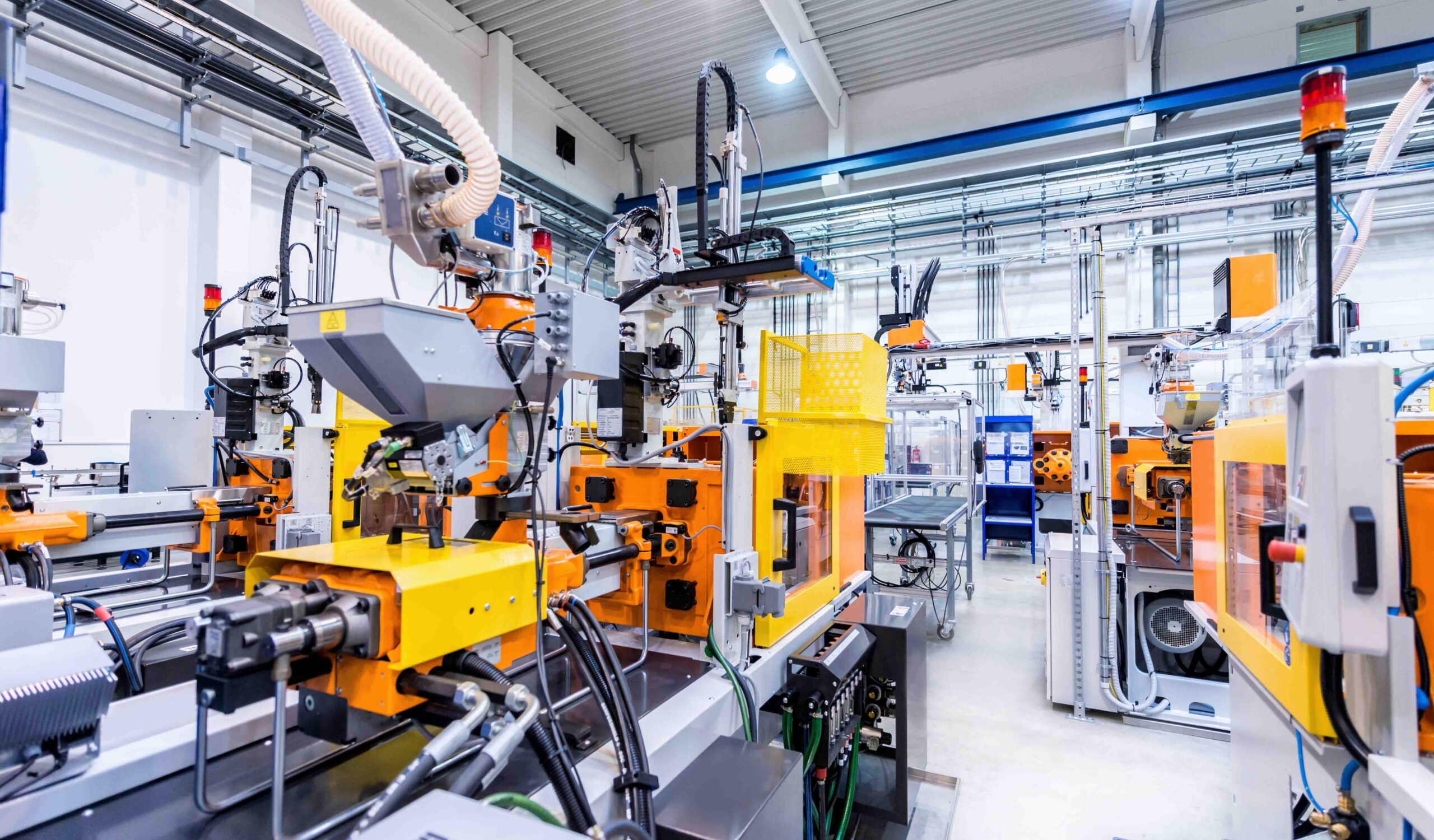
Machine Guarding Assessment: Protecting Employees and Boosting Productivity in Indian Manufacturing
October 23, 2023
Scaffolding Safety Training: A Proactive Approach Towards Employee Protection in Indian Industries
October 26, 2023Fire Safety Audit in India: Compliance, Risk Prevention and Workplace Safety
Fire safety is an important part of protecting people, property, equipment, and business operations. A fire can spread quickly when hazards are not identified and fire protection systems are not properly maintained.
A Fire Safety Audit helps organizations identify fire hazards, check existing fire protection systems, find compliance gaps, and improve emergency preparedness. It is useful for factories, warehouses, hospitals, hotels, offices, schools, residential buildings, commercial complexes, and other facilities.
A professional audit should not be limited to checking fire extinguishers. It should examine the complete fire safety arrangement, including detection, firefighting systems, emergency exits, electrical risks, evacuation procedures, fire drills, documentation, and employee awareness.
The Safety Master provides professional safety and fire safety solutions to help organizations identify risks, improve compliance, and create safer workplaces.
What Is a Fire Safety Audit?
A Fire Safety Audit is a systematic examination of a building, workplace, facility, or industrial unit to identify fire hazards and evaluate the effectiveness of fire prevention and protection measures.
The main purpose is to answer important questions:
- What can cause a fire?
- How quickly can a fire be detected?
- Are firefighting systems suitable and operational?
- Can people safely evacuate the building?
- Are emergency exits accessible?
- Are employees trained to respond to a fire?
- Are fire safety requirements being followed?
- What corrective actions are required?
A professional Fire Safety Audit looks at both physical safety systems and emergency preparedness rather than simply completing a checklist.
Why Is Fire Safety Auditing Important?
Regular auditing can help organizations:
- Identify fire hazards before an incident
- Reduce the possibility of fire-related losses
- Protect employees, visitors, and contractors
- Check fire detection and firefighting systems
- Improve emergency evacuation arrangements
- Identify electrical and combustible-material risks
- Find gaps in fire safety compliance
- Improve employee awareness and emergency response
- Support business continuity
- Maintain better safety documentation
Fire Safety Compliance Requirements in India
Fire safety requirements can vary depending on the type of building, occupancy, industry, location, and applicable state or local fire authority requirements.
Organizations should consider applicable requirements such as the National Building Code, local fire service requirements, building approvals, Fire NOC conditions, electrical safety requirements, and other applicable regulations and standards.
National Building Code and Fire Safety
The National Building Code provides important guidance for building planning and fire and life safety. Areas such as means of escape, fire protection systems, fire detection, firefighting arrangements, and building safety need appropriate consideration.
A Fire Safety Audit can help identify gaps between the existing arrangement and applicable requirements.
Fire NOC and Local Fire Department Requirements
Fire departments may have specific requirements for different types of buildings and occupancies.
Depending on the facility, organizations may need to maintain appropriate:
- Fire NOC or approvals
- Fire protection systems
- Emergency exits
- Fire alarm systems
- Firefighting equipment
- Inspection and maintenance records
- Emergency response procedures
- Fire drill records
Requirements can differ by state and local authority, so organizations should verify the requirements applicable to their specific facility.
What Does a Fire Safety Audit Check?
A detailed audit should cover the complete fire safety system.
Fire Detection and Alarm Systems
Auditors check whether smoke detectors, heat detectors, manual call points, fire alarm panels, and other detection systems are appropriately installed, accessible, maintained, and tested.
Early detection is important because it gives people more time to raise an alarm, control the emergency, and evacuate.
Fire Extinguishers
The audit should verify:
- Correct extinguisher type
- Proper location
- Accessibility
- Identification/signage
- Inspection status
- Maintenance condition
- Suitability for the fire hazards present
Simply having extinguishers does not guarantee effective fire protection.
Hydrant and Sprinkler Systems
Where applicable, the audit may examine:
- Fire hydrants
- Hose reels
- Fire pumps
- Sprinkler systems
- Water storage
- Fire pump room
- Valves
- Pressure and operational condition
- Maintenance records
Emergency Exits and Escape Routes
Emergency exits are one of the most important parts of fire safety.
The audit should check whether:
- Exit routes are clearly identified
- Emergency exits remain unobstructed
- Exit doors can be opened safely
- Emergency lighting is available
- Exit signage is visible
- Evacuation routes are practical
- Assembly points are identified
Electrical Fire Risks
Electrical faults are an important area of fire risk assessment.
The audit may examine:
- Electrical panels
- Wiring condition
- Overloaded circuits
- Temporary connections
- Cable management
- Earthing
- Electrical equipment
- Maintenance records
- Housekeeping around electrical installations
Storage of Flammable and Combustible Materials
Flammable liquids, gases, chemicals, packaging materials, waste, and other combustible materials should be properly stored and controlled.
The auditor should identify conditions that could increase the likelihood or severity of a fire.
Fire Safety Audit Process
A professional audit normally follows a structured process.
1. Pre-Audit Planning
Before visiting the site, relevant information about the facility, processes, occupancy, previous incidents, fire systems, and available documents can be reviewed.
2. Site Inspection
The auditor conducts a physical inspection of the facility.
The inspection may cover:
- Production areas
- Electrical rooms
- Storage areas
- Fire pump rooms
- Staircases
- Emergency exits
- Offices
- Utility areas
- Kitchens
- Hazardous areas
- Parking areas
3. Hazard Identification
Potential sources of ignition, combustible materials, unsafe conditions, and other fire hazards are identified.
4. Compliance Gap Assessment
Existing arrangements are compared with applicable requirements and good fire safety practices.
5. Fire Safety Risk Evaluation
The identified hazards are evaluated according to their potential impact and likelihood.
6. Reporting
The final report should clearly explain:
- Observations
- Non-compliances
- Fire hazards
- Risk levels
- Photographic evidence where appropriate
- Recommended corrective actions
- Priority actions
7. Corrective Action and Follow-Up
An audit becomes more valuable when identified gaps are actually closed.
Organizations should assign responsibilities, set target dates, implement corrective actions, and verify closure.
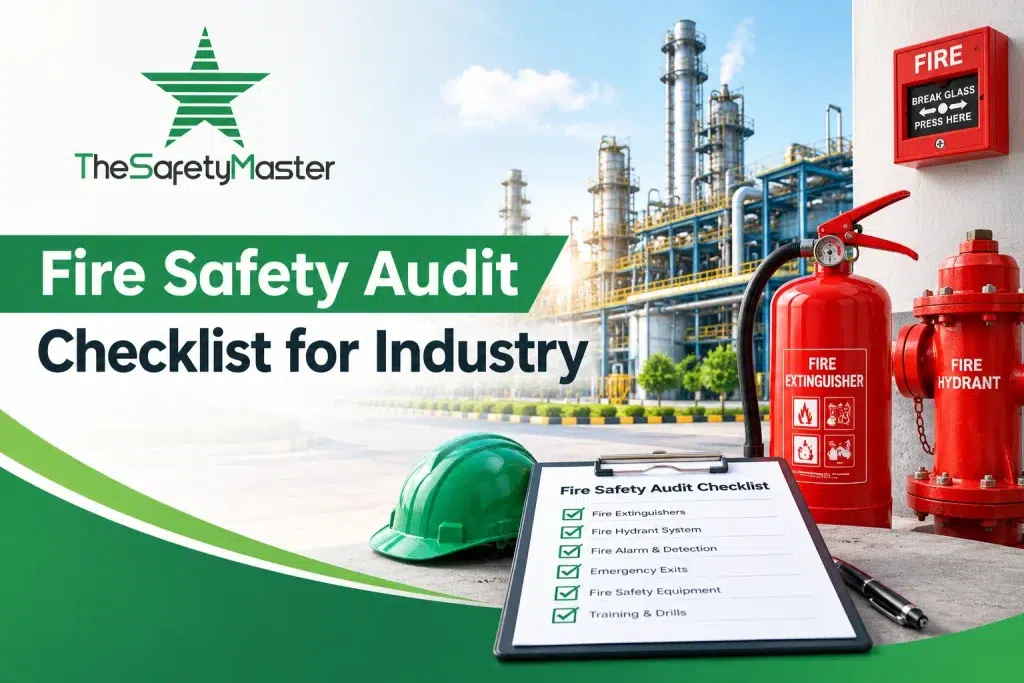
Fire Safety Audit Checklist
A practical Fire Safety Audit checklist may include the following areas:
- Fire alarm system
- Smoke and heat detectors
- Fire extinguishers
- Fire hydrants
- Sprinkler system
- Fire pumps
- Fire water storage
- Emergency exits
- Escape routes
- Emergency lighting
- Exit signage
- Fire doors
- Electrical installations
- Flammable material storage
- Housekeeping
- Fire drill records
- Emergency response plan
- Employee fire safety training
- Maintenance records
- Fire NOC and relevant documentation
The exact checklist should be customized according to the building type, industry, processes, occupancy, and hazards.
Fire Safety Audit for Different Industries
Fire Safety Audit for Manufacturing Industries
Manufacturing facilities may have machinery, electrical systems, chemicals, combustible materials, hot work, and production processes that increase fire risk.
The audit should therefore consider process-specific hazards rather than using only a generic checklist.
Fire Safety Audit for Warehouses
Warehouses may contain large quantities of packaging, plastics, chemicals, raw materials, or finished products.
Storage height, aisle arrangements, fire protection systems, electrical installations, and emergency access should be carefully reviewed.
Fire Safety Audit for Hospitals
Hospitals require special attention because patients may have limited mobility and may need assistance during evacuation.
Fire detection, compartmentation, emergency exits, medical equipment, evacuation procedures, staff training, and fire response plans are important areas for review.
Fire Safety Audit for Hotels
Hotels have sleeping occupants, kitchens, electrical equipment, generators, LPG installations, and high visitor movement.
A professional audit should review guest evacuation arrangements, emergency lighting, fire alarms, extinguishers, hydrants, kitchen fire protection, and staff preparedness.
Fire Safety Audit for Offices and Commercial Buildings
Offices and commercial buildings should focus on electrical safety, evacuation routes, fire alarm systems, emergency exits, occupancy, housekeeping, and employee awareness.
Benefits of a Professional Fire Safety Audit
A well-conducted audit provides benefits beyond basic compliance.
Reduces Fire Risk
Identifying hazards early gives organizations an opportunity to control them before they result in an emergency.
Improves Emergency Preparedness
Audits can identify weaknesses in evacuation procedures, emergency response plans, fire drills, and employee training.
Protects People and Property
Effective fire prevention and protection measures help reduce the potential impact of fire on people, buildings, equipment, and business operations.
Improves Compliance
A professional audit helps organizations understand where their existing arrangements may have gaps against applicable requirements.
Supports Business Continuity
A major fire can interrupt production, damage equipment, affect employees, and cause significant financial losses. Better fire preparedness can help reduce operational disruption.
How Often Should a Fire Safety Audit Be Conducted?
There is no single frequency that applies equally to every organization. Audit frequency should consider the facility’s risk profile, occupancy, processes, regulatory requirements, previous incidents, changes in operations, and local fire authority requirements.
High-risk facilities may require more frequent inspections and reviews than low-risk office environments.
A new process, building modification, change in occupancy, major equipment installation, or significant fire incident should also trigger a review of fire safety arrangements.
Common Fire Safety Audit Mistakes
Organizations often make mistakes such as:
Only Checking Fire Extinguishers
Fire safety is much broader than extinguishers. Detection, evacuation, hydrants, sprinklers, electrical safety, emergency planning, and employee training also require attention.
Treating the Audit as a Paper Exercise
A report is useful only when it reflects actual site conditions and leads to corrective action.
Ignoring Electrical Hazards
Poor wiring, overloaded circuits, damaged cables, and unsafe electrical practices can create serious fire hazards.
Blocking Emergency Exits
Storage or equipment should never compromise emergency escape routes.
Not Training Employees
Employees need to understand alarm procedures, evacuation routes, assembly points, and their responsibilities during an emergency.
Why Choose The Safety Master for Fire Safety Audit?
The Safety Master focuses on practical safety solutions, risk identification, compliance support, and actionable recommendations.
A professional audit approach can help organizations:
- Identify fire hazards
- Evaluate existing fire protection systems
- Review emergency preparedness
- Identify compliance gaps
- Prepare detailed audit reports
- Recommend corrective actions
- Improve workplace fire safety
The Safety Master also provides safety audit and fire safety support for different types of workplaces and industries.
FAQs About Fire Safety Audit in India
What is the purpose of a Fire Safety Audit?
The purpose is to identify fire hazards, evaluate fire prevention and protection systems, assess emergency preparedness, identify compliance gaps, and recommend corrective actions.
Is Fire Safety Audit mandatory in India?
Requirements depend on the building type, occupancy, industry, state, local fire authority, and applicable regulations. Organizations should check the requirements applicable to their specific facility.
Who can conduct a Fire Safety Audit?
A competent and experienced fire safety professional or qualified safety consultant with appropriate knowledge of fire protection systems and applicable requirements should conduct the audit.
What is included in a Fire Safety Audit report?
A report generally includes site observations, identified hazards, compliance gaps, risk findings, photographs where appropriate, and recommended corrective actions.
How often should a Fire Safety Audit be conducted?
Frequency should be based on the facility’s risk profile and applicable requirements. High-risk facilities may need more frequent audits than lower-risk workplaces.
Can a Fire Safety Audit prevent a fire?
An audit cannot guarantee that a fire will never occur. However, it can identify hazards and weaknesses in prevention, detection, protection, and emergency response systems so that corrective actions can reduce risk.
Conclusion
Fire safety should be treated as an ongoing responsibility rather than a one-time compliance activity. A professional Fire Safety Audit helps organizations understand their actual level of preparedness, identify hazards, improve fire protection systems, and take corrective action before a serious incident occurs.
From factories and warehouses to hospitals, hotels, offices, and commercial buildings, every facility has its own fire risks. A detailed and practical audit can help protect people, property, operations, and business continuity.
For professional fire safety assessment, compliance support, and practical risk-reduction solutions, The Safety Master can help organizations strengthen their overall fire safety management.