Hazardous Area Classification Singapore: IEC Standards and Industrial Safety Requirements

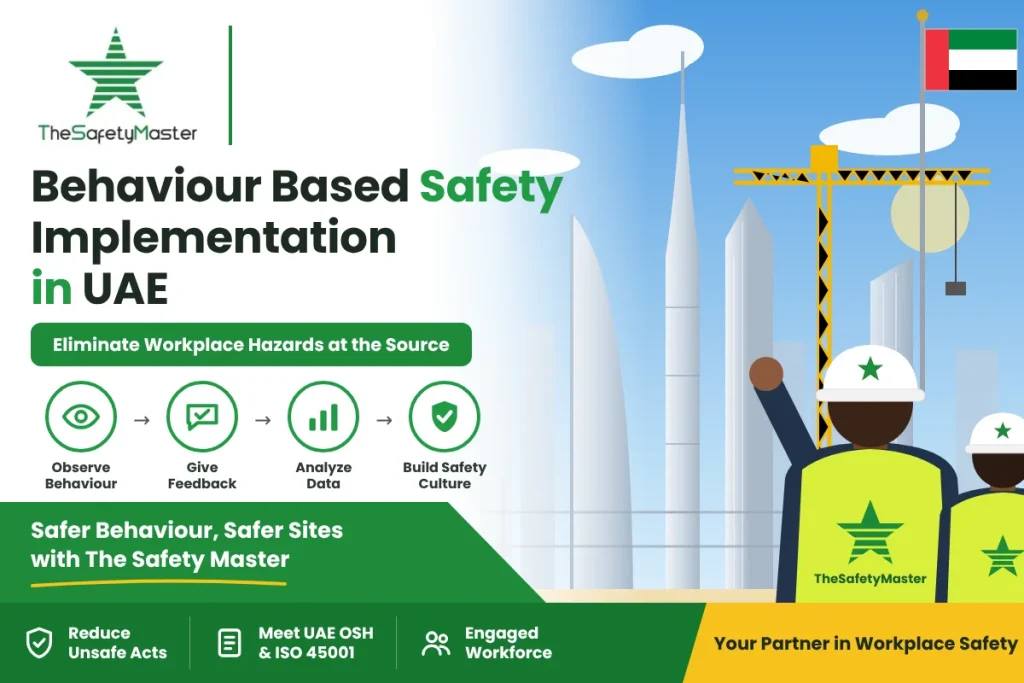
How to Achieve Behavior-Based Safety Implementation in UAE to Eliminate Workplace Hazards
November 27, 2026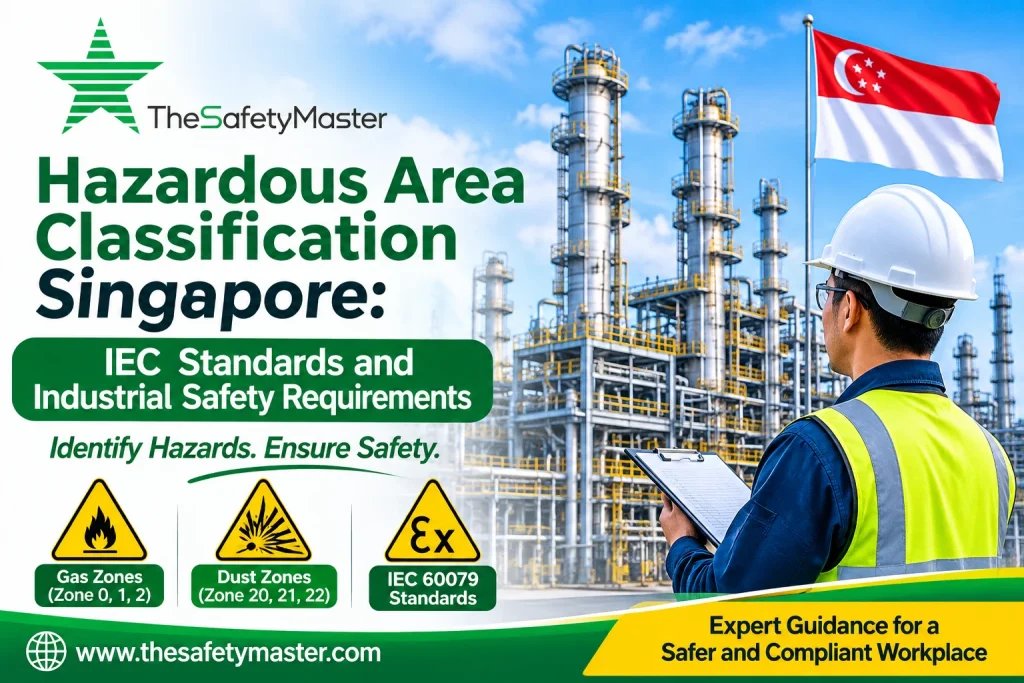
Industrial facilities that handle flammable gases, vapours, combustible dust, and hazardous chemicals require proper safety planning. These materials can create explosive atmospheres when mixed with air under certain conditions. A small spark, hot surface, or electrical fault may cause a fire or explosion if suitable safety measures are not implemented.
Hazardous Area Classification Singapore is an important part of industrial safety management. It helps identify areas where explosive atmospheres may occur and determines the type of electrical equipment and protection required in those locations.
Industries such as oil and gas, petrochemicals, chemical manufacturing, pharmaceuticals, and petroleum storage must follow suitable hazardous area classification practices.
The Safety Master provides industrial safety consultancy and risk assessment solutions to help organisations identify hazardous locations, evaluate explosion risks, and improve workplace safety through recognised international standards.
What Is Hazardous Area Classification?
Hazardous Area Classification (HAC) is a systematic process used to identify and classify locations where flammable gases, vapours, or combustible dust may create an explosive atmosphere.
The main purpose is to prevent ignition by selecting suitable electrical and non-electrical equipment for hazardous locations.
The classification process considers several factors:
- Type of flammable material.
- Gas or dust release sources.
- Probability of explosive atmosphere formation.
- Frequency and duration of hazardous conditions.
- Ventilation conditions.
- Operating temperature and pressure.
- Equipment installation and maintenance requirements.
Why Is Hazardous Area Classification Important?
Hazardous area classification helps industries understand explosion risks and establish suitable protection measures.
Its major benefits include:
- Fire and Explosion Prevention: Helps identify locations where explosive atmospheres may develop.
- Safe Equipment Selection: Supports the selection of equipment suitable for classified hazardous zones.
- Worker Protection: Reduces the risk of injuries caused by fires and explosions.
- Regulatory Compliance: Supports industrial safety and applicable legal requirements.
- Operational Reliability: Helps reduce equipment damage and unexpected production interruptions.
- Better Risk Management: Provides technical information for explosion prevention and safety planning.
Hazardous Area Classification Zones and Their Types
Hazardous locations are divided into different zones according to the frequency and duration of explosive atmospheres.
1. Gas and Vapour Classification
The IEC system divides hazardous gas and vapour locations into three main zones.
Zone 0
An area where an explosive gas atmosphere is present continuously, frequently, or for long periods.
Examples:
- Inside flammable liquid storage tanks.
- Inside certain process vessels.
- Areas containing continuous flammable vapour.
Zone 1
An area where an explosive gas atmosphere is likely to occur occasionally during normal operations.
Examples:
- Near chemical processing equipment.
- Around filling and transfer points.
- Near certain pump seals and venting arrangements.
Zone 2
An area where an explosive gas atmosphere is not likely to occur during normal operations. If it occurs, it will normally exist for a short period.
Examples:
- Areas surrounding Zone 1 locations.
- Certain outdoor gas handling areas.
- Locations near flammable gas connections.
2. Combustible Dust Classification
Industries handling combustible powders and dust also require proper hazardous area classification.
The three main dust zones are:
- Zone 20: An area where an explosive dust atmosphere is present continuously, frequently, or for long periods.
- Zone 21: An area where an explosive dust atmosphere is likely to occur occasionally during normal operations.
- Zone 22: An area where an explosive dust atmosphere is not likely to occur during normal operations and, if it occurs, will exist for a short period.
Examples include grain processing, pharmaceutical manufacturing, food production, and powder handling facilities.
Important IEC Standards for Hazardous Area Classification
The International Electrotechnical Commission (IEC) publishes internationally recognised standards for electrical equipment and explosive atmosphere safety.
Industries in Singapore can use these standards as technical references when developing hazardous area classification studies and explosion protection systems.
1. IEC 60079-10-1: Explosive Gas Atmospheres
This standard provides guidance for classifying areas where flammable gases or vapours may create explosive atmospheres.
It helps engineers identify hazardous locations and establish suitable equipment selection requirements.
2. IEC 60079-10-2: Explosive Dust Atmospheres
This standard covers the classification of locations where combustible dust clouds or dust layers may create explosion hazards.
It is particularly important for industries handling combustible powders, fibres, and dust.
3. IEC 60079-14: Electrical Installations Design and Selection
This standard provides requirements and recommendations for the design, selection, and installation of electrical equipment in explosive atmospheres.
4. IEC 60079-17: Inspection and Maintenance
This standard provides guidance for inspection and maintenance of electrical installations in hazardous areas.
5. IEC 60079-0: Equipment General Requirements
This standard establishes general requirements for electrical equipment intended for use in explosive atmospheres.
6. IEC 61511: Functional Safety
IEC 61511 provides requirements for safety instrumented systems used in the process industry sector. It supports the development and management of safety instrumented functions.
Hazardous Area Classification Requirements in Singapore
Singapore has important industrial sectors, including petroleum refining, petrochemical manufacturing, chemical processing, and pharmaceutical production.
These industries must manage hazardous substances and workplace explosion risks through suitable safety arrangements.
Important Singapore Safety Requirements
1. Workplace Safety and Health Act
The Workplace Safety and Health (WSH) framework establishes duties for workplace safety and health. Employers and other responsible parties must manage workplace risks and take reasonably practicable measures to protect workers.
2. Workplace Safety and Health (Risk Management) Regulations
These regulations require workplace risks to be assessed and controlled. Hazardous area classification can support the identification and management of explosion-related risks.
3. Fire Safety Requirements
Industrial facilities must consider applicable fire safety requirements, including fire prevention, emergency access, and suitable protection systems.
4. Hazardous Substances Management
Facilities handling flammable substances, toxic chemicals, and combustible dust must establish appropriate controls for storage, handling, and workplace safety.
5. Electrical Equipment Requirements
Electrical equipment installed in classified locations must be appropriate for the identified hazardous conditions and applicable installation requirements.
Importantly, IEC standards provide technical guidance, while the applicable Singapore legislation, regulatory approvals, and industry-specific requirements must be checked separately for each facility.
Ministry of Manpower Singapore+3
Step-by-Step Hazardous Area Classification Process
A proper classification study requires technical information, site inspection, and engineering evaluation.
Step 1: Collection of Industrial Documents
The first step is to collect relevant engineering and process documents.
These may include:
- Process Flow Diagrams (PFDs).
- Piping and Instrumentation Diagrams (P&IDs).
- Equipment layout drawings.
- Chemical safety data sheets.
- Ventilation system details.
- Equipment specifications.
- Process operating conditions.
Step 2: Identification of Hazardous Materials
The study team identifies flammable gases, vapours, liquids, and combustible dust present in the facility.
Important properties include flash point, ignition temperature, vapour density, flammable limits, and gas or dust group.
Step 3: Identification of Release Sources
Potential release sources are identified throughout the facility.
Examples include:
- Pumps and compressors.
- Storage tanks.
- Pipeline connections.
- Valves and flanges.
- Chemical transfer stations.
- Pressure relief systems.
- Loading and unloading points.
Step 4: Evaluation of Ventilation
Ventilation plays an important role in controlling the accumulation of flammable gases and vapours.
The assessment considers natural ventilation, mechanical ventilation, air movement, and possible gas accumulation locations.
Step 5: Classification of Hazardous Zones
Based on release characteristics, ventilation, and operating conditions, the study team identifies suitable hazardous area zones.
Step 6: Preparation of Hazardous Area Drawings
The results are documented in hazardous area classification drawings. These drawings identify classified locations, zone boundaries, and relevant technical information.
Step 7: Equipment Selection and Verification
Electrical equipment is selected according to the zone, gas or dust group, temperature requirements, equipment protection level, and applicable protection concept.
Step 8: Final Report and Recommendations
The final report includes classification assumptions, drawings, material information, release sources, zone details, and recommendations for safe operation.
Common Industries Requiring Hazardous Area Classification in Singapore
Several industrial sectors require hazardous area classification to manage explosion risks.
1. Oil and Gas Industry
Oil and gas facilities handle flammable gases, petroleum products, and pressurised systems. Classification helps identify hazardous locations around pipelines, compressors, storage tanks, and processing units.
2. Chemical and Petrochemical Industry
Chemical manufacturing facilities use flammable liquids, gases, and reactive materials. Proper classification supports safe equipment installation and explosion prevention.
3. Pharmaceutical Industry
Pharmaceutical production may involve flammable solvents, powders, and chemical processing activities. Dust and vapour hazards must be evaluated.
4. Petroleum Storage Terminals
Petroleum storage and distribution facilities require proper assessment of tank farms, loading stations, transfer pumps, and pipelines.
5. Food and Manufacturing Industry
Facilities handling combustible materials such as flour, sugar, starch, and other fine powders may require dust hazardous area classification.
Common Mistakes in Hazardous Area Classification
Incorrect classification can create serious safety problems. Industries should avoid the following mistakes:
- Using outdated hazardous area classification drawings.
- Ignoring possible gas and vapour leakage points.
- Selecting unsuitable electrical equipment.
- Not considering ventilation conditions.
- Ignoring combustible dust accumulation.
- Failing to conduct periodic inspections.
- Not updating drawings after plant modifications.
- Using incorrect equipment protection levels.
Regular engineering reviews and inspections help maintain the accuracy of hazardous area classification documentation.
Why Choose The Safety Master for Hazardous Area Classification?
The Safety Master supports industrial organisations with professional safety consultancy, hazard identification, and risk assessment solutions.
Our services help businesses improve explosion prevention practices and strengthen industrial safety management.
Our Key Services
- Hazardous Area Classification Studies.
- Hazardous Area Classification Drawings.
- Explosion Risk Assessment.
- HAZOP Study.
- HIRA and Risk Assessment.
- LOPA and SIL Assessment.
- Process Safety Management.
- Fire Safety Audit.
- Electrical Safety Audit.
- Industrial Safety Consultancy.
Benefits of Working with The Safety Master
Technical Expertise: Professional support for identifying hazardous locations and evaluating industrial explosion risks.
Standards-Based Approach: Assessment methodologies based on relevant IEC standards and applicable safety requirements.
Detailed Documentation: Proper classification reports, technical recommendations, and hazardous area drawings.
Industrial Safety Improvement: Practical recommendations to support safer operations and reduce workplace risks.
Comprehensive Consultancy: Integrated support for process safety, electrical safety, and industrial risk management.
Conclusion
Hazardous area classification is an essential safety requirement for industries handling flammable gases, vapours, and combustible dust. Following suitable IEC standards helps organisations identify explosive atmosphere risks, classify hazardous locations, and select appropriate equipment.
Hazardous Area Classification Singapore is particularly important for oil and gas facilities, petrochemical plants, chemical manufacturing units, and petroleum storage terminals.
The Safety Master provides professional hazardous area classification, explosion risk assessment, and industrial safety consultancy services to help organisations improve workplace protection and achieve safer industrial operations.