Benefits of HAZOP Studies for Oil & Gas, Chemical, and Manufacturing Industries

Critical Process Hazard Analysis Steps for Preventing Major Industrial Hazards
May 27, 2026
How HAZOP Supports Functional Safety and SIL Assessment
June 3, 2026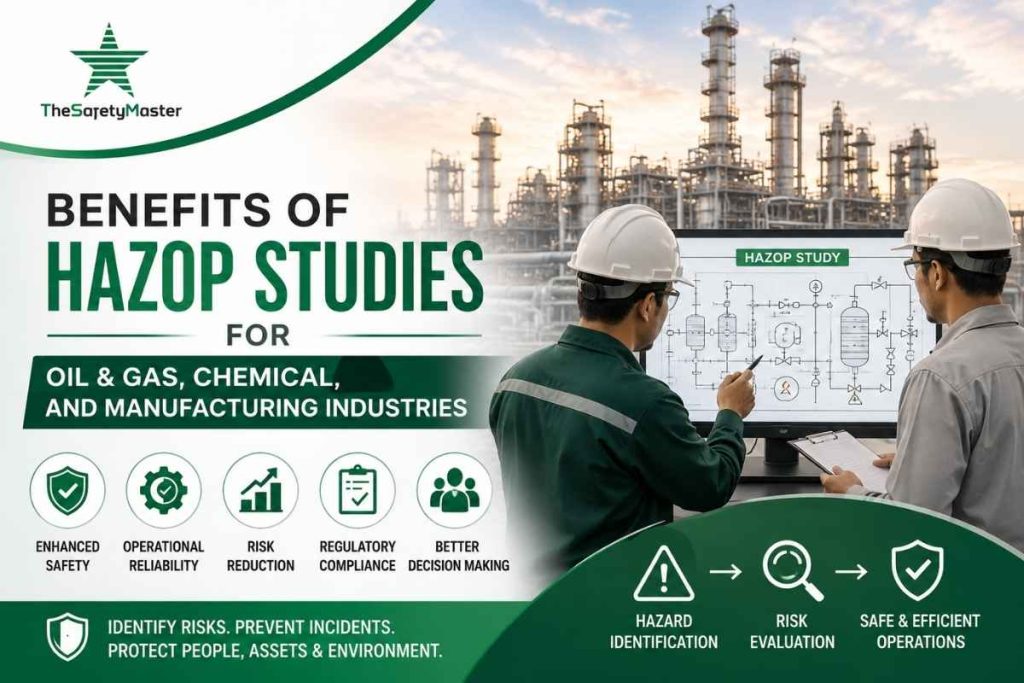
Industrial facilities handle complex processes, hazardous materials, and high-risk operations every day. A single oversight in process design or operation can lead to fires, explosions, toxic releases, equipment damage, environmental incidents, and significant financial losses. This is why process safety remains a top priority for industries such as oil and gas, chemicals, pharmaceuticals, power generation, and manufacturing.
One of the most effective methods for identifying and managing process-related risks is the Hazard and Operability Study (HAZOP). Widely recognized across industries, HAZOP is a structured and systematic technique used to identify potential hazards and operational issues before they result in accidents.
This article explores the key benefits of HAZOP studies and why they are essential for maintaining safe and reliable industrial operations.
What Is a HAZOP Study?
A Hazard and Operability Study (HAZOP) is a systematic risk assessment method used to identify deviations from intended process design and evaluate their potential consequences. It involves a multidisciplinary team that examines each section of a process using predefined guidewords such as “No,” “More,” “Less,” “Reverse,” and “Other Than.”
The objective is to uncover hazards, equipment failures, human errors, and operational challenges that could impact safety, production, or the environment.
HAZOP studies are commonly conducted during:
- New plant design stages
- Plant modifications and expansions
- Process safety reviews
- Regulatory compliance assessments
- Operational risk management programs
Why HAZOP Is Important for High-Risk Industries
Industries that deal with flammable, explosive, toxic, or high-pressure substances face significant process risks. Traditional safety inspections may identify visible hazards, but they often fail to uncover complex process interactions that can lead to catastrophic events.
HAZOP helps organizations proactively identify hidden risks before they become incidents, allowing them to implement effective safeguards and control measures.
Key Benefits of HAZOP Studies
Improved Identification of Process Hazards
One of the primary benefits of a HAZOP study is its ability to identify process hazards that may not be immediately obvious.
By systematically evaluating every process node and possible deviation, organizations can discover:
- Equipment failures
- Instrumentation malfunctions
- Human errors
- Process design weaknesses
- Utility failures
- External influences
This detailed analysis helps organizations address vulnerabilities before operations begin or continue.
Enhanced Operational Reliability
HAZOP is not limited to safety concerns. It also identifies operability issues that may affect plant performance and productivity.
The study can reveal:
- Bottlenecks in production processes
- Inefficient operating conditions
- Maintenance challenges
- Equipment performance limitations
Addressing these issues improves process reliability, reduces downtime, and enhances overall operational efficiency.
Prevention of Major Industrial Accidents
Industrial accidents often occur due to multiple failures happening simultaneously. HAZOP helps identify these potential failure scenarios and recommends preventive measures.
Organizations can reduce the likelihood of:
- Fires
- Explosions
- Toxic gas releases
- Chemical spills
- Pressure vessel failures
- Environmental incidents
By identifying and mitigating these risks early, companies can significantly strengthen their safety performance.
Supports Regulatory Compliance
Many national and international process safety regulations recommend or require hazard identification and risk assessment studies.
HAZOP supports compliance with:
- Process Safety Management (PSM) requirements
- Occupational safety regulations
- Environmental protection standards
- Industry-specific safety guidelines
A well-documented HAZOP study demonstrates an organization’s commitment to safety and regulatory compliance.
Better Decision-Making for Plant Modifications
Whenever process changes are introduced, new risks may emerge. HAZOP helps evaluate the safety implications of modifications before implementation.
This is particularly valuable during:
- Capacity expansions
- Equipment replacements
- Technology upgrades
- Process redesigns
- New product introductions
The study ensures that modifications do not unintentionally create new hazards.
Reduced Financial Losses
Industrial incidents can result in significant financial consequences, including:
- Equipment damage
- Production shutdowns
- Regulatory penalties
- Legal liabilities
- Insurance claims
- Reputational damage
HAZOP studies help organizations avoid these costs by identifying and addressing risks proactively.
The investment in a HAZOP study is often far lower than the cost of recovering from a major incident.
Improved Team Collaboration
A successful HAZOP study involves experts from different disciplines, including:
- Process engineering
- Operations
- Maintenance
- Instrumentation
- Safety management
This collaborative approach ensures that diverse perspectives are considered when evaluating risks.
It also promotes greater awareness of process safety among employees and strengthens the overall safety culture of the organization.
Better Risk Prioritization
Industrial facilities often face numerous hazards. HAZOP helps organizations prioritize risks based on their severity and likelihood.
This allows management to focus resources on:
- Critical safety improvements
- High-risk process areas
- Essential safeguard upgrades
- Emergency preparedness measures
Effective prioritization leads to more efficient risk management strategies.
Integration with Other Risk Assessment Methods
HAZOP works effectively alongside other process safety techniques.
For example, organizations often combine HAZOP findings with a comprehensive HIRA program to achieve a broader understanding of workplace and process risks.
This integrated approach enhances overall safety management and supports continuous improvement initiatives.
Strengthens Emergency Preparedness
HAZOP studies identify potential accident scenarios and their consequences. These insights can be used to improve emergency response planning.
Organizations can develop:
- Emergency shutdown procedures
- Fire response plans
- Evacuation strategies
- Spill containment measures
- Incident response protocols
Preparedness reduces the impact of incidents when they occur.
Industry Applications of HAZOP Studies
Oil and Gas Industry
Oil and gas facilities operate under high pressures and temperatures while handling highly flammable substances.
HAZOP studies help identify risks associated with:
- Refining processes
- Storage terminals
- Pipelines
- Offshore platforms
- Gas processing plants
These studies contribute significantly to accident prevention and operational reliability.
Chemical Industry
Chemical manufacturing involves hazardous reactions and toxic materials.
HAZOP assists chemical plants in identifying:
- Reaction hazards
- Process deviations
- Toxic release scenarios
- Equipment integrity issues
- Storage and handling risks
The result is a safer working environment and improved process control.
Manufacturing Industry
Modern manufacturing facilities often use automated systems, chemical processes, and energy-intensive operations.
HAZOP studies support manufacturing organizations by improving:
- Equipment reliability
- Production continuity
- Worker safety
- Process efficiency
- Risk management practices
They are particularly valuable in sectors such as pharmaceuticals, food processing, automotive manufacturing, and specialty chemicals.
Enhancing HAZOP Effectiveness Through Training
The quality of a HAZOP study depends heavily on the competence of the team conducting it. Organizations that invest in professional HAZOP Training can improve the accuracy and effectiveness of their risk assessments.
Proper training helps participants:
- Understand HAZOP methodology
- Apply guidewords effectively
- Identify process deviations
- Evaluate consequences accurately
- Recommend practical safeguards
Well-trained teams produce more meaningful and actionable study results.
Complementing HAZOP with Fire Safety Assessments
While HAZOP focuses on process-related risks, fire safety evaluations remain equally important. Organizations often supplement HAZOP findings with a comprehensive Fire Audit to assess fire protection systems, emergency preparedness, and regulatory compliance.
Together, these assessments create a stronger and more comprehensive safety framework.
Conclusion
HAZOP studies are among the most powerful tools available for identifying and managing process risks in oil & gas, chemical, and manufacturing industries. They provide a structured approach to uncovering hazards, improving operational reliability, supporting compliance, and preventing major accidents.
As industrial processes become increasingly complex, the importance of proactive risk assessment continues to grow. Organizations that regularly conduct HAZOP studies not only protect their employees and assets but also improve operational efficiency and long-term business sustainability.
By integrating HAZOP with broader safety initiatives, training programs, and fire risk assessments, companies can build a stronger safety culture and achieve safer industrial operations.