Critical Process Hazard Analysis Steps for Preventing Major Industrial Hazards

How Process Safety Management Training Builds Safer Industrial Operations in India
May 25, 2026
Benefits of HAZOP Studies for Oil & Gas, Chemical, and Manufacturing Industries
May 29, 2026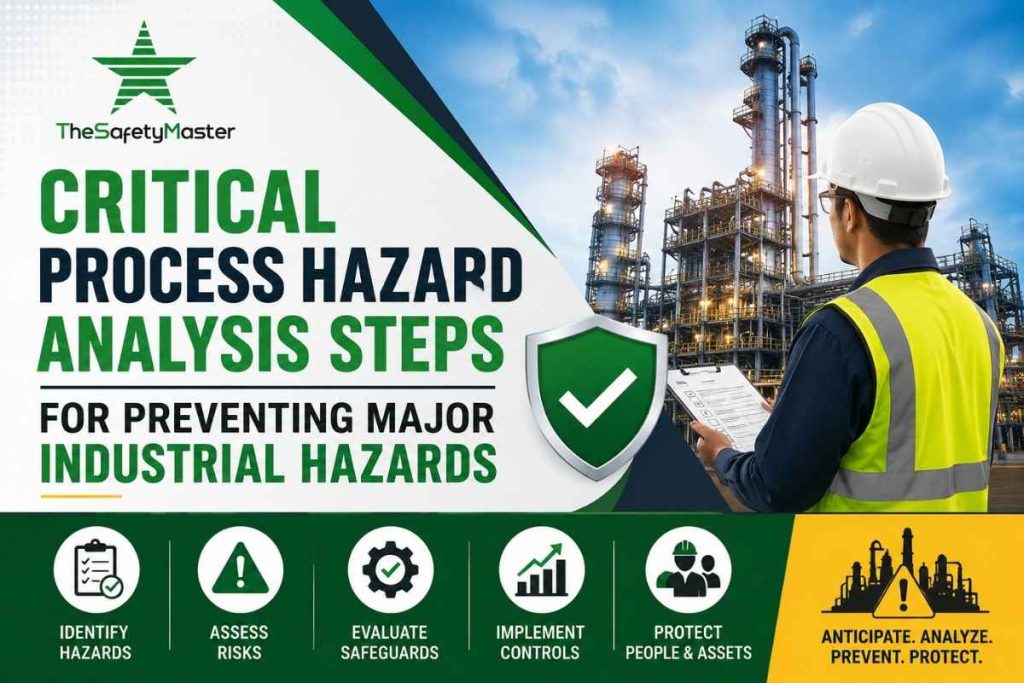
Industrial facilities handling hazardous chemicals, high-pressure systems, flammable materials, and complex operations face serious risks every day. A single overlooked hazard can lead to fires, explosions, toxic releases, environmental damage, production loss, and even fatalities. This is why Process Hazard Analysis (PHA) plays a critical role in industrial safety management.
Process Hazard Analysis is a structured and systematic approach used to identify potential hazards within industrial processes and evaluate the risks associated with them. It helps organizations recognize weaknesses in systems before incidents occur and allows them to implement effective safeguards to prevent catastrophic events.
Industries such as oil and gas, petrochemicals, pharmaceuticals, chemical manufacturing, power plants, and refineries rely heavily on PHA studies to maintain safe operations and comply with safety regulations.
Understanding the Importance of Process Hazard Analysis
Many industrial accidents occur not because hazards are unknown, but because risks are underestimated, ignored, or poorly managed. Process Hazard Analysis helps organizations move from reactive safety management to proactive risk prevention.
PHA provides a detailed examination of:
- Process design
- Equipment integrity
- Operational procedures
- Human factors
- Emergency systems
- Possible failure scenarios
The primary objective is to identify what could go wrong, determine how severe the consequences may be, and establish controls that minimize the likelihood of incidents.
A properly conducted PHA improves operational reliability, reduces downtime, enhances employee safety, and protects company reputation.
Step 1: Collect Complete Process Information
The first and most critical step in any Process Hazard Analysis is gathering accurate and updated process safety information. Without reliable data, the analysis becomes incomplete and ineffective.
This information typically includes:
- Process flow diagrams (PFDs)
- Piping and instrumentation diagrams (P&IDs)
- Equipment specifications
- Chemical properties
- Operating procedures
- Safety system details
- Maintenance history
- Previous incident records
Incomplete or outdated documentation can result in missed hazards and incorrect risk evaluations. Every detail related to the process must be reviewed carefully before starting the analysis.
Step 2: Define the Scope and Objectives
Before conducting the study, the organization must clearly define the scope of the Process Hazard Analysis.
This includes identifying:
- Which process units will be analyzed
- Operational boundaries
- Types of hazards being evaluated
- Specific objectives of the study
A clearly defined scope prevents confusion and ensures the team focuses on the most critical risk areas.
For example, some studies may focus on:
- Flammable chemical handling
- Toxic gas release scenarios
- Pressure system failures
- Human error risks
- Startup and shutdown operations
Clear objectives help improve the quality and effectiveness of the entire PHA process.
Step 3: Build a Competent Multidisciplinary Team
Process Hazard Analysis should never be conducted by a single individual. Effective PHA requires input from professionals with different technical backgrounds and operational experience.
The team may include:
- Process engineers
- Operations personnel
- Safety professionals
- Maintenance engineers
- Instrumentation specialists
- Supervisors
- Emergency response experts
Team members should have practical knowledge of the process and understand possible operational deviations.
Organizations often work with an experienced process hazard analysis consultant to ensure the study follows industry standards and identifies hidden operational risks effectively.
Step 4: Select the Appropriate PHA Methodology
Different industrial processes require different hazard analysis techniques. Selecting the correct methodology is essential for identifying process risks accurately.
Common PHA methodologies include:
- HAZOP (Hazard and Operability Study)
- What-If Analysis
- Failure Mode and Effects Analysis (FMEA)
- Fault Tree Analysis (FTA)
- Checklist Analysis
- Layer of Protection Analysis (LOPA)
Among these, HAZOP is one of the most widely used methods in high-risk industries because it systematically evaluates process deviations and their consequences.
Professionals seeking deeper expertise often enroll in HAZOP Training programs to strengthen their ability to identify process hazards and conduct detailed risk assessments.
Step 5: Identify Potential Hazards and Deviations
Once the methodology is selected, the team begins identifying possible hazards and operational deviations.
This step examines situations such as:
- High pressure
- Low flow
- Temperature deviations
- Equipment malfunction
- Valve failures
- Human errors
- Utility failures
- Chemical incompatibility
The team evaluates how these deviations could occur and what consequences they may create.
For example:
- A blocked pipeline may increase pressure and lead to equipment rupture.
- Incorrect chemical mixing may generate toxic gas.
- Cooling system failure may trigger thermal runaway reactions.
Every possible scenario must be analyzed carefully to understand its impact on workers, equipment, environment, and surrounding communities.
Step 6: Evaluate Existing Safeguards
Identifying hazards alone is not enough. The team must also assess whether current safeguards are adequate to control the identified risks.
Existing safeguards may include:
- Pressure relief valves
- Gas detection systems
- Emergency shutdown systems
- Fire protection systems
- Interlocks and alarms
- Standard operating procedures
- Operator training programs
The effectiveness and reliability of these controls must be evaluated honestly.
If safeguards are weak, outdated, or dependent entirely on human intervention, the risk level may still remain unacceptable.
Step 7: Conduct Risk Ranking and Prioritization
Not all hazards carry the same level of risk. Some may have minor operational impact, while others could result in catastrophic industrial disasters.
Risk ranking helps organizations prioritize corrective actions based on:
- Likelihood of occurrence
- Severity of consequences
- Existing protection layers
This allows management to focus resources on the most critical hazards first.
High-risk scenarios usually demand immediate engineering or procedural improvements, while lower-risk issues may require monitoring or administrative controls.
A structured risk matrix is often used to classify hazards into categories such as:
- Low risk
- Medium risk
- High risk
- Critical risk
Step 8: Develop Actionable Recommendations
After evaluating risks, the team must recommend practical solutions to reduce or eliminate hazards.
Recommendations may involve:
- Equipment modification
- Process redesign
- Additional instrumentation
- Improved maintenance practices
- Enhanced emergency planning
- Updated operating procedures
- Automation improvements
- Additional employee training
Recommendations should be realistic, measurable, and prioritized based on risk severity.
Organizations that combine technical controls with strong safety culture initiatives, such as Behavior-Based Safety Training, often achieve better long-term safety performance because employees become more aware of unsafe behaviors and operational risks.
Step 9: Document and Communicate Findings
Proper documentation is essential for regulatory compliance and future safety improvements.
PHA reports should include:
- Identified hazards
- Risk rankings
- Safeguards reviewed
- Recommended corrective actions
- Responsible persons
- Completion timelines
The findings should also be communicated effectively to employees, supervisors, and management teams.
Poor communication can cause important safety recommendations to be ignored or delayed, increasing operational risk.
Step 10: Review and Revalidate the PHA Regularly
Industrial processes constantly evolve due to:
- Equipment upgrades
- Process modifications
- Production changes
- New chemicals
- Operational expansions
Because of these changes, Process Hazard Analysis should never be treated as a one-time exercise.
PHA studies must be reviewed and revalidated periodically to ensure hazards remain controlled and safeguards continue to function effectively.
Many regulations require revalidation every five years, but high-risk facilities may need more frequent reviews depending on operational complexity.
Final Thoughts
Process Hazard Analysis is one of the most powerful tools for preventing major industrial accidents and improving operational safety. A well-executed PHA helps organizations identify hidden risks, strengthen process controls, and protect workers, assets, and the environment from catastrophic incidents.
By following a structured approach that includes hazard identification, safeguard evaluation, risk prioritization, and continuous improvement, industries can significantly reduce the likelihood of serious process safety failures.
In high-risk industrial environments, safety cannot depend on assumptions or luck. It requires systematic analysis, technical expertise, and continuous commitment to hazard prevention.