How to Create a Practical Fire Safety Audit Checklist for Industry and Manufacturing Plants

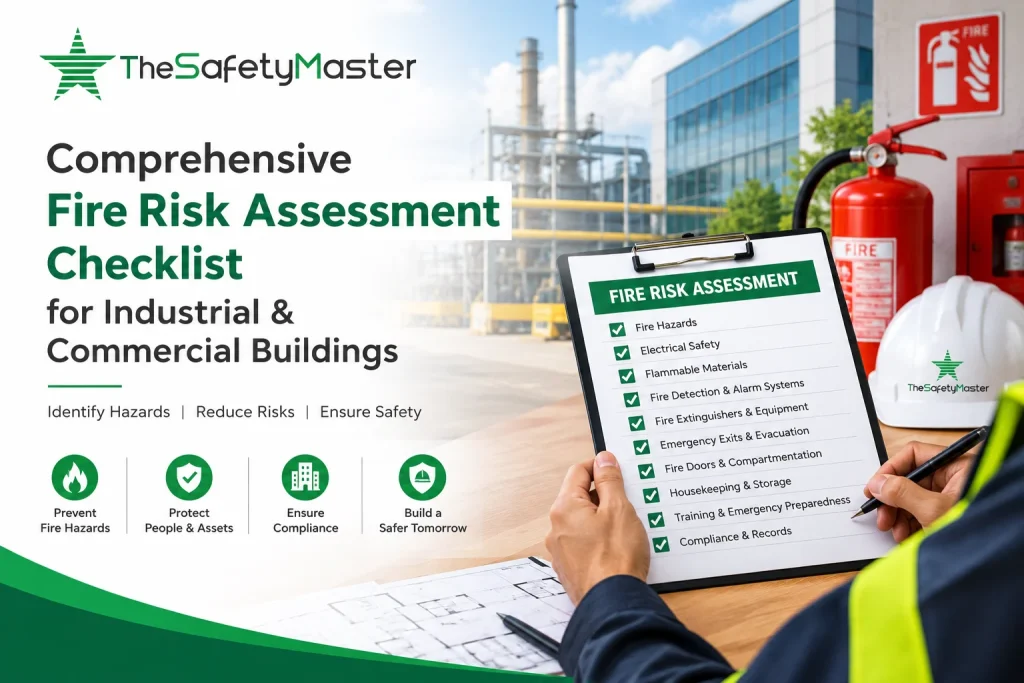
Comprehensive Fire Risk Assessment Checklist for Industrial & Commercial Buildings
October 14, 2026
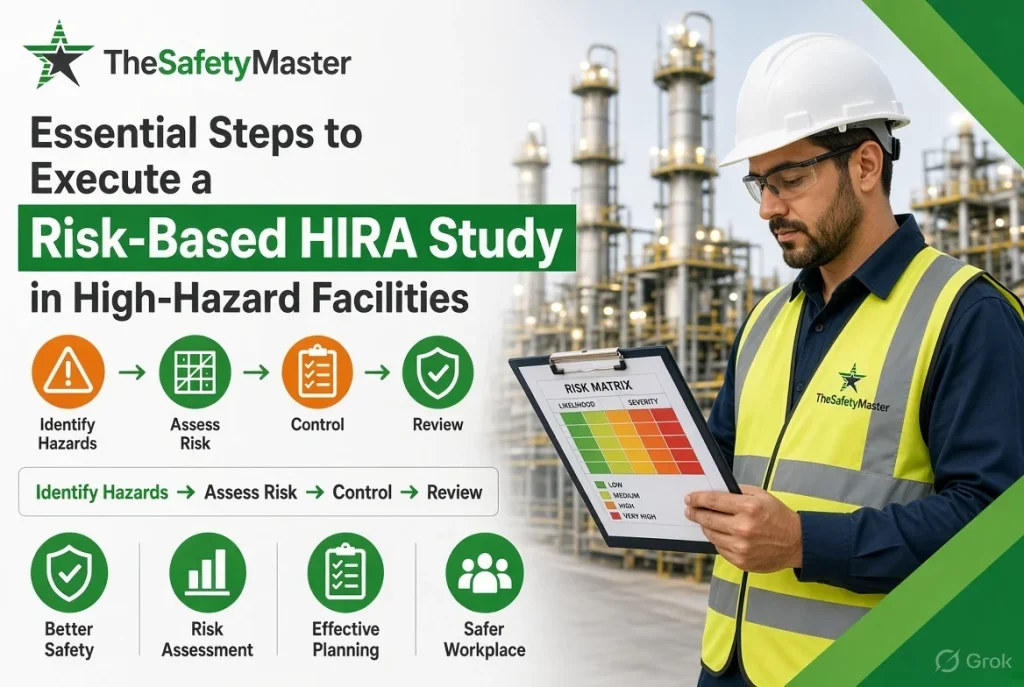
Essential Steps to Execute a Risk-Based HIRA Study in High-Hazard Facilities
October 19, 2026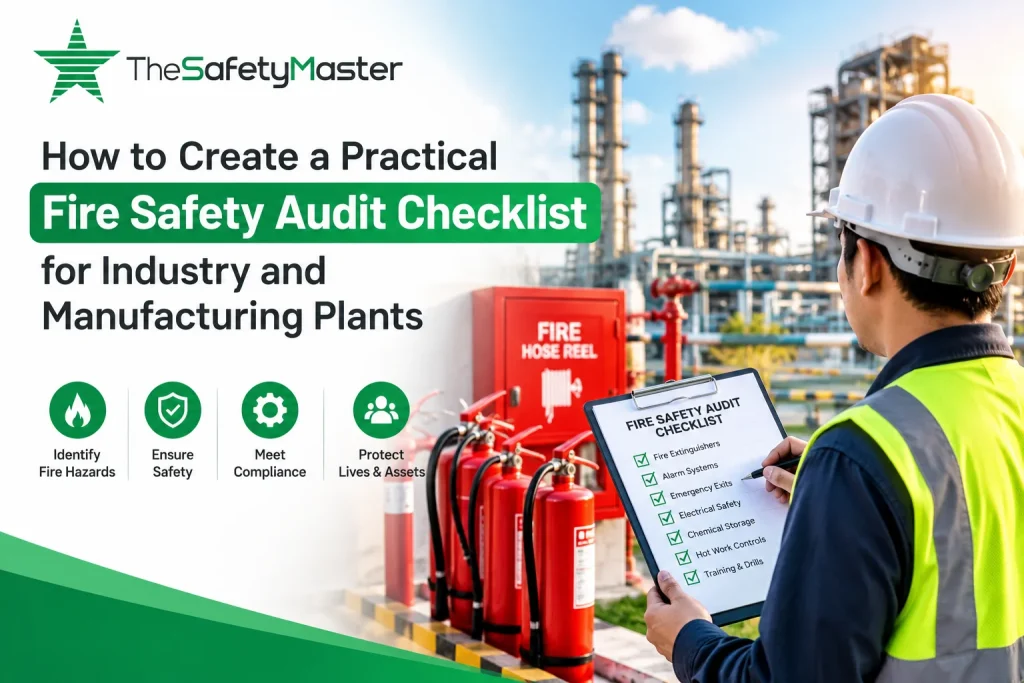
Fire safety is very important in industrial and manufacturing plants. Factories often use heavy machines, electrical equipment, chemicals, fuel, gas, and other materials that can cause fires. A small fire can damage equipment, stop production, injure workers, and lead to major financial losses. A proper Fire Safety Audit Checklist helps identify fire hazards and improve workplace safety.
The Safety Master supports organisations in improving workplace safety through fire safety audits, risk assessments, and practical safety solutions. A well-planned fire safety audit helps businesses check their fire protection systems, emergency arrangements, and safety procedures.
This guide explains how to create a practical fire safety audit checklist for industries and manufacturing plants.
What Is a Fire Safety Audit Checklist?
A fire safety audit checklist is a structured list of safety points used to inspect a building, factory, manufacturing unit, or industrial facility for fire hazards. It helps safety professionals check whether fire prevention measures, firefighting equipment, emergency exits, and evacuation plans are suitable and properly maintained.
The checklist also helps identify unsafe conditions before they cause a fire or emergency.
A practical checklist generally covers:
- Fire hazards and combustible materials.
- Electrical installations and equipment.
- Fire extinguishers and firefighting systems.
- Emergency exits and escape routes.
- Fire alarms and detection systems.
- Storage of chemicals and flammable liquids.
- Employee training and emergency drills.
- Fire safety records and maintenance reports.
The checklist should be prepared according to the nature of the industry, its operations, applicable legal requirements, and the risks present at the site.
Why Is a Fire Safety Audit Important for Manufacturing Plants?
Manufacturing plants may contain several fire hazards because of their production activities, equipment, and storage arrangements. Regular fire safety audits help control these risks and improve emergency preparedness.
1. Identify Fire Hazards
A fire safety audit helps identify possible ignition sources, such as electrical faults, hot surfaces, welding activities, and sparks from machinery. It also checks whether combustible materials are stored safely.
2. Protect Workers and Visitors
A proper audit checks whether workers can leave the building safely during an emergency. It also reviews evacuation routes, emergency signs, alarms, and assembly points.
3. Reduce Equipment and Property Damage
Fire incidents can damage expensive machinery, raw materials, finished products, and production facilities. Regular inspections help reduce the likelihood of fire-related losses.
4. Improve Legal and Safety Compliance
Industrial facilities must follow applicable fire safety, building, electrical, factory, and occupational safety requirements. An audit helps identify compliance gaps and plan corrective actions.
5. Reduce Production Downtime
A major fire can stop manufacturing activities for days or months. Preventive measures, proper maintenance, and emergency planning can reduce the risk of unexpected production interruptions.
How to Create a Practical Fire Safety Audit Checklist
A useful checklist should be simple, specific, and easy to use during an industrial site inspection. Follow these steps to prepare a checklist that suits your facility.
Step 1: Understand the Industrial Site
Start by collecting basic information about the plant and its activities.
Check the following:
- Type of manufacturing process.
- Number of workers and shifts.
- Building layout and production areas.
- Electrical rooms and power distribution systems.
- Storage areas for raw materials and finished goods.
- Chemicals, gases, fuels, and flammable liquids used.
- Welding, cutting, heating, and other hot work activities.
- Existing fire protection and emergency systems.
This information helps identify the main fire hazards in different areas of the facility.
Step 2: Identify Fire Hazards
Inspect each work area to find possible sources of fire. Pay special attention to areas where combustible materials are stored or where heat and sparks are generated.
Common hazards include:
- Overloaded electrical sockets and damaged cables.
- Oil leakage from machines.
- Improper storage of flammable liquids.
- Accumulation of dust and combustible waste.
- Gas leaks and damaged gas connections.
- Uncontrolled welding and cutting activities.
- Blocked ventilation openings.
- Smoking in restricted areas.
- Poor housekeeping near electrical equipment.
Record every hazard with its exact location and a description of the unsafe condition.
Step 3: Inspect Fire Detection and Alarm Systems
Fire detection systems provide early warning and help workers respond quickly to an emergency.
The checklist should include:
- Smoke and heat detectors are installed where required.
- Fire alarms are accessible and functional.
- Manual call points are visible and unobstructed.
- Alarm signals can be heard in relevant work areas.
- Control panels show no unresolved faults.
- Inspection and testing records are available.
- Backup power arrangements are maintained where required.
Inspection and testing should follow the applicable standards, manufacturer instructions, and maintenance schedule.
Step 4: Check Firefighting Equipment
Firefighting equipment must be suitable for the hazards present in each area and maintained in working condition.
Inspect the following:
- Fire extinguishers are available at designated locations.
- Extinguishers are suitable for the expected fire classes.
- Operating instructions are visible.
- Safety pins, seals, hoses, and pressure indicators are checked as applicable.
- Equipment is accessible and not blocked by materials.
- Inspection and servicing records are available.
- Fire hose reels and hydrants are accessible.
- Pumps, water supplies, and sprinkler systems are maintained where installed.
Do not assume that one type of fire extinguisher is suitable for every hazard. For example, energised electrical equipment and flammable liquids require appropriate firefighting methods.
Step 5: Inspect Emergency Exits and Escape Routes
Workers must be able to evacuate safely during a fire. Emergency routes should remain clear throughout all shifts.
Check whether:
- Emergency exits are clearly marked.
- Escape routes are free from obstructions.
- Exit doors operate properly.
- Emergency lighting is functional.
- Exit signs are visible.
- Stairways and corridors are kept clear.
- Assembly points are identified.
- Evacuation plans are displayed at suitable locations.
- Emergency access for fire services is maintained.
Any blocked exit or locked emergency door that prevents safe escape should be treated as a serious safety concern and corrected immediately.
Step 6: Review Electrical and Mechanical Safety
Electrical faults and overheated equipment are common ignition sources in industrial environments.
The checklist should cover:
- Electrical panels are closed and properly labelled.
- Cables and connections are in safe condition.
- Electrical equipment is protected from dust, moisture, and damage as required.
- Equipment is not overloaded.
- Motors and machines receive regular maintenance.
- Earthing and electrical protection systems are inspected.
- Combustible materials are kept away from hot surfaces.
- Electrical faults are reported and corrected promptly.
Only authorised and competent personnel should carry out electrical inspections, repairs, and testing.
Step 7: Check Chemical and Flammable Material Storage
Many industrial plants use solvents, oils, paints, gases, fuels, and other materials that can increase fire risk.
Check the following:
- Flammable liquids are stored in suitable designated areas.
- Containers are labelled correctly.
- Safety Data Sheets are available where required.
- Incompatible chemicals are separated.
- Gas cylinders are secured and stored appropriately.
- Leaks and spills are addressed promptly.
- Ignition sources are controlled near flammable materials.
- Suitable ventilation is provided where required.
- Spill response and emergency arrangements are available.
- Storage quantities and arrangements follow applicable requirements.
Facilities handling combustible dust should also assess dust accumulation, ignition sources, and the need for appropriate explosion prevention and protection measures.
Step 8: Review Hot Work Safety
Welding, cutting, grinding, and similar work can generate sparks and heat. These activities may start fires if performed near combustible materials.
Include these checks:
- A hot work permit system is followed where required.
- The work area is inspected before work begins.
- Combustible materials are removed or suitably protected.
- Suitable fire extinguishers are available.
- Gas hoses and connections are inspected.
- Fire watchers are assigned where required.
- Nearby areas are checked for sparks and heat transfer.
- Post-work fire monitoring is completed according to the risk and permit requirements.
Hot work should stop if the required safety controls are missing or ineffective.
Step 9: Review Employee Training and Emergency Preparedness
Workers must understand the fire risks in their workplace and know how to respond during an emergency.
Check whether:
- Employees receive fire safety induction training.
- Relevant workers receive extinguisher training.
- Emergency procedures are communicated.
- Evacuation drills are conducted at suitable intervals.
- Emergency response team members understand their duties.
- First-aid and emergency contacts are available.
- Visitors and contractors receive necessary safety instructions.
- Drill findings are recorded and corrective actions are completed.
Training should be appropriate to each person’s role and the risks of the workplace.
Step 10: Record Findings and Assign Corrective Actions
An audit is useful only when identified problems are addressed. Record each finding and assign responsibility for corrective action.
A practical report should include:
- Audit date and location.
- Name of the auditor.
- Area or equipment inspected.
- Identified hazard or non-compliance.
- Risk level and potential consequences.
- Recommended corrective action.
- Responsible department or person.
- Target completion date.
- Action status and verification details.
High-risk findings should receive immediate attention. The safety team should follow up until corrective actions are completed and verified.
Practical Fire Safety Audit Checklist for Industries
The following checklist can be used as a starting point during a factory inspection. Adapt it to the specific hazards, systems, and legal requirements of the facility.
| No. | Inspection Item | Status |
|---|---|---|
| 1 | Fire hazards identified in all production areas | Yes / No / N.A. |
| 2 | Electrical panels and wiring inspected | Yes / No / N.A. |
| 3 | Fire extinguishers accessible and maintained | Yes / No / N.A. |
| 4 | Fire alarms and detection systems tested | Yes / No / N.A. |
| 5 | Emergency exits clearly marked and unobstructed | Yes / No / N.A. |
| 6 | Emergency lighting and exit signs functional | Yes / No / N.A. |
| 7 | Flammable materials stored safely | Yes / No / N.A. |
| 8 | Gas cylinders and fuel storage inspected | Yes / No / N.A. |
| 9 | Hot work permits and controls followed | Yes / No / N.A. |
| 10 | Fire hydrants, pumps, and sprinklers maintained where installed | Yes / No / N.A. |
| 11 | Housekeeping and combustible waste controlled | Yes / No / N.A. |
| 12 | Emergency access routes kept clear | Yes / No / N.A. |
| 13 | Fire safety training records available | Yes / No / N.A. |
| 14 | Evacuation drills completed and documented | Yes / No / N.A. |
| 15 | Audit findings and corrective actions tracked | Yes / No / N.A. |
Important: “N.A.” means not applicable. Any item marked “No” should be recorded, assessed for risk, and assigned a corrective action. The checklist does not replace a detailed technical inspection or a review of applicable legal requirements.
Common Fire Safety Audit Mistakes to Avoid
1. Using the Same Checklist for Every Industry
A food processing plant, chemical factory, warehouse, and metal manufacturing unit may have different fire hazards. Prepare the checklist according to the actual site conditions.
2. Ignoring High-Risk Areas
Electrical rooms, boiler areas, chemical stores, fuel storage areas, and hot work zones require particular attention. Do not focus only on offices and common areas.
3. Checking Equipment Without Reviewing Records
A fire extinguisher may appear to be in good condition but may have overdue servicing. Review inspection reports, test certificates, and maintenance records as applicable.
4. Failing to Close Audit Findings
Repeatedly identifying the same problem without completing corrective actions does not improve safety. Assign responsibilities, set deadlines, and verify closure.
5. Ignoring Night Shifts and Contractors
Fire hazards can remain uncontrolled when staffing and supervision are limited. Check emergency arrangements across relevant shifts and include contractor activities in the audit.
How Often Should a Fire Safety Audit Be Conducted?
The frequency of a fire safety audit depends on the type of industry, level of fire risk, applicable legal requirements, insurance conditions, and changes in operations.
A practical approach includes:
- Routine workplace checks according to site procedures.
- Scheduled inspections and maintenance of fire protection equipment.
- Periodic formal fire safety audits.
- Additional assessments after significant process changes, incidents, building modifications, or changes in stored materials.
- Follow-up inspections to verify corrective actions.
High-risk facilities may need more frequent inspections and specialist reviews. Always follow applicable legal requirements and equipment maintenance schedules.
Benefits of Professional Fire Safety Audits
A professional fire safety audit can provide a more structured review of hazards, protection systems, emergency procedures, and compliance gaps.
Key benefits include:
- Better identification of fire hazards.
- Improved emergency planning and evacuation arrangements.
- More effective maintenance of firefighting systems.
- Clear priorities for risk reduction.
- Better documentation of safety findings.
- Reduced likelihood of avoidable fire incidents.
- Improved awareness among employees and contractors.
The Safety Master can support organisations seeking to strengthen industrial safety through suitable audit and risk management services. The scope of any professional audit should be agreed according to the site’s requirements.
Conclusion
A practical Fire Safety Audit Checklist is an important tool for improving safety in industrial and manufacturing plants. It helps identify hazards, inspect firefighting equipment, review electrical safety, assess chemical storage, and check emergency arrangements.
The checklist should be specific to the facility, supported by accurate records, and followed by timely corrective actions. Regular inspections, employee training, proper maintenance, and effective emergency planning can help reduce fire risks.
The Safety Master encourages organisations to make fire prevention a regular part of industrial safety management. A systematic fire safety audit helps protect workers, equipment, property, and business operations.
Frequently Asked Questions
1. What should a fire safety audit checklist include?
A fire safety audit checklist should include fire hazards, electrical safety, fire extinguishers, alarms, emergency exits, chemical storage, hot work activities, employee training, emergency drills, and corrective action records.
2. Who can conduct a fire safety audit in an industrial plant?
A fire safety audit should be conducted by a competent person with suitable knowledge of fire hazards, protection systems, and applicable requirements. Specialist inspections may be necessary for electrical installations, fire protection systems, and hazardous industrial processes.
3. How often should a fire safety audit be conducted in a factory?
The frequency depends on applicable laws, fire risk, industry type, equipment requirements, and company procedures. High-risk facilities may require more frequent assessments, along with routine inspections and maintenance.
4. Why is a fire safety audit important for manufacturing plants?
It helps identify ignition sources, unsafe storage, defective equipment, blocked exits, and weaknesses in emergency preparedness. Corrective actions can reduce the likelihood and impact of fire incidents.
5. What is the difference between a fire safety audit and a fire risk assessment?
A fire safety audit systematically reviews fire safety arrangements, equipment, procedures, and compliance. A fire risk assessment identifies fire hazards, evaluates the likelihood and consequences of a fire, and determines suitable control measures. Both activities can support an effective fire prevention programme.
The Safety Master can help organisations improve workplace safety through appropriate fire safety audit and risk management services. A well-maintained checklist, supported by competent inspections and corrective actions, is an essential step towards a safer industrial workplace.