How to Conduct an Effective Workplace Safety Audit: A Step-by-Step Checklist

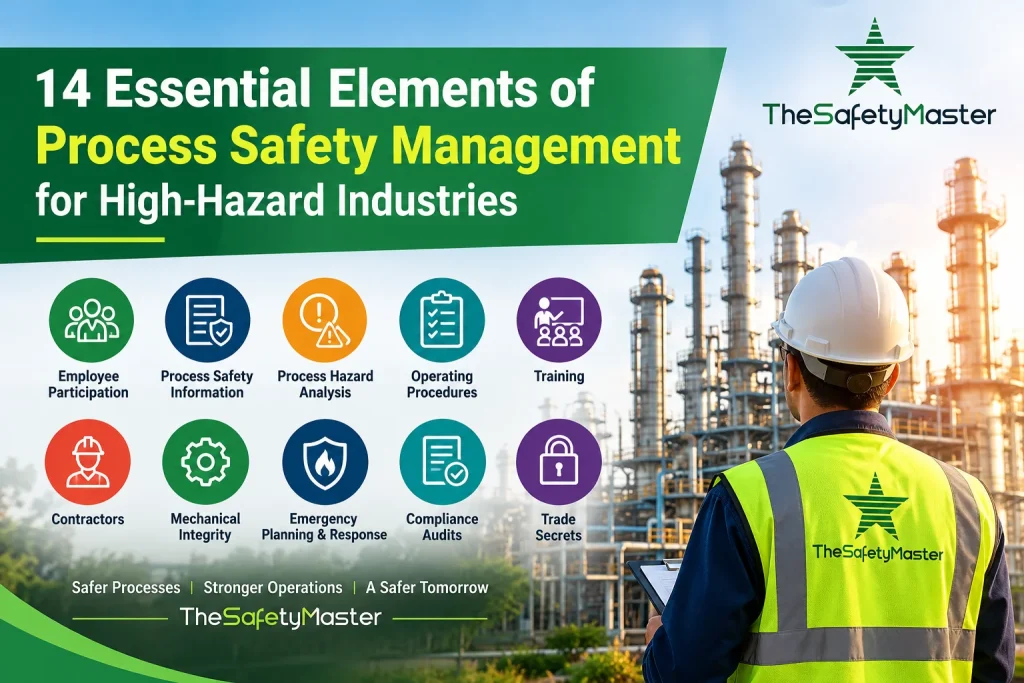
14 Essential Elements of Process Safety Management for High-Hazard Industries
September 29, 2026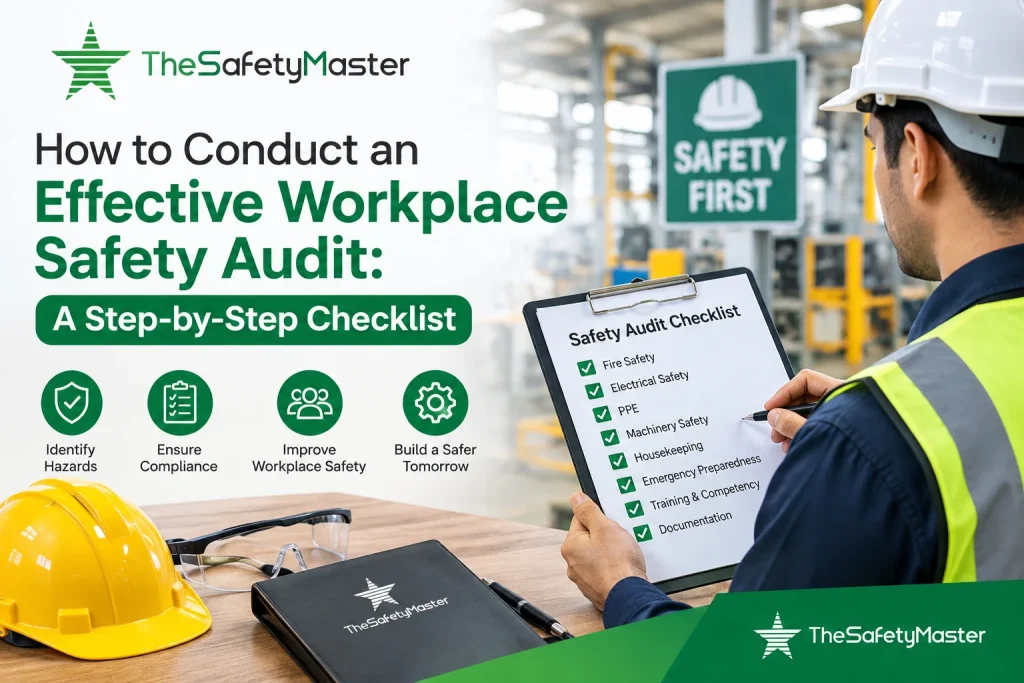
A Workplace Safety Audit is an important process for identifying unsafe conditions, checking safety practices, and improving workplace compliance. A well-planned audit helps organizations find hazards before they result in accidents, injuries, equipment damage, or operational disruptions.
For industries such as manufacturing, construction, chemicals, warehouses, oil and gas, and other workplaces, regular safety audits can provide a structured way to review safety performance. The Safety Master helps organizations understand workplace risks and develop practical approaches for improving safety management.
What Is a Workplace Safety Audit?
A workplace safety audit is a systematic review of workplace conditions, safety procedures, equipment, employee practices, and compliance requirements. The purpose is to identify gaps between current practices and the organization’s safety standards.
A safety audit may examine areas such as:
- Fire protection systems
- Emergency exits and evacuation routes
- Personal protective equipment
- Electrical safety
- Machine guarding
- Chemical storage and handling
- Housekeeping
- Work permits
- Emergency preparedness
- Safety training
- Incident records
- Contractor safety
- Safety signage
- Workplace inspections
The findings can then be used to develop corrective and preventive actions.
Why Is a Workplace Safety Audit Important?
Regular audits help organizations identify problems that may not be visible during normal operations. They also provide documented evidence of safety performance.
Important benefits include:
- Identification of workplace hazards
- Better compliance with applicable requirements
- Reduction of unsafe conditions
- Improved employee safety awareness
- Better emergency preparedness
- Identification of gaps in safety procedures
- Improved housekeeping and workplace organization
- Tracking of corrective actions
- Support for continuous safety improvement
An audit should not only focus on finding mistakes. It should also help an organization understand why safety gaps exist and what actions can address them.
Step-by-Step Workplace Safety Audit Process
Step 1: Define the Audit Scope
Before starting the audit, clearly define what will be reviewed.
The scope may cover:
- A complete facility
- A particular production area
- A warehouse
- Maintenance activities
- Electrical systems
- Fire safety
- Chemical handling
- Contractor activities
- Emergency response systems
A clear scope keeps the audit organized and ensures important areas are not missed.
Step 2: Identify Applicable Safety Requirements
Review the safety requirements that apply to the workplace and audit scope.
Depending on the industry and location, these may include:
- Applicable laws and regulations
- Company safety procedures
- Industry standards
- Fire safety requirements
- Occupational safety requirements
- Equipment manufacturer instructions
- Internal safety policies
The auditor should use current and applicable requirements rather than relying on outdated documents.
Step 3: Prepare the Safety Audit Checklist
A checklist provides a structured method for reviewing workplace safety.
A basic checklist can include questions such as:
| Audit Area | Example Check |
|---|---|
| Fire Safety | Are fire extinguishers accessible and inspected? |
| Emergency Exits | Are emergency exits clear and properly marked? |
| PPE | Is required PPE available and being used? |
| Electrical Safety | Are electrical panels protected and accessible? |
| Machinery | Are guards installed and maintained? |
| Housekeeping | Are work areas clean and free from unnecessary obstacles? |
| Chemical Safety | Are chemicals correctly labelled and stored? |
| Training | Are employees receiving required safety training? |
| Emergency Response | Are emergency procedures available and understood? |
The checklist should be customized according to the workplace and its hazards.
Step 4: Review Previous Audit Findings
Before conducting the physical audit, check previous audit reports.
Look for:
- Open corrective actions
- Repeated findings
- Overdue actions
- Serious hazards
- Previous incidents
- Recurring housekeeping issues
- Training gaps
Repeated findings may indicate that previous corrective actions were not effective.
Step 5: Conduct a Workplace Inspection
Walk through the workplace and observe actual conditions.
Do not depend only on documents or interviews. Compare written procedures with what employees actually do.
During the inspection, look for:
- Unsafe acts
- Unsafe conditions
- Blocked exits
- Damaged equipment
- Missing guards
- Poor housekeeping
- Improper PPE use
- Chemical leaks
- Exposed electrical hazards
- Unsafe storage
- Missing warning signs
Photographs and observations can be recorded as supporting evidence where appropriate.
Step 6: Interview Employees
Employees who perform daily activities can provide useful information about workplace risks.
Ask practical questions such as:
- What hazards do you encounter during your work?
- What happens when equipment fails?
- Do you know the emergency procedure?
- Is PPE easily available?
- Have you received safety training?
- How are unsafe conditions reported?
- Are there procedures that are difficult to follow?
Employee feedback can reveal gaps that may not be obvious during a physical inspection.
Step 7: Review Documents and Records
Review relevant safety documentation to verify whether required systems are implemented.
Documents may include:
- Safety procedures
- Training records
- Inspection records
- Maintenance records
- Incident reports
- Emergency drill records
- Permit-to-work records
- Risk assessments
- Fire equipment inspection records
- PPE records
- Corrective action reports
Document review should be compared with actual workplace conditions.
Step 8: Identify and Classify Findings
Not every finding has the same level of risk. Findings should be classified according to the organization’s defined risk criteria.
For example:
- Critical finding
- Major finding
- Minor finding
- Observation
- Opportunity for improvement
Risk-based classification helps management prioritize corrective actions.
Step 9: Prepare the Audit Report
The audit report should clearly communicate what was checked and what was found.
A typical report can include:
- Audit objective
- Audit scope
- Audit date
- Audit team
- Areas inspected
- Documents reviewed
- Positive observations
- Non-conformities
- Risk observations
- Photographic evidence
- Corrective actions
- Responsible persons
- Target completion dates
- Follow-up requirements
A clear report makes it easier for management to act on the findings.
Step 10: Develop Corrective Actions
Each significant finding should have an appropriate corrective action.
A good corrective action should identify:
- What needs to be corrected
- Why the issue occurred
- Who is responsible
- Required resources
- Target completion date
- Verification method
Where appropriate, organizations should address the root cause instead of simply correcting the immediate problem.
Step 11: Follow Up and Verify Closure
An audit is not complete when the report is issued.
The auditor or responsible safety team should verify whether corrective actions have actually been completed.
For example, if an audit identifies a blocked emergency exit, simply assigning an action is not enough. The organization should verify that the obstruction has been removed and that suitable controls are in place to prevent recurrence.
How to Create a Workplace Safety Audit Checklist
A useful checklist should be simple, relevant, and based on actual workplace hazards.
Start by dividing the audit into important sections:
General Safety
Check:
- Workplace housekeeping
- Safety signs
- Walkways
- Lighting
- Access routes
- Workplace conditions
Fire Safety
Check:
- Fire extinguishers
- Fire alarm systems
- Emergency exits
- Fire hydrants
- Emergency lighting
- Evacuation routes
- Fire drills
Electrical Safety
Check:
- Electrical panels
- Cables
- Earthing
- Electrical equipment
- Isolation procedures
- Panel access
PPE
Check:
- PPE availability
- Correct PPE selection
- PPE condition
- Employee usage
- PPE training
Machinery Safety
Check:
- Machine guarding
- Emergency stops
- Maintenance
- Lockout/tagout where applicable
- Operator training
Emergency Preparedness
Check:
- Emergency plans
- Emergency contacts
- Assembly points
- First-aid facilities
- Emergency drills
- Employee awareness
What Are the 5 C’s of Audit?
The 5 C’s of audit are commonly used as a simple framework for presenting audit findings. They are:
- Criteria – What requirement, standard, or expectation should be followed?
- Condition – What was actually observed?
- Cause – Why did the problem occur?
- Consequence – What could happen if the issue remains unresolved?
- Corrective Action – What action should be taken?
Using these points can make audit findings easier to understand and act upon.
What Is a 5S Audit Checklist?
A 5S audit checklist is used to assess workplace organization and housekeeping based on the 5S methodology:
- Sort – Remove unnecessary items.
- Set in Order – Arrange necessary items for easy access.
- Shine – Keep the workplace clean.
- Standardize – Establish consistent workplace practices.
- Sustain – Maintain the improvements over time.
A 5S audit can help identify clutter, poor storage, inconsistent practices, and housekeeping problems.
What Are the 7 Audit Procedures?
Audit procedures vary depending on the organization and audit objective. A practical workplace safety audit can include these seven procedures:
- Document review – Check policies, procedures, records, and previous reports.
- Workplace inspection – Physically inspect workplace conditions.
- Employee interviews – Discuss safety practices and concerns.
- Observation – Observe actual work activities.
- Record verification – Confirm that required inspections, training, and maintenance are documented.
- Finding evaluation – Assess and classify identified gaps.
- Corrective action follow-up – Verify that actions are completed and effective.
Common Mistakes During a Workplace Safety Audit
Organizations can reduce audit effectiveness by making common mistakes.
Some examples include:
- Using the same checklist for every type of workplace
- Focusing only on documentation
- Ignoring employee feedback
- Not checking previous findings
- Recording findings without evidence
- Failing to prioritize serious hazards
- Assigning corrective actions without clear responsibility
- Not following up on overdue actions
- Treating an audit as a one-time activity
An effective audit should combine document review, workplace observation, employee interaction, and corrective action follow-up.
How The Safety Master Can Support Workplace Safety Improvement
A structured Workplace Safety Audit can help organizations identify hazards, review existing controls, and improve workplace safety practices. The Safety Master focuses on practical safety approaches that can help organizations understand risks and strengthen their safety management processes.
Organizations can use audit findings as an input for risk assessment, employee training, corrective actions, emergency preparedness, and continuous improvement.
Conclusion
A Workplace Safety Audit should be systematic, evidence-based, and focused on practical improvement. From defining the audit scope and preparing a checklist to inspecting the workplace, identifying findings, preparing a report, and verifying corrective actions, every step contributes to a more effective safety management process.
A well-designed checklist helps auditors maintain consistency, while employee interviews and workplace observations help identify real operational risks. The Safety Master can help organizations build a structured approach to workplace safety and risk management.
FAQs
Q-What are the steps involved in conducting a workplace safety audit?
The main steps include defining the scope, identifying requirements, preparing a checklist, reviewing previous findings, inspecting the workplace, interviewing employees, reviewing documents, identifying findings, preparing the report, assigning corrective actions, and verifying closure.
Q-How to create a safety audit checklist?
Start by identifying workplace hazards and applicable safety requirements. Divide the checklist into areas such as fire safety, electrical safety, PPE, machinery, housekeeping, emergency preparedness, training, and documentation. Customize the checklist to the specific workplace.
Q-What are the 5 C’s of audit?
The 5 C’s are Criteria, Condition, Cause, Consequence, and Corrective Action. They provide a structured way to explain an audit finding and the action required to address it.
Q-How do you prepare an audit checklist?
Review applicable requirements, previous audit findings, workplace hazards, procedures, incident records, and operational activities. Convert these requirements into clear questions or verification points that auditors can use during the inspection.
Q-What is a 5S audit checklist?
A 5S audit checklist evaluates workplace organization using Sort, Set in Order, Shine, Standardize, and Sustain. It is commonly used to review housekeeping, storage, organization, cleanliness, and workplace discipline.
Q-What are the 7 audit procedures?
Seven practical audit procedures are document review, workplace inspection, employee interviews, observation, record verification, finding evaluation, and corrective-action follow-up. The exact procedures may vary according to the audit scope and organization.