How HIRA Safety Helps Organizations Identify Hazards and Prevent Workplace Accidents
Leading Consulting Services and Regulatory Requirements for HAZOP Study in India
November 18, 2026
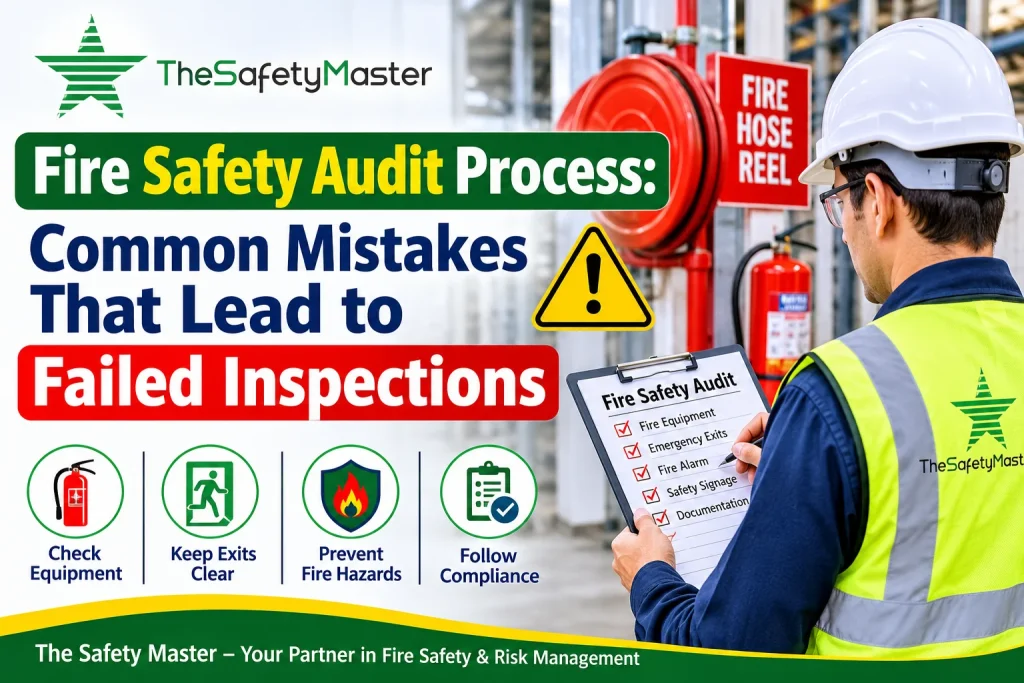
Fire Safety Audit Process: Common Mistakes That Lead to Failed Inspections
November 23, 2026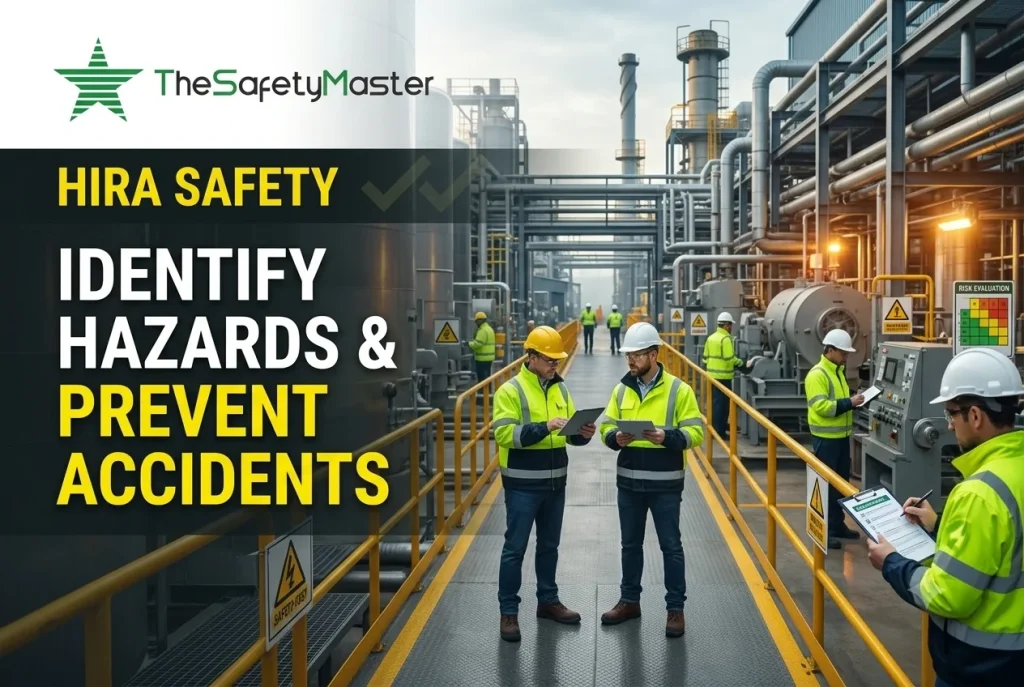
Workplace safety is no longer just a regulatory checkbox; it is a foundational pillar of operational excellence and employee well-being.Every year, organizations across industrial, manufacturing, and commercial sectors face severe disruptions due to preventable workplace accidents.The key to breaking this cycle lies in shifting from reactive incident response to proactive hazard management.
This is where HIRA Safety (Hazard Identification and Risk Assessment) comes into play. At The Safety Master, we help organizations build robust, proactive safety frameworks that pinpoint operational risks long before they result in injuries or costly downtime.
Understanding HIRA Safety: The Core Framework
HIRA Safety is a structured, systematic methodology designed to identify workplace hazards, evaluate associated risk levels, and establish effective control measures.It serves as the baseline for modern Occupational Health and Safety Management Systems (OHSMS), including ISO 45001 compliance.
[ Hazard Identification ] ➔ [ Risk Analysis & Evaluation ] ➔ [ Control Implementation ] ➔ [ Continuous Monitoring ]
The Two Fundamental Components of HIRA Safety
- Hazard Identification (HI):The process of spotting potential sources of harm, unsafe conditions, or risky work behaviors across a facility.
- Risk Assessment (RA):Evaluating the likelihood of a hazard causing an incident paired with the potential severity of the outcome.
$$\text{Risk Level} = \text{Likelihood of Occurrence} \times \text{Severity of Impact}$$
Key Categories of Workplace Hazards Identified by HIRA Safety
To prevent accidents, safety teams must first understand what hazards look like on the shop floor.The Safety Master classifies workplace hazards into five core operational categories:
Hazard CategoryKey Operational IndicatorsCommon Workplace ExamplesPhysical Hazards Environmental stressors and energy sources Excessive noise, high vibration, unguarded machinery, fall risks Chemical Hazards Exposure to dangerous substances or vapors Toxic gas inhalation ($H_2S$, $CO$), corrosive acid spills, flammable storage Ergonomic Hazards Strain caused by workstation layout or physical tasks Heavy manual lifting, repetitive assembly motions, awkward posture Electrical Hazards Live electrical exposure and grounding faults Uninsulated wiring, circuit overloads, arc flash risks Psychosocial Hazards Mental and organizational stressors Chronic shift-work fatigue, extreme workload stress, inadequate safety training
Step-by-Step: How The Safety Master Implements HIRA Safety
Executing an effective HIRA Safety study requires a structured, expert-led approach.The Safety Master guides organizations through a proven multi-stage implementation process:
1. Systematic Workplace Walkthroughs & Data Gathering
Safety specialists inspect machinery, review past incident logs, examine Standard Operating Procedures (SOPs), and consult directly with ground-level operators to capture all routine and non-routine hazards.
2. Risk Evaluation via Matrix Scoring
Once hazards are identified, they are mapped onto a standardized Risk Matrix:
- Low Risk (Green): Acceptable; continue monitoring under existing controls.
- Medium Risk (Yellow): Tolerable; implement additional control measures within a defined timeline.
- High/Critical Risk (Red): Unacceptable; immediate corrective action required before work proceeds.
3. Applying the Hierarchy of Controls
To mitigate high-risk areas effectively, The Safety Master enforces the universally accepted Hierarchy of Controls:
Level 1: Elimination
Physically remove the hazard entirely (e.g., eliminating manual high-altitude work with automation).
Level 2: Substitution
Replace dangerous materials or processes with safer alternatives (e.g., swapping solvent-based chemicals for water-based solutions).
Level 3: Engineering Controls
Isolate personnel from the hazard (e.g., installing interlocked machine guards, continuous perimeter handrails, or local exhaust ventilation).
Level 4: Administrative Controls
Change how people work through procedures and training (e.g., mandatory Permit-to-Work systems, job rotation, and safety SOP updates).
Level 5: Personal Protective Equipment (PPE)
Protect workers with equipment like safety harnesses, respirators, face shields, and chemical-resistant gloves.
Business Benefits of Partnering with The Safety Master for HIRA Safety
Implementing a robust HIRA Safety strategy delivers tangible operational and financial advantages:
- Accident & Injury Reduction:Early identification prevents workplace injuries, occupational illnesses, and fatalities before they occur.
- Regulatory Compliance & Risk Reduction: Helps organizations stay fully compliant with local statutory norms and international health and safety regulations, guarding against costly fines and legal liabilities.
- Cost Savings & Operational Efficiency:Minimizes unplanned machine downtime, workers’ compensation claims, and legal costs associated with workplace incidents.
- Fostering a Safety-First Culture:Engaging workers in hazard identification builds trust, enhances risk awareness, and drives accountability across all organization levels.
Transform Your Workplace Safety with The Safety Master
Proactive hazard management is the single most effective investment an organization can make to protect its people and assets. The Safety Master provides comprehensive safety consulting, specialized HIRA Safety studies, custom risk matrix development, and hands-on employee safety training tailored to your exact industry needs.
Contact The Safety Master today to schedule your comprehensive HIRA Safety assessment and build a safer, zero-accident workplace.