Comprehensive Safety Audit: A Complete Guide to Workplace Safety and Risk Control

How to Conduct a Successful PSSR in Your Chemical Plant Pre-Startup Safety Review
May 15, 2023
Understanding the Importance of Contractor Safety in Todays Industrial Workforce
May 16, 2023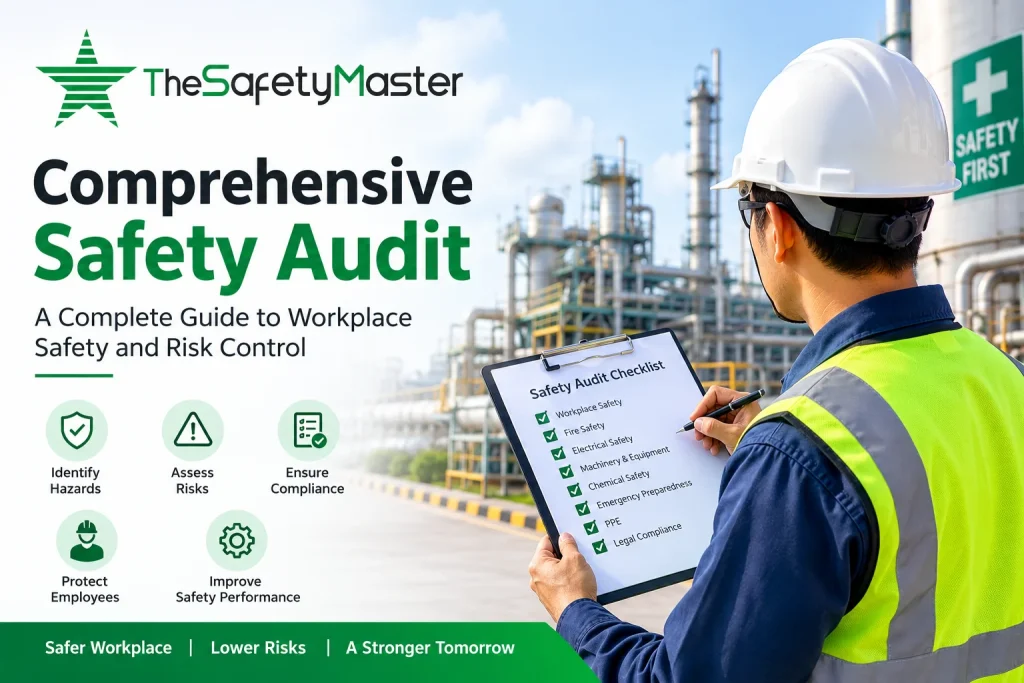
Introduction to Comprehensive Safety Audit
A safe workplace is important for every business. Employees work better when they have a safe environment, proper equipment, and clear safety procedures. However, workplaces can have hidden hazards that may lead to injuries, equipment damage, fires, or serious accidents. A Comprehensive Safety Audit helps organizations identify these problems and take corrective action before an incident occurs.
A safety audit is a systematic review of workplace conditions, safety procedures, equipment, documents, and employee practices. It helps a company understand whether its safety systems are working properly and where improvements are needed.
The Safety Master provides safety consulting and audit-related services to help organizations improve workplace safety, manage risks, and strengthen safety performance. A well-planned audit can support better decision-making, reduce unsafe conditions, and help businesses build a strong safety culture.
What Is a Comprehensive Safety Audit?
A Comprehensive Safety Audit is a detailed evaluation of an organization’s health and safety management system. It covers workplace hazards, machinery, electrical installations, fire protection, personal protective equipment, emergency arrangements, employee training, and applicable legal requirements.
Unlike a basic workplace inspection, a comprehensive audit examines both physical conditions and management practices. It checks whether safety procedures are documented, communicated, followed, and reviewed regularly.
For example, an auditor may inspect a manufacturing plant to identify unsafe machine guards, exposed electrical wiring, blocked emergency exits, improper chemical storage, and gaps in employee training. The findings help management understand the level of risk and decide which actions need immediate attention.
The main objective is to prevent incidents, protect employees, safeguard assets, and improve the overall safety management system.
Importance of a Comprehensive Safety Audit
Regular safety audits help businesses identify problems before they cause serious harm. They also help management understand whether existing safety controls are suitable for actual workplace conditions.
Key benefits include:
- Early hazard identification: Find unsafe conditions and practices before an accident occurs.
- Risk reduction: Assess hazards and introduce suitable control measures.
- Legal compliance: Review applicable occupational safety requirements and industry standards.
- Employee protection: Improve working conditions and reduce exposure to workplace risks.
- Equipment safety: Identify problems with machinery, tools, electrical systems, and protective devices.
- Emergency preparedness: Check fire protection, evacuation routes, alarms, and emergency response plans.
- Better productivity: Reduce avoidable downtime caused by incidents and unsafe equipment.
- Improved safety culture: Encourage employees and supervisors to take responsibility for safety.
- Management accountability: Assign corrective actions, responsibilities, and completion dates.
A comprehensive audit should not be treated as a paperwork exercise. Its value comes from identifying real problems and ensuring that recommended improvements are completed.
Key Areas Covered in a Comprehensive Safety Audit
The scope of an audit depends on the type of industry, workplace activities, equipment, and risk level. The following areas are commonly reviewed.
Workplace Hazard Identification and Risk Assessment
Hazard identification is an important part of every safety audit. Auditors review work activities to identify anything that could cause injury, illness, property damage, or an environmental incident.
Common hazards include slippery floors, falling objects, moving machinery, working at height, manual handling, chemical exposure, and unsafe work practices.
The auditor evaluates the likelihood of an incident and its possible consequences. A risk assessment helps the organization prioritize hazards and select suitable controls.
Risk assessments should be reviewed when processes change, new equipment is installed, or an incident reveals a weakness in existing controls.
Fire Safety Audit
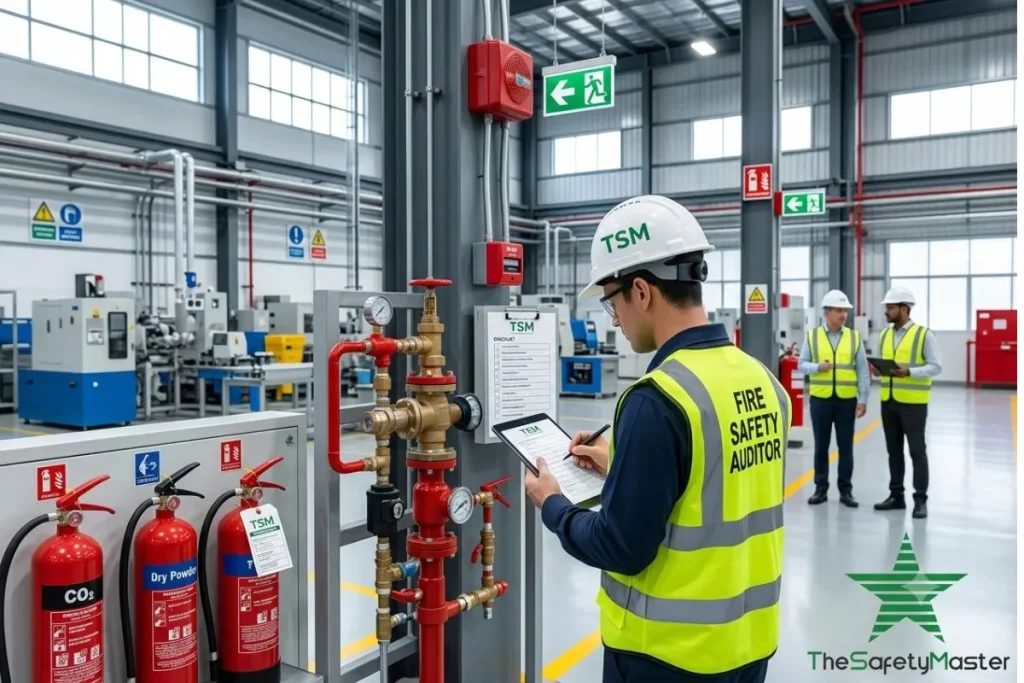
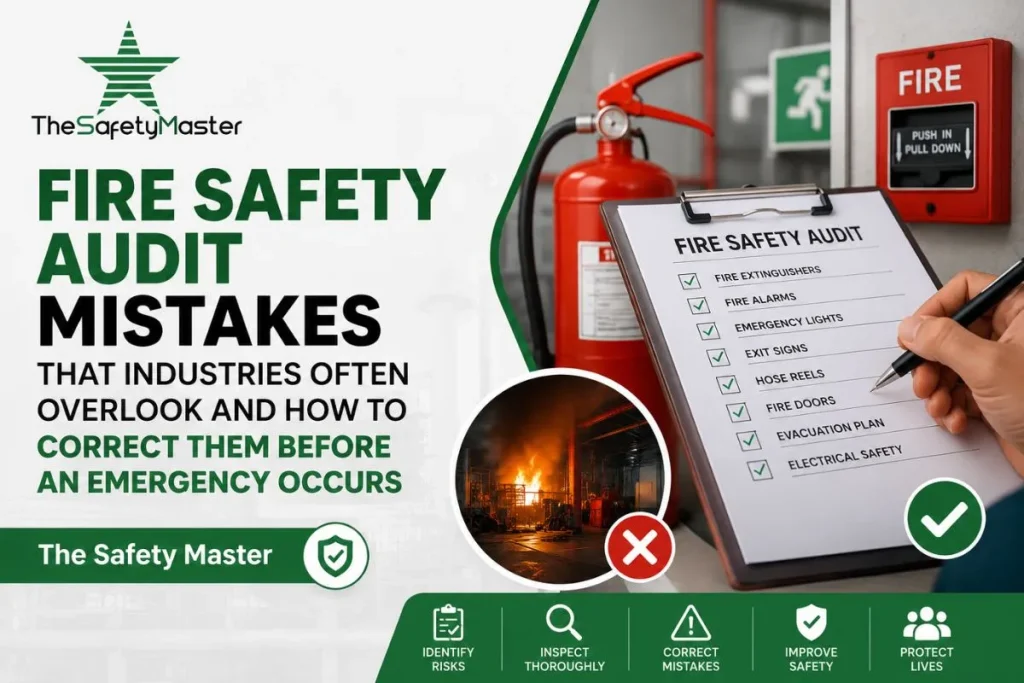
Fire safety is an important part of a comprehensive workplace audit. Fire hazards may arise from combustible materials, electrical faults, hot work, flammable liquids, gas leaks, and poor housekeeping.
The audit may review:
- Availability and condition of fire extinguishers.
- Fire alarm and detection systems.
- Emergency exits and evacuation routes.
- Fire hydrants, hose reels, and sprinkler systems where applicable.
- Storage and handling of flammable materials.
- Hot work permits and fire watch arrangements.
- Emergency lighting and exit signage.
- Fire evacuation plans and mock drills.
- Inspection and maintenance records.
The auditor identifies gaps and recommends corrective measures based on the building, process, applicable requirements, and fire risk.
Electrical Safety Audit
Electrical hazards can result in electric shock, burns, equipment damage, and electrical fires. An electrical safety review checks whether electrical installations and working practices provide suitable protection.
Common audit points include:
- Condition of electrical panels and distribution boards.
- Earthing and bonding arrangements.
- Cable insulation and electrical connections.
- Protection against overloads and short circuits.
- Electrical equipment inspection and maintenance.
- Lockout/tagout procedures during maintenance.
- Access control around electrical panels.
- Electrical safety training and authorization.
- Applicable electrical testing and inspection records.
Qualified professionals should carry out specialized electrical testing and assessments. Unsafe electrical conditions should be addressed according to their risk and the relevant technical requirements.
Machinery and Equipment Safety
Industrial machinery can cause serious injuries when guards, interlocks, emergency stops, or maintenance controls are missing or defective.
A comprehensive safety audit checks whether machines are operated and maintained safely. It may cover machine guarding, rotating parts, conveyors, lifting equipment, pressure systems, hand tools, and other equipment relevant to the workplace.
Auditors also review preventive maintenance records, operator training, equipment inspection reports, and safe operating procedures.
Where required, machinery should be isolated before maintenance. Employees must understand the hazards and follow approved procedures for operating, cleaning, adjusting, and repairing equipment.
Personal Protective Equipment
Personal protective equipment (PPE) helps protect workers from hazards that cannot be adequately controlled through other measures.
The audit checks whether employees receive suitable PPE for their tasks and whether the equipment is used, maintained, and replaced properly.
Common PPE includes safety helmets, protective footwear, gloves, safety goggles, face shields, hearing protection, respiratory protection, and fall protection equipment.
PPE selection should be based on the hazards identified during the risk assessment. Employers should also provide instructions and training on correct use, limitations, storage, and inspection.
PPE should not replace practical measures such as eliminating hazards, installing guards, improving ventilation, or isolating dangerous energy sources.
Chemical and Hazardous Material Safety
Chemical handling can create risks such as poisoning, burns, fire, explosions, and harmful exposure. A safety audit reviews how chemicals are purchased, stored, handled, transported, and disposed of.
Important checks include proper labeling, accessible safety data sheets, compatible chemical storage, ventilation, spill control equipment, and emergency response arrangements.
The audit should also review employee training, exposure controls, chemical handling procedures, and arrangements for reporting leaks or spills.
Where dangerous substances are used, the organization should assess the specific hazards and implement controls suitable for the chemical and process.
Emergency Preparedness and Response
Every workplace should have suitable arrangements for responding to emergencies. These may include fires, chemical releases, equipment failures, medical emergencies, natural disasters, and other serious events.
A comprehensive safety audit evaluates emergency plans, alarm systems, evacuation procedures, first-aid facilities, emergency contacts, and employee responsibilities.
Auditors may also review mock drill records and the actions taken after previous exercises. Emergency routes must remain accessible, and employees should understand how to raise an alarm, evacuate safely, and report to the designated assembly point.
Emergency plans should reflect actual site conditions and be updated whenever important workplace changes occur.
Comprehensive Safety Audit Process
A structured audit process helps organizations obtain reliable findings and take effective corrective action.
Step 1: Planning and Preparation
The first step is to define the audit scope, objectives, locations, and activities. The auditor reviews available safety policies, risk assessments, previous audit reports, incident records, maintenance documents, and applicable legal requirements.
Management should identify the responsible representatives and provide access to the areas, records, and employees required for the assessment.
Step 2: Workplace Inspection
The auditor visits the workplace to examine actual operating conditions. This includes observing work practices, checking equipment, reviewing housekeeping, and identifying unsafe conditions.
The inspection should cover routine activities as well as higher-risk tasks, such as hot work, confined-space entry, lifting operations, and work at height, wherever relevant.
Photographs and inspection notes may be recorded when appropriate and permitted.
Step 3: Employee Interviews and Document Review
Employees and supervisors can provide valuable information about workplace hazards and the effectiveness of safety procedures.
The auditor may ask about safety training, emergency arrangements, equipment defects, permit-to-work requirements, incident reporting, and the use of PPE.
Documents are compared with actual workplace practices. A procedure that exists on paper but is not followed in practice represents a gap that needs attention.
Step 4: Risk Evaluation and Gap Analysis
The findings are evaluated to determine the level of risk and the difference between existing practices and applicable requirements.
High-risk findings, such as exposed live electrical parts or failed critical safety systems, require urgent attention. Other findings may be scheduled according to their severity, likelihood, and potential consequences.
The auditor should provide clear evidence for each significant finding and explain why corrective action is needed.
Step 5: Audit Report Preparation
The audit report records the observations, identified hazards, risk ratings where applicable, compliance gaps, and recommended corrective measures.
A useful report should be easy for management and operational teams to understand. Each finding should include enough information to identify the problem, the affected area, and the action required.
The report should distinguish urgent safety concerns from lower-priority improvement opportunities.
Step 6: Corrective Action and Follow-Up
An audit is effective only when the organization acts on its findings. Management should assign an owner to every corrective action and set a realistic completion date based on the risk.
Actions may include repairing equipment, improving guarding, updating procedures, providing training, changing storage arrangements, or strengthening emergency controls.
Follow-up inspections should verify that the corrective actions have been completed and that the risks have been reduced. High-risk issues may require immediate verification before the affected activity resumes.
Comprehensive Safety Audit Checklist
A practical checklist helps auditors review important safety areas consistently. The following points can be adapted to the needs of a particular site.
General workplace safety
- Floors, walkways, and work areas are maintained properly.
- Housekeeping and waste disposal arrangements are adequate.
- Safety signs and hazard warnings are visible.
- Safe work procedures are available and followed.
- Previous audit findings are tracked and closed.
Fire and emergency safety
- Fire extinguishers are accessible and inspected.
- Emergency exits and escape routes are unobstructed.
- Alarm and emergency communication arrangements are functional.
- Evacuation plans and emergency contacts are available.
- Employees participate in relevant emergency training and drills.
Electrical safety
- Electrical panels are properly identified and accessible to authorized personnel.
- Damaged cables and unsafe connections are addressed.
- Electrical protection and earthing arrangements are maintained.
- Electrical maintenance is performed by qualified personnel.
- Energy isolation procedures are followed during maintenance.
Machinery and equipment
- Required machine guards are installed and maintained.
- Emergency stops and safety devices are checked.
- Equipment inspections and maintenance records are available.
- Operators are trained and authorized.
- Lifting equipment and accessories are inspected as required.
Chemical safety
- Containers are correctly labeled.
- Safety data sheets are accessible.
- Incompatible chemicals are stored separately where required.
- Spill response equipment is available when needed.
- Workers understand chemical hazards and safe handling procedures.
Employee safety and management
- PPE is suitable and used correctly.
- Employees receive relevant safety training.
- Incidents and near misses are reported and investigated.
- Risk assessments are reviewed when necessary.
- Corrective actions have assigned owners and deadlines.
This checklist is a starting point, not a replacement for a site-specific assessment or any mandatory inspection prescribed by applicable law.
Safety Audit Standards and Legal Compliance in India
Organizations in India should identify the occupational safety, fire safety, electrical safety, environmental, and industry-specific requirements that apply to their operations.
Depending on the organization, the review may consider applicable provisions of the Occupational Safety, Health and Working Conditions Code and other legislation in force, relevant state rules, factory or establishment requirements, electrical safety rules, fire approvals, and sector-specific regulations. The applicability and current legal status of each requirement should be verified for the site.
ISO 45001 can provide a framework for occupational health and safety management systems. IS 14489 may also be relevant to safety audit practices, depending on the audit scope and applicable requirements.
A comprehensive safety audit should check more than the availability of certificates and records. It should evaluate whether the relevant controls are implemented and working effectively at the workplace.
Legal requirements vary by industry, location, process, and facility. Organizations should seek qualified advice when determining their specific compliance obligations.
Common Challenges Found During Safety Audits
Many organizations have safety policies but face difficulties implementing them consistently. Common issues include:
- Incomplete risk assessments.
- Poor housekeeping and blocked access routes.
- Defective machinery guards.
- Inadequate electrical maintenance.
- Improper chemical labeling or storage.
- Insufficient employee training.
- Incomplete inspection and maintenance records.
- Weak incident investigation practices.
- Repeated audit findings that remain unresolved.
- Limited involvement from supervisors and senior management.
These problems often arise when safety responsibilities are unclear or corrective actions are not monitored. A practical action plan, regular communication, and management support can help close these gaps.
How to Choose a Comprehensive Safety Audit Consultant
Choosing the right safety audit consultant can help an organization obtain useful findings and practical recommendations.
Before selecting a consultant, consider the following factors:
Industry experience: The consultant should understand the hazards associated with your industry, equipment, and operations.
Technical knowledge: The audit team should have the relevant competence to assess workplace, machinery, electrical, fire, and process safety risks within the agreed scope.
Understanding of compliance: The consultant should be able to identify applicable legal requirements and relevant standards without making unsupported compliance claims.
Clear reporting: Audit reports should describe findings, explain risks, and recommend practical corrective actions.
Implementation support: Support with action tracking, training, and follow-up can help organizations turn audit findings into measurable improvements.
Customized approach: Audit scope and depth should match the size, activities, and risk profile of the facility.
The Safety Master offers industrial safety consulting and audit-related solutions across areas such as process safety, fire safety, electrical safety, risk assessment, and safety management. Organizations can discuss their site requirements to determine a suitable audit scope.
Why Choose The Safety Master for a Comprehensive Safety Audit?
The Safety Master supports organizations seeking to improve workplace safety, identify operational risks, and strengthen safety management practices.
A well-planned audit can help management understand the current safety position, identify gaps, and prioritize improvements. The audit scope should be designed around the organization’s operations, relevant hazards, and compliance requirements.
The Safety Master provides a range of industrial risk management, safety consulting, training, and digital safety solutions. These services can support organizations in manufacturing, chemicals, pharmaceuticals, construction, energy, warehousing, and other sectors.
Working with an experienced safety team can help businesses develop practical corrective action plans, improve employee awareness, and monitor the closure of audit findings.
Organizations should discuss their industry, facility size, operational risks, and specific audit needs before finalizing the scope and deliverables.
Conclusion
A Comprehensive Safety Audit is an important part of an effective workplace safety management system. It helps identify hazards, assess risks, review compliance, and evaluate whether safety procedures are working as intended.
Regular audits, employee involvement, suitable control measures, and timely corrective action can help organizations reduce workplace risks and improve operational performance. However, an audit report alone cannot guarantee a safe workplace. Management must ensure that the findings lead to real and lasting improvements.
The Safety Master helps organizations strengthen workplace safety through safety consulting, risk assessment, audit-related services, and training. A practical, risk-based audit approach can support safer working conditions, better compliance management, and continuous improvement.