What Is Workplace Ergonomics and Why Is It Important?

Understanding the Importance of Contractor Safety in Todays Industrial Workforce
May 16, 2023
How to Choose the Best Safety Training Company in India?
May 16, 2023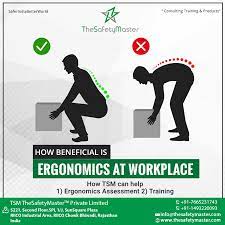
What Is Workplace Ergonomics?
Workplace ergonomics is the process of designing work, tools, equipment, and work areas according to the needs and abilities of employees. The main purpose of ergonomics is to make work safer, more comfortable, and more efficient.
Every workplace has different physical demands. Employees may sit for long hours, stand continuously, lift materials, use machines, repeat the same movement, work in uncomfortable positions, or handle heavy tools. If these tasks are not properly designed, they can create physical stress and increase the chance of injury.
Workplace ergonomics focuses on reducing unnecessary physical strain while helping employees perform their jobs correctly. It considers factors such as posture, movement, force, repetition, workstation design, manual handling, vibration, and working conditions.
A good ergonomic approach does not only benefit employees. It can also improve productivity, reduce absenteeism, improve work quality, and support a stronger workplace safety culture.
Why Is Workplace Ergonomics Important?
Poor ergonomic conditions can slowly affect employees. Some problems may appear after days, while others may develop over months or years. Common problems include back pain, neck pain, shoulder problems, wrist injuries, muscle fatigue, and other musculoskeletal disorders.
A proper workplace ergonomics program helps identify these risks before they become serious problems.
Reduces Workplace Injuries
Ergonomic improvements can reduce exposure to awkward postures, excessive force, repetitive movements, and other physical risks. Better work design can make tasks easier and safer.
Improves Employee Comfort
Employees who work with properly designed equipment and workstations are more likely to feel comfortable during their working hours. Comfortable employees can focus better on their tasks.
Improves Productivity
Poor workstation design can cause unnecessary movement, fatigue, and delays. Ergonomic improvements can make work processes easier and more efficient.
Reduces Absenteeism
Musculoskeletal problems are a common reason for employees missing work. Identifying ergonomic hazards early can help reduce preventable injuries and related absenteeism.
Supports Workplace Safety
Ergonomics is an important part of an overall safety management system. It helps organizations look beyond immediate hazards and address conditions that may cause long-term health problems.
Common Ergonomic Hazards in the Workplace
Ergonomic hazards can be found in offices, factories, construction sites, warehouses, hospitals, workshops, and many other workplaces.
Awkward Postures
Working with the neck bent, back twisted, arms raised, or wrists positioned incorrectly can place additional stress on the body.
For example, employees may need to bend frequently to access materials placed at floor level or reach above shoulder height while performing maintenance work.
Repetitive Movements
Performing the same movement repeatedly can place stress on specific muscles and joints. Assembly work, typing, packaging, scanning, and production activities may involve repetitive movements.
Heavy Lifting and Manual Handling
Lifting, carrying, pushing, and pulling heavy materials can create significant physical strain. Incorrect lifting techniques can increase the risk of back and other musculoskeletal injuries.
Excessive Force
Some jobs require employees to apply high force when using tools, operating machinery, opening containers, pushing equipment, or handling materials. Excessive force should be assessed and reduced where possible.
Prolonged Sitting or Standing
Employees who remain seated for long periods may experience discomfort in the back, neck, shoulders, or legs. Similarly, prolonged standing can cause fatigue and discomfort in the legs and lower back.
Vibration
Hand tools and machinery can expose employees to vibration. Long or repeated exposure may create health and comfort concerns and should be properly assessed.
Poor Workstation Design
A workstation that is too high, too low, too far away, or poorly arranged can force employees into uncomfortable positions.
What Is an Ergonomic Risk Assessment?
An ergonomic risk assessment is a systematic process used to identify and evaluate physical factors that may affect employees while performing their work.
The assessment helps organizations understand which tasks create the highest ergonomic risk and what improvements should be made.
Workplace Observation
The assessment begins with observing employees while they perform normal work activities. The assessor looks at posture, movement, tools, equipment, workstation layout, and working methods.
Task Analysis
Each important task is reviewed to understand the physical demands involved. This can include lifting, pushing, pulling, reaching, bending, twisting, repetitive movement, and prolonged standing or sitting.
Employee Feedback
Employees often understand the practical difficulties of their jobs better than anyone else. Their feedback can help identify discomfort, difficult tasks, equipment problems, and areas requiring improvement.
Risk Evaluation
Identified hazards are evaluated based on factors such as frequency, duration, force, posture, repetition, and exposure. Higher-risk tasks should receive priority for corrective action.
Corrective Recommendations
The final stage is to recommend practical improvements. These may include equipment changes, workstation adjustments, mechanical lifting aids, improved tools, job rotation, work-rest schedules, or changes to the work process.
Workplace Ergonomics in Different Industries
Ergonomic risks are not limited to office environments. Different industries have different ergonomic challenges.
Office Ergonomics
Office employees may spend many hours using computers. Poor chair height, monitor position, keyboard placement, and prolonged sitting can create discomfort.
Good office ergonomics includes proper workstation adjustment, suitable seating, correct monitor positioning, and regular movement.
Industrial Ergonomics
Manufacturing employees may perform repetitive tasks, operate machinery, handle components, or work with tools. Industrial ergonomics focuses on reducing excessive force, repetitive movements, awkward postures, and manual handling risks.
Construction Ergonomics
Construction workers may lift materials, use hand tools, work in awkward positions, climb, bend, kneel, and perform physically demanding activities.
Planning material movement and using suitable lifting equipment can help reduce unnecessary physical strain.
Warehouse and Logistics Ergonomics
Warehouse employees may repeatedly lift boxes, move materials, push carts, and reach for products. Proper storage height, material-handling equipment, and improved layout can reduce ergonomic risks.
Healthcare and Hospitality
Healthcare workers may need to move patients, stand for long periods, bend, reach, or handle equipment. Hospitality workers may also perform repetitive movements, carry loads, stand for extended periods, and work in confined areas.
Ergonomic improvements should therefore be designed according to the actual tasks performed in each industry.
How Can Ergonomic Hazards Be Controlled?
Organizations should use a systematic approach to control ergonomic risks. The best solution is usually to change the work or equipment instead of depending only on employee behavior.
Improve Workstation Design
Workstations should be designed so that frequently used tools and materials are easy to access. Work surfaces, chairs, screens, and equipment should be adjusted according to the task.
Use Mechanical Assistance
Where possible, organizations should use lifting devices, conveyors, carts, hoists, adjustable platforms, and other equipment to reduce manual handling.
Improve Tools and Equipment
Tools should be selected and maintained according to the job. Ergonomically designed tools can reduce excessive force and uncomfortable wrist or hand positions.
Reduce Repetitive Work
Organizations can review production methods and introduce suitable job rotation or task variation where appropriate. Automation may also help reduce repetitive manual activities.
Provide Training
Employees should understand correct work methods, safe manual handling, workstation adjustment, and early reporting of discomfort.
Training should support engineering and administrative controls rather than being the only control measure.
Practical Workplace Ergonomics Improvements
Many ergonomic improvements can be simple and practical.
For office employees, organizations can:
- Adjust chair and desk height.
- Position the monitor at a comfortable viewing level.
- Keep frequently used items within easy reach.
- Encourage regular movement.
- Provide suitable keyboard and mouse positioning.
- Avoid prolonged static working positions.
For industrial and warehouse employees, organizations can:
- Store heavy materials at suitable heights.
- Use mechanical lifting equipment.
- Reduce unnecessary carrying distances.
- Improve workstation layout.
- Select suitable hand tools.
- Reduce excessive bending and twisting.
- Review repetitive tasks.
- Maintain equipment properly.
Small improvements can make a significant difference when they are applied consistently.
Benefits of a Workplace Ergonomics Program
A structured workplace ergonomics program can provide several benefits to an organization.
It can help reduce ergonomic hazards, improve employee comfort, support productivity, reduce injury-related costs, and improve overall safety performance.
Other benefits may include better employee engagement, improved work quality, fewer work disruptions, and stronger awareness of safe working practices.
Ergonomics can also support continuous improvement because organizations can regularly review work activities and identify better ways to perform them.
Why Conduct an Ergonomics Audit?
An ergonomics audit provides a structured way to review workplace conditions and identify areas that may need improvement.
An audit can examine workstation design, manual handling, posture, repetitive tasks, tools, equipment, employee practices, and existing controls.
The findings can help management prioritize improvements based on the level of risk. Instead of making random changes, organizations can focus resources on tasks that create the greatest ergonomic concern.
An ergonomics audit can also be useful when introducing new equipment, changing production processes, redesigning workstations, or investigating repeated employee discomfort or injuries.
Role of The Safety Master in Workplace Ergonomics
The Safety Master can support organizations in identifying workplace ergonomic risks and developing practical improvement strategies.
A professional assessment can help organizations understand the relationship between workplace design, employee activities, and physical risk. The assessment can cover workstations, manual handling activities, repetitive tasks, posture, tools, equipment, and other relevant ergonomic factors.
The Safety Master focuses on practical safety solutions that can be implemented in real workplace conditions. Depending on the workplace, recommendations may include workstation improvements, better material handling, equipment changes, employee awareness, ergonomic training, and risk reduction measures.
Organizations can use these findings as part of their wider occupational health and safety improvement program.
How to Build a Strong Ergonomic Safety Culture
Ergonomics should not be treated as a one-time activity. Organizations should make it part of everyday safety management.
Managers should encourage employees to report discomfort and ergonomic concerns without fear. Supervisors should regularly observe work activities and check whether controls remain effective.
New employees should receive suitable ergonomic guidance, while existing employees should receive refresher training when necessary.
Organizations should also review ergonomic risks whenever there is a change in equipment, process, workstation design, staffing, or production requirements.
Continuous review helps ensure that ergonomic controls remain suitable as workplace conditions change.
Conclusion
Workplace ergonomics plays an important role in creating safer, healthier, and more productive workplaces. By identifying ergonomic hazards such as awkward posture, repetitive movement, excessive force, manual handling, vibration, and poorly designed workstations, organizations can take practical steps to reduce risk.
A proper ergonomic risk assessment and ergonomics audit can help identify high-risk activities and provide clear recommendations for improvement. Engineering controls, better equipment, improved workstation design, suitable work practices, and employee training can all contribute to better ergonomic safety.
The Safety Master can help organizations assess ergonomic risks and develop practical solutions based on their workplace activities. A strong focus on workplace ergonomics can protect employees while also supporting productivity, efficiency, and long-term workplace safety.