Fire Safety Audit Checklist: Essential Points for Effective Fire Safety Inspection

BBS Implementation in the Workplace: A Complete Guide for Safer Work Practices
August 10, 2026
Fire Safety Audit: Complete Guide for Industrial and Commercial Buildings
August 18, 2026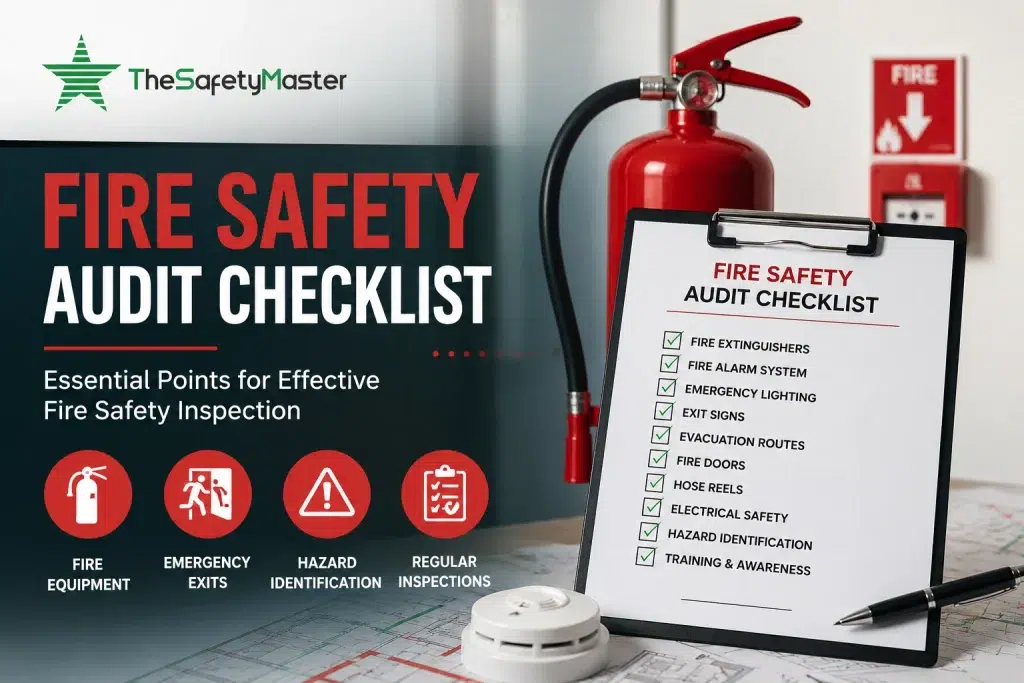
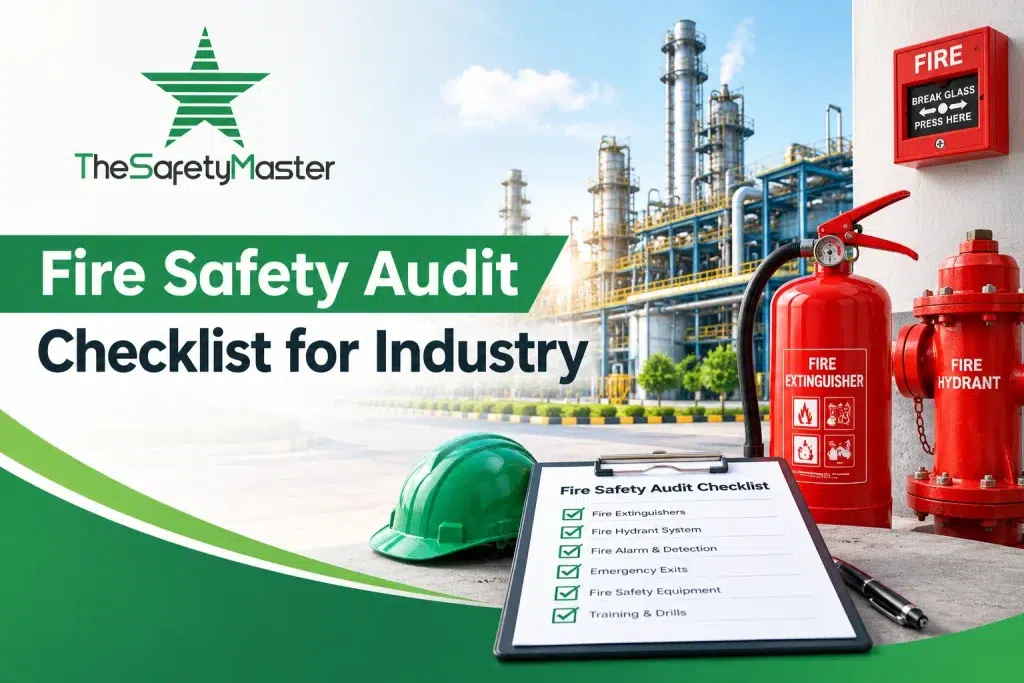
A proper Fire Safety Audit Checklist helps organizations systematically inspect fire prevention, protection, emergency preparedness, and evacuation arrangements. A detailed audit identifies gaps before they become serious risks and helps businesses improve compliance, employee safety, and emergency response. The Safety Master provides professional fire safety audit and inspection support to help organizations assess their existing fire protection systems and strengthen workplace fire safety.
What Is a Fire Safety Audit?
A fire safety audit is a systematic examination of a building’s fire prevention and protection arrangements. It evaluates whether fire safety equipment, emergency procedures, evacuation routes, electrical systems, firefighting installations, and employee preparedness are adequate.
The main objective is to identify:
- Potential fire hazards
- Deficiencies in firefighting systems
- Blocked or inadequate evacuation routes
- Non-compliance with applicable requirements
- Poor emergency preparedness
- Maintenance gaps in fire protection equipment
Why Is a Fire Safety Audit Important?
A fire safety audit can help organizations reduce the possibility of fire incidents and limit losses if a fire occurs.
Major Benefits of Fire Safety Auditing
- Identifies fire hazards before an emergency.
- Checks the condition of fire protection equipment.
- Evaluates emergency evacuation arrangements.
- Reviews employee awareness and training.
- Identifies maintenance and compliance gaps.
- Supports continuous improvement of fire safety systems.
Essential Fire Safety Audit Checklist
A comprehensive inspection should cover the following major areas.
1. Fire Extinguishers
Inspect all portable fire extinguishers to verify:
- Correct extinguisher type for the hazard
- Proper location and accessibility
- Adequate quantity
- Pressure condition
- Physical damage or corrosion
- Inspection and maintenance records
- Clear identification and signage
- Valid servicing status
2. Fire Alarm and Detection System
Check whether the fire detection and alarm system is operational and appropriately maintained.
The audit should include:
- Smoke and heat detectors
- Manual call points
- Fire alarm control panels
- Audible and visual alarms
- Battery backup
- Alarm testing records
- Detector condition and accessibility
3. Fire Hydrant and Hose Reel System
Inspect the fire hydrant and hose reel system for operational readiness.
Check:
- Fire pumps
- Hydrant valves
- Hose reels
- Fire hoses
- Hydrant boxes
- Pressure availability
- Pump room condition
- Water storage capacity
- Inspection and testing records
4. Automatic Sprinkler System
Where sprinkler systems are installed, verify:
- Sprinkler head condition
- Control valves
- Water pressure
- Alarm valves
- Pump operation
- Obstructions around sprinkler heads
- Inspection and maintenance records
5. Emergency Exit and Evacuation Routes
Emergency exits are one of the most important parts of fire safety.
Check whether:
- Exit routes are clearly marked.
- Emergency doors can be opened quickly.
- Stairways are free from obstruction.
- Exit signs are visible.
- Emergency lighting works properly.
- Evacuation routes are not used for storage.
- Assembly points are identified.
6. Electrical Fire Safety
Electrical faults can become a major source of workplace fires.
Inspect:
- Electrical panels
- Wiring and cable condition
- Overloaded circuits
- Extension cords
- Earthing arrangements
- Electrical equipment
- Temporary connections
- Panel accessibility
- Electrical inspection records
7. Fire Pump and Water Supply
The fire water system should be checked for reliability during an emergency.
The auditor should review:
- Main fire pump
- Diesel fire pump
- Jockey pump
- Pump auto-start function
- Fire water tank
- Pressure gauges
- Valves
- Pump testing records
- Backup arrangements
8. Emergency Preparedness
A fire safety audit should also evaluate emergency preparedness.
Check:
- Emergency response plan
- Fire emergency procedures
- Evacuation plan
- Emergency contact information
- Assembly points
- Fire drills
- Employee training
- Roles and responsibilities during emergencies
Study the Existing Fire Fighting System and Prepare the Report
A professional auditor should study the existing fire fighting system and prepare the report based on site observations, available documents, equipment condition, testing records, and identified deficiencies.
The report should clearly explain:
- Existing firefighting arrangements
- Equipment and systems inspected
- Observed deficiencies
- Risk significance
- Recommended corrective actions
- Priority of corrective actions
- Photographic evidence where appropriate
- Responsibility and suggested timelines
A clear report helps management understand which issues require immediate attention and which can be addressed through planned improvements.
Fire Safety Audit Inspection Process
Step 1: Review Existing Documents
Before the physical inspection, review available:
- Fire safety plans
- Previous audit reports
- Fire equipment maintenance records
- Fire drill records
- Training records
- Fire NOC or applicable approvals
- Testing and inspection certificates
Step 2: Conduct Site Inspection
Inspect the building, workplace, equipment, fire protection systems, electrical areas, storage areas, exits, and emergency arrangements.
Step 3: Identify Fire Hazards
Identify hazards such as:
- Flammable material storage
- Poor housekeeping
- Electrical overload
- Blocked exits
- Unsafe hot work
- Improper chemical storage
- Combustible waste
- Inadequate fire protection
Step 4: Assess Risk
Each identified deficiency should be evaluated according to its potential impact and urgency.
Step 5: Prepare the Audit Report
Document findings with clear observations, photographs, recommendations, and corrective actions.
Step 6: Follow Up on Corrective Actions
An effective audit does not end when the report is issued. Organizations should track corrective actions until important deficiencies are closed.
Free Fire Safety Audit Checklist: Essential Points for Effective Fire Inspection
A free fire safety audit checklist essential points for effective fire inspection can include the following areas:
- Fire extinguishers available and accessible
- Fire extinguishers properly inspected
- Fire alarm system operational
- Smoke and heat detectors functional
- Emergency exits clearly marked
- Exit routes free from obstruction
- Emergency lighting operational
- Fire hydrant system inspected
- Fire hoses in good condition
- Fire pumps tested
- Fire water tank adequate
- Sprinkler system inspected where applicable
- Electrical panels properly maintained
- Flammable materials properly stored
- Fire doors functional
- Emergency plan available
- Fire drill conducted periodically
- Employees trained in emergency procedures
- Assembly point identified
- Fire inspection and maintenance records maintained
Third Party Fire Audit Report Format
A third party fire audit report format should be structured so that management can easily understand the inspection findings and corrective actions.
Suggested Report Structure
1. Cover Page
- Organization name
- Site location
- Audit date
- Auditor/agency name
2. Executive Summary
Provide a brief overview of the overall fire safety condition.
3. Scope of Audit
Mention the areas, buildings, systems, and activities covered.
4. Site Observations
Record the findings identified during the inspection.
5. Fire Protection Systems
Include observations related to:
- Fire extinguishers
- Fire alarm system
- Hydrant system
- Sprinkler system
- Fire pumps
- Emergency lighting
- Fire doors
6. Risk Rating
Classify findings according to their priority or risk level.
7. Photographic Evidence
Include photographs where they help explain deficiencies.
8. Recommendations
Provide practical corrective measures for every significant observation.
9. Corrective Action Plan
Include responsible persons, target dates, and closure status where applicable.
10. Conclusion
Summarize the overall condition of the site’s fire safety arrangements.
Fire Safety Report Sample
A simple fire safety report sample finding could be presented as:
Observation: Emergency exit pathway partially obstructed by stored material.
Risk: Obstruction may delay evacuation during a fire emergency.
Recommendation: Remove all stored material from the designated emergency exit route and maintain the route free from obstruction at all times.
Priority: High
Corrective Action: Responsible department should clear the area and implement periodic housekeeping inspections.
This format makes audit observations easier to understand and track.
Common Fire Safety Audit Mistakes
Organizations should avoid:
Ignoring Housekeeping
Combustible waste, packaging, and unnecessary storage can increase fire risk.
Checking Equipment Without Testing
Simply looking at firefighting equipment is not always sufficient. Appropriate inspection and testing records should also be reviewed.
Not Reviewing Emergency Procedures
A technically compliant fire protection system may still be ineffective if employees do not know how to respond.
Failing to Close Previous Findings
Repeated observations indicate that corrective actions are not being effectively implemented.
How The Safety Master Can Help
Professional fire safety auditing can provide an independent assessment of existing fire prevention and protection arrangements. The Safety Master can support organizations with fire safety audits, identification of deficiencies, recommendations, and structured reporting to help improve workplace fire preparedness.
FAQs About Fire Safety Audit Checklist
What is included in a fire safety audit checklist?
It generally includes fire extinguishers, fire alarms, hydrants, sprinklers, emergency exits, fire pumps, electrical safety, emergency lighting, evacuation procedures, fire drills, training, housekeeping, and documentation.
How often should a fire safety audit be conducted?
The frequency depends on the type of building, occupancy, applicable requirements, risk level, and organizational procedures. Higher-risk facilities may require more frequent inspections and reviews.
What is the purpose of a third-party fire audit?
A third-party audit provides an independent assessment of fire safety arrangements and can help identify deficiencies that may be overlooked during routine internal inspections.
What should a fire safety audit report contain?
It should generally include the audit scope, site observations, fire protection system assessment, deficiencies, risk priorities, photographs where appropriate, recommendations, and corrective action requirements.
Why is fire drill training important?
Fire drills help employees understand evacuation procedures, emergency responsibilities, alarm response, and assembly arrangements before an actual emergency occurs.
What is checked during a fire extinguisher inspection?
Inspectors generally check accessibility, correct type, physical condition, pressure where applicable, identification, service status, and maintenance records.
Can a fire safety audit identify electrical fire risks?
Yes. A fire safety audit can identify visible electrical hazards such as overloaded circuits, damaged cables, unsafe temporary connections, poor housekeeping around electrical panels, and inadequate maintenance. Specialized electrical testing may require a competent electrical professional.
Conclusion
A systematic Fire Safety Audit Checklist helps organizations identify fire hazards, evaluate firefighting systems, improve emergency preparedness, and prioritize corrective actions. From reviewing fire extinguishers and alarm systems to checking evacuation routes and preparing a professional audit report, every element contributes to a safer workplace. By conducting regular inspections and acting on audit findings, organizations can strengthen fire prevention and emergency response with support from The Safety Master.