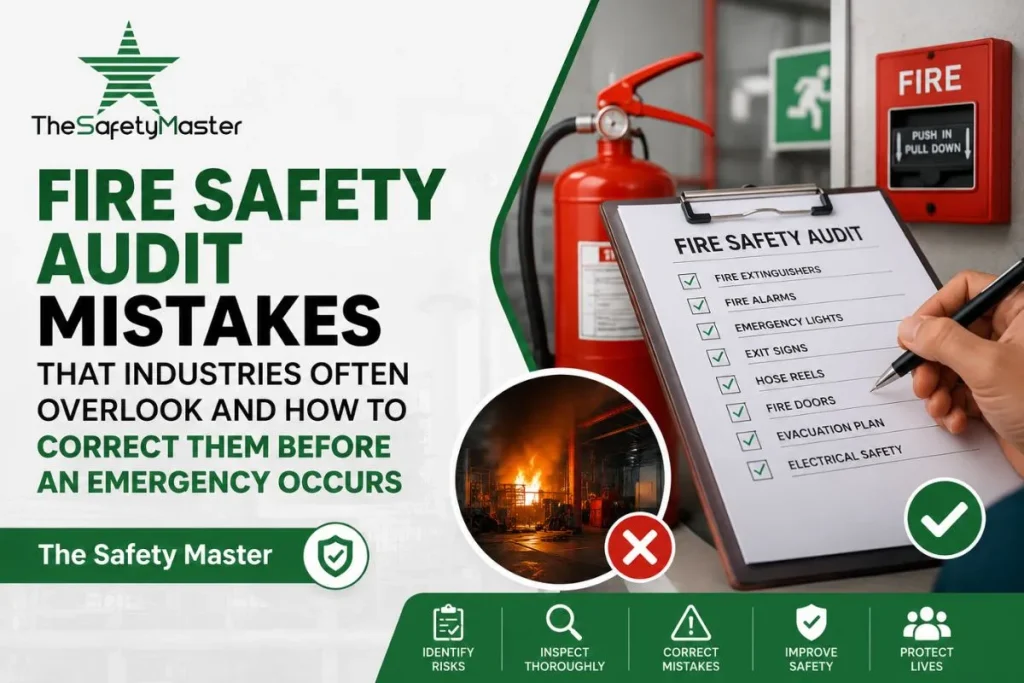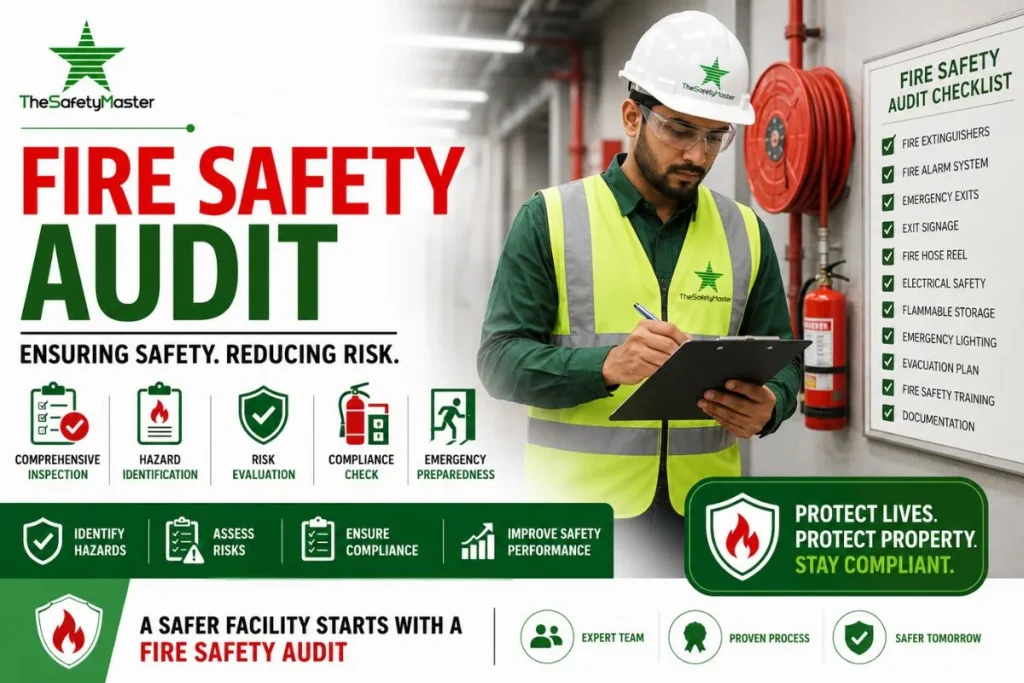
Comprehensive Fire Safety Audit Checklist and Report

Fire Pump Performance Testing Services: Ensuring Reliability with The Safety Master
July 30, 2024
Effective Waste & Garbage Management Systems Guide
August 14, 2024
Comprehensive Fire Safety Audit Checklist and Report: Complete Guide
Fire safety is important for every workplace, commercial building, industrial facility, hospital, hotel, school, residential building, and other occupied premises. A proper fire safety audit helps identify fire hazards, check fire protection systems, review emergency arrangements, and improve overall safety.
A fire safety audit checklist provides a systematic way to inspect important fire prevention and protection measures. The audit findings are then documented in a fire safety audit report, which helps management understand gaps and take corrective action.
The Safety Master provides professional safety consultancy and audit solutions to help organizations identify fire risks, improve compliance, and strengthen workplace safety.
What Is a Fire Safety Audit?
A fire safety audit is a systematic inspection of a building, workplace, plant, or facility to identify fire hazards and evaluate existing fire prevention and protection measures.
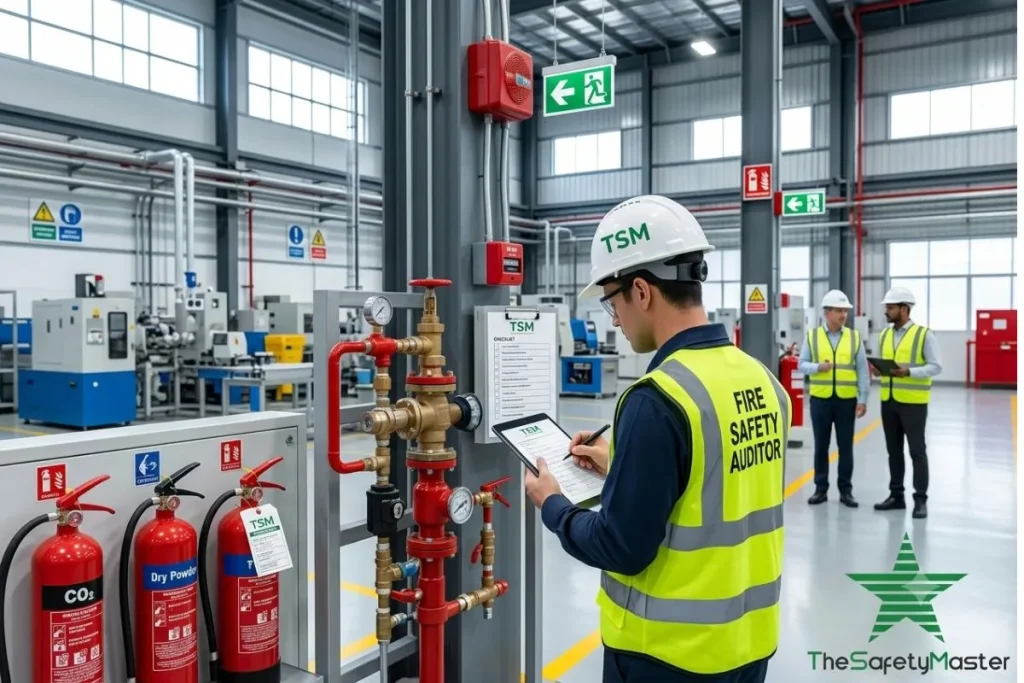
During an audit, important areas such as fire extinguishers, fire alarms, emergency exits, hydrant systems, sprinklers, emergency lighting, electrical safety, evacuation arrangements, fire doors, signage, and emergency procedures may be reviewed.
The purpose is not only to identify existing problems but also to recommend practical corrective actions that can reduce the possibility and impact of a fire.
Why Is a Fire Safety Audit Important?
A regular fire safety audit helps an organization understand whether its fire protection arrangements are suitable and properly maintained.
Key benefits include:
- Identification of potential fire hazards
- Evaluation of fire protection systems
- Identification of blocked or unsafe escape routes
- Checking the condition of fire extinguishers
- Verification of fire alarm systems
- Review of emergency evacuation arrangements
- Identification of electrical fire risks
- Improvement of employee fire safety awareness
- Better emergency preparedness
- Support for applicable regulatory compliance
- Reduction of potential property damage and business interruption
A well-planned audit also helps management prioritize high-risk findings and complete corrective actions.
Comprehensive Fire Safety Audit Checklist
A good checklist should be suitable for the type of facility being audited. The following areas can be included in a comprehensive fire safety inspection.
Fire Extinguishers
Check whether:
- Correct types of extinguishers are available
- Extinguishers are easily accessible
- Equipment is properly mounted or positioned
- Inspection and maintenance records are available
- Extinguishers are not damaged
- Pressure indicators are within the required range where applicable
- Access to extinguishers is not blocked
- Employees know the basic use of extinguishers
Fire Alarm and Detection System
Inspect:
- Smoke detectors
- Heat detectors
- Manual call points
- Fire alarm control panels
- Audible and visual alarm devices
- Detector locations
- Alarm testing records
- Battery or backup power
- Maintenance records
The auditor should verify that the system is maintained and capable of providing early warning during an emergency.
Fire Hydrant System
The checklist should cover:
- Fire water storage
- Fire pumps
- Hydrant points
- Hose reels
- Hoses and nozzles
- Valves
- Pump room condition
- Pressure availability
- Testing and maintenance records
- Accessibility of firefighting equipment
Sprinkler System
Where sprinklers are installed, check:
- Sprinkler heads
- Control valves
- Water supply
- Alarm valves
- Pipe condition
- Obstructions around sprinkler heads
- Pump performance
- Inspection and testing records
Emergency Exits and Escape Routes
Emergency evacuation routes are one of the most important areas of a fire audit.
Check whether:
- Emergency exits are clearly identified
- Exit routes are free from obstruction
- Exit doors can be opened as required
- Stairways are accessible
- Exit signs are visible
- Emergency lighting is available
- Evacuation routes are communicated to occupants
- Assembly points are identified
Blocked or poorly marked escape routes can seriously affect evacuation during a fire.
Fire Doors
Inspect fire doors for:
- Proper condition
- Correct closing mechanism
- Damaged doors
- Door gaps and seals where applicable
- Unapproved modifications
- Obstructions
- Suitable signage
Fire doors should be maintained so that they can perform their intended role during an emergency.
Electrical Fire Safety Checklist
Electrical systems can be an important source of fire risk. The audit should consider:
- Electrical panels
- Wiring condition
- Loose connections
- Overloaded circuits
- Temporary electrical arrangements
- Extension boards
- Earthing
- Electrical panel accessibility
- Thermographic inspection records where applicable
- Electrical maintenance records
Electrical rooms should also be kept free from unnecessary combustible materials.
Housekeeping and Storage
Good housekeeping can significantly reduce fire risk.
Check:
- Storage of combustible materials
- Waste accumulation
- Chemical storage
- Flammable material storage
- Separation between combustible materials and ignition sources
- Cleanliness of electrical rooms
- Storage near emergency exits
- Storage near firefighting equipment
Combustible materials should not be stored in escape routes or in locations where they can increase fire spread.
Emergency Preparedness and Evacuation
A fire safety audit should also review the organization’s emergency preparedness.
Important points include:
- Emergency response procedures
- Evacuation plans
- Emergency contact information
- Assembly points
- Fire drills
- Employee awareness
- Fire warden arrangements
- Visitor evacuation arrangements
- Emergency communication systems
- Training records
Regular fire drills can help employees understand what to do during an actual emergency.
Fire Safety Training
Fire protection equipment is only effective when people know how to respond correctly.
Organizations should provide appropriate training on:
- Fire prevention
- Types of fire
- Fire extinguisher awareness
- Emergency evacuation
- Alarm response
- Emergency communication
- Assembly procedures
- Roles and responsibilities
- Basic emergency response
Training should be suitable for the workplace and the risks present at the facility.
What Should a Fire Safety Audit Report Include?
A fire safety audit report should clearly communicate the audit findings and recommended actions.
A professional report can include:
Executive Summary
Provide a brief overview of the audit, major findings, overall safety condition, and priority areas.
Facility Information
Include relevant information such as:
- Facility name
- Location
- Type of occupancy
- Areas inspected
- Date of audit
- Auditor details
- Scope of audit
Fire Safety Observations
Record the conditions observed during the inspection.
Each finding should be clear and easy to understand.
Risk Classification
Findings can be categorized according to their level of importance or risk so management can prioritize corrective actions.
Photographic Evidence
Where appropriate, photographs can help demonstrate the actual condition observed during the audit.
Corrective Action Recommendations
Every significant finding should have a practical recommendation.
Action Plan
The report can include:
| Finding | Risk | Recommended Action | Responsibility | Target Date | Status |
|---|---|---|---|---|---|
| Blocked exit route | High | Remove obstruction | Facility Team | Defined date | Open |
| Damaged extinguisher | Medium | Replace/service extinguisher | Maintenance | Defined date | Open |
| Missing exit signage | Medium | Install suitable signage | Facility Team | Defined date | Open |
How to Conduct a Fire Safety Audit
A systematic process makes the audit more effective.
Step 1: Understand the Facility
Review the building type, occupancy, processes, materials, layout, and potential fire hazards.
Step 2: Review Existing Documents
Check available fire safety plans, maintenance records, previous audit reports, training records, inspection records, and emergency procedures.
Step 3: Inspect the Facility
Conduct a physical inspection using a suitable fire safety audit checklist.
Step 4: Check Fire Protection Systems
Inspect applicable detection, alarm, suppression, firefighting, emergency lighting, and evacuation systems.
Step 5: Identify Gaps
Document unsafe conditions, missing equipment, maintenance problems, procedural gaps, and other observations.
Step 6: Prepare the Fire Safety Audit Report
Present observations, risk priorities, photographs where appropriate, recommendations, and corrective actions.
Step 7: Follow Up
An audit should not end when the report is issued. Corrective actions should be tracked until important findings are closed.
Common Fire Safety Audit Findings
Some common findings may include:
- Blocked emergency exits
- Poor housekeeping
- Expired or poorly maintained extinguishers
- Missing fire safety signage
- Fire doors not maintained properly
- Inadequate emergency lighting
- Fire alarm maintenance gaps
- Obstructed firefighting equipment
- Poor storage of combustible materials
- Incomplete fire drill records
- Lack of employee fire safety training
- Electrical safety deficiencies
The exact findings will depend on the facility, occupancy, processes, and applicable requirements.
How Often Should a Fire Safety Audit Be Conducted?
The required frequency depends on the type of facility, risk level, occupancy, applicable requirements, previous findings, and changes in operations.
High-risk industrial facilities may need more frequent inspections or audits than lower-risk workplaces.
Organizations should also consider conducting an additional review after major changes such as:
- Building modifications
- Process changes
- Changes in occupancy
- Installation of new equipment
- Major electrical modifications
- Significant fire incidents
- Changes in applicable requirements
Fire Safety Audit Checklist for Different Industries
A checklist should be customized according to the facility.
Industrial Facilities
Focus on:
- Process fire hazards
- Flammable materials
- Storage
- Fire protection systems
- Emergency response
- Electrical safety
- Hot work
- Chemical hazards
Hotels
Focus on:
- Guest rooms
- Kitchen areas
- Emergency exits
- Fire alarm systems
- Guest evacuation
- Fire doors
- Emergency lighting
- Staff training
Hospitals
Focus on:
- Patient evacuation
- Critical areas
- Medical gases
- Electrical systems
- Fire detection
- Emergency response
- Fire compartmentation
Offices
Focus on:
- Electrical safety
- Emergency exits
- Fire extinguishers
- Alarm systems
- Emergency lighting
- Housekeeping
- Employee awareness
Schools
Focus on:
- Student evacuation
- Assembly areas
- Fire alarms
- Emergency exits
- Fire extinguishers
- Staff training
- Fire drills
Importance of Professional Fire Safety Audits
Internal inspections are useful for routine monitoring, but professional audits can provide an independent assessment of the facility’s fire safety arrangements.
An experienced auditor can help identify issues that may be overlooked during routine inspections and provide recommendations based on the facility’s specific risks.
The Safety Master can support organizations with professional safety audit and consultancy solutions designed around their operational and fire safety requirements.
Conclusion
A comprehensive fire safety audit is an important part of effective fire risk management. A properly prepared checklist helps auditors inspect critical areas systematically, while a detailed report helps management understand findings and take corrective action.
Organizations should regularly review fire protection systems, emergency exits, electrical safety, housekeeping, evacuation arrangements, employee training, and emergency preparedness.
By using a structured audit process and following up on corrective actions, organizations can strengthen their fire safety performance and create a safer environment. The Safety Master helps organizations improve safety through professional audit, consultancy, training, and risk management solutions.
FAQs
Q-What is a fire safety audit checklist?
A fire safety audit checklist is a structured list of items used to inspect fire prevention, detection, protection, evacuation, emergency preparedness, and related safety measures.
Q-What is included in a fire safety audit report?
A fire safety audit report generally includes facility information, audit scope, observations, photographs where applicable, identified gaps, risk priorities, recommendations, and a corrective action plan.
Q-How often should a fire safety audit be conducted?
The frequency depends on the facility, fire risk, occupancy, applicable requirements, and operational conditions. Higher-risk facilities may require more frequent audits.
Q-What are the common findings in a fire safety audit?
Common findings include blocked exits, poorly maintained extinguishers, inadequate signage, alarm system issues, poor housekeeping, electrical hazards, inadequate emergency lighting, and gaps in fire safety training.
Q-Why is a professional fire safety audit important?
A professional audit provides a systematic and independent review of fire safety arrangements and can help identify hazards, compliance gaps, and areas requiring corrective action.
Q-Can a fire safety audit checklist be customized?
Yes. A checklist should be customized according to the building type, occupancy, processes, materials, fire hazards, installed protection systems, and applicable requirements.