Enhancing Safety Culture: A Comprehensive Guide by a Leading Safety Consultant

Key Differences Between HAZOP and Other Safety Assessment Techniques
July 27, 2023Creating a Fire-Safe Workplace Culture: Practical Fire Safety Tips from The Safety Master
July 31, 2023
A strong Safety Culture is important for every organization that wants to protect employees, reduce workplace incidents, and improve overall safety performance. Safety is not only about rules, equipment, or procedures. It also depends on how employees and management think about safety and how they behave every day.
A positive safety culture encourages employees to identify hazards, report unsafe conditions, follow safe work practices, and take responsibility for workplace safety. The Safety Master helps organizations improve their safety practices through professional safety consulting, training, audits, risk assessments, and practical safety management solutions.
What Is Safety Culture?
Safety Culture refers to the shared values, attitudes, beliefs, and behaviors that influence how safety is managed within an organization. It shows how seriously an organization takes the protection of its employees, visitors, assets, and environment.
A strong safety culture is visible in everyday activities. Employees follow procedures, managers support safe working practices, hazards are reported, and corrective actions are taken without unnecessary delay.
Safety culture should not be treated as a one-time program. It should become part of normal business operations and decision-making.
Why Is a Strong Safety Culture Important?
A good safety culture can help organizations identify and control workplace risks before they result in incidents. It also encourages employees to actively participate in safety activities.
Key benefits include:
- Reduction in workplace incidents and injuries
- Better hazard identification and risk control
- Increased employee safety awareness
- Improved communication between employees and management
- Better compliance with safety requirements
- Greater employee participation in safety programs
- Improved emergency preparedness
- Protection of equipment, property, and business operations
- Continuous improvement in safety performance
Key Elements of an Effective Safety Culture
Management Commitment to Safety
Management commitment is one of the most important parts of a successful safety culture. Leaders should demonstrate through their actions that safety is a priority.
Management can support safety by providing appropriate resources, participating in safety meetings, reviewing safety performance, and taking timely action on identified hazards.
Employee Participation
Employees work directly with equipment, materials, processes, and workplace hazards. Their experience can provide valuable information about potential risks.
Organizations should encourage employees to report unsafe conditions, participate in toolbox talks, suggest improvements, and contribute to safety inspections.
Hazard Identification and Risk Assessment
Hazards should be identified before they cause harm. Risk assessment helps organizations understand the likelihood and possible consequences of hazards.
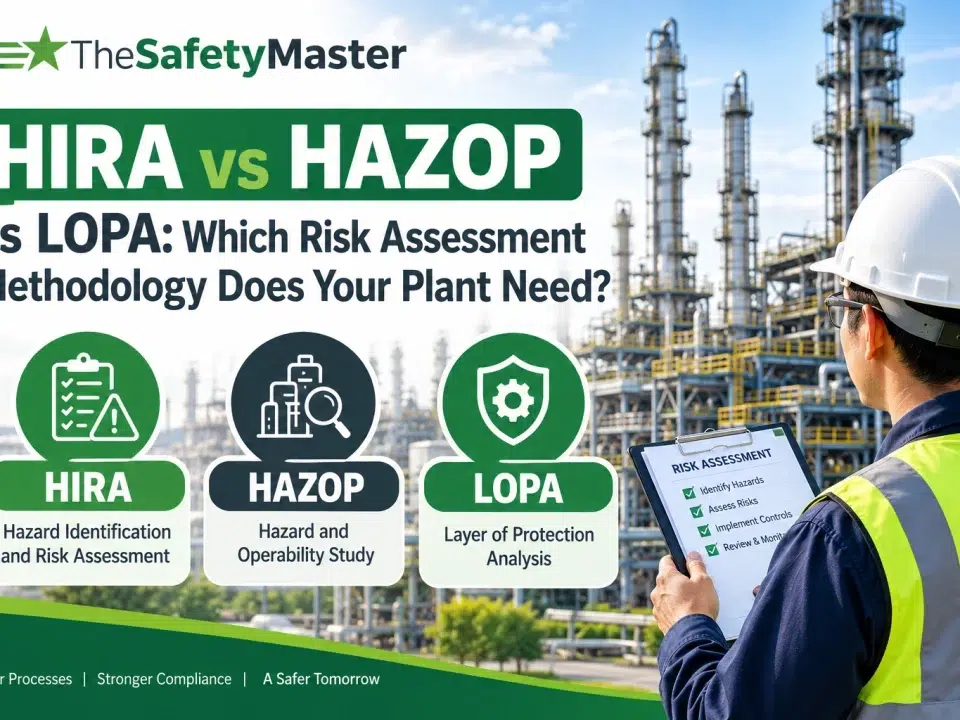
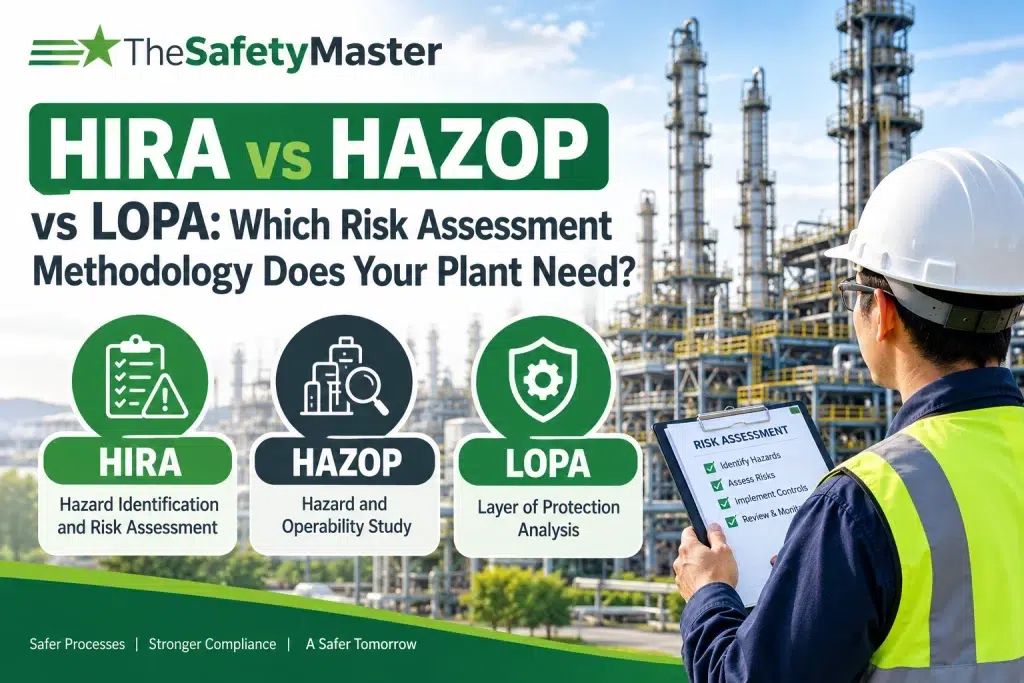
Methods such as HIRA, HAZOP, JSA, What-If Analysis, and risk assessment can be used depending on the nature of the workplace and process.
Safety Training and Awareness
Regular training helps employees understand workplace hazards and safe working procedures.
Training may include:
- Fire safety training
- HIRA training
- HAZOP training
- Emergency response training
- PPE awareness
- Electrical safety
- Work-at-height safety
- Confined space safety
- Process safety
- Behavior-based safety
Training should be practical and relevant to the actual risks employees face.
Reporting and Learning from Incidents
Organizations should encourage employees to report incidents, near misses, unsafe acts, and unsafe conditions.
The purpose of incident reporting should be to understand what happened and identify improvements. Investigations can help determine root causes and prevent similar incidents from happening again.
How to Build a Strong Safety Culture
Assess the Current Safety Culture
The first step is understanding the organization’s existing safety culture. Organizations can review safety procedures, employee participation, incident records, training programs, inspections, audits, and management involvement.
A safety culture assessment can identify strengths as well as areas that require improvement.
Set Clear Safety Expectations
Employees should clearly understand what is expected from them. Safety responsibilities should be communicated through procedures, training, toolbox talks, meetings, and workplace communication.
Encourage Open Communication
Employees should feel comfortable reporting hazards and safety concerns. Open communication allows organizations to identify problems earlier and take corrective action.
Conduct Regular Safety Audits
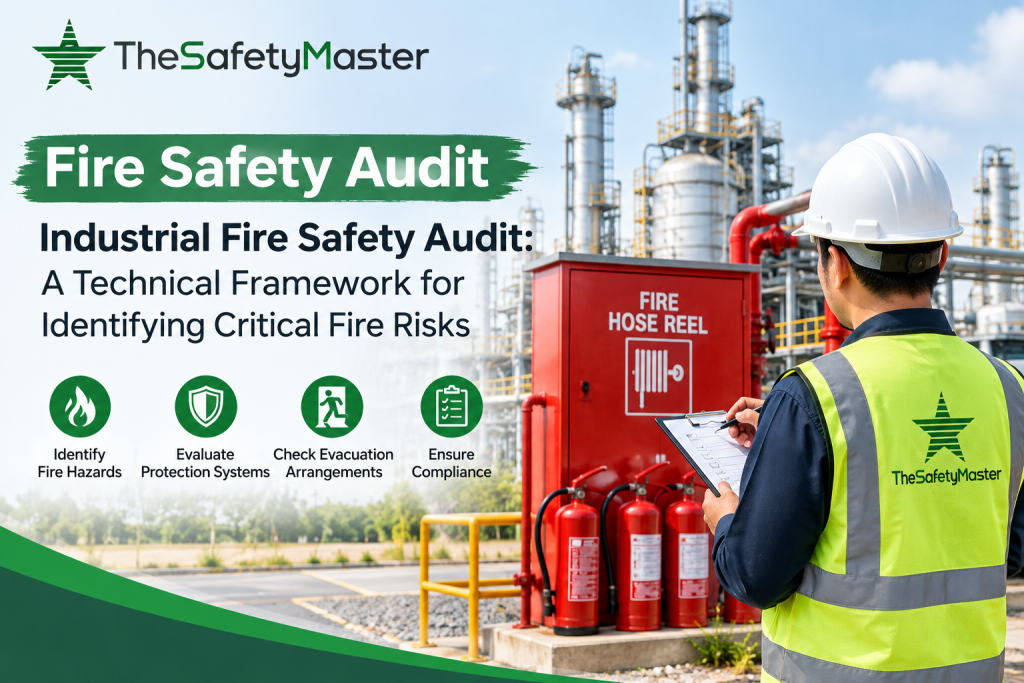
Safety audits can help identify gaps in safety systems and workplace practices. Audits may cover fire protection, electrical systems, emergency preparedness, process safety, PPE, documentation, and regulatory requirements.
The findings should be followed by corrective and preventive actions.
Measure Safety Performance
Organizations should use appropriate safety indicators to monitor performance. Both leading and lagging indicators can provide useful information.
Leading indicators may include:
- Number of safety inspections
- Training completion
- Safety observations
- Near-miss reporting
- Corrective action closure
Lagging indicators may include:
- Lost-time injuries
- Recordable incidents
- Property damage incidents
- Occupational injuries
Using both types of indicators provides a broader understanding of safety performance.
Role of Behavior-Based Safety
Human behavior can have a significant impact on workplace safety. Behavior-Based Safety (BBS) focuses on observing workplace behaviors, identifying unsafe practices, and encouraging safer actions.
BBS programs can help employees understand how their daily actions influence workplace risks. Positive feedback, coaching, observation, and employee involvement can support safer behavior.
Role of Safety Consultants in Improving Safety Culture
Professional safety consultants can provide independent expertise and practical recommendations for improving workplace safety.
A safety consultant may support organizations with:
- Safety culture assessment
- Safety audits
- HIRA and risk assessment
- Fire safety audits
- Process safety consulting
- HAZOP studies
- Safety training
- Emergency preparedness
- Behavior-based safety programs
- Safety management system development
- Compliance assessments
The Safety Master provides safety consulting and training solutions designed to help organizations identify hazards, improve safety systems, and develop stronger safety practices.
Common Challenges in Developing Safety Culture
Organizations may face several challenges while building a strong safety culture.
Lack of Management Involvement
If management does not actively support safety initiatives, employees may not consider safety a priority.
Poor Communication
When safety information is not communicated clearly, employees may misunderstand procedures or fail to report hazards.
Inadequate Training
Employees need appropriate knowledge and skills to perform their work safely. Training should be regular and relevant to workplace risks.
Focus Only on Accidents
Organizations should not wait for accidents before taking action. Near misses, unsafe conditions, safety observations, and leading indicators should also be reviewed.
Failure to Close Corrective Actions
Identifying a hazard is only the first step. Corrective actions should be assigned, tracked, and completed within appropriate timelines.
How The Safety Master Can Support Safety Improvement
The Safety Master supports organizations with professional safety consulting, risk management, audits, training, and process safety services.
Its approach can help organizations understand workplace hazards, improve risk controls, strengthen employee awareness, and develop practical safety management systems.
A strong safety culture requires continuous involvement from management and employees. Professional guidance can help organizations identify gaps and create a structured improvement plan.
Conclusion
Building a strong Safety Culture requires more than written policies. It requires leadership commitment, employee participation, effective communication, proper training, hazard identification, risk assessment, audits, and continuous improvement.
Organizations that make safety part of everyday decision-making can create a safer and more responsible workplace. The Safety Master can support organizations in developing practical safety programs, improving risk management, and strengthening workplace safety performance.
FAQs About Safety Culture
Q-What is Safety Culture?
Safety Culture is the shared values, attitudes, beliefs, and behaviors that influence how safety is managed and practiced within an organization.
Q-Why is Safety Culture important?
A strong safety culture helps organizations identify hazards, improve employee awareness, encourage safe behavior, and reduce workplace risks.
Q-How can an organization improve its Safety Culture?
Organizations can improve safety culture through management commitment, employee participation, safety training, hazard identification, audits, incident learning, communication, and continuous improvement.
Q-What is the role of management in Safety Culture?
Management should provide leadership, resources, training, clear safety expectations, and timely action on identified safety issues.
Q-What is Behavior-Based Safety?
Behavior-Based Safety focuses on identifying and improving workplace behaviors that can influence safety performance. It encourages employees to recognize unsafe actions and adopt safer work practices.
Q-Can a safety consultant help improve Safety Culture?
Yes. A professional safety consultant can assess existing safety practices, identify gaps, conduct audits and risk assessments, provide training, and recommend practical improvements.
Q-How does safety training support Safety Culture?
Safety training improves employee knowledge and awareness of workplace hazards and helps employees understand the correct procedures for performing work safely.
Q-What is the difference between Safety Culture and Safety Management?
Safety management focuses on systems, procedures, processes, and controls used to manage safety. Safety culture focuses on the attitudes, behaviors, values, and commitment that influence how those systems are followed and supported.