Fire Safety Audit in Workplace: A Complete Guide to Workplace Fire Safety | The Safety Master

Introduction to Hazard Identification and Risk Analysis- TheSafetyMaster
July 22, 2021
Behavior-Based Safety: Key Concepts and Benefits
September 16, 2021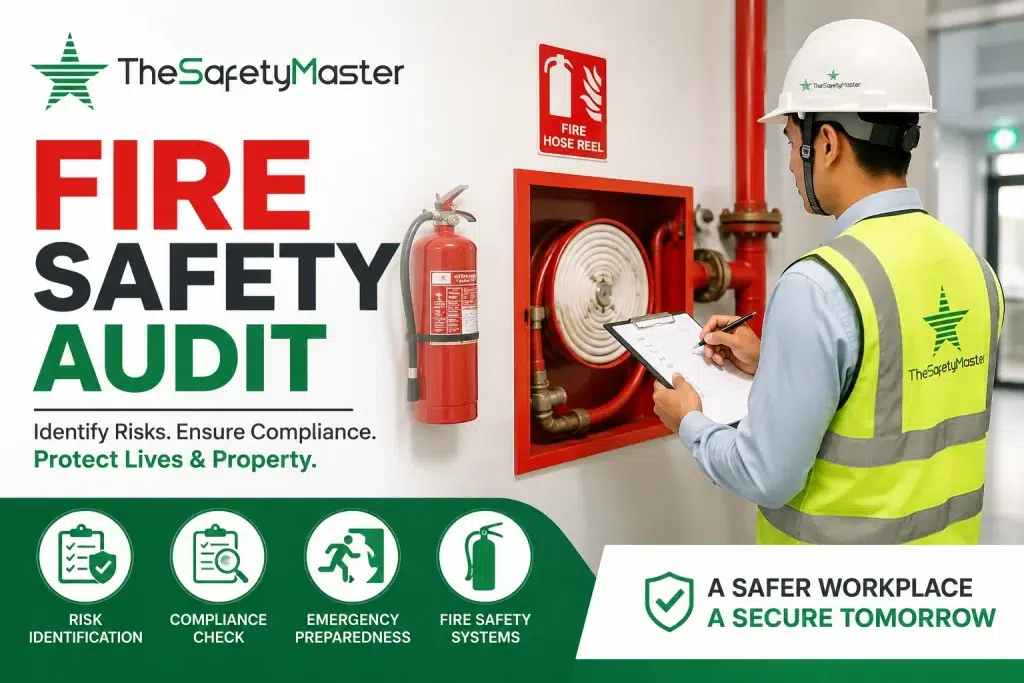
A Fire Safety Audit in Workplace is an important process for identifying fire hazards, checking fire protection systems, improving emergency preparedness, and protecting employees, visitors, buildings, equipment, and business operations.
Every workplace has different fire risks. Offices may face electrical and housekeeping risks, while factories, warehouses, hospitals, hotels, and chemical facilities may have additional risks from machinery, combustible materials, flammable liquids, gases, or production processes.
A professional fire safety audit checks whether the workplace is prepared to prevent, detect, control, and respond to a fire emergency.
The Safety Master provides safety and risk-management solutions that help organizations identify workplace hazards, improve fire protection arrangements, and strengthen overall safety performance.
What Is a Fire Safety Audit in Workplace?
A Fire Safety Audit in Workplace is a systematic examination of a workplace to identify fire hazards and evaluate the effectiveness of fire prevention, detection, firefighting, evacuation, and emergency response arrangements.
A proper audit should not only check whether fire extinguishers are available. It should also determine whether the equipment is suitable, accessible, maintained, and ready for use.
A workplace fire safety audit may cover:
- Fire extinguishers
- Fire alarm systems
- Smoke and heat detectors
- Hydrant systems
- Sprinkler systems
- Fire pumps
- Emergency exits
- Escape routes
- Emergency lighting
- Fire doors
- Electrical installations
- Flammable material storage
- Housekeeping
- Fire evacuation plans
- Fire drills
- Employee training
- Emergency response procedures
- Inspection and maintenance records
The objective is to identify gaps and recommend practical corrective actions.
Why Is Fire Safety Important in the Workplace?
Fire can spread very quickly and may cause injuries, fatalities, property damage, production loss, business interruption, and financial loss.
Common workplace fire hazards include:
- Electrical short circuits
- Overloaded electrical panels
- Damaged electrical cables
- Poor housekeeping
- Improper storage of combustible materials
- Flammable liquids and gases
- Hot work activities
- Smoking
- Combustible waste
- Blocked emergency exits
- Poorly maintained fire equipment
- Lack of employee awareness
A regular fire safety audit helps organizations identify these problems before they develop into serious incidents.
Protecting Employees and Visitors
Employees, contractors, customers, and visitors should know what to do during a fire emergency. Emergency exits should be accessible, clearly marked, and free from obstruction.
Protecting Buildings and Equipment
Fire can damage buildings, machinery, raw materials, documents, electrical systems, and finished products. Effective fire prevention and protection measures can help reduce potential losses.
Supporting Business Continuity
A major fire can stop business operations for days, weeks, or even longer. Effective fire prevention and emergency planning can help organizations reduce business interruption.
What Does a Workplace Fire Safety Audit Check?
A detailed audit examines both physical fire protection systems and workplace safety practices.
1. Fire Detection and Alarm System
The auditor should check smoke detectors, heat detectors, manual call points, fire alarm panels, audible alarms, visual alarms, and backup power arrangements.
The audit may verify:
- Detector condition
- Detector location
- Alarm audibility
- Manual call points
- Fire alarm panel
- Testing records
- Maintenance records
- Backup power
Early fire detection gives people more time to respond and evacuate.
2. Fire Extinguishers
Fire extinguishers should be suitable for the types of fire hazards present in each area.
The audit should check:
- Correct extinguisher type
- Location
- Accessibility
- Physical condition
- Pressure condition
- Inspection status
- Identification signage
- Maintenance records
Fire extinguishers should not be hidden behind equipment, stock, furniture, or other materials.
3. Fire Hydrant and Sprinkler Systems
Where fixed firefighting systems are provided, the audit should examine hydrants, hose reels, sprinklers, pumps, tanks, valves, and related equipment.
Important checks include:
- Fire-water availability
- Fire pump condition
- Hydrant accessibility
- Hose condition
- Sprinkler coverage
- Valve accessibility
- Testing records
- Maintenance records
4. Emergency Exits and Escape Routes
Emergency exits are a critical part of workplace fire safety.
The auditor should check whether:
- Emergency exits are clearly marked
- Exit doors operate properly
- Escape routes are free from obstruction
- Emergency lighting is available
- Exit signs are visible
- Evacuation plans are displayed
- Assembly points are identified
An emergency evacuation plan is only effective when employees understand it and can use the escape routes safely.
5. Electrical Fire Safety
Electrical systems are an important area of workplace fire-risk assessment.
The audit may identify:
- Damaged cables
- Loose electrical connections
- Overloaded circuits
- Improper temporary wiring
- Poor electrical-panel housekeeping
- Unprotected electrical equipment
- Unsafe extension-board use
- Inadequate maintenance
Electrical systems should be inspected and maintained by competent personnel.
Fire Safety Audit Process: Step by Step
A professional Fire Safety Audit in Workplace should follow a systematic process.
Step 1: Pre-Audit Planning
Before the site inspection, the auditor should understand the workplace, building layout, occupancy, processes, materials, and major fire hazards.
Relevant documents may include:
- Building layouts
- Fire system drawings
- Previous audit reports
- Applicable approvals
- Fire equipment maintenance records
- Fire drill records
- Emergency response procedures
Step 2: Workplace Site Inspection
The auditor conducts a physical inspection of the workplace.
Special attention should be given to high-risk areas such as:
- Electrical rooms
- Production areas
- Warehouses
- Chemical storage
- Kitchens
- Boiler areas
- Workshops
- Charging areas
- Flammable-material storage areas
Step 3: Documentation Review
The auditor compares actual workplace conditions with available safety documents and records.
This may include:
- Fire equipment inspection records
- Training records
- Fire drill records
- Preventive maintenance records
- Emergency response plans
- Previous corrective actions
Step 4: Employee Interaction
Employees play an important role in emergency preparedness.
Auditors may ask employees:
- Where is your nearest emergency exit?
- Where is the assembly point?
- How do you raise the fire alarm?
- What should you do when the alarm sounds?
- Do you know how to use a fire extinguisher?
- Who should be contacted during an emergency?
This helps determine whether workplace fire procedures are actually understood.
Step 5: Identify Fire Safety Gaps
The auditor identifies deficiencies and evaluates their significance based on workplace risks and applicable requirements.
Step 6: Prepare the Fire Safety Audit Report
A good report should clearly explain:
- Audit scope
- Audit methodology
- Observations
- Fire hazards
- Compliance gaps
- Risk priorities
- Photographic evidence
- Recommended corrective actions
- Responsible department
- Target completion date
Step 7: Corrective Action and Follow-Up
An audit should not end with the report.
Management should assign corrective actions, establish deadlines, verify completion, and conduct follow-up inspections for important findings.
Workplace Fire Safety Audit Checklist
A basic Fire Safety Audit in Workplace Checklist can include:
| Fire Safety Area | Key Check |
|---|---|
| Fire Extinguishers | Correct type, accessible and maintained |
| Fire Alarm | Functional and tested |
| Smoke Detectors | Installed and operational |
| Hydrant System | Accessible and maintained |
| Sprinkler System | Functional and unobstructed |
| Emergency Exits | Clearly marked and accessible |
| Escape Routes | Free from obstruction |
| Emergency Lighting | Available and functional |
| Electrical Systems | No visible unsafe conditions |
| Flammable Materials | Properly stored |
| Housekeeping | Combustible waste controlled |
| Fire Doors | Functional and unobstructed |
| Evacuation Plan | Displayed and communicated |
| Fire Drills | Conducted periodically |
| Employee Training | Emergency procedures understood |
A checklist is useful for consistency, but it should be customized according to the actual workplace hazards.
How Often Should a Fire Safety Audit Be Conducted?
There is no single audit frequency suitable for every workplace. Frequency should depend on factors such as:
- Workplace risk level
- Occupancy
- Fire load
- Type of processes
- Building changes
- Previous audit findings
- Incident history
- Applicable requirements
High-Risk Industries
Factories, chemical facilities, warehouses, petroleum-related operations, and other high-risk workplaces may require more frequent assessments.
Offices and Commercial Buildings
Offices and commercial facilities should have a planned inspection and audit program covering fire equipment, emergency exits, electrical safety, evacuation procedures, and employee awareness.
After Major Changes
A fire safety assessment should also be considered after major changes to:
- Building layout
- Production processes
- Fire protection systems
- Electrical systems
- Occupancy
- Storage arrangements
Benefits of a Professional Fire Safety Audit
Identifies Hidden Fire Hazards
A professional audit can identify hazards that may be overlooked during normal workplace activities.
Improves Emergency Preparedness
It evaluates whether employees, equipment, procedures, and emergency systems are ready for a fire emergency.
Supports Fire Safety Compliance
A structured audit helps organizations identify gaps against applicable fire safety requirements and internal standards.
Reduces Potential Fire Losses
Identifying and correcting hazards early can help reduce the likelihood and potential impact of fire incidents.
Improves Safety Culture
Regular fire safety audits demonstrate that fire prevention is an ongoing responsibility rather than a one-time activity.
Common Fire Safety Problems Found in Workplaces
Some common findings during workplace fire audits include:
Blocked Emergency Exits
Materials, equipment, furniture, or stock may block escape routes.
Poor Fire Extinguisher Accessibility
Extinguishers may be hidden, blocked, incorrectly positioned, or poorly identified.
Poor Housekeeping
Combustible waste, packaging materials, oily materials, and other unnecessary combustibles can increase fire risk.
Electrical Hazards
Damaged cables, overloaded circuits, loose connections, and poor panel housekeeping can create ignition risks.
Inadequate Employee Training
Employees may not know how to raise an alarm, evacuate safely, or respond to an initial fire.
Poor Fire Equipment Maintenance
Fire alarms, extinguishers, hydrants, sprinklers, pumps, and other systems require appropriate inspection, testing, and maintenance.
How to Improve Workplace Fire Safety After an Audit
After completing the audit, organizations should:
- Review the audit findings with management.
- Prioritize critical and high-risk observations.
- Assign corrective actions.
- Set realistic completion dates.
- Improve engineering controls where required.
- Conduct employee fire safety training.
- Conduct emergency fire drills.
- Maintain inspection and testing records.
- Verify corrective-action closure.
- Repeat assessments based on workplace risk.
This approach helps turn the audit report into a practical workplace safety improvement program.
Why Choose The Safety Master for Fire Safety Audit?
The Safety Master focuses on practical safety assessment, fire risk identification, compliance support, and corrective recommendations.
A professional assessment can include workplace inspection, documentation review, employee interaction, emergency preparedness evaluation, and identification of fire safety gaps.
The Safety Master supports organizations that want to improve workplace fire safety and develop a more proactive approach to risk management.
Conclusion
A Fire Safety Audit in Workplace is an important tool for identifying fire hazards, evaluating fire protection systems, improving emergency preparedness, and protecting people and business assets.
A good audit should go beyond checking whether fire extinguishers are available. It should examine fire prevention, detection, firefighting systems, emergency exits, electrical safety, housekeeping, employee training, fire drills, documentation, and corrective actions.
By regularly identifying and correcting fire safety gaps, organizations can create a safer and better-prepared workplace.
The Safety Master can help organizations assess workplace fire risks and develop practical recommendations for improving overall fire safety performance.
FAQs About Fire Safety Audit in Workplace
1. What is a Fire Safety Audit in Workplace?
A Fire Safety Audit in Workplace is a systematic assessment of fire hazards, fire protection systems, emergency exits, evacuation procedures, employee awareness, and emergency preparedness.
2. Why is a Fire Safety Audit important?
It helps identify fire hazards and safety gaps before they lead to serious incidents. It also helps improve fire protection, emergency preparedness, and workplace safety.
3. What is checked during a workplace fire safety audit?
The audit can check fire extinguishers, fire alarms, smoke detectors, hydrants, sprinklers, emergency exits, electrical systems, fire doors, flammable-material storage, housekeeping, fire drills, training, and maintenance records.
4. Who should conduct a workplace Fire Safety Audit?
The audit should be conducted by a competent and experienced fire safety or safety professional with knowledge of workplace hazards, fire protection systems, emergency preparedness, and applicable requirements.
5. How often should a workplace Fire Safety Audit be conducted?
The frequency depends on the workplace risk level, occupancy, processes, fire load, previous findings, changes to the facility, and applicable requirements. Higher-risk workplaces generally require more frequent assessment.
6. What is included in a Fire Safety Audit report?
A professional report can include the audit scope, methodology, observations, hazards, risk priorities, photographs, compliance gaps, recommendations, responsible departments, and corrective-action priorities.