Fire Safety Audits in India: Process, Benefits, and Compliance

Behavior-Based Safety Implementation: Overcoming Resistance
January 17, 2025
How Can Fire Audits Enhance Emergency Preparedness Beyond Compliance?
January 20, 2025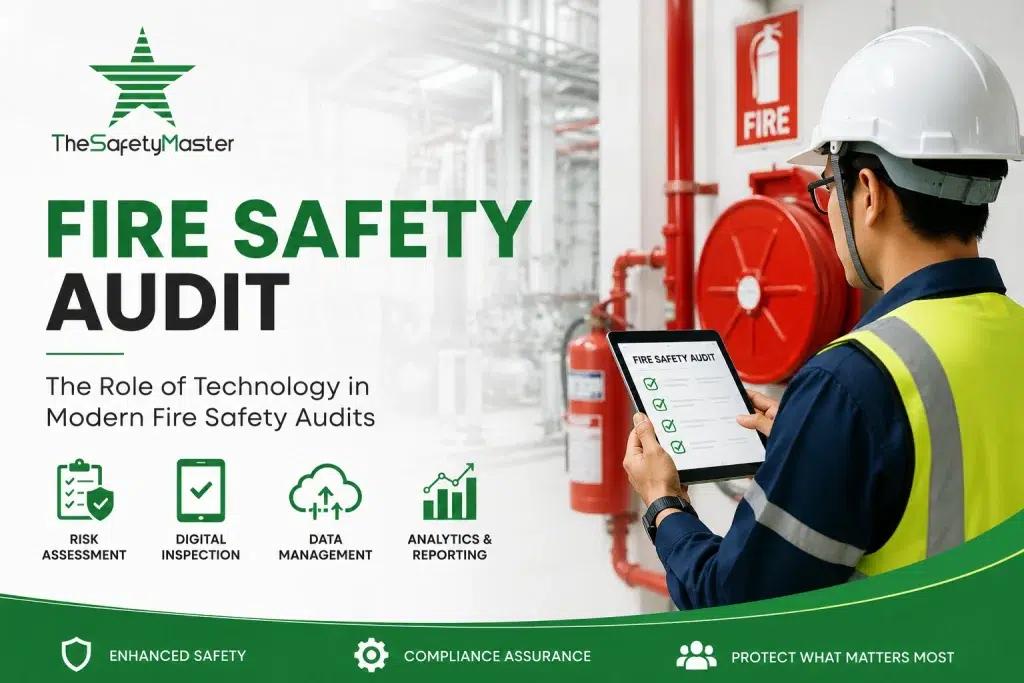
Fire Safety Audit in India: The Role of Technology in Modern Fire Safety Audits
Fire safety is an important part of protecting people, buildings, equipment, and business operations. A traditional fire safety audit mainly depends on physical inspections, checklists, documents, and manual observations. Today, technology is making the audit process more accurate, faster, and easier to monitor.
A modern fire safety audit in India can use digital inspection tools, thermal imaging, smart fire detection systems, automated reporting, sensors, and data-based risk analysis. These technologies help safety professionals identify hidden problems and provide better recommendations.
For organisations looking to improve fire prevention and emergency preparedness, The Safety Master can help develop a systematic approach to fire safety auditing and risk control.
What Is a Fire Safety Audit?
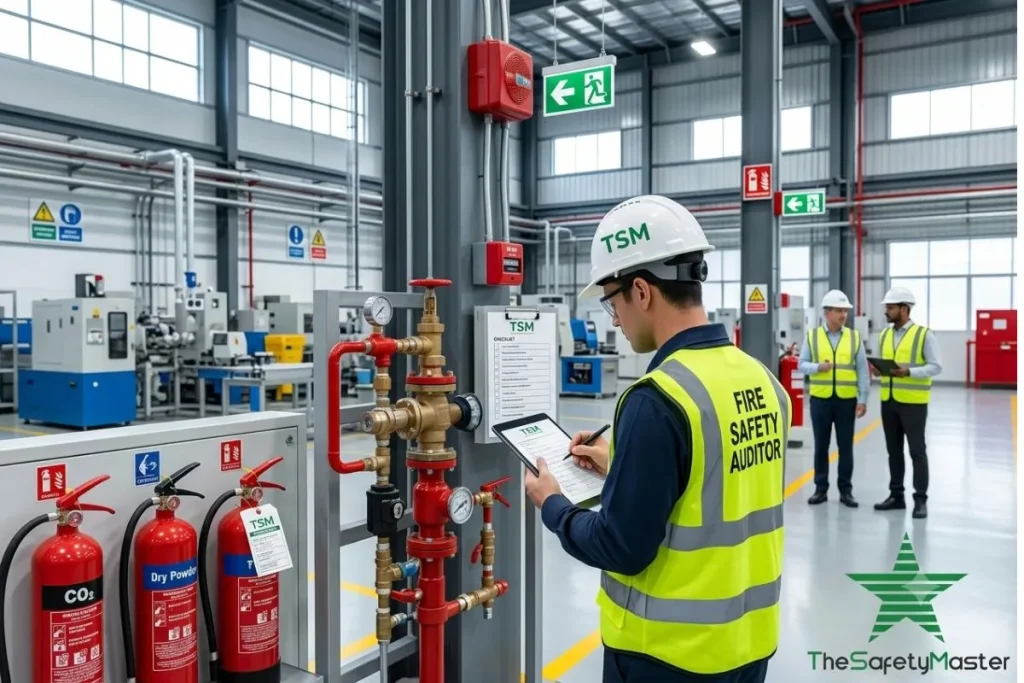
A fire safety audit is a systematic assessment of a building, workplace, industrial facility, or other premises to identify fire hazards and evaluate existing fire prevention and protection measures.
A comprehensive audit can examine:
- Fire detection and alarm systems
- Fire extinguishers
- Hydrant and sprinkler systems
- Fire pumps and water storage
- Emergency exits and escape routes
- Emergency lighting and signage
- Electrical fire hazards
- Passive fire protection
- Fire doors and compartmentation
- Emergency response procedures
- Fire safety training and mock drills
- Inspection and maintenance records
The Institution of Fire Engineers (India) describes fire safety audits as a way to assess fire safety standards, identify fire risks, and recommend measures to reduce those risks.
Why Technology Is Important in Modern Fire Safety Audits
Technology allows auditors to collect and analyse information more efficiently than manual methods alone.
Modern audit systems can help with:
- Digital data collection
- Photographic evidence
- Faster reporting
- Risk classification
- Tracking corrective actions
- Equipment monitoring
- Remote notifications
- Historical comparison of audit findings
- Identification of abnormal conditions
Digital audit platforms can also standardise inspections and reduce the possibility of missed checklist items. Some modern platforms combine mobile data collection, photographs, automated validation, and structured reporting.ecome part of an organization’s continuous fire risk management system.

How Technology Is Changing Fire Safety Audit in India
Digital Fire Safety Inspection
Paper-based checklists can be difficult to maintain, especially for large buildings and multiple locations. Digital inspection applications allow auditors to record observations directly during site inspections.
An auditor can capture:
- Photographs
- Observations
- Equipment details
- Non-conformities
- Risk levels
- Recommendations
- Responsible persons
- Target completion dates
This creates a more organised record of the audit.
Thermal Imaging Technology
Thermal imaging cameras can help identify abnormal heat conditions that may not be visible during a normal visual inspection.
For example, thermal imaging may help detect:
- Overheated electrical connections
- Abnormal temperatures in electrical panels
- Hot spots in equipment
- Potential electrical problems
Thermal imaging is particularly useful when electrical hazards are part of the fire risk assessment.
Smart Fire Detection Systems
Modern fire detection systems can provide more information than traditional alarm systems. Depending on the installation, advanced systems may provide information about detector status, system faults, alarm locations, and other conditions.
During an audit, these systems can be reviewed to determine whether detection and alarm arrangements are appropriate for the building and its occupancy.
IoT Sensors and Real-Time Monitoring
Internet of Things (IoT) technology can connect sensors and equipment to monitoring platforms.
Depending on the application, sensors can monitor conditions such as:
- Temperature
- Smoke
- Equipment status
- Water pressure
- Pump status
- Environmental conditions
Real-time monitoring can help facility teams identify abnormal conditions before they develop into serious problems.
Mobile-Based Audit Reporting
Mobile devices make it possible for auditors to complete inspections while moving through the facility.
Instead of recording observations on paper and entering them later, information can be entered directly into a digital system.
This can improve:
- Data accuracy
- Audit speed
- Evidence collection
- Report preparation
- Corrective-action tracking
Role of Artificial Intelligence in Fire Safety Audits
Artificial Intelligence (AI) is increasingly being explored for safety inspections and data analysis.
AI-supported systems may help analyse large amounts of inspection data and identify repeated findings or patterns.
For example, if the same type of fire safety deficiency appears repeatedly across different audit cycles, data analysis can help management identify the underlying problem.
AI can potentially support:
- Image-based identification of visible conditions
- Risk trend analysis
- Repeated finding identification
- Data classification
- Automated report assistance
- Predictive maintenance support
However, technology should support qualified safety professionals rather than completely replace professional judgement.
Technology for Fire Alarm and Detection System Audits
Fire alarm and detection systems are important components of building fire safety.
During an audit, professionals may review:
- Fire alarm control panel
- Smoke detectors
- Heat detectors
- Manual call points
- Alarm notification systems
- Detector coverage
- Fault indications
- Battery backup
- Maintenance records
- System testing records
Modern digital systems can make it easier to record equipment status and identify faults.
Technology for Fire Protection Systems
Technology can also support inspection and monitoring of active fire protection systems.
These may include:
Fire Hydrant Systems
Auditors can review pump operation, pressure, valves, hydrants, hose reels, and maintenance records.
Sprinkler Systems
Inspection may include sprinkler coverage, condition, valves, water supply, and maintenance arrangements.
Fire Pumps
Monitoring systems can help record pump status and operating conditions.
Fire Extinguishers
Digital asset tracking can help organisations maintain records of extinguisher location, inspection, servicing, and replacement requirements.
Digital Documentation and Fire Safety Compliance
Documentation is an important part of a professional fire safety management system.
Digital systems can help maintain:
- Audit reports
- Inspection records
- Maintenance certificates
- Fire drill records
- Training records
- Fire equipment registers
- Corrective-action reports
- Photographic evidence
- Compliance documents
A structured audit report should not simply identify problems. It should help management understand the risk, recommended action, responsible person, and priority.
Professional audit practices commonly include documentation review, site assessment, operational sampling, detailed findings, and action planning.
Benefits of Using Technology in Fire Safety Audits
1. Faster Inspections
Digital tools can reduce paperwork and make information collection faster.
2. Better Evidence
Photographs and digital records provide useful evidence for findings and corrective actions.
3. Improved Accuracy
Standardised digital checklists can reduce the possibility of missing inspection points.
4. Easier Corrective-Action Tracking
Management can track open and completed actions more efficiently.
5. Better Historical Analysis
Previous audit data can be compared with current findings to identify recurring problems.
6. Improved Decision-Making
Data can help management prioritise high-risk findings and allocate resources.
7. Better Multi-Site Management
Organisations with several facilities can maintain centralised audit information and compare performance between sites.
What Should a Modern Fire Safety Audit Cover?
Technology is useful, but a complete audit should still consider the overall fire safety system.
A typical audit may cover:
- Fire hazards and ignition sources
- Fire load
- Electrical safety
- Fire detection
- Fire alarm systems
- Fire extinguishers
- Hydrant systems
- Sprinkler systems
- Fire pumps
- Emergency exits
- Evacuation arrangements
- Emergency lighting
- Fire doors
- Compartmentation
- Passive fire protection
- Fire safety training
- Mock drills
- Emergency response
- Maintenance records
- Applicable legal and technical requirements
The National Productivity Council also highlights identification of significant fire hazards, evaluation of existing controls, testing of fire safety equipment, and training as important parts of fire safety auditing.
How The Safety Master Can Help
The Safety Master focuses on systematic safety assessment and risk management. A professional fire safety audit approach can help organisations identify gaps in fire prevention, protection, emergency preparedness, and compliance.
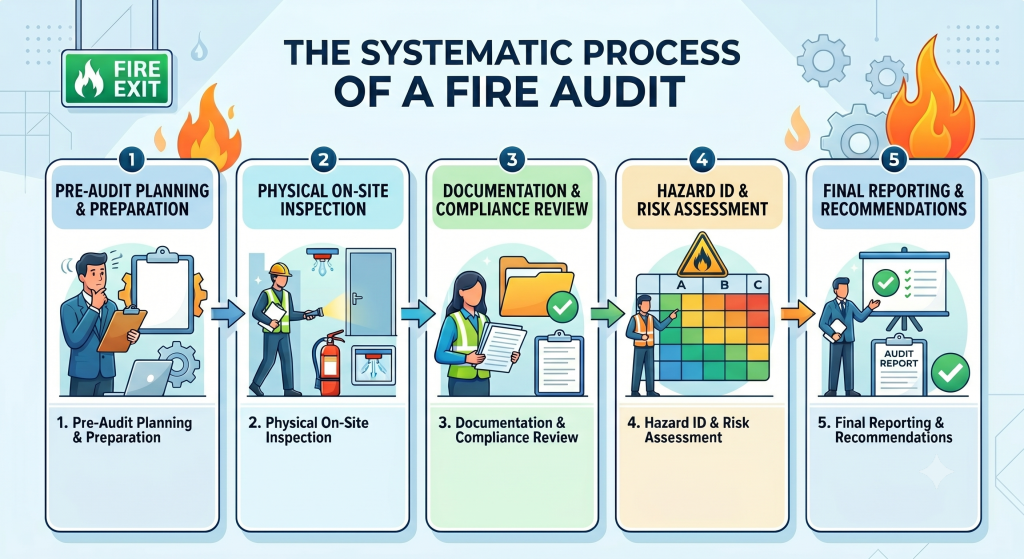
The audit process should ideally move through four important stages:
Assessment
Understand the facility, occupancy, processes, fire hazards, existing systems, and available documentation.
Inspection
Physically inspect fire protection systems, escape routes, electrical areas, emergency arrangements, and other relevant areas.
Risk Evaluation
Identify deficiencies and prioritise them according to their potential impact and urgency.
Corrective Action
Provide practical recommendations and track actions until important gaps are addressed.
This approach makes a fire safety audit in India more than a simple checklist exercise. It becomes part of a continuous fire risk management system.

Future of Fire Safety Auditing in India
The future of fire safety auditing is likely to become increasingly digital and data-driven.
Technologies such as IoT sensors, mobile inspection applications, thermal imaging, cloud-based reporting, analytics, smart building systems, and AI-supported analysis can provide safety teams with better information.
However, technology alone cannot create a safe workplace. It must be combined with competent professionals, proper maintenance, employee training, emergency planning, management commitment, and regular inspections.
Conclusion
Technology is changing the way organisations inspect, monitor, document, and improve fire safety. From digital checklists and thermal imaging to smart detection systems and data analytics, modern tools can make fire safety audits more efficient and transparent.
A well-planned fire safety audit in India should combine technology with professional expertise and a practical understanding of fire hazards. The objective is not simply to find deficiencies but to help organisations reduce fire risk, improve emergency preparedness, and protect people and property.
With a systematic approach, The Safety Master can support organisations in strengthening their fire safety management and building a safer workplace. expertise, The Safety Master can help organizations build a more proactive and reliable approach to fire safety.
Frequently Asked Questions
Q-What is a fire safety audit in India?
A fire safety audit in India is a systematic assessment of a building, workplace, or industrial facility to identify fire hazards and evaluate fire prevention, detection, protection, evacuation, and emergency preparedness measures.
Q-How does technology improve fire safety audits?
Technology can improve audits through digital checklists, mobile inspections, photographs, thermal imaging, smart monitoring systems, automated reporting, data analysis, and corrective-action tracking.
Q-Can thermal imaging be used during a fire safety audit?
Yes. Thermal imaging can help identify abnormal heat conditions, particularly in electrical systems and equipment, that may not be visible during a normal visual inspection.
Q-What systems are checked during a fire safety audit?
Depending on the scope, an audit may examine fire alarms, detectors, extinguishers, hydrants, sprinklers, fire pumps, emergency exits, emergency lighting, passive fire protection, electrical hazards, documentation, training, and emergency procedures.
Q-Why is digital fire safety reporting useful?
Digital reporting makes it easier to record observations, attach photographs, classify risks, assign corrective actions, monitor completion, and compare findings across multiple audits.
Q-Does technology replace a professional fire safety auditor?
No. Technology is a supporting tool. Professional knowledge and judgement remain important for understanding hazards, evaluating risk, interpreting findings, and recommending suitable corrective measures.