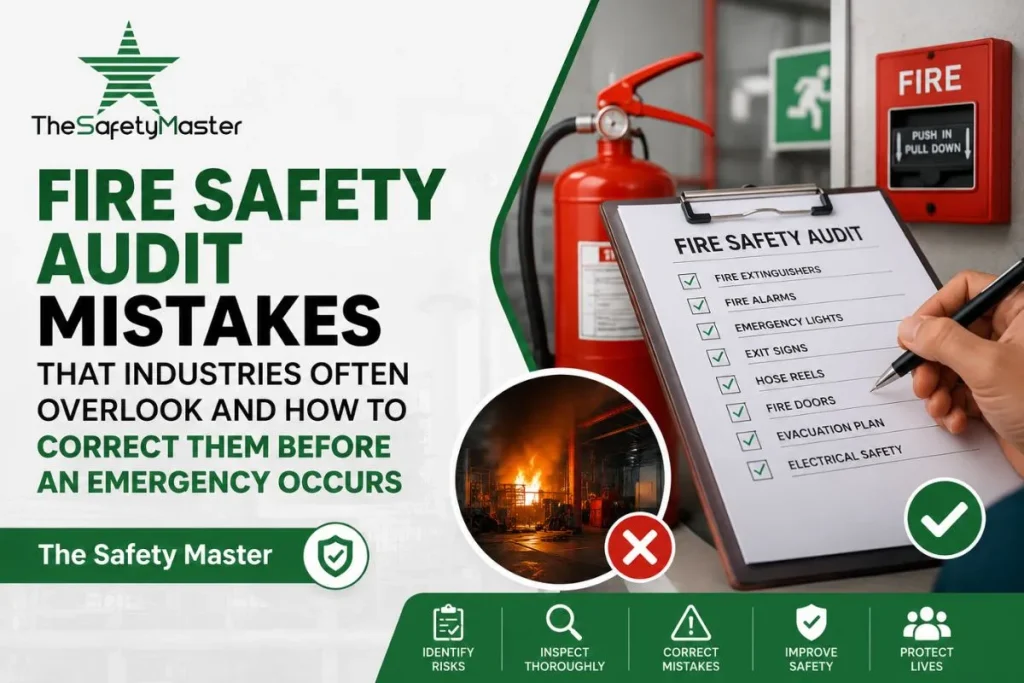
Fire Safety Audits: A Crucial Aspect of Risk Management for Indian Industrial Facilities

Effective Safety Communication: Using Safety Quotes, Slogans, and Messages to Inspire a Safer Workplace
September 18, 2024
Keeping the Sparks at Bay: How Fire Safety Audits Are Revolutionizing Safety Standards in the Electric Vehicle Manufacturing Sector
October 3, 2024
Fire is one of the most serious risks faced by industrial facilities. Manufacturing plants, warehouses, chemical industries, power plants, refineries, and other high-risk facilities may have many possible sources of fire. Electrical faults, flammable materials, hot work, combustible dust, machinery, chemicals, and poor housekeeping can increase the risk.
A Fire Safety Audit helps industries identify these hazards before they become major incidents. It is a systematic review of fire prevention measures, fire protection systems, emergency procedures, and safety practices at a workplace.
For Indian industries, regular fire safety audits are an important part of effective risk management. The Safety Master helps organizations improve fire safety, identify gaps, and develop practical measures to protect people, property, and business operations.
Why Fire Safety Audit Is Important for Indian Industries
Industrial facilities often involve complex operations and high-risk activities. A small fire can quickly become a major emergency if fire detection, firefighting equipment, emergency exits, or evacuation systems are not properly maintained.
A fire safety audit helps organizations:
- Identify potential fire hazards
- Check the condition of firefighting systems
- Review emergency preparedness
- Check fire detection and alarm systems
- Verify emergency exits and evacuation routes
- Identify gaps in fire safety compliance
- Improve employee awareness
- Reduce the possibility of fire-related losses
- Support continuous safety improvement
A properly conducted audit does not only focus on firefighting equipment. It also examines how effectively an organization prevents fires and responds to emergencies.
What Is a Fire Safety Audit?
A Fire Safety Audit is a structured examination of a workplace to identify fire hazards and evaluate the effectiveness of existing fire prevention and protection systems.
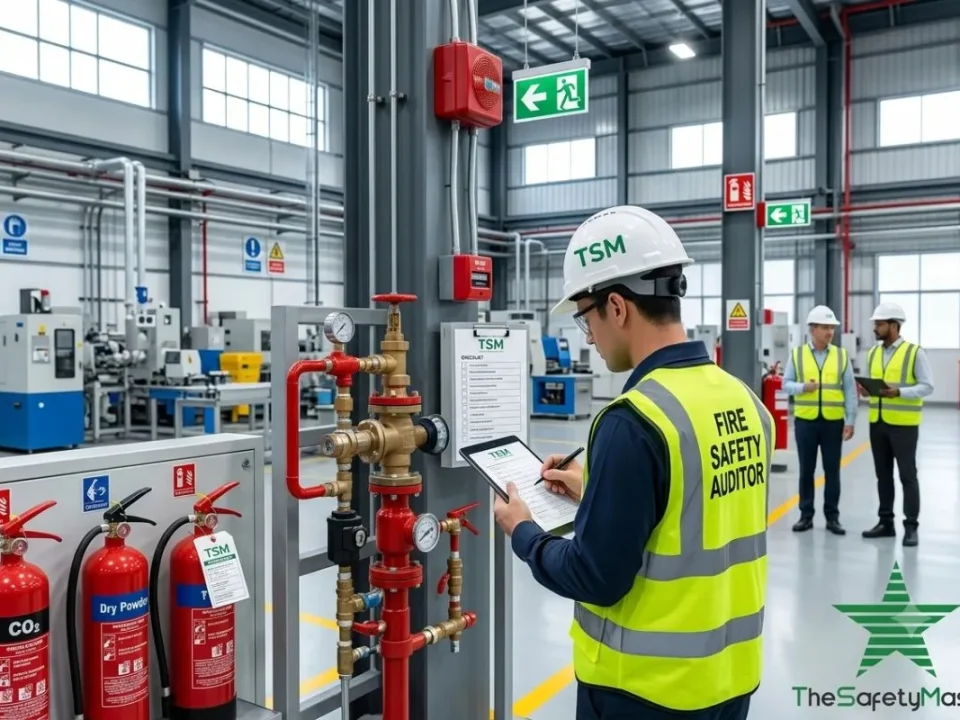
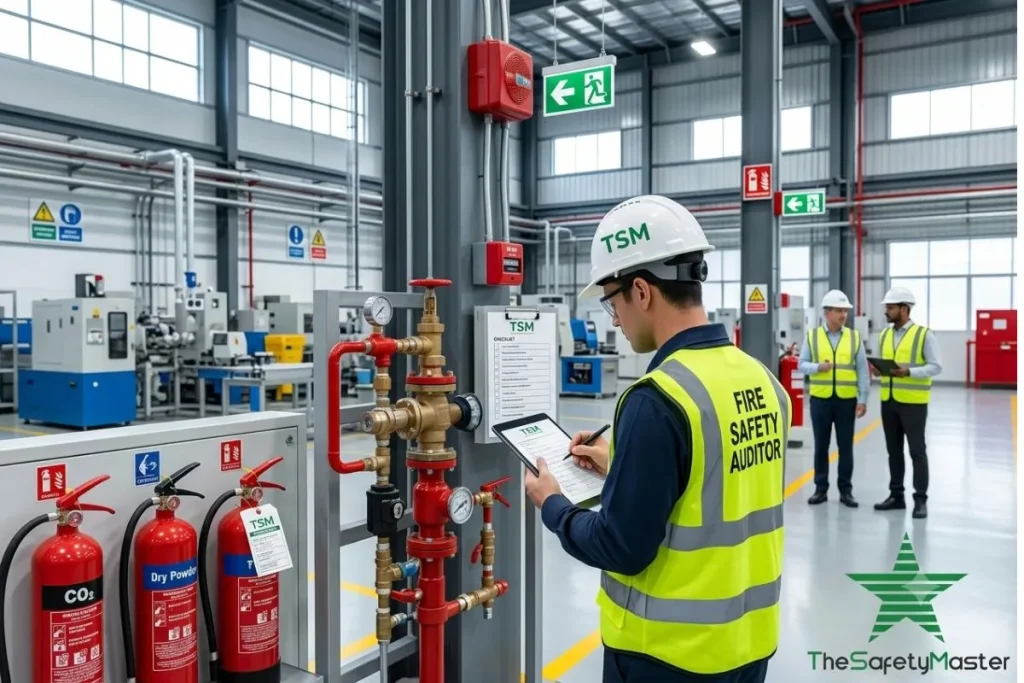
The audit normally covers areas such as electrical safety, fire extinguishers, hydrant systems, fire alarms, emergency lighting, exit routes, storage practices, housekeeping, hot work, emergency response, and employee training.
The objective is to identify unsafe conditions and recommend corrective actions.
Main Objectives of a Fire Safety Audit
The key objectives include:
- Identify fire hazards.
- Evaluate existing fire protection systems.
- Check emergency preparedness.
- Identify unsafe practices.
- Review fire safety procedures.
- Check the accessibility of emergency exits.
- Assess employee awareness and training.
- Recommend corrective and preventive actions.
- Improve overall fire safety performance.
Key Areas Covered During a Fire Safety Audit
A detailed audit should cover the important fire safety elements of an industrial facility.
Fire Detection and Alarm Systems
Auditors check whether smoke detectors, heat detectors, manual call points, fire alarms, and related systems are installed appropriately and maintained properly.
The audit may also review whether alarm systems can effectively alert employees during an emergency.
Fire Extinguishers
Fire extinguishers should be suitable for the types of fire risks present in the facility.
The auditor may check:
- Correct extinguisher type
- Location and accessibility
- Inspection status
- Pressure condition
- Identification and signage
- Maintenance records
- Employee awareness
Hydrant and Fire Water Systems
For larger industrial facilities, fire hydrant and fire water systems are important parts of fire protection.
The audit can review hydrants, hose reels, pumps, fire water tanks, valves, pressure, accessibility, and maintenance records.
Emergency Exits and Evacuation Routes
Emergency exits must be clearly identified and accessible.
A Fire Safety Audit checks whether:
- Exit routes are free from obstruction
- Emergency doors operate correctly
- Exit signs are visible
- Emergency lighting is available
- Evacuation routes are properly marked
- Assembly points are identified
Electrical Fire Safety
Electrical problems are a common source of workplace fires.
An audit may examine electrical panels, cables, temporary connections, overloaded circuits, earthing, housekeeping around electrical equipment, and preventive maintenance practices.
Storage and Housekeeping
Poor storage and housekeeping can increase fire risk.
Combustible materials should be properly stored and separated from ignition sources. Waste, packaging materials, chemicals, and other flammable materials should be managed safely.
Fire Safety Audit Checklist for Industrial Facilities
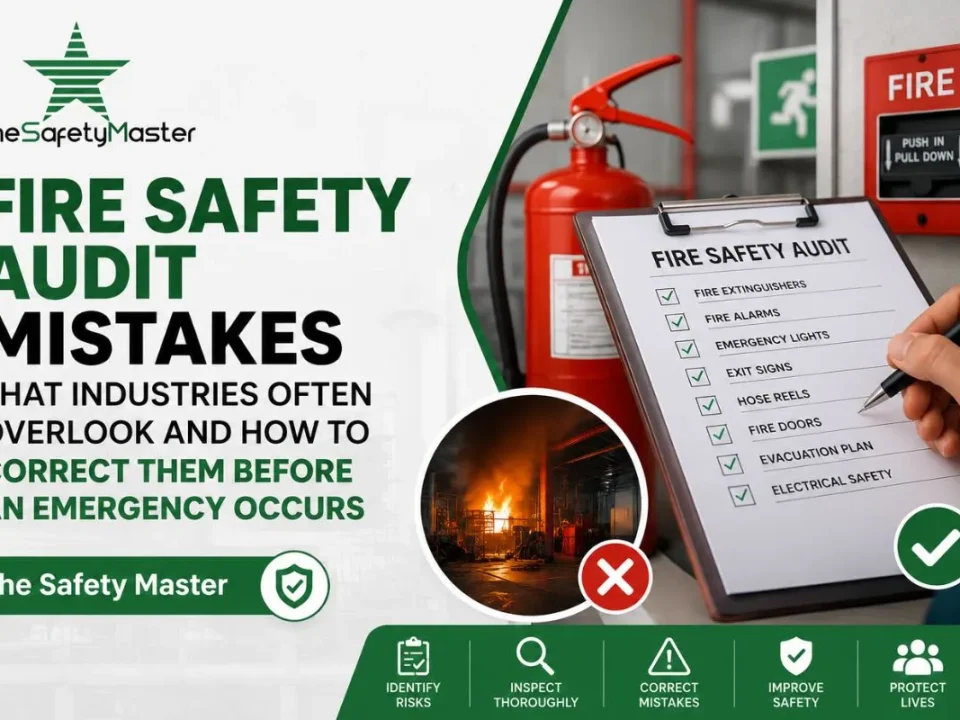
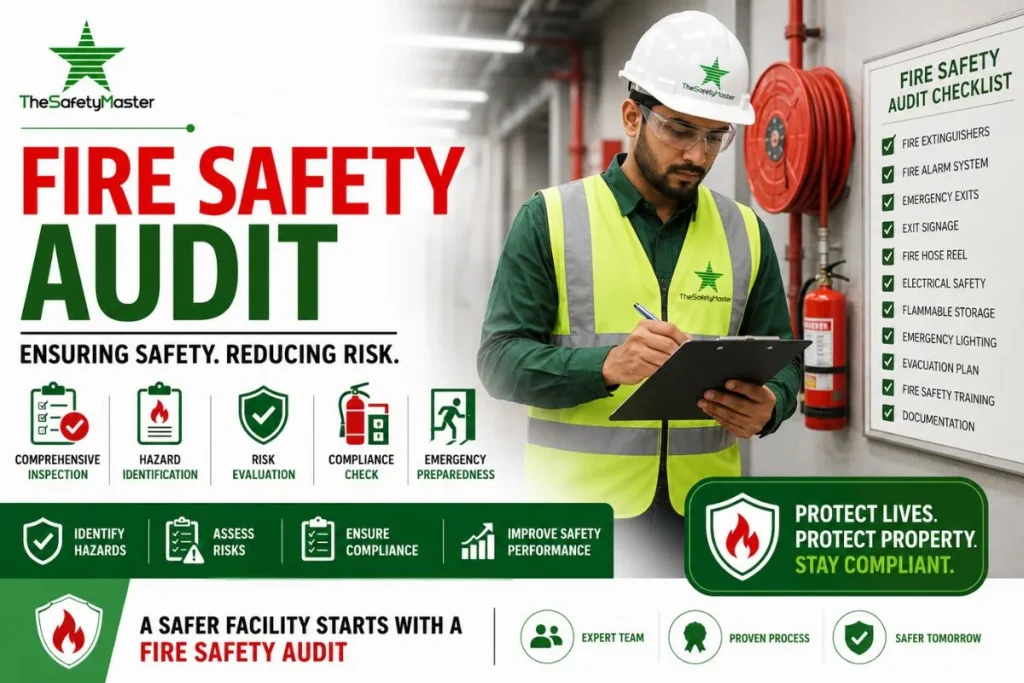
A practical fire safety audit checklist can include the following points:
- Fire extinguishers available and accessible
- Fire extinguishers inspected and maintained
- Fire alarm system operational
- Smoke and heat detectors functional
- Hydrant system maintained
- Fire pumps tested
- Fire water storage adequate
- Emergency exits clearly marked
- Evacuation routes free from obstruction
- Emergency lighting available
- Fire doors maintained
- Electrical systems inspected
- Flammable materials properly stored
- Hot work controlled through appropriate procedures
- Emergency response plan available
- Fire drills conducted
- Employees trained in emergency procedures
- Assembly points identified
- Safety signage provided
- Fire safety records maintained
The exact checklist should be adapted to the facility’s processes, hazards, size, and applicable requirements.
Fire Safety Compliance in Indian Industries
Fire safety compliance is an important part of industrial risk management. Organizations should identify the requirements applicable to their facility and regularly review whether their systems and procedures meet those requirements.
Compliance should not be treated as a one-time activity. Fire protection equipment, emergency systems, procedures, training, and workplace conditions can change over time.
Regular audits help organizations identify gaps and take corrective action before an emergency occurs.
How a Fire Safety Audit Is Conducted
A typical audit can follow a structured process.
1. Review Available Documents
The audit team reviews relevant documents, previous audit reports, fire system records, inspection records, emergency procedures, training records, and other available safety documents.
2. Conduct a Site Inspection
The facility is inspected to identify fire hazards and assess existing fire protection arrangements.
3. Identify Fire Hazards
Potential ignition sources, combustible materials, unsafe storage, electrical risks, process hazards, and other fire hazards are identified.
4. Check Fire Protection Systems
Fire alarms, extinguishers, hydrants, pumps, sprinklers, emergency lighting, fire doors, and other systems are reviewed according to the facility’s requirements.
5. Review Emergency Preparedness
Emergency response plans, evacuation arrangements, fire drills, employee training, communication systems, and assembly points are evaluated.
6. Prepare the Fire Audit Report
The findings are documented in a structured fire audit report. The report should clearly explain identified gaps and recommended corrective actions.
7. Follow Up on Corrective Actions
Audit findings are useful only when corrective actions are completed. Organizations should assign responsibilities, set target dates, and track closure.
Importance of a Fire Audit Report
A fire audit report provides a documented record of the audit findings.
A good report may include:
- Scope of the audit
- Facility details
- Areas inspected
- Fire hazards identified
- Existing controls
- Compliance observations
- Photographic evidence where appropriate
- Risk level or priority
- Recommended corrective actions
- Responsible person or department
- Target completion date
- Follow-up requirements
A clear report helps management understand where improvements are required and prioritize important actions.
Benefits of Regular Fire Safety Audits
Regular audits can provide several benefits to industrial organizations.
Protects Employees
The primary objective of fire safety is to protect people. Identifying hazards early can help reduce the potential for injuries and loss of life.
Reduces Property Damage
Early identification of fire hazards and weaknesses in protection systems can reduce the potential impact of a fire.
Improves Emergency Preparedness
Audits help organizations review evacuation procedures, emergency response plans, fire drills, and employee awareness.
Supports Business Continuity
A major fire can interrupt production and business operations. Better prevention and preparedness can help reduce operational disruption.
Builds a Strong Safety Culture
Regular fire safety reviews show employees that safety is an ongoing responsibility rather than a one-time compliance activity.
Common Fire Safety Problems Found in Industrial Facilities
Some common findings during industrial fire safety inspections include:
- Blocked emergency exits
- Poor housekeeping
- Incorrect storage of combustible materials
- Expired or poorly maintained extinguishers
- Inadequate fire signage
- Electrical overloads
- Damaged electrical cables
- Poor access to firefighting equipment
- Incomplete emergency procedures
- Lack of regular fire drills
- Insufficient employee training
- Poor maintenance records
Correcting these issues can significantly improve workplace fire preparedness.
Role of Employees in Fire Safety
Fire safety is not only the responsibility of the safety department. Employees play an important role in preventing and responding to fires.
Employees should understand:
- How to report a fire
- How to raise an alarm
- Where emergency exits are located
- Where assembly points are located
- How to use a fire extinguisher when trained
- What actions to take during evacuation
- How to report unsafe conditions
Regular training and fire drills can help employees respond more effectively during emergencies.
Why Choose The Safety Master for Fire Safety Audit Services?
The Safety Master provides safety-focused solutions designed to help organizations identify hazards and improve workplace safety performance.
A professional Fire Safety Audit can help your organization understand existing fire risks, evaluate protection systems, identify compliance gaps, and develop practical corrective actions.
The audit approach should be based on the nature of the facility, its processes, materials, occupancy, fire hazards, and emergency arrangements.
Conclusion
A Fire Safety Audit is an important part of risk management for Indian industrial facilities. It helps organizations identify fire hazards, evaluate existing protection systems, improve emergency preparedness, and take corrective action before a serious incident occurs.
Regular inspections, effective fire protection systems, employee training, emergency drills, good housekeeping, and continuous monitoring all contribute to a safer workplace.
For organizations looking to strengthen industrial fire safety and risk management, The Safety Master can support the process through professional safety assessment and audit solutions.
Frequently Asked Questions
Q-What is a Fire Safety Audit?
A Fire Safety Audit is a systematic assessment of a workplace to identify fire hazards and evaluate fire prevention, protection, emergency response, and evacuation arrangements.
Q-Why is Fire Safety Audit important for industries?
It helps industries identify fire hazards, find weaknesses in fire protection systems, improve emergency preparedness, and reduce the risk of fire-related injuries, property damage, and business interruption.
Q-What does a Fire Safety Audit checklist include?
A checklist can include fire extinguishers, alarms, detectors, hydrants, fire pumps, emergency exits, electrical safety, storage, housekeeping, emergency lighting, fire drills, training, signage, and emergency procedures.
Q-What is included in a fire audit report?
A fire audit report generally includes the audit scope, observations, identified hazards, photographs where appropriate, risk priorities, recommended corrective actions, and follow-up requirements.
Q-How often should an industrial Fire Safety Audit be conducted?
The frequency should depend on the facility’s risk profile, processes, applicable requirements, changes in operations, previous findings, and internal safety management procedures. High-risk facilities may require more frequent reviews.
Q-Who should conduct a Fire Safety Audit?
A Fire Safety Audit should be conducted by competent and suitably experienced safety professionals who understand fire hazards, fire protection systems, industrial processes, and applicable requirements.
Q-Can a Fire Safety Audit improve workplace safety?
Yes. A properly conducted audit can identify unsafe conditions and provide practical recommendations to improve fire prevention, emergency preparedness, and overall workplace safety.
Q-What is the difference between a Fire Safety Audit and a Fire Risk Assessment?
A Fire Risk Assessment focuses on identifying fire hazards, evaluating the associated risks, and determining suitable controls. A Fire Safety Audit is a broader systematic review of fire safety arrangements, systems, procedures, compliance, and preparedness.