Hazard Identification and Risk Assessment: A Practical Guide for Workplace Safety

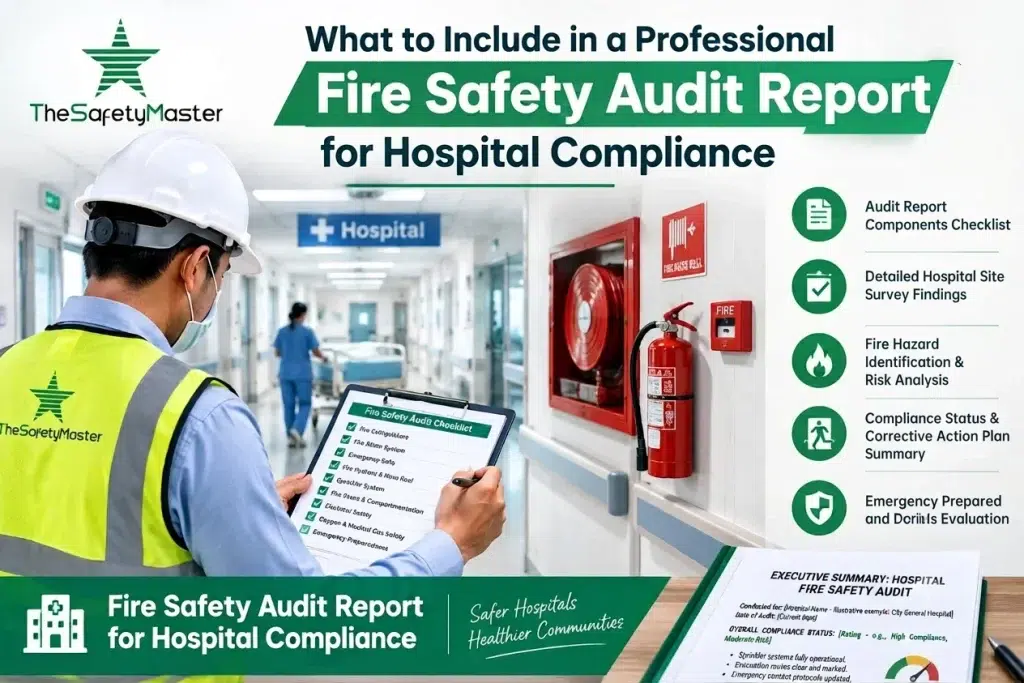
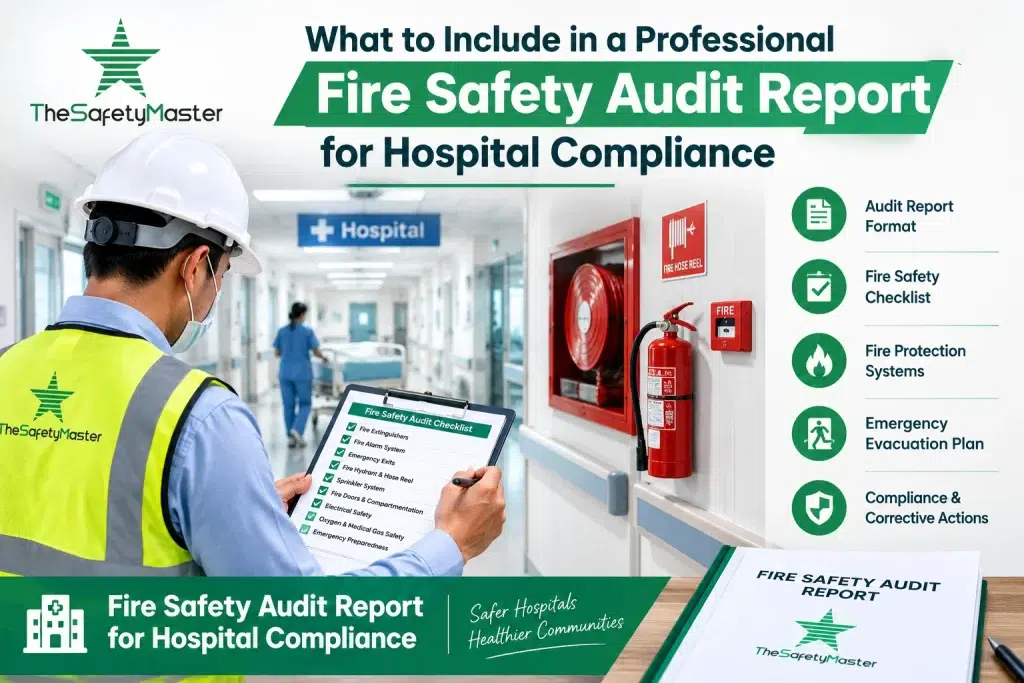
What to Include in a Professional Fire Safety Audit Report for Hospital Compliance
October 7, 2026
Build a Successful Career in Process Safety with HAZOP Certification Course in India
October 7, 2026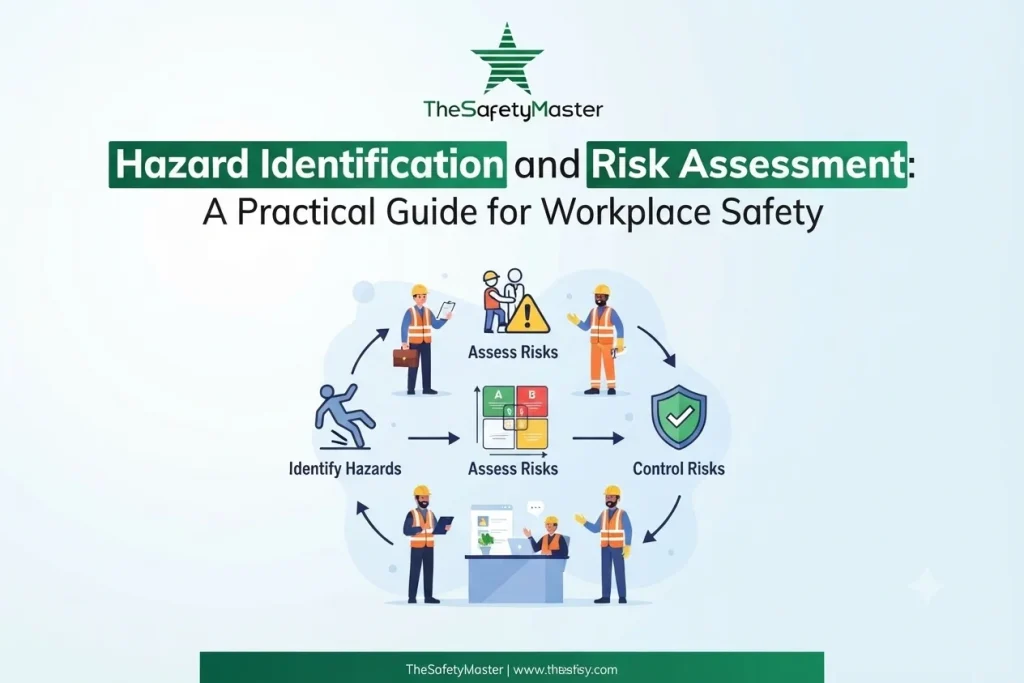
Hazard Identification and Risk Assessment is an important process for protecting workers, equipment, property, and the environment. Every workplace has potential hazards, including unsafe equipment, electrical risks, chemicals, fire, working at height, moving machinery, and unsafe work practices.
A proper risk assessment helps organizations identify these hazards before they cause an accident. It also helps safety professionals decide which control measures should be applied to reduce risk.
The Safety Master provides practical safety solutions and guidance to help organizations improve workplace safety, identify hazards, and manage occupational risks effectively.
What Is Hazard Identification and Risk Assessment?
Hazard Identification and Risk Assessment is a systematic process used to identify hazards, evaluate the risks associated with them, and determine suitable control measures.
A hazard is anything that has the potential to cause harm. Risk is the possibility that the hazard may cause injury, illness, property damage, environmental damage, or other losses.
For example, an unguarded machine is a hazard. The possibility of a worker being injured by that machine represents the associated risk.
Why Is Hazard Identification Important?
Hazard identification allows an organization to understand what can go wrong before an incident occurs. It can help businesses:
- Identify workplace hazards
- Prevent accidents and injuries
- Reduce unsafe conditions
- Improve safety procedures
- Protect employees and visitors
- Meet applicable safety requirements
- Improve emergency preparedness
- Reduce property and equipment damage
- Support continuous safety improvement
Key Steps in Hazard Identification and Risk Assessment
A good risk assessment should follow a clear and systematic process.
1. Identify the Hazards
The first step is to identify all potential hazards in the workplace.
Common hazards include:
- Electrical hazards
- Fire and explosion hazards
- Chemical hazards
- Mechanical hazards
- Biological hazards
- Ergonomic hazards
- Working-at-height hazards
- Confined-space hazards
- Slip, trip, and fall hazards
- Noise and vibration
- Heat and cold exposure
- Vehicle and traffic hazards
Hazards should be identified through workplace inspections, job observations, incident records, worker discussions, safety data sheets, and review of work procedures.
2. Identify Who May Be Harmed
The next step is to determine who could be affected by each hazard.
This may include:
- Employees
- Contractors
- Visitors
- Temporary workers
- Maintenance personnel
- Operators
- Emergency response teams
- Other people working near the activity
Special consideration should be given to new workers, young workers, workers with limited experience, and people who may be more exposed to particular hazards.
3. Evaluate the Risk
After identifying hazards, the organization should evaluate the level of risk.
Risk is commonly evaluated by considering:
Risk = Likelihood × Severity
Likelihood represents how likely an incident is to occur, while severity represents the potential consequences if the incident occurs.
A risk matrix can be used to classify risks as low, medium, high, or critical.
4. Determine Risk Control Measures
Once the risk level is understood, appropriate controls should be selected.
The Hierarchy of Controls is commonly used to prioritize risk reduction.
Elimination
Remove the hazard completely whenever practical.
Substitution
Replace a hazardous material, process, or activity with a safer alternative.
Engineering Controls
Use physical or technical controls to separate people from hazards.
Examples include machine guards, ventilation systems, barriers, and interlocks.
Administrative Controls
Use procedures, training, signs, permits, schedules, and safe work instructions to reduce exposure.
Personal Protective Equipment
PPE such as helmets, gloves, safety shoes, goggles, respirators, and hearing protection can provide additional protection.
PPE should generally be considered along with higher-level controls rather than as the only control.
Hazard Identification and Risk Assessment in Different Workplaces
Risk assessment requirements can vary depending on the type of workplace and activities involved.
Manufacturing Industry
Manufacturing facilities may need to assess:
- Machinery hazards
- Electrical systems
- Chemical handling
- Material movement
- Welding and hot work
- Pressure systems
- Fire hazards
- Maintenance activities
Construction Sites
Construction risk assessments may cover:
- Work at height
- Excavation
- Scaffolding
- Lifting operations
- Electrical work
- Demolition
- Mobile equipment
- Falling objects
Chemical and Process Industries
Process industries may require detailed assessment of:
- Chemical exposure
- Toxic releases
- Fire and explosion
- Pressure systems
- Process deviations
- Storage hazards
- Emergency scenarios
Tools such as HAZOP, LOPA, What-If Analysis, and other process safety techniques may be used where appropriate.
Hospitals and Healthcare Facilities
Hospitals have a wide range of hazards, including:
- Fire hazards
- Electrical hazards
- Medical gases
- Chemical exposure
- Biological hazards
- Radiation
- Slips and falls
- Emergency situations
A hospital safety assessment should consider patients, staff, visitors, contractors, and emergency response requirements.
How to Write a Safety Audit Report
A safety audit report should clearly communicate what was inspected, what hazards were identified, and what corrective actions are required.
Basic Structure of a Safety Audit Report
A professional report can include:
- Audit title
- Organization and site details
- Audit date
- Audit scope
- Audit objectives
- Audit team
- Areas inspected
- Findings and observations
- Risk classification
- Photographic evidence where required
- Corrective actions
- Responsible person
- Target completion date
- Follow-up requirements
- Conclusion
A good report should use clear language and provide practical corrective actions.
Importance of Regular Risk Assessment
Risk assessment should not be treated as a one-time activity. It should be reviewed when there are significant changes in processes, equipment, materials, workplace conditions, or legal requirements.
It should also be reviewed after serious incidents, near misses, or when existing control measures are found to be ineffective.
Regular review helps ensure that the assessment remains relevant to actual workplace conditions.
Benefits of Hazard Identification and Risk Assessment
A structured risk assessment program can provide several benefits.
Improved Workplace Safety
Identifying hazards before incidents occur helps organizations take preventive action.
Reduced Accidents
Effective control measures can reduce the likelihood of injuries, occupational illnesses, fires, and other incidents.
Better Safety Planning
Risk assessment provides useful information for preparing safe work procedures, emergency plans, training programs, and inspection schedules.
Improved Compliance
A documented risk assessment can support an organization’s safety management and compliance activities.
Stronger Safety Culture
When workers are involved in identifying hazards and suggesting controls, they become more aware of workplace risks and safety responsibilities.
Role of The Safety Master
The Safety Master supports organizations with professional safety and risk management solutions. Hazard Identification and Risk Assessment can help businesses understand workplace hazards, evaluate risks, and develop practical control measures.
A systematic approach to risk assessment can help organizations move from reactive safety management toward proactive hazard prevention.
Conclusion
Hazard Identification and Risk Assessment is a fundamental part of effective workplace safety management. It provides a structured way to identify hazards, evaluate risks, and implement suitable controls.
From manufacturing plants and construction sites to hospitals and process industries, every workplace can benefit from a systematic risk assessment process.
By identifying hazards early and applying the Hierarchy of Controls, organizations can reduce workplace risks and create safer working conditions. The Safety Master helps organizations build practical approaches to safety, risk management, audits, and hazard control.