What to Include in a Professional Fire Safety Audit Report for Hospital Compliance

What to Include in a Professional Fire Safety Audit Report for Hospital Compliance
October 6, 2026
Hazard Identification and Risk Assessment: A Practical Guide for Workplace Safety
October 7, 2026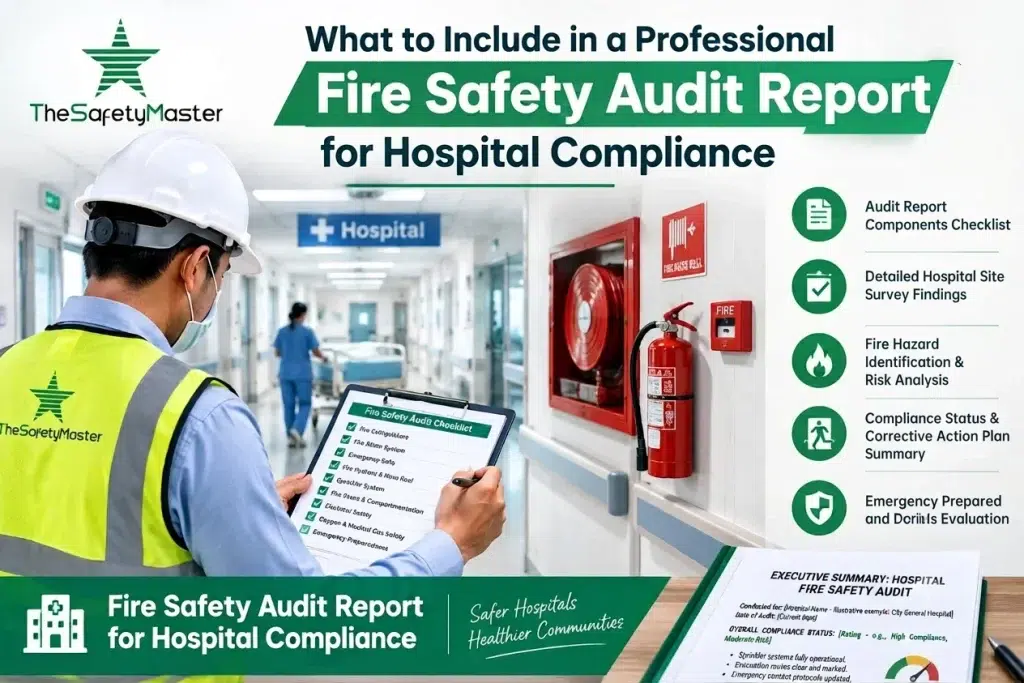
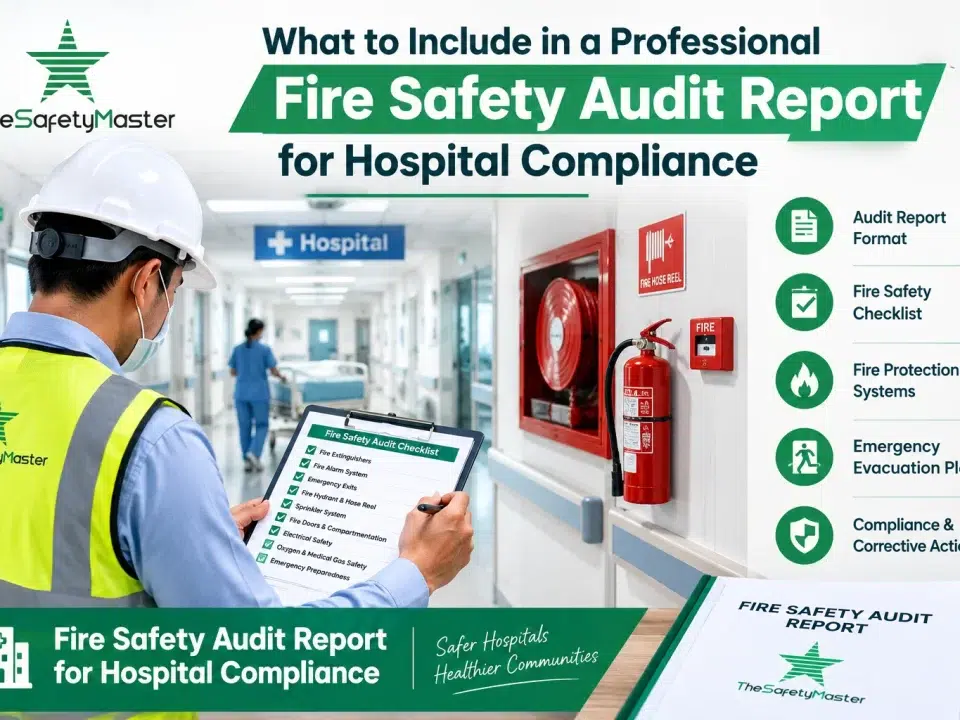
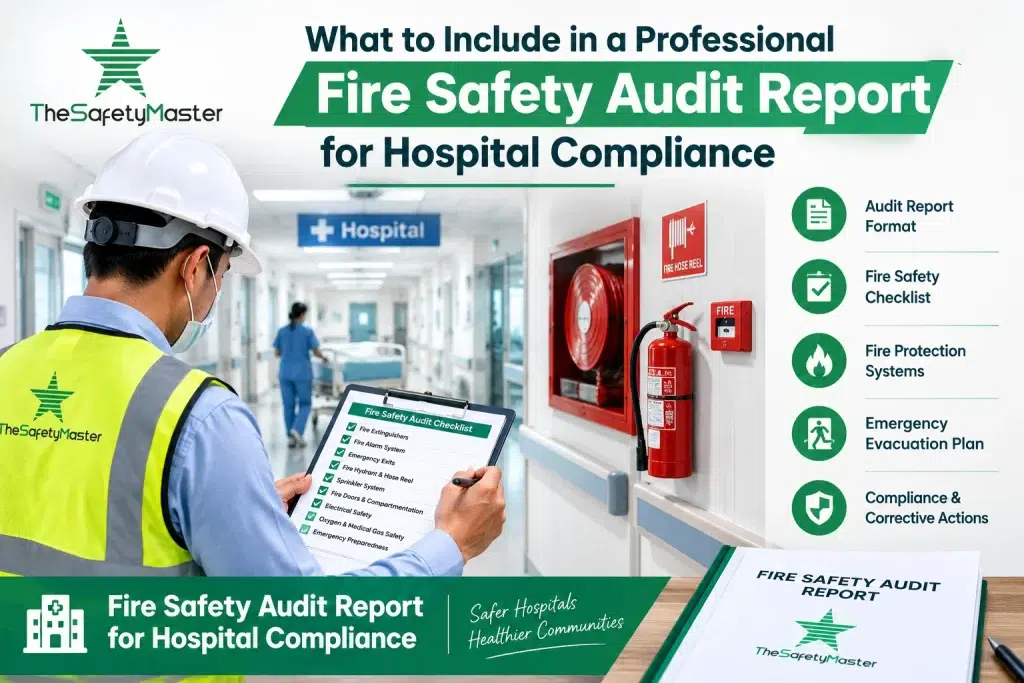
Hospitals need strong fire safety systems because they care for patients who may not be able to evacuate quickly. A professional fire safety audit report for hospital operations helps identify fire hazards, check safety systems, review emergency preparedness, and recommend corrective actions. A proper report also provides management with a clear record of the hospital’s fire safety condition.
The Safety Master provides safety audit and risk management solutions that can help organizations improve workplace and fire safety practices.
What Is a Fire Safety Audit Report for a Hospital?
A fire safety audit report is a formal document prepared after inspecting the fire prevention, protection, and emergency response arrangements of a hospital.
The report normally records:
- Areas inspected
- Fire hazards identified
- Fire protection systems available
- Non-compliances and deficiencies
- Risk observations
- Emergency preparedness
- Training and awareness
- Corrective actions
- Responsible persons
- Target completion dates
- Recommendations for improvement
The report should be clear enough for hospital management, safety teams, maintenance departments, and auditors to understand the current fire safety condition.
Why Is a Fire Safety Audit Important for Hospitals?
Hospitals have several special fire safety challenges. Patients may be bedridden, dependent on medical equipment, or unable to move without assistance. Hospitals may also contain oxygen systems, electrical equipment, laboratories, kitchens, pharmacies, generators, and other potential fire hazards.
A fire safety audit can help hospitals:
- Identify fire hazards before an emergency
- Check fire detection and alarm systems
- Review firefighting arrangements
- Inspect emergency exits and escape routes
- Check emergency lighting and signage
- Review fire extinguisher availability
- Assess evacuation arrangements
- Check staff fire safety training
- Identify maintenance gaps
- Improve emergency preparedness
- Support regulatory and accreditation requirements
Fire Safety Audit Checklist for Hospitals
A professional hospital audit should cover different areas rather than checking only fire extinguishers.
Fire Extinguishers
The audit should verify:
- Correct extinguisher type
- Adequate number of extinguishers
- Proper location
- Easy accessibility
- Identification signage
- Inspection status
- Pressure condition where applicable
- Maintenance records
- Unobstructed access
Fire Detection and Alarm System
Check whether:
- Smoke detectors are installed in required areas
- Heat detectors are provided where appropriate
- Manual call points are accessible
- Fire alarm panels are functioning
- Audible and visual alarms are effective where required
- Alarm testing is documented
- Fault indications are addressed
- Maintenance records are available
Fire Hydrant and Sprinkler Systems
The audit may review:
- Fire hydrant availability
- Hose reels
- Fire pumps
- Water storage
- Sprinkler systems
- Valves and accessibility
- Pump testing records
- Pressure conditions
- Maintenance documentation
Emergency Exits and Escape Routes
Inspect:
- Exit doors
- Staircases
- Corridors
- Emergency routes
- Exit signage
- Emergency lighting
- Obstructions
- Door opening direction where applicable
- Accessibility of evacuation routes
Special attention should be given to patient evacuation routes because hospitals may need assisted evacuation.
Electrical Fire Safety
Electrical systems should also be reviewed for fire risks.
Check:
- Electrical panels
- Wiring condition
- Overloaded sockets
- Temporary connections
- Damaged cables
- Electrical equipment
- Earthing arrangements
- Preventive maintenance
- Thermographic inspection records where applicable
Medical Gas and Oxygen Safety
Hospitals should pay special attention to medical gas systems and oxygen storage/use areas.
The audit can review:
- Medical gas storage
- Oxygen cylinder arrangements
- Cylinder segregation
- Warning signage
- Leakage control
- Storage practices
- Fire protection arrangements
- Staff awareness
- Emergency procedures
Kitchen and LPG Safety
Hospital kitchens can create significant fire risks. Inspect:
- LPG cylinders and connections
- Gas pipelines
- Gas leak detection
- Cooking equipment
- Exhaust systems
- Fire extinguishers
- Fire suppression systems where provided
- Housekeeping
- Emergency shut-off arrangements
What to Include in a Professional Fire Safety Audit Report for Hospital?
A professional report should contain sufficient information to understand the inspection, findings, risk level, and required corrective actions.
1. Audit Details
Include:
- Hospital name
- Location
- Date of audit
- Audit team
- Areas inspected
- Scope of audit
- Reference documents
- Applicable requirements
2. Executive Summary
The executive summary should provide a short overview of the hospital’s fire safety condition.
It can mention:
- Major positive observations
- Critical deficiencies
- High-risk areas
- Overall assessment
- Immediate actions required
3. Hospital Profile
The report may include basic information such as:
- Building type
- Number of floors
- Patient capacity
- Critical care areas
- Operation theatres
- Laboratories
- Pharmacy
- Kitchen
- Electrical rooms
- Generator areas
- Medical gas facilities
4. Fire Safety System Assessment
Document the condition of:
- Fire alarm systems
- Smoke detectors
- Fire extinguishers
- Hydrant systems
- Sprinklers
- Fire pumps
- Fire water tanks
- Emergency lighting
- Exit signage
- Fire doors
- Smoke control systems where applicable
5. Fire Safety Audit Findings
Each finding should clearly explain what was observed.
A useful format is:
Observation → Risk → Recommendation → Responsible Person → Target Date → Status
For example:
Observation: A fire exit corridor was partially blocked by stored materials.
Risk: Obstruction may delay evacuation during a fire emergency.
Recommendation: Remove the materials immediately and maintain the corridor free from obstruction.
Priority: High
6. Photographic Evidence
Photographs can make the report easier to understand. Images should clearly show:
- Fire safety deficiencies
- Blocked exits
- Damaged equipment
- Poor storage
- Missing signage
- Fire protection equipment
- Good practices
Each photograph should have a short description and location.
7. Corrective Action Plan
The report should provide a practical action plan.
| Finding | Risk Level | Corrective Action | Responsibility | Target Date |
|---|---|---|---|---|
| Blocked emergency exit | High | Remove obstruction | Facility Team | Immediate |
| Missing fire signage | Medium | Install required signage | Maintenance | 7 Days |
| Expired equipment inspection | High | Arrange inspection/service | Safety Team | Immediate |
Fire Safety Audit Report PDF Free Download
Hospitals often search for a fire safety audit report PDF free download to understand how an audit report is structured.
A sample report can be useful for learning the format, but it should not be copied blindly. Hospital fire safety requirements can vary according to building characteristics, applicable regulations, local authority requirements, and accreditation requirements.
A professional report should be customized to the actual hospital, its building, occupancy, fire protection systems, and identified hazards.
Fire Safety Audit Checklist Excel
A fire safety audit checklist Excel format can make inspections easier because auditors can record observations, responsibilities, risk ratings, and corrective action status in a structured way.
Useful Excel columns can include:
- Sr. No.
- Audit Area
- Inspection Point
- Observation
- Compliance Status
- Risk Level
- Recommended Action
- Responsible Department
- Target Date
- Completion Status
- Remarks
This format can also help management track open and closed findings.
Fire Safety Audit Checklist PDF
A fire safety audit checklist PDF can be useful for field inspections and documentation. It may cover:
- Building fire safety
- Fire extinguishers
- Fire alarm systems
- Hydrant systems
- Sprinklers
- Emergency exits
- Fire doors
- Electrical safety
- Kitchen safety
- Medical gas safety
- Emergency response
- Fire drills
- Training records
- Housekeeping
The checklist should be adapted to the hospital’s actual facilities and applicable requirements.
Fire Safety Audit Checklist for Industry
Although hospitals have special requirements, the basic fire audit approach can also be applied to industrial facilities.
A fire safety audit checklist for industry may include:
- Process areas
- Chemical storage
- Electrical rooms
- Warehouses
- Production areas
- Fire hydrants
- Fire extinguishers
- Emergency exits
- Fire pumps
- Emergency response
- Hot work controls
- Flammable material storage
Industrial audits generally require additional attention to process hazards and hazardous materials.
Fire Audit Checklist
A general fire audit checklist should evaluate whether the organization has adequate arrangements to prevent, detect, control, and respond to fire.
Important sections include:
- Fire prevention
- Fire detection
- Fire alarm
- Firefighting equipment
- Emergency exits
- Emergency lighting
- Fire signage
- Electrical safety
- Storage practices
- Emergency response
- Fire drills
- Staff training
- Inspection and maintenance records
Fire Safety Checklist for Buildings in India
A fire safety checklist for buildings in India should consider the building’s occupancy, height, layout, fire protection systems, emergency exits, and applicable Indian requirements.
The audit may review:
- Fire exits
- Staircases
- Fire doors
- Emergency lighting
- Fire extinguishers
- Fire alarm systems
- Hydrant systems
- Sprinkler systems
- Fire pumps
- Fire water storage
- Fire control room
- Emergency signage
- Electrical safety
- Fire drill records
- Training records
- Maintenance records
The final checklist should be aligned with applicable national, state, local authority, and building-specific requirements.
NABH Fire Safety Guidelines for Hospitals
Hospitals seeking accreditation should pay close attention to fire and life safety requirements applicable to their facility.
The audit should review areas such as:
- Fire prevention
- Fire detection
- Fire protection systems
- Emergency preparedness
- Evacuation procedures
- Fire drills
- Staff training
- Equipment inspection
- Emergency response procedures
- Documentation and records
Hospitals should always use the current official NABH requirements applicable to their accreditation scope rather than relying on an old checklist or unofficial PDF.
Fire Safety Measures in Hospitals
Important fire safety measures include:
- Maintain clear emergency exits
- Install and maintain suitable fire detection systems
- Provide appropriate firefighting equipment
- Test fire alarm systems regularly
- Maintain fire hydrant and sprinkler systems where provided
- Keep electrical installations in safe condition
- Control oxygen and medical gas-related fire risks
- Maintain kitchen fire safety
- Conduct regular fire drills
- Train hospital staff
- Maintain emergency response procedures
- Keep fire safety records updated
- Inspect high-risk areas regularly
How to Write a Safety Audit Report?
A good safety audit report should be factual, clear, and action-oriented.
A simple process is:
Step 1: Define the Audit Scope
Decide which hospital buildings, departments, systems, and activities will be inspected.
Step 2: Conduct the Inspection
Inspect the site and compare actual conditions with applicable requirements.
Step 3: Record Observations
Document both compliant conditions and deficiencies.
Step 4: Assess Risk
Classify findings according to their potential impact and urgency.
Step 5: Provide Recommendations
Give practical corrective actions rather than simply identifying problems.
Step 6: Assign Responsibility
Identify the department or person responsible for corrective action.
Step 7: Set Target Dates
Set realistic completion dates based on the severity of each finding.
Step 8: Prepare the Final Report
Include photographs, observations, recommendations, risk ratings, and an action plan.
Step 9: Follow Up
An audit is more effective when corrective actions are tracked until closure.
Benefits of a Professional Hospital Fire Safety Audit
A structured fire safety audit can help hospitals:
- Reduce fire risks
- Improve patient safety
- Protect staff and visitors
- Improve emergency preparedness
- Identify system failures
- Improve compliance
- Strengthen documentation
- Improve fire safety awareness
- Support continuous improvement
Conclusion
A professional fire safety audit report for hospital compliance should be more than a simple checklist. It should provide a clear picture of fire hazards, fire protection systems, emergency preparedness, non-compliances, risk levels, and corrective actions.
A detailed Fire Safety Audit Checklist for Hospitals should cover fire detection, alarms, extinguishers, hydrants, sprinklers, emergency exits, electrical safety, medical gases, kitchens, fire drills, training, and documentation. A well-prepared report also helps hospital management prioritize corrective actions and continuously improve fire safety.
The Safety Master can support organizations with professional safety audits, risk assessment, fire safety consulting, and practical recommendations designed to improve workplace and hospital safety.