How to Choose the Best Fire Safety Audit Companies in India: A Complete Guide

Top 10 Fire Safety Audit Companies in India for Industrial and Commercial Compliance
September 28, 2026
14 Essential Elements of Process Safety Management for High-Hazard Industries
September 29, 2026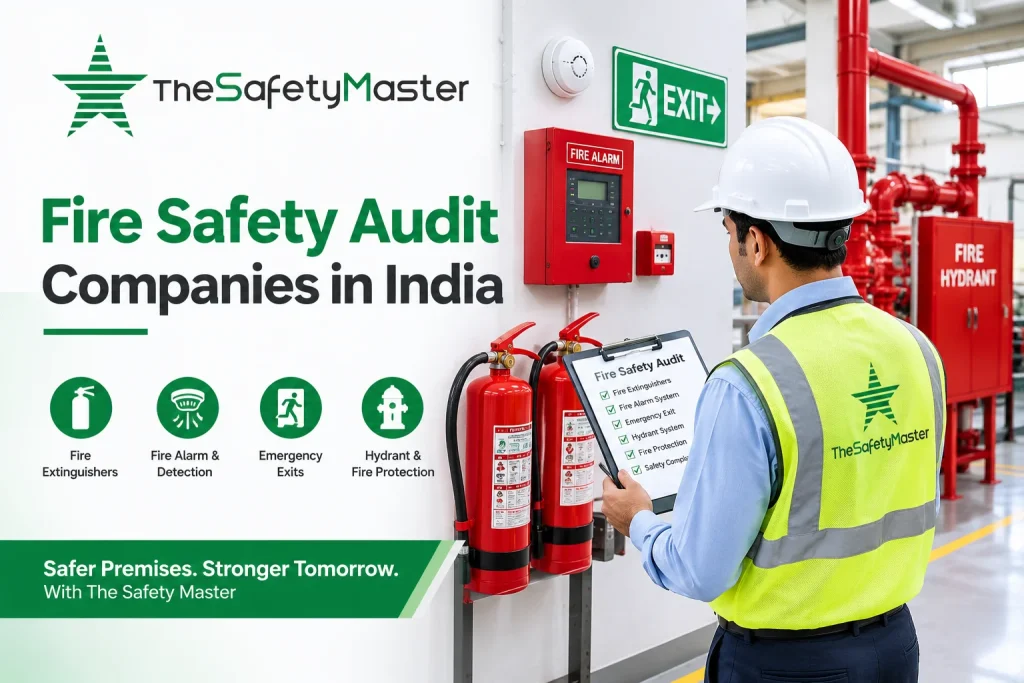
Why Fire Safety Audits Are Important
Fire can cause serious damage to people, buildings, equipment, documents, and business operations. A fire safety audit helps an organization identify fire hazards and check whether its fire prevention and protection systems are working properly.
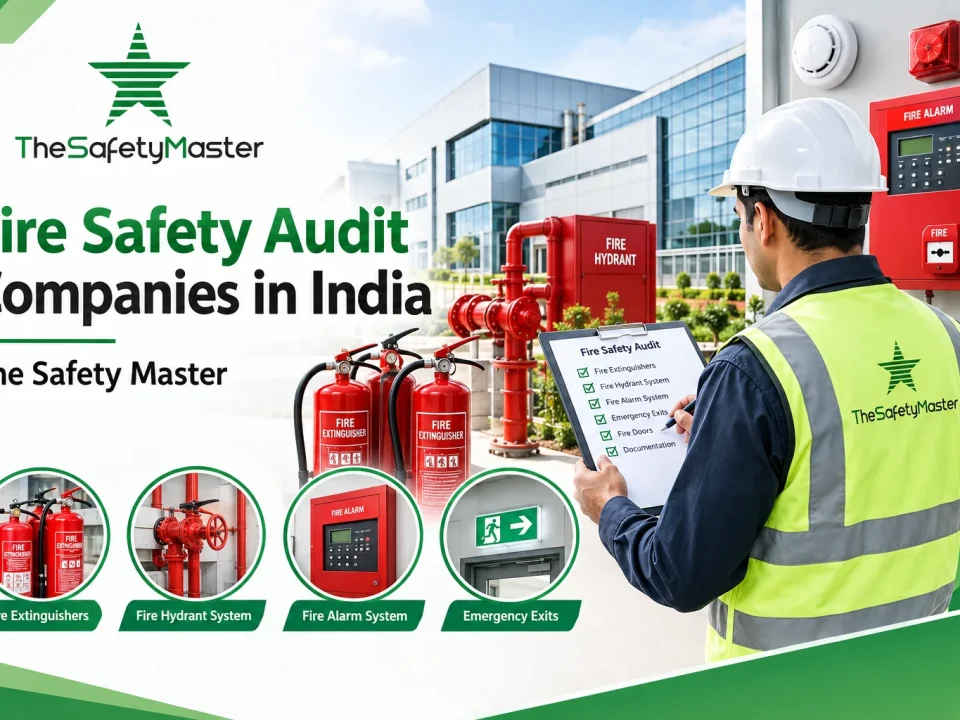
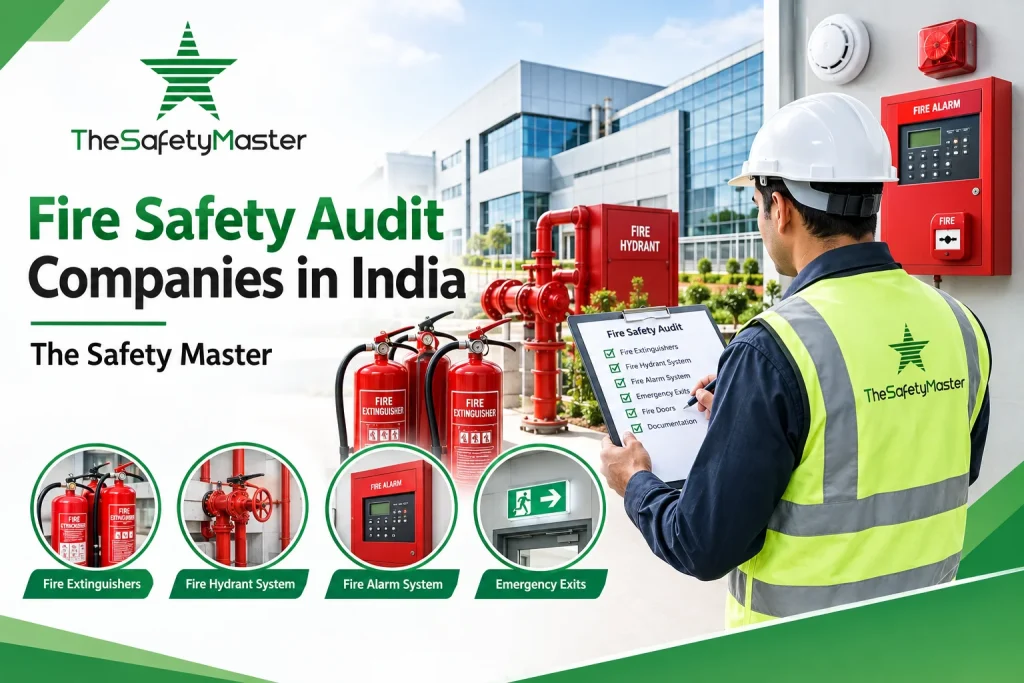
A professional audit reviews areas such as fire extinguishers, fire alarms, emergency exits, electrical safety, firefighting systems, evacuation arrangements, emergency lighting, fire pumps, hydrants, and safety procedures.
Choosing the right Fire Safety Audit Companies in India is important because the quality of the audit depends on the experience, technical knowledge, inspection process, and reporting approach of the service provider.
The Safety Master provides safety and risk-management solutions designed to help organizations identify hazards, improve fire safety practices, and strengthen workplace safety.
What Is a Fire Safety Audit?
A fire safety audit is a systematic inspection of a building, workplace, plant, facility, or commercial property to identify fire hazards and evaluate existing fire protection measures.
The audit normally includes:
- Identification of possible fire hazards
- Inspection of fire protection systems
- Checking emergency exits and escape routes
- Inspection of fire extinguishers
- Review of fire alarm and detection systems
- Checking emergency lighting and signage
- Inspection of electrical safety arrangements
- Review of firefighting equipment
- Evaluation of emergency response procedures
- Review of fire safety training
- Preparation of an audit report
- Recommendations for corrective actions
A good audit should not only identify problems but also provide practical recommendations to reduce fire risk.
How to Choose Fire Safety Audit Companies in India
Choosing a fire safety audit provider requires more than checking the price. Organizations should evaluate the company’s technical capability, experience, audit methodology, reporting quality, and understanding of applicable requirements.
Check Technical Experience
Look for an organization with experience in the type of facility being audited. A manufacturing plant, warehouse, hospital, hotel, office building, chemical facility, and educational institution can have very different fire risks.
Ask about previous experience with similar facilities and industries.
Review the Audit Scope
Before selecting a company, understand what will be included in the audit.
A professional fire safety audit may cover:
- Fire prevention
- Fire detection
- Fire alarm systems
- Fire suppression systems
- Fire extinguishers
- Hydrant systems
- Sprinkler systems
- Fire pumps
- Emergency exits
- Evacuation plans
- Electrical hazards
- Emergency preparedness
- Fire safety training
A clearly defined scope helps prevent important areas from being missed.
Check the Auditor’s Qualifications
The competence of the audit team is an important consideration. Ask about the qualifications, training, industry experience, and technical background of the auditors.
The team should understand fire protection systems, building safety, emergency response, electrical hazards, evacuation requirements, and relevant safety standards.
Ask About the Audit Methodology
A reliable audit company should have a structured inspection methodology.
The process may include:
- Understanding the facility
- Reviewing available documents
- Conducting a site inspection
- Identifying fire hazards
- Checking fire protection systems
- Discussing observations with responsible personnel
- Assessing risks
- Preparing the audit report
- Recommending corrective actions
A systematic approach produces more useful results than a basic visual inspection.
Check the Fire Safety Audit Report
The final report is one of the most important deliverables.
A useful fire safety audit report should clearly explain:
- Observation
- Location of the issue
- Identified hazard
- Possible consequence
- Risk level, where applicable
- Recommended corrective action
- Suggested priority
- Photographic evidence, where appropriate
The report should be easy for management and safety teams to understand and use for corrective-action planning.
Consider Industry-Specific Fire Risks
Different industries have different fire hazards.
Manufacturing Facilities
Manufacturing plants may have combustible materials, machinery, electrical equipment, flammable liquids, gases, hot work, and process-related hazards.
The audit should consider these risks and evaluate whether existing fire protection systems are suitable.
Warehouses
Warehouses can have high storage loads, packaging materials, pallets, chemicals, and restricted access areas. Storage arrangement and fire protection systems should be carefully reviewed.
Hospitals
Hospitals require special attention because patients may have limited mobility. Fire detection, alarm systems, evacuation procedures, emergency lighting, compartmentation, and staff training are particularly important.
Hotels and Commercial Buildings
Hotels, offices, malls, and commercial buildings should have effective detection, alarm, firefighting, evacuation, emergency lighting, and signage systems.
Check Applicable Standards and Requirements
The selected audit company should understand relevant Indian fire safety requirements and applicable standards for the facility.
Depending on the building and industry, the audit may consider requirements related to:
- National Building Code provisions
- Fire and Life Safety requirements
- Applicable BIS standards
- Electrical safety requirements
- Local fire authority requirements
- Industry-specific requirements
- Company safety procedures
Requirements can vary according to building type, occupancy, location, processes, and applicable local regulations. Therefore, the audit should be specific to the facility rather than based on a generic checklist.
Ask for a Detailed Checklist
Before appointing an audit company, ask whether it uses a structured checklist.
A fire safety audit checklist may include:
- Fire extinguishers
- Fire hydrants
- Sprinklers
- Fire pumps
- Fire alarm systems
- Smoke detectors
- Emergency exits
- Escape routes
- Emergency lighting
- Fire doors
- Electrical installations
- Fire water storage
- Emergency response plans
- Fire drills
- Safety signage
- Employee training
A detailed checklist helps auditors inspect the facility systematically.
Check Previous Experience and References
Organizations can ask potential service providers for examples of similar projects, experience in relevant industries, and client references where appropriate.
Instead of selecting a company only because it has a large number of clients, consider whether it has relevant experience with your facility type and risk profile.
Compare Service Scope and Cost
Cost is an important factor, but it should not be the only selection criterion.
When comparing Fire Safety Audit Companies in India, compare:
- Audit scope
- Number of auditors
- Auditor experience
- Facility size
- Inspection duration
- Technical assessment
- Report quality
- Photographic evidence
- Corrective-action recommendations
- Follow-up support
- Applicable taxes and travel costs
A very low-cost audit may not provide the same level of technical assessment as a detailed audit.
Why Choose The Safety Master?
The Safety Master focuses on practical safety and risk-management solutions for organizations across different industries.
Its safety services can help organizations identify hazards, review existing safety controls, and develop practical recommendations for improving workplace safety.
When selecting a fire safety audit provider, organizations should look for a service approach that combines technical inspection, hazard identification, risk evaluation, clear reporting, and practical corrective actions.
Benefits of a Professional Fire Safety Audit
A properly conducted fire safety audit can help organizations:
- Identify fire hazards
- Improve emergency preparedness
- Check firefighting equipment
- Identify gaps in fire protection systems
- Improve evacuation arrangements
- Strengthen employee awareness
- Support compliance activities
- Reduce the potential impact of fire incidents
- Establish corrective-action priorities
- Improve overall fire safety management
The objective is not simply to complete an inspection. The objective is to identify weaknesses and help the organization improve its fire safety arrangements.
Common Mistakes When Selecting a Fire Safety Audit Company
Organizations should avoid selecting an auditor based only on price.
Other common mistakes include:
- Choosing a company without relevant industry experience
- Not checking auditor qualifications
- Using a generic checklist
- Not defining the audit scope
- Ignoring electrical fire hazards
- Not checking emergency exits
- Accepting a report without practical recommendations
- Not assigning responsibility for corrective actions
- Not conducting follow-up inspections
A good selection process can help ensure that the audit produces useful information for management.
Fire Safety Audit Process
A typical fire safety audit can follow these stages:
Pre-Audit Review
The auditor reviews available documents, building information, previous audit reports, fire system records, emergency plans, and other relevant information.
Site Inspection
The audit team physically inspects the facility and observes fire hazards, protection systems, emergency routes, equipment, and workplace conditions.
Risk Identification
Observed gaps and hazards are documented and evaluated based on their potential impact and importance.
Reporting
The auditor prepares a report containing observations, evidence, recommendations, and corrective actions.
Corrective Action
The organization implements corrective measures according to the identified priorities.
Follow-Up
A follow-up review can help confirm whether important recommendations have been implemented.
Conclusion
Selecting the right Fire Safety Audit Companies in India is an important step toward improving fire prevention, protection, and emergency preparedness. Organizations should consider technical experience, auditor qualifications, audit scope, methodology, reporting quality, industry knowledge, and cost before making a decision.
A professional audit should provide more than a checklist. It should identify actual fire risks, explain safety gaps, and provide practical recommendations for improvement.
The Safety Master can support organizations with professional safety and risk-management solutions focused on identifying hazards and improving workplace safety.
FAQs
1. What are the top 10 fire safety companies in India?
There is no single official ranking that defines the top 10 fire safety companies in India. Fire safety service providers can specialize in different areas, including fire safety audits, fire protection systems, training, consulting, testing, and maintenance. Organizations should compare companies based on relevant experience, auditor qualifications, service scope, technical capability, and project references.
2. How much does a fire safety audit typically cost?
The cost of a fire safety audit varies depending on the size and type of facility, location, industry, number of buildings, audit scope, complexity of fire protection systems, and number of auditors required. A small office and a large industrial facility will normally require different levels of inspection. It is best to request a detailed quotation based on the actual facility and required scope.
3. What are the top 10 fire and safety institutes in India?
India has many institutes and organizations providing fire and safety education and training. There is no universally accepted official “top 10” ranking. When selecting an institute, consider course recognition, curriculum, practical training, faculty experience, certification, industry exposure, and the suitability of the program for your career goals.
4. What are the top 10 fire protection companies in the world?
There is no single official global top-10 ranking for fire protection companies. The global market includes companies involved in fire detection, alarms, suppression, fire protection equipment, engineering, inspection, and related technologies. Companies should be compared according to the specific fire protection product or service required.
5. Who is the biggest fire protection company?
There is no single definition of the “biggest” fire protection company because companies can be measured by revenue, employees, geographic presence, product portfolio, or market segment. Different companies lead different parts of the global fire protection industry.
6. What is a Type 4 fire system?
The meaning of “Type 4 fire system” depends on the classification or standard being used. Fire alarm and fire protection systems can be categorized differently under different codes and standards. Therefore, the applicable standard and jurisdiction should be identified before defining a system as Type 4. For a building project, the fire consultant should confirm the required system classification based on the applicable requirements.