Industrial Fire Risk Assessment: Using a Fire Safety Audit Checklist for Industry

HIRA Risk Assessment: A Complete Guide to Identifying and Controlling Workplace Risks
October 5, 2026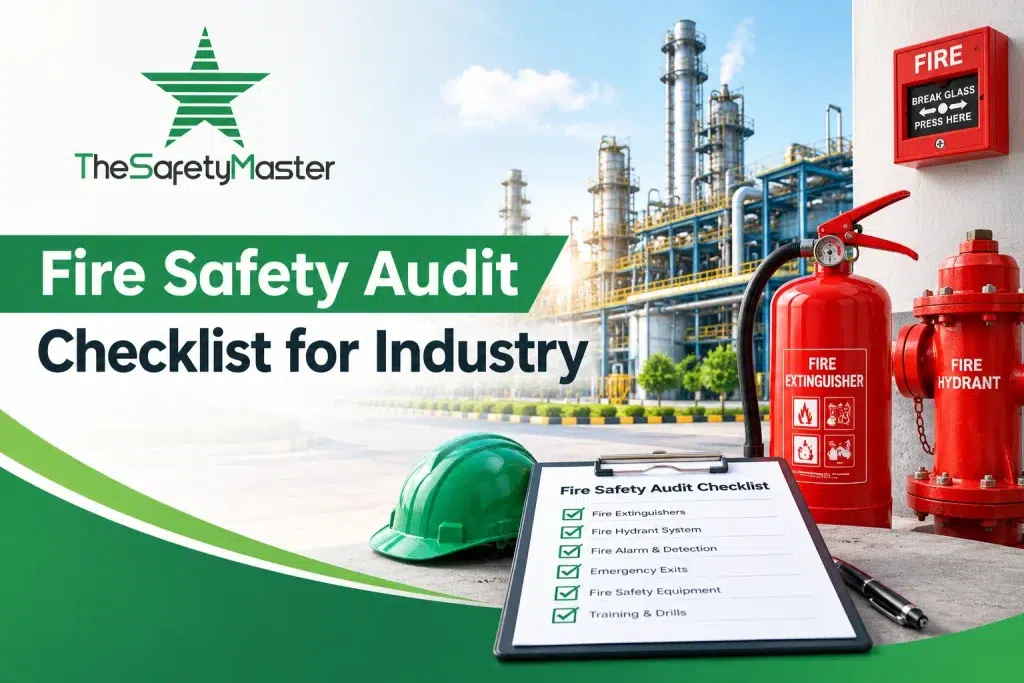
Industrial workplaces contain machinery, electrical equipment, chemicals, fuels, gases, combustible materials, and other fire hazards. A small fire can quickly become a major emergency if proper fire prevention and protection measures are not in place. This is why regular fire risk assessment and fire safety audits are important for factories, warehouses, plants, and other industrial facilities.
A Fire Safety Audit Checklist for Industry helps safety teams identify fire hazards, check fire protection systems, review emergency arrangements, and record corrective actions. The checklist gives auditors a structured way to inspect important fire safety points and improve workplace safety.
The Safety Master provides professional safety audit and risk management support to help industries identify hazards and strengthen their fire safety systems.
What Is a Fire Safety Audit Checklist?
A fire safety audit checklist is a structured list of items used to inspect fire prevention and fire protection arrangements at a workplace. It helps an auditor check whether important fire safety measures are available, maintained, accessible, and working properly.
A Fire Safety Audit Checklist for Industry may cover:
- Fire extinguishers and their condition
- Fire hydrant systems
- Fire pumps
- Sprinkler systems
- Fire alarms and detectors
- Emergency exits
- Emergency lighting
- Fire doors
- Electrical installations
- Storage of flammable materials
- LPG and gas storage
- Fire water tanks
- Emergency response plans
- Evacuation arrangements
- Fire safety training
- Emergency drills
- Safety signs
- Housekeeping
- Inspection and maintenance records
The checklist can be modified according to the type, size, process, and hazards of the industrial facility.
Why Is an Industrial Fire Risk Assessment Important?
Industrial fire risk assessment helps identify potential sources of fire and evaluate the possible consequences. It also helps the organization decide which controls are required to reduce the risk.
Common industrial fire hazards include:
Electrical Fire Hazards
Damaged cables, overloaded circuits, loose connections, defective electrical panels, and poor maintenance can create fire risks.
Flammable Materials
Petroleum products, solvents, chemicals, gases, paints, and other combustible materials require proper storage and handling.
Hot Work
Welding, cutting, grinding, and other hot work activities can create sparks and heat that may ignite combustible materials.
Combustible Storage
Paper, packaging, plastics, wood, textiles, and other combustible materials can increase fire load when stored improperly.
Machinery and Process Hazards
Industrial machinery can generate heat, friction, sparks, or combustible dust. Proper inspection and maintenance can help reduce these risks.
Fire Safety Audit Checklist for Industry: Key Inspection Points
A detailed industrial audit should cover different areas of the workplace.
Fire Detection and Alarm Systems
Check whether fire alarm systems, smoke detectors, heat detectors, manual call points, and alarm panels are installed where required and properly maintained.
The auditor should also review testing and maintenance records.
Fire Extinguishers
Check:
- Correct extinguisher type
- Proper location
- Accessibility
- Pressure condition
- Physical damage
- Inspection tags
- Service records
- Suitable signage
Fire extinguishers should not be blocked by equipment, materials, or stored goods.
Fire Hydrant and Hose Reel Systems
Inspect hydrants, hose reels, valves, hoses, nozzles, pressure, accessibility, and maintenance records.
The fire water supply should be adequate for the facility’s requirements.
Fire Pumps and Water Storage
Check the condition and maintenance of fire pumps, fire water tanks, pump controllers, valves, and related equipment.
Regular testing helps identify problems before an actual emergency occurs.
Emergency Exits and Evacuation Routes
Emergency routes should remain clear and easy to identify.
Check:
- Exit doors
- Staircases
- Escape routes
- Exit signs
- Emergency lighting
- Assembly areas
- Evacuation maps
Materials should never be stored in emergency escape routes.
Fire Safety Audit Checklist for Hospitals
Hospitals have special fire safety requirements because patients may not be able to evacuate independently. A Fire Safety Audit Checklist for Hospitals should consider patient areas, medical gases, electrical systems, kitchens, laboratories, storage areas, emergency exits, fire detection systems, and evacuation procedures.
Important checks may include:
- Fire alarm systems
- Smoke and heat detectors
- Fire extinguishers
- Hydrant and sprinkler systems
- Emergency exits
- Fire doors
- Medical gas storage and systems
- Electrical safety
- Emergency lighting
- Evacuation plans
- Staff fire training
- Fire drills
A hospital fire audit should consider both normal evacuation and evacuation of patients who require assistance.
Fire Safety Checklist for Buildings in India
A fire safety checklist for buildings in India should be developed according to the building type, occupancy, fire hazards, applicable requirements, and local authority requirements.
The audit may include:
- Means of escape
- Fire exits
- Fire doors
- Fire alarm systems
- Fire extinguishing systems
- Fire hydrants
- Sprinklers
- Emergency lighting
- Fire safety signage
- Electrical installations
- Fire pumps
- Fire water storage
- Emergency response arrangements
- Fire drills
- Maintenance records
For industrial and commercial buildings, the checklist should be adapted to the actual hazards instead of using the same checklist for every facility.
Fire Safety Audit Checklist PDF
A Fire Safety Audit Checklist PDF can be useful for auditors, safety officers, facility managers, and industrial teams. A PDF checklist can be printed and used during physical inspection.
A useful checklist should include fields such as:
| Inspection Point | Status | Observation | Corrective Action |
|---|---|---|---|
| Fire extinguishers | Satisfactory/Not Satisfactory | Condition noted | Action required |
| Emergency exits | Satisfactory/Not Satisfactory | Exit blocked | Clear route |
| Fire alarm | Satisfactory/Not Satisfactory | Testing required | Repair/test |
| Hydrant system | Satisfactory/Not Satisfactory | Observation | Corrective action |
| Emergency lighting | Satisfactory/Not Satisfactory | Defect found | Replace/repair |
The checklist should also include the inspection date, location, auditor name, responsible person, and target completion date.
Fire Safety Audit Checklist Excel
A Fire Safety Audit Checklist Excel file can be useful when the audit team needs to track many observations and corrective actions.
Excel-based checklists can include columns for:
- Serial number
- Inspection area
- Fire safety requirement
- Compliance status
- Risk level
- Observation
- Recommended action
- Responsible person
- Target date
- Completion status
- Remarks
Digital checklists make it easier to track open and closed actions and prepare management reports.
Fire Audit Checklist
A Fire Audit Checklist should cover both active and passive fire protection systems. It should not only check whether equipment exists but also whether it is accessible, maintained, tested, and suitable for the identified hazards.
The audit can cover:
- Fire prevention
- Fire detection
- Fire alarm
- Fire extinguishing
- Emergency evacuation
- Electrical safety
- Storage and housekeeping
- Emergency response
- Training and drills
- Inspection and maintenance
Fire Fighting Checklist PDF
A Fire Fighting Checklist PDF can help safety teams inspect firefighting equipment and systems in a systematic way.
Typical inspection points include:
- Portable fire extinguishers
- Fire hydrants
- Hose reels
- Fire hoses
- Fire nozzles
- Fire pumps
- Sprinklers
- Fire water tanks
- Fire alarm systems
- Emergency communication systems
- Fire doors
- Emergency exits
The checklist should be reviewed regularly and updated when processes, equipment, building layouts, or fire hazards change.
Free Industrial Fire Risk Assessment Using a Fire Safety Audit Checklist for Industry
Organizations looking for a free industrial fire risk assessment using a Fire Safety Audit Checklist for Industry can begin with a basic inspection of the workplace.
Start by identifying sources of ignition, combustible materials, flammable substances, electrical hazards, hot work activities, and other potential fire sources.
Next, check the existing fire protection systems and emergency arrangements. Record every unsafe condition and determine the required corrective action.
However, a basic checklist should not replace a professional fire risk assessment where the facility has complex processes, high fire loads, hazardous chemicals, combustible dust, flammable gases, or other significant risks.
How to Conduct a Fire Safety Audit?
A fire safety audit should be systematic and evidence-based.
Step 1: Review Available Information
Collect information about the building, processes, occupancy, materials, fire protection systems, previous incidents, maintenance records, and emergency procedures.
Step 2: Inspect the Workplace
Walk through the facility and identify fire hazards, unsafe conditions, blocked exits, damaged equipment, poor housekeeping, and other deficiencies.
Step 3: Check Fire Protection Systems
Inspect fire extinguishers, alarms, detectors, hydrants, sprinklers, pumps, emergency lighting, fire doors, and other applicable systems.
Step 4: Review Emergency Preparedness
Check emergency plans, evacuation procedures, assembly points, fire drills, staff training, and emergency communication arrangements.
Step 5: Prepare the Fire Audit Report
Record observations, risk levels, photographs where appropriate, recommendations, responsible persons, and target completion dates.
The final report should help management understand the major fire risks and prioritize corrective actions.
Fire Safety Audit Report PDF
A Fire Safety Audit Report PDF should clearly present the findings of the audit. It normally contains:
- Facility information
- Audit date
- Scope of audit
- Audit team
- Areas inspected
- Fire hazards identified
- Fire protection systems reviewed
- Non-compliances
- Risk observations
- Photographic evidence
- Corrective actions
- Recommendations
- Responsibility
- Target completion date
- Conclusion
A report should be customized to the facility rather than using a generic template.
Benefits of Using a Fire Safety Audit Checklist
A properly designed checklist provides several benefits:
- Helps identify fire hazards
- Makes inspections systematic
- Reduces the chance of missing important items
- Improves fire equipment inspections
- Supports corrective action tracking
- Helps improve emergency preparedness
- Supports safety documentation
- Helps management prioritize risks
- Encourages regular fire safety inspections
A checklist is most effective when it is combined with competent auditing, risk assessment, proper documentation, and timely corrective action.
Final Thoughts
Industrial fire risks can come from electrical systems, machinery, flammable materials, hot work, combustible storage, chemicals, and many other sources. Regular inspection helps identify these hazards before they develop into serious incidents.
A well-designed Fire Safety Audit Checklist for Industry provides a practical framework for checking fire prevention, detection, protection, evacuation, and emergency response arrangements. PDF and Excel formats can make inspections and corrective-action tracking easier.
For organizations that need professional fire risk assessment, fire safety audits, and practical safety solutions, The Safety Master can support a structured approach to identifying and controlling workplace fire risks.