Build a Successful Career in Process Safety with HAZOP Certification Course in India

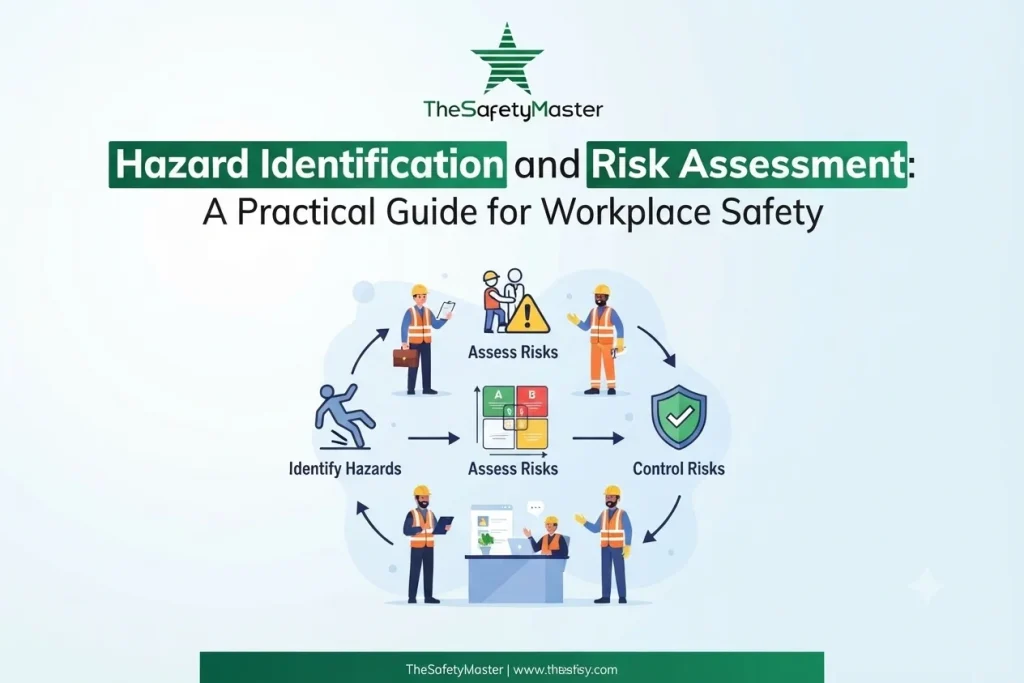
Hazard Identification and Risk Assessment: A Practical Guide for Workplace Safety
October 7, 2026
HAZOP Training in India: Complete Guide to Certification, Course Benefits & Career Opportunities
October 8, 2026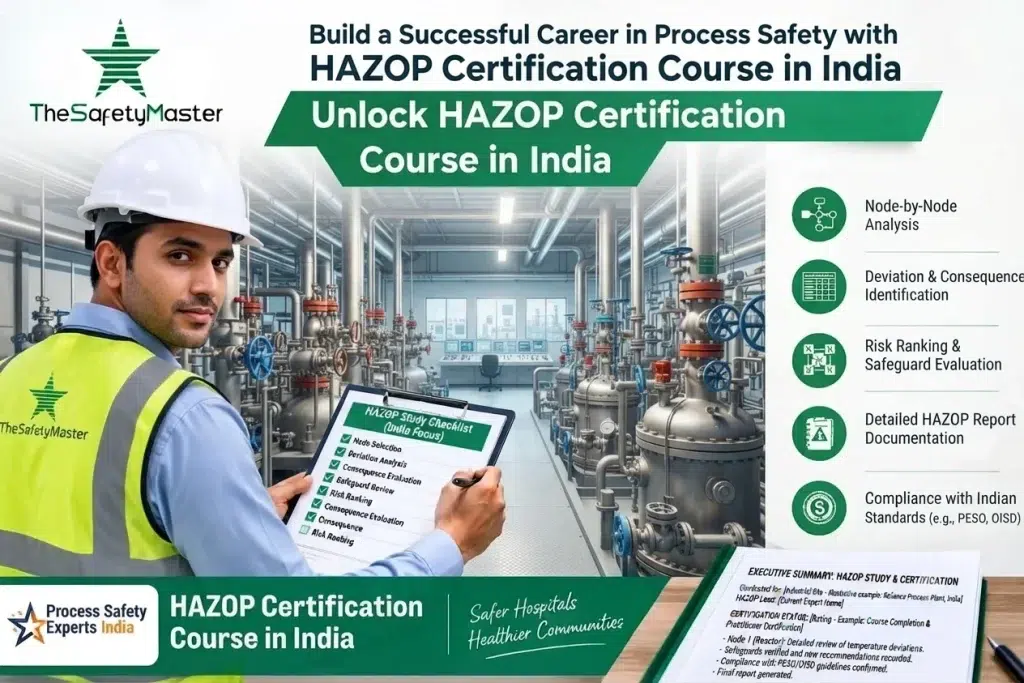
Process safety is an important part of industries where hazardous chemicals, flammable materials, pressure systems, and complex processes are used. Industries such as oil and gas, chemical, petrochemical, pharmaceutical, power, manufacturing, and energy need skilled professionals who can identify process hazards and help prevent major accidents.
A HAZOP Certification Course in India can help safety professionals, engineers, process engineers, and other technical professionals develop practical knowledge of Hazard and Operability Study. The course helps learners understand how to identify deviations, evaluate possible causes and consequences, and recommend suitable safeguards.
The Safety Master provides professional safety training designed to help learners develop practical process safety knowledge and improve their career opportunities.
Why HAZOP Is Important in Process Safety
HAZOP, or Hazard and Operability Study, is a structured method used to identify potential hazards and operational problems in a process or system. A HAZOP study is generally performed by a multidisciplinary team using process information, drawings, operating conditions, and guide words.
The main purpose is to find possible deviations from the intended design and understand what could happen if those deviations occur.
Common HAZOP Guide Words
Some commonly used guide words include:
- No
- More
- Less
- As well as
- Part of
- Reverse
- Other than
These guide words are combined with process parameters such as flow, pressure, temperature, level, composition, and time.
What Does a HAZOP Study Identify?
A HAZOP study can help identify:
- Process hazards
- Equipment failures
- Human errors
- Operational problems
- Unsafe process deviations
- Possible accident scenarios
- Existing safeguards
- Recommendations for risk reduction
Benefits of a HAZOP Certification Course in India
A professional HAZOP course can provide both technical knowledge and practical understanding of process safety.
Develop Process Hazard Identification Skills
One of the main benefits is learning how to systematically identify hazards. Professionals can understand how deviations may occur and how they can affect people, equipment, production, and the environment.
Understand HAZOP Methodology
A structured HAZOP methodology helps professionals understand the relationship between:
Deviation → Cause → Consequence → Safeguard → Recommendation
This approach makes the study more systematic and easier to document.
Improve Risk Assessment Knowledge
HAZOP is closely connected with process risk management. Training can help professionals understand how hazards are assessed and how appropriate safeguards can be recommended.
Increase Career Opportunities
HAZOP knowledge can be useful for professionals looking for opportunities in:
- Process safety
- HSE
- EHS
- Chemical engineering
- Process engineering
- Operations
- Risk management
- Safety consulting
- Plant safety
- Loss prevention
A recognized training certificate can also strengthen a professional profile when combined with practical industry experience.
Who Should Take HAZOP Training?
A HAZOP Certification Course in India can be useful for professionals working in or planning careers in process industries.
Safety Professionals
Safety engineers and HSE professionals can improve their understanding of process hazards and risk assessment techniques.
Process Engineers
Process engineers can learn how HAZOP is applied to process designs, operating conditions, and process modifications.
Chemical Engineers
Chemical engineers working with hazardous materials and chemical processes can benefit from structured hazard identification skills.
Plant and Operations Professionals
Operations and plant personnel can understand how process deviations can affect plant safety and production.
Students and Early-Career Professionals
Engineering graduates and safety professionals starting their careers can develop an additional process safety skill that supports future career growth.
What You Learn in a HAZOP Certification Course
A good HAZOP course should cover both basic concepts and practical applications.
Fundamentals of HAZOP
Learners understand:
- Meaning of HAZOP
- Purpose of HAZOP
- HAZOP terminology
- HAZOP team structure
- HAZOP procedure
- HAZOP documentation
HAZOP Guide Words and Parameters
Training explains how guide words are applied to process parameters such as:
- Flow
- Pressure
- Temperature
- Level
- Composition
- Time
- Sequence
Causes and Consequences
A major part of HAZOP is understanding why a deviation could happen and what could happen as a result.
For example, excessive pressure may occur because of blocked discharge, control valve failure, or incorrect operating conditions. The consequence could include equipment damage, release of hazardous material, or fire and explosion risk.
Safeguards and Recommendations
The HAZOP team reviews existing safeguards and determines whether additional actions may be required to reduce risk.
Recommendations should be practical, clear, and related to the identified hazard.
HAZOP Study Process
A typical HAZOP study follows a systematic process.
Select the HAZOP Node
The process is divided into manageable sections called nodes. Each node is studied separately.
Apply Guide Words
Guide words are applied to process parameters to identify possible deviations.
Identify Causes
The team determines possible reasons for the deviation.
Evaluate Consequences
The team considers the potential effects of the deviation on people, equipment, production, and the environment.
Review Safeguards
Existing preventive and protective measures are identified.
Develop Recommendations
If additional risk reduction is needed, suitable recommendations are developed.
Document the Results
The findings are recorded in a HAZOP worksheet or report for further action and follow-up.
HAZOP and Other Process Safety Techniques
HAZOP is one of several techniques used in process safety and risk management.
HAZOP vs HAZID
HAZID is generally used for broader hazard identification, while HAZOP focuses on systematic examination of process deviations.
HAZOP vs LOPA
HAZOP identifies deviations, causes, consequences, and safeguards. LOPA, or Layer of Protection Analysis, can then be used to evaluate the effectiveness of independent protection layers for specific scenarios.
HAZOP vs FMEA
FMEA generally examines potential failure modes and their effects, while HAZOP uses guide words to systematically identify deviations from design intent.
Understanding these methods can help professionals select the right risk assessment technique for a particular process.
Career Opportunities After HAZOP Training
HAZOP skills can support career development in many industries.
Professionals may find opportunities as:
- Process Safety Engineer
- HSE Engineer
- Safety Engineer
- Process Engineer
- Risk Assessment Engineer
- HAZOP Facilitator
- Process Safety Consultant
- EHS Professional
- Loss Prevention Professional
Industries that commonly use process safety techniques include oil and gas, refineries, petrochemicals, chemicals, pharmaceuticals, power generation, manufacturing, and other process industries.
Why Choose The Safety Master for HAZOP Training?
The Safety Master focuses on practical safety education and professional development. A HAZOP training program should help learners understand not only the theory but also how HAZOP studies are performed in real industrial environments.
Professional training can help learners understand HAZOP terminology, team participation, guide words, deviations, causes, consequences, safeguards, recommendations, and HAZOP documentation.
For professionals who want to build a career in process safety, developing practical risk assessment skills can be an important step toward long-term career growth.
How to Build a Career in Process Safety
Completing a HAZOP course is one part of developing a strong process safety career.
Build Technical Knowledge
Understand process safety fundamentals, hazard identification, risk assessment, HAZOP, LOPA, SIL, PHA, and other relevant techniques.
Gain Industry Experience
Practical plant and process experience can help professionals understand how hazards occur in real working environments.
Improve Communication Skills
HAZOP studies involve multidisciplinary teams. Professionals should be able to explain hazards, ask questions, discuss scenarios, and communicate recommendations clearly.
Learn Documentation
Good documentation is an important part of process safety. Professionals should understand how to prepare clear HAZOP worksheets, reports, and recommendations.
Continue Professional Development
Process safety is a continuously developing field. Regular training and practical learning can help professionals keep their knowledge current.
Conclusion
A HAZOP Certification Course in India can be a valuable step for professionals who want to develop skills in process safety, hazard identification, and risk assessment. HAZOP training provides an understanding of how process deviations are identified, how their causes and consequences are evaluated, and how safeguards and recommendations are developed.
For engineers, safety professionals, process professionals, and other technical personnel, HAZOP knowledge can support career growth across several process industries.
With professional training from The Safety Master, learners can strengthen their process safety knowledge and develop skills that can be applied to industrial risk assessment and HAZOP studies.