Top-Rated HAZOP Study Consultants in India for Chemical, Oil, and Industrial Plants

How to Choose Certified Hazardous Area Classification Electrical Equipment for Industrial Plants
November 17, 2026Leading Consulting Services and Regulatory Requirements for HAZOP Study in India
November 18, 2026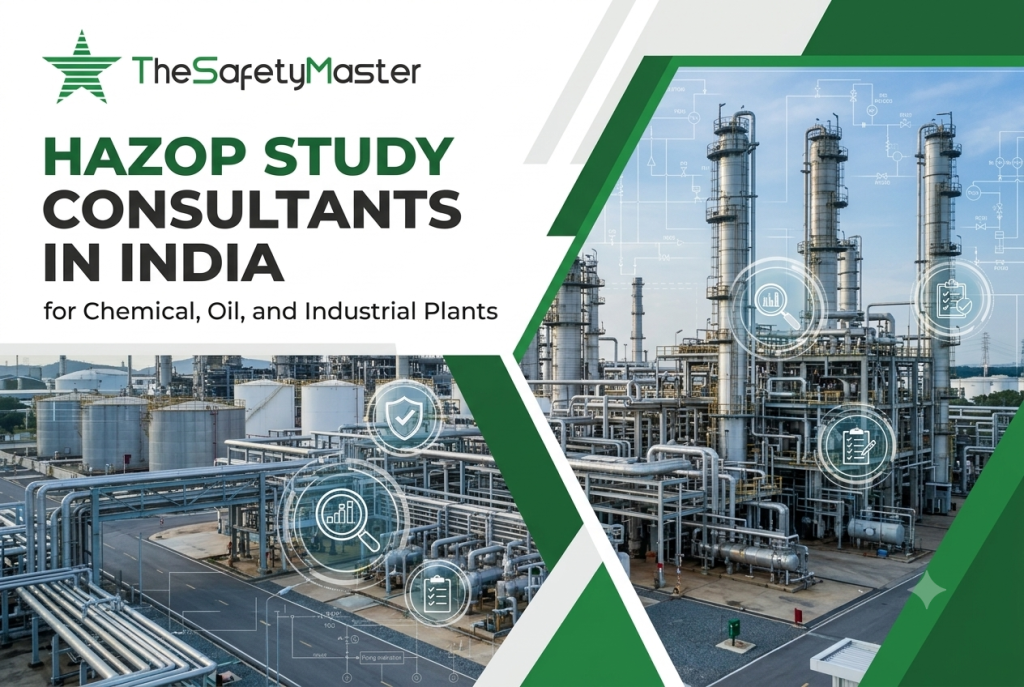
Modern industrial processing involves extreme operational conditions—high pressures, volatile temperatures, reactive chemical compounds, and complex piping architectures. In sectors like petrochemicals, pharmaceuticals, refining, and specialty chemical manufacturing, even a minor deviation from design intent can trigger catastrophic events, including toxic releases, vapor cloud explosions, and severe asset degradation.
To safeguard personnel, community assets, and environmental ecosystems, industrial facilities require rigorous Process Hazard Analysis (PHA) frameworks. Partnering with premier hazop study consultants in india such as The Safety Master provides the technical leadership, guide-word discipline, and regulatory alignment necessary to run safe, highly reliable, and compliant operations.
What is a HAZOP Study and Why is it Critical for Process Industries?
A Hazard and Operability (HAZOP) study is a structured, systematic, and multidisciplinary risk assessment methodology governed by international standards such as IEC 61882. Unlike high-level qualitative risk reviews, a HAZOP breaks down complex process flow diagrams (PFDs) and Piping and Instrumentation Diagrams (P&IDs) into distinct, manageable units known as nodes.
By applying standard parameter guide words to each node, the study team identifies credible process deviations, evaluates their root causes and potential consequences, evaluates existing safeguards, and formulates risk mitigation measures.
┌─────────────────┐ ┌──────────────────┐ ┌─────────────────┐
│ Define Node │ ──► │ Apply Guide Words│ ──► │ Identify Causes │
│ (P&IDs / Scope) │ │ (No, More, Less) │ │ & Consequences │
└─────────────────┘ └──────────────────┘ └─────────────────┘
 │
┌─────────────────┐ ┌──────────────────┐ │
│ Scored Report & │ ◄── │ Assess Safeguards│ ◄────────────┘
│ Recommendations │ │ (LOPA / SIL) │
└─────────────────┘ └──────────────────┘
Key Objectives of HAZOP Execution
- Hazard Identification:Uncover potential sources of fire, explosion, chemical release, or runaway reactions before commissioning.
- Operability Review:Identify bottlenecks, design flaws, or operational difficulties that could lead to unscheduled shutdowns or reduced plant throughput.
- Regulatory Compliance: Satisfy statutory requirements set by the Factories Act, Manufacture, Storage and Import of Hazardous Chemical (MSIHC) Rules, and international standards such as OSHA 29 CFR 1910.119 (PSM).
Why Choose The Safety Master as Your HAZOP Study Partner?
The Safety Master stands out among safety and risk engineering consultancies in India. With hundreds of process safety assignments executed across various industrial hubs, the firm provides deep technical knowledge combined with practical site experience.
+------------------------------------------------------------------------+
| THE SAFETY MASTER AT A GLANCE |
+----------------------------------+-------------------------------------+
| Executed HAZOP Studies | 200+ Process Hazard Reviews |
| Chemical & Process Plants Served | 200+ Facilities Nationally |
| Cumulative Training Delivery | 200,000+ Industrial Man-Hours |
| Key Regulatory Standards Covered | IEC 61882, OSHA PSM, CCPS, MSIHC |
+----------------------------------+-------------------------------------+
Core Strengths of The Safety Master
- Independent, High-Caliber Facilitation:An effective HAZOP requires an unbiased chairman.Facilitators from The Safety Master bring independent domain expertise, ensuring study sessions remain focused, rigorous, and free from internal operational bias.
- Multidisciplinary Team Integration: Consultants smoothly coordinate discussions among process engineers, operations staff, instrumentation leads, and maintenance personnel to ensure thorough reviews.
- Advanced Integration with LOPA and SIL:Rather than treating HAZOP as an isolated event, The Safety Master integrates findings directly into Layer of Protection Analysis (LOPA) and Safety Integrity Level (SIL) allocation studies.
Sector-Specific HAZOP Solutions by The Safety Master
Different process industries handle unique chemical dynamics, pressure regimes, and equipment layouts. The Safety Master tailors its HAZOP methodology to match the operational demands of each sector.
1. Chemical & Bulk Pharmaceutical Plants
Chemical processing facilities frequently handle exothermic reactions, toxic intermediates, and volatile organic solvents. HAZOP assessments evaluate:
- Thermal runaway risks in reactor vessels during cooling media failure.
- Overpressurization in distillation columns and condensation loops.
- Cross-contamination risks in multi-product batch manufacturing lines.
2. Oil & Gas Refineries and Petrochemicals
Upstream, midstream, and downstream oil and gas infrastructure process highly flammable hydrocarbons under elevated pressures. The Safety Master evaluates:
- Hydrocarbon gas leaks, flare system capacities, and isolation boundaries.
- Compressor surge conditions and emergency shutdown (ESD) valve response logic.
- High-pressure separator failures and hydrate formation in transport pipelines.
3. Industrial, Power, and Manufacturing Facilities
Heavy utility plants rely on steam generators, ammonia refrigeration loops, fuel gas skids, and bulk storage farms. HAZOP reviews examine:
- Boiler drum low-water trip sequences and fuel-air ratio control failure.
- Ammonia toxicity and release containment in industrial refrigeration setups.
- Bulk chemical transfer operations, truck unloading skids, and static discharge controls.
Step-by-Step HAZOP Study Methodology
The Safety Master follows a structured process aligned with international standards to maximize risk coverage without delaying project deadlines.
 STEP 1: Scope & Document Preparation (P&IDs, PFDs, Cause & Effect)
 │
 ▼
 STEP 2: Node Selection & Process Intent Definition
 │
 ▼
 STEP 3: Application of Guide Words (No, More, Less, As Well As, Reverse)
 │
 ▼
 STEP 4: Deviation, Cause & Consequence Mapping
 │
 ▼
 STEP 5: Evaluation of Existing Safeguards & Action Recommendations
 │
 ▼
 STEP 6: Action Tracking, Scored Register & Final Management Report
Phase 1: Preparation & Technical Documentation Review
Before entering the workshop, consultants compile up-to-date documentation, including P&IDs, process flow diagrams, heat and material balances (HMB), safety data sheets (SDS), and cause-and-effect matrices.
Phase 2: Node Division and Parameter Guide-Word Review
The process line is systematically divided into logical nodes. Standard guide words are combined with parameters (such as Flow, Pressure, Temperature, Level, and Reaction) to evaluate potential process deviations.
- NO FLOW: Pipe blockage, closed isolation valve, pump trip, or line rupture.
- MORE PRESSURE: Thermal expansion, control valve failing open, downstream blockage, or runaway exotherm.
- LESS TEMPERATURE: Loss of heating medium, low ambient conditions, or unreacted chemical buildup.
Phase 3: Safeguard Evaluation & Recommendations
The team evaluates current safeguards (such as interlocks, pressure relief valves, alarms, and rupture disks) to determine whether they reduce risk to As Low As Reasonably Practicable (ALARP) levels. If gaps are identified, clear, actionable, and assigned safety recommendations are documented in the study register.
Business Benefits of Partnering with Leading HAZOP Consultants
Operational Dimension Standard Internal Review Professional HAZOP with The Safety Master Risk Coverage May miss subtle inter-system design deviations. Systematic, node-by-node assessment aligned with IEC 61882 standards. Regulatory Compliance Risk of non-compliance during statutory audits. Audited, fully documented reports that satisfy statutory and insurance requirements. Asset Downtime Higher likelihood of operational trips or equipment damage. Early detection of design issues, protecting plant uptime and assets. Action Tracking Static recommendation lists with unclear ownership. Prioritized, scored action registers with assigned target dates.
Frequently Asked Questions (FAQs)
A HAZID (Hazard Identification) study is a high-level review performed during early project engineering to identify major hazards. A HAZOP (Hazard and Operability Study) is a detailed, node-by-node evaluation conducted using final P&IDs to identify specific process deviations, root causes, and safeguards.
HAZOP studies should be conducted during the detailed design stage prior to construction, before commissioning new process modifications, every 3 to 5 years as part of Process Safety Management (PSM) re-validation, and prior to plant decommissioning.
The duration depends on plant complexity and the number of P&IDs involved. Small unit operations may take 2 to 3 days, whereas complex petrochemical complexes or refinery units may require 2 to 4 weeks of structured daily sessions.
Essential documents include finalized P&IDs, Process Flow Diagrams (PFDs), Heat & Material Balances, Operating & Emergency Procedures, Control Philosophy Documents, Cause & Effect Matrices, and Equipment Data Sheets.
The Safety Master brings extensive hands-on expertise across process safety management, skilled facilitation, and seamless integration with downstream risk assessments like LOPA and SIL.Their actionable reports ensure statutory compliance, enhance operational reliability, and protect personnel and equipment assets.