Fire Safety Audit Process: Common Mistakes That Lead to Failed Inspections

How HIRA Safety Helps Organizations Identify Hazards and Prevent Workplace Accidents
November 19, 2026
How to Perform a Compliant Fire Risk Assessment to Protect Workplace Assets
November 23, 2026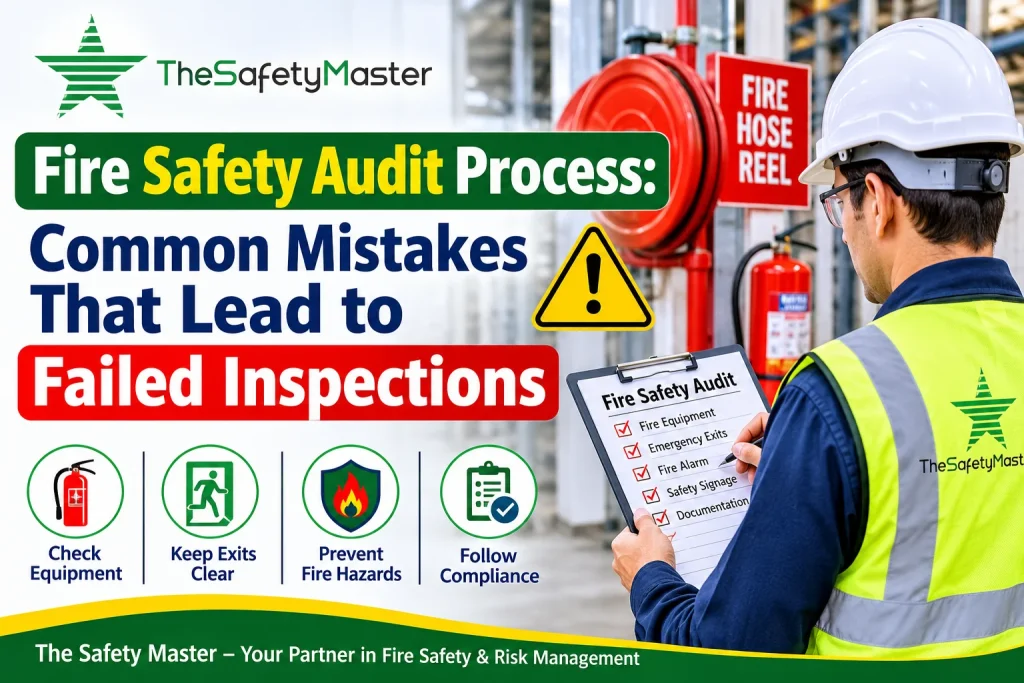
Fire safety is an important responsibility for every business, industrial facility, commercial building, warehouse, and workplace. A small mistake in fire prevention or emergency preparation can create serious risks for employees, visitors, property, and business operations. Regular fire safety inspections help organizations identify hazards, check fire protection systems, and maintain a safe working environment.
However, many organizations fail fire safety inspections because of poor preparation, outdated equipment, incomplete documentation, and a lack of employee awareness. Understanding the Fire Safety Audit Process helps businesses identify these problems before an official inspection takes place.
The Safety Master provides professional safety solutions to help organizations improve fire prevention, workplace safety, and regulatory compliance.
What Is a Fire Safety Audit Process?
A Fire Safety Audit Process is a systematic inspection of a building, workplace, or industrial facility to evaluate its fire prevention arrangements, fire protection systems, emergency procedures, and safety practices.
The main purpose is to identify potential fire hazards and check whether the available safety arrangements are suitable for the facility.
A typical fire safety audit covers:
- Fire detection and alarm systems.
- Fire extinguishers and firefighting equipment.
- Emergency exits and evacuation routes.
- Fire hydrant and sprinkler systems.
- Electrical installations and fire hazards.
- Emergency lighting and safety signage.
- Employee fire safety training.
- Fire emergency response procedures.
- Inspection and maintenance records.
A proper audit helps organizations find safety gaps and take corrective action before an emergency or regulatory inspection.
Why Is the Fire Safety Audit Important?
Fire safety audits help businesses reduce fire-related risks and improve emergency preparedness. They also support organizations in maintaining applicable fire safety requirements.
Important benefits include:
1. Identifying Fire Hazards
An audit identifies potential fire sources, including overloaded electrical circuits, combustible materials, flammable liquids, poor housekeeping, and unsafe storage practices.
2. Improving Fire Protection Systems
Regular inspections help verify whether fire alarms, extinguishers, hydrants, sprinklers, and other firefighting equipment are suitable, accessible, and properly maintained.
3. Protecting Employees and Visitors
A good fire safety system helps people understand emergency procedures, evacuation routes, assembly points, and their responsibilities during a fire.
4. Supporting Regulatory Compliance
Fire safety audits help organizations identify gaps against applicable building, fire, electrical, and occupational safety requirements.
Common Mistakes That Lead to Failed Fire Safety Inspections
Many businesses believe that installing fire extinguishers and displaying emergency signs is enough to pass an inspection. However, fire safety requires continuous monitoring, proper documentation, and employee participation.
The following mistakes can create serious inspection problems.
1. Ignoring Regular Fire Safety Inspections
One of the most common mistakes is conducting fire safety inspections only before an official audit.
Fire protection systems and workplace conditions can change over time. Equipment may become damaged, emergency routes may become blocked, and new fire hazards may develop.
Solution:
- Conduct scheduled fire safety inspections.
- Check all fire protection equipment.
- Identify new workplace hazards.
- Maintain inspection records.
- Close identified safety gaps promptly.
2. Poor Maintenance of Fire Extinguishers
Fire extinguishers are essential firefighting equipment. However, some organizations fail to check their condition regularly.
Common problems include expired servicing, damaged hoses, missing safety pins, incorrect placement, and obstructed access.
Solution:
- Check extinguisher locations and accessibility.
- Verify the extinguisher type is suitable for the identified fire risks.
- Follow manufacturer instructions and applicable inspection requirements.
- Maintain servicing and inspection records.
- Replace damaged or unsuitable equipment.
3. Blocked Emergency Exits and Evacuation Routes
Blocked emergency exits are a serious fire safety concern. Storage materials, equipment, furniture, and waste can obstruct evacuation routes.
During an emergency, blocked exits can delay evacuation and increase the risk of injuries.
Solution:
- Keep emergency exits clear at all times.
- Display visible exit signs.
- Check emergency doors and escape routes.
- Maintain accessible evacuation pathways.
- Conduct regular workplace inspections.
4. Incomplete Fire Safety Documentation
Documentation is an important part of the Fire Safety Audit Process. Even when safety equipment is available, missing records can create inspection problems.
Common documentation gaps include:
- Missing fire equipment maintenance reports.
- Incomplete fire drill records.
- Outdated emergency response plans.
- Missing employee training records.
- Incomplete fire safety inspection checklists.
- Unclosed corrective action reports.
Solution:
Maintain updated fire safety documentation and ensure that inspection, maintenance, training, and corrective action records are available when required.
5. Lack of Employee Fire Safety Training
Employees play an important role in preventing fire incidents and responding to emergencies. However, many organizations do not provide sufficient fire safety awareness training.
Employees may not know how to raise an alarm, report a fire, follow evacuation routes, or identify the correct emergency assembly point.
Solution:
- Provide regular fire safety awareness training.
- Conduct emergency evacuation drills.
- Explain alarm and emergency reporting procedures.
- Train designated employees in appropriate firefighting responsibilities.
- Maintain training attendance records.
6. Ignoring Electrical Fire Hazards
Electrical problems are a major potential source of workplace fires. Damaged cables, overloaded sockets, faulty electrical equipment, and poor electrical maintenance can increase fire risks.
Solution:
- Inspect electrical installations regularly.
- Avoid overloaded electrical connections.
- Replace damaged cables and accessories.
- Maintain electrical inspection records.
- Ensure electrical work is performed by competent personnel.
7. Incorrect Storage of Flammable Materials
Improper storage of flammable liquids, gases, chemicals, and combustible materials can increase the likelihood and severity of fires.
Some facilities store incompatible materials together or keep flammable substances near ignition sources.
Solution:
- Identify flammable and combustible materials.
- Follow suitable storage and segregation requirements.
- Provide appropriate ventilation.
- Control ignition sources.
- Display necessary warning signs.
- Maintain relevant safety information and emergency arrangements.
8. Missing or Damaged Fire Safety Signage
Fire safety signs help employees and visitors identify emergency exits, firefighting equipment, alarm points, and evacuation routes.
Missing, damaged, unclear, or poorly positioned signs can create confusion during emergencies.
Solution:
Install suitable fire safety signage at visible locations. Regularly check emergency exit signs, fire extinguisher signs, alarm point signs, and evacuation direction indicators.
9. No Proper Fire Emergency Response Plan
Some organizations have firefighting equipment but do not have a practical emergency response plan.
Without clear procedures, employees may become confused during a fire emergency.
Solution:
Prepare and communicate an emergency response plan covering alarm activation, evacuation, emergency communication, assembly points, and coordination with emergency services.
10. Failure to Close Previous Audit Findings
Another common mistake is identifying fire safety problems but failing to implement corrective actions.
Repeated findings can indicate poor safety management and ineffective monitoring.
Solution:
Maintain a corrective action register with the identified issue, responsible person, target completion date, action taken, and verification status.
Want to dive deeper into content strategy? Read More.
Step-by-Step Fire Safety Audit Process
A structured audit approach helps organizations identify problems and improve fire safety performance.
Step 1: Review Existing Documents
Review previous audit reports, fire equipment maintenance records, emergency plans, fire drill reports, and applicable compliance documents.
Step 2: Identify Fire Hazards
Inspect the workplace to identify ignition sources, combustible materials, electrical hazards, unsafe storage, and other potential fire risks.
Step 3: Inspect Fire Protection Equipment
Check fire alarms, extinguishers, hydrants, sprinklers, emergency lighting, and other relevant fire protection arrangements.
Step 4: Check Emergency Evacuation Arrangements
Verify that emergency exits, escape routes, assembly points, and evacuation signage are suitable and accessible.
Step 5: Evaluate Employee Awareness
Review employee training records and assess awareness of fire alarms, evacuation procedures, and emergency responsibilities.
Step 6: Prepare the Fire Safety Audit Report
Document observations, identified hazards, non-conformities, risk levels, and recommended corrective actions.
Step 7: Implement Corrective Actions
Assign responsibilities, establish completion timelines, and verify that identified safety gaps have been properly addressed.
Fire Safety Audit Checklist for Successful Inspections
Organizations can use the following checklist as a starting point for their internal inspections:
- Fire extinguishers are suitable and accessible.
- Fire alarms are maintained and tested.
- Fire hydrants and hose reels are accessible.
- Emergency exits are clear and operational.
- Exit signs are visible.
- Emergency lighting is functional.
- Electrical installations are properly maintained.
- Flammable materials are stored safely.
- Fire emergency plans are updated.
- Employees receive appropriate fire safety training.
- Fire drills are conducted and recorded.
- Previous audit findings are closed.
- Fire safety documentation is updated.
This checklist is a basic starting point and should be customized according to the building type, occupancy, fire risks, and applicable regulations.
How The Safety Master Helps Improve Fire Safety Compliance
The Safety Master supports organizations in improving workplace safety through professional fire safety and risk management solutions.
A structured Fire Safety Audit Process helps businesses identify fire hazards, evaluate existing fire protection arrangements, and develop practical corrective action plans.
Professional fire safety support can include:
- Fire Safety Audit and inspection.
- Fire Risk Assessment.
- Fire safety compliance gap assessment.
- Fire protection system evaluation.
- Emergency preparedness review.
- Fire safety training and awareness.
- Corrective action recommendations.
- Safety documentation support.
With proper planning and continuous monitoring, organizations can strengthen their fire prevention systems and improve inspection readiness.
Conclusion
A successful fire safety inspection depends on more than installing firefighting equipment. Regular inspections, proper equipment maintenance, clear emergency procedures, employee training, and updated documentation are essential parts of an effective Fire Safety Audit Process.
Organizations should identify common mistakes early and implement corrective actions without delay. Continuous improvement helps reduce fire risks, protect people, and support regulatory compliance.
The Safety Master helps organizations strengthen fire safety management through professional audits, risk assessments, and practical safety solutions. A proactive approach to fire prevention today can help prevent serious incidents tomorrow.