Step-by-Step Process Safety Management Implementation in Thailand: Ensuring Compliance and Hazard Control
HIRA Study Methodology: Hazard Identification and Risk Assessment Explained
November 25, 2026
Professional HAZOP Study and Risk Assessment in Singapore for Chemical and Oil Refineries
November 27, 2026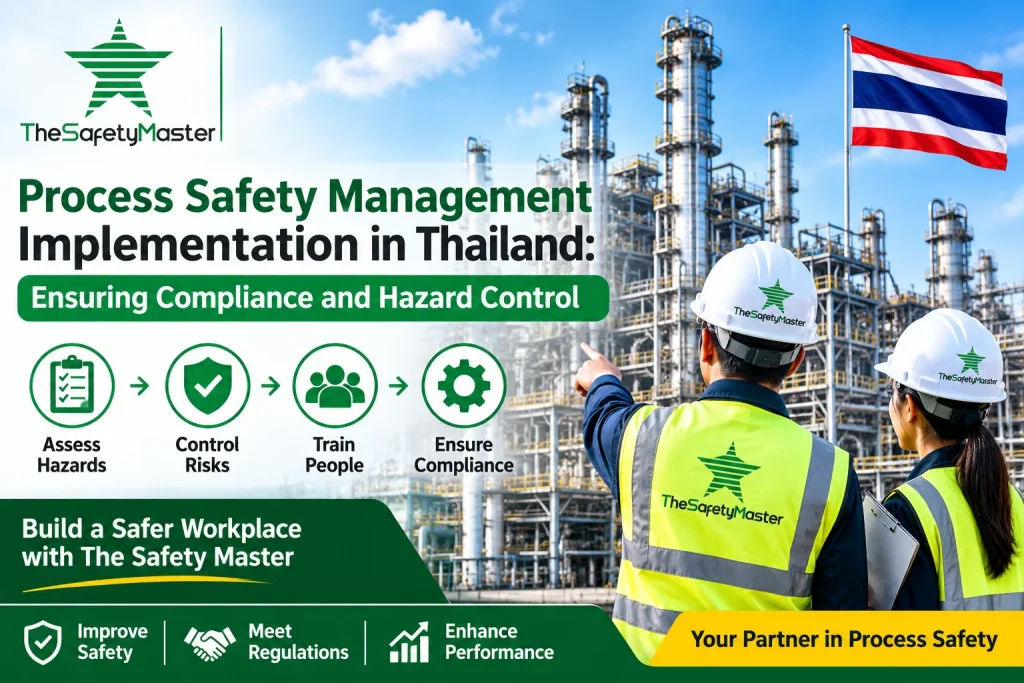
Industrial safety is an important part of every manufacturing, chemical, oil and gas, and petrochemical facility. Industrial operations involve several risks, including fire, explosions, chemical leaks, equipment failures, and hazardous material releases. Without proper safety systems, these hazards can cause serious accidents, injuries, environmental damage, and financial losses.
Process Safety Management Implementation in Thailand helps industries identify potential hazards, control operational risks, and maintain safe working conditions. It provides a structured approach to managing dangerous processes, protecting employees, and improving industrial performance.
Thailand has a growing industrial sector, including petrochemical plants, refineries, manufacturing facilities, chemical industries, and energy operations. These industries require effective safety management systems to control workplace hazards and meet applicable safety requirements.
The Safety Master provides professional process safety consultancy and implementation support to help organizations develop effective safety management systems, improve compliance, and reduce industrial risks.
What Is Process Safety Management Implementation?
Process Safety Management (PSM) is a systematic approach to identifying, evaluating, preventing, and controlling hazards associated with industrial processes involving dangerous chemicals, flammable materials, and hazardous operations.
PSM focuses on preventing major industrial accidents rather than only controlling everyday workplace injuries.
A properly implemented PSM system includes:
- Process hazard identification and risk assessment.
- Safe operating procedures.
- Equipment reliability and mechanical integrity.
- Employee training and competency.
- Emergency preparedness and response.
- Management of change.
- Incident investigation.
- Regular safety audits and performance monitoring.
Importance of Process Safety Management in Thailand
Thailand has several industrial zones and manufacturing hubs where process safety plays an important role. Industries operating in areas such as Rayong, Chonburi, Bangkok, and other industrial regions need effective systems to manage process-related hazards.
Process Safety Management helps organizations:
- Prevent fires, explosions, and chemical releases.
- Protect employees, contractors, and visitors.
- Improve equipment reliability.
- Reduce operational interruptions.
- Strengthen regulatory compliance.
- Improve emergency response capabilities.
- Build a strong industrial safety culture.
Step-by-Step Process Safety Management Implementation in Thailand
A successful PSM system requires proper planning, technical knowledge, employee participation, and continuous improvement. The following steps explain how industries can implement an effective system.
Step 1: Conduct an Initial Safety Assessment
The first step is to understand the existing safety performance of the facility.
A detailed assessment helps identify gaps in current safety practices, operational procedures, equipment conditions, and safety documentation.
Key Activities
- Review existing safety policies and procedures.
- Identify hazardous processes and materials.
- Evaluate existing risk assessment reports.
- Review accident and incident records.
- Check emergency response arrangements.
- Identify gaps in existing PSM practices.
The assessment provides a clear understanding of the improvements required before implementing a complete PSM framework.
Step 2: Identify Process Hazards
Hazard identification is one of the most important parts of Process Safety Management.
Industrial facilities must identify hazards that may cause serious accidents during normal operations, maintenance, shutdowns, and emergency situations.
Common Process Hazards
- Flammable gas and liquid releases.
- Chemical leakage and toxic exposure.
- High-pressure equipment failure.
- Excessive temperature and pressure.
- Equipment corrosion and damage.
- Fire and explosion risks.
- Chemical reactions and process instability.
Common Hazard Identification Techniques
HAZOP Study: Identifies process deviations and their possible consequences.
What-If Analysis: Evaluates potential accident scenarios through structured questions.
HAZID Study: Identifies hazards during different project and operational stages.
FMEA: Identifies possible equipment and system failures.
The Safety Master supports organizations with process hazard identification and risk assessment activities to improve industrial safety.
Step 3: Perform Process Risk Assessment
After identifying hazards, organizations must evaluate the associated risks and determine suitable control measures.
Risk assessment helps understand the likelihood and consequences of hazardous events.
Important Risk Assessment Methods
- HIRA – Hazard Identification and Risk Assessment.
- HAZOP – Hazard and Operability Study.
- LOPA – Layer of Protection Analysis.
- QRA – Quantitative Risk Assessment.
- FMEA – Failure Mode and Effects Analysis.
Risk Control Measures
Organizations should follow the hierarchy of controls:
- Elimination of hazards.
- Substitution with safer materials or processes.
- Engineering controls.
- Administrative controls.
- Personal protective equipment.
Proper risk assessment helps industries prioritize safety improvements and reduce the possibility of major accidents.
Step 4: Develop Safe Operating Procedures
Safe Operating Procedures (SOPs) provide employees with clear instructions for performing industrial activities safely.
Every critical operation should have documented procedures that employees can understand and follow.
Important SOP Requirements
- Normal operating conditions.
- Startup and shutdown procedures.
- Emergency shutdown requirements.
- Operating limits and safety precautions.
- Chemical handling instructions.
- Equipment inspection requirements.
- Maintenance and isolation procedures.
Procedures should be reviewed regularly and updated whenever equipment, technology, or operating conditions change.
Step 5: Implement Mechanical Integrity Programs
Mechanical integrity ensures that important industrial equipment remains safe, reliable, and suitable for its intended operation.
Equipment failure can result in dangerous chemical releases, fires, explosions, and production losses.
Important Mechanical Integrity Activities
- Regular equipment inspections.
- Preventive maintenance.
- Pressure vessel testing.
- Pipeline integrity inspections.
- Safety valve testing.
- Instrumentation and control system checks.
- Documentation of maintenance activities.
A proper mechanical integrity program helps identify equipment problems before they develop into serious incidents.
Step 6: Establish Management of Change (MOC)
Management of Change is an important PSM element that ensures safety risks are evaluated before making changes to industrial processes.
Changes in equipment, chemicals, technology, procedures, or operating conditions can introduce new hazards.
MOC Implementation Activities
- Identify the proposed change.
- Evaluate potential safety risks.
- Review technical requirements.
- Obtain management approval.
- Update relevant documents.
- Train affected employees.
- Verify safety conditions before implementation.
An effective MOC process prevents uncontrolled changes and maintains process safety throughout plant operations.
Step 7: Provide Employee Training and Competency Development
Employees must understand industrial hazards, safety procedures, and emergency response responsibilities.
Regular training improves employee awareness and supports the successful implementation of PSM.
Important Training Topics
- Process Safety Management fundamentals.
- HAZOP and HIRA awareness.
- Chemical handling and storage.
- Permit to Work (PTW).
- Lockout/Tagout (LOTO).
- Emergency response procedures.
- Fire prevention and protection.
- Incident reporting and investigation.
Training should be provided to operators, engineers, maintenance teams, supervisors, and contractors according to their responsibilities.
Step 8: Develop Emergency Preparedness and Response Plans
Industrial facilities must be prepared to respond quickly to unexpected emergencies.
An effective emergency response plan reduces the impact of accidents and helps protect people, property, and the environment.
Important Emergency Arrangements
- Fire emergency response.
- Chemical spill management.
- Gas leakage response.
- Emergency evacuation.
- First aid and medical support.
- Emergency communication systems.
- Firefighting equipment.
- Coordination with external emergency services.
Regular emergency drills help employees understand their responsibilities and improve response capabilities.
Step 9: Conduct PSM Audits and Performance Monitoring
Regular audits help organizations evaluate whether their PSM systems are properly implemented and maintained.
PSM audits identify gaps, unsafe practices, and opportunities for improvement.
Important PSM Audit Activities
- Review PSM documentation.
- Verify implementation of safety procedures.
- Inspect critical equipment.
- Check employee training records.
- Review incident investigation reports.
- Evaluate corrective actions.
- Monitor safety performance indicators.
Organizations should establish measurable safety performance indicators, including incident frequency, overdue inspections, audit findings, and corrective action closure rates.
Important PSM Elements for Industrial Facilities
A comprehensive Process Safety Management system generally includes the following 14 elements:
- Employee Participation.
- Process Safety Information.
- Process Hazard Analysis.
- Operating Procedures.
- Training.
- Contractor Management.
- Pre-Startup Safety Review.
- Mechanical Integrity.
- Hot Work Permit.
- Management of Change.
- Incident Investigation.
- Emergency Planning and Response.
- Compliance Audits.
- Trade Secrets.
These 14 elements are based on the OSHA Process Safety Management framework. Organizations in Thailand can use this framework as a reference while adapting implementation to applicable Thai laws, regulations, and industry requirements.
Regulatory Compliance for Process Safety Management in Thailand
Industrial organizations operating in Thailand must understand and comply with applicable occupational safety, environmental, factory, and hazardous substance regulations.
Important regulatory frameworks include:
- Occupational Safety, Health and Environment Act B.E. 2554 (2011).
- Factory Act B.E. 2535 (1992), as amended.
- Hazardous Substance Act B.E. 2535 (1992), as amended.
- Applicable Ministry of Industry regulations.
- Relevant environmental protection requirements.
- Applicable fire prevention and emergency safety requirements.
Compliance obligations depend on the industry, facility classification, activities, and materials handled. Organizations should verify the latest applicable legal requirements with qualified local professionals and relevant authorities.
Benefits of Professional Process Safety Management Implementation
Professional PSM implementation provides several operational and business benefits.
1. Improved Workplace Safety
Identifying and controlling process hazards helps reduce the likelihood of serious industrial accidents.
2. Better Regulatory Compliance
A structured PSM system helps organizations identify applicable legal requirements and maintain supporting safety documentation.
3. Reduced Operational Risks
Risk assessments, inspections, and preventive maintenance help control potential equipment and process failures.
4. Improved Employee Awareness
Regular training helps employees understand their safety responsibilities and follow established procedures.
5. Increased Operational Reliability
Proper process controls and equipment maintenance reduce unexpected shutdowns and production interruptions.
6. Stronger Safety Culture
Employee participation and management commitment encourage safer working practices throughout the organization.
Why Choose The Safety Master for Process Safety Management Implementation in Thailand?
The Safety Master supports industrial organizations with professional process safety consultancy, risk assessment, and safety management solutions.
Our objective is to help organizations identify process hazards, improve operational controls, and establish effective safety management practices.
Our Process Safety Services
- Process Safety Management (PSM) Implementation.
- HAZOP Study and Facilitation.
- HIRA and Risk Assessment.
- LOPA and SIL Assessment.
- Quantitative Risk Assessment (QRA).
- Process Hazard Analysis (PHA).
- Fire Safety Audit.
- Electrical Safety Audit.
- Safety Training and Awareness.
- Process Safety Audits and Gap Assessments.
Our approach focuses on practical safety solutions, systematic risk management, employee awareness, and continuous improvement.
Conclusion
Effective Process Safety Management Implementation in Thailand is essential for industries that handle hazardous chemicals, flammable materials, high-pressure systems, and complex industrial processes. A structured PSM framework helps organizations identify hazards, evaluate risks, establish safe operating procedures, and prevent major industrial accidents.
By following a step-by-step implementation process, industries can improve workplace safety, equipment reliability, regulatory compliance, and operational performance.
The Safety Master provides professional process safety consultancy and implementation support to help organizations strengthen their industrial safety systems. Partner with The Safety Master to develop effective process safety practices and create safer industrial operations.
FAQs – Frequently Asked Questions
Process Safety Management Implementation in Thailand is a systematic approach to identifying, evaluating, and controlling industrial process hazards. It helps organizations prevent fires, explosions, chemical releases, and other major industrial accidents.
PSM is important because it helps chemical, manufacturing, petrochemical, and oil and gas industries control operational risks, protect employees, improve equipment reliability, and meet applicable safety requirements.
The 14 elements include employee participation, process safety information, process hazard analysis, operating procedures, training, contractor management, mechanical integrity, management of change, incident investigation, and other essential safety management activities.
Industries handling hazardous chemicals, flammable materials, toxic substances, high-pressure equipment, and complex industrial processes can benefit from PSM. These include chemical plants, refineries, petrochemical facilities, manufacturing units, and energy industries.
The Safety Master provides process safety consultancy, HAZOP studies, HIRA, LOPA and SIL assessments, QRA, PSM implementation support, and safety audits to help organizations improve industrial safety and hazard control.