Safety Consultants Near Me: A Complete Guide to Workplace Safety Services

Building Fire Safety Risks: 5 Steps From Negligence to Management
May 23, 2023
Navigating Fire Audits: Essential Tips from a Fire Safety Consultant
May 25, 2023
Finding reliable safety consultants near me is important for businesses that want to protect employees, reduce workplace hazards, and improve safety performance. Every workplace has different risks. Factories, construction sites, warehouses, hospitals, chemical plants, and offices need proper safety planning to prevent accidents and maintain safe working conditions.
Professional safety consultants help businesses identify hazards, assess risks, improve safety procedures, and follow applicable health and safety requirements. They also support employee training, emergency planning, safety audits, and the development of effective safety management systems.
The Safety Master provides industrial safety consulting, risk management, safety audits, fire safety engineering, and training solutions for organisations across India and beyond. Working with experienced safety professionals can help your business build a safer workplace and improve its overall safety performance.
What Are Safety Consultants?
Safety consultants are professionals who help organisations identify workplace hazards and develop practical solutions to control risks. They review work activities, inspect facilities, assess safety procedures, and recommend improvements based on the organisation’s needs.
A safety consultant may work with management, engineers, supervisors, contractors, and employees to improve workplace safety. Their responsibilities depend on the industry, project requirements, and level of risk.
Common responsibilities include:
- Identifying workplace hazards and unsafe conditions.
- Conducting workplace and industrial safety audits.
- Performing hazard identification and risk assessment.
- Reviewing fire safety and emergency preparedness.
- Supporting environmental, health, and safety compliance.
- Developing safety policies, procedures, and documentation.
- Providing safety training to employees and contractors.
- Recommending corrective actions and preventive measures.
Hiring professional safety consultants helps businesses understand their risks and take suitable steps to prevent workplace incidents.
Why Businesses Need Safety Consultants Near Me
Every organisation must manage safety risks according to its operations, workforce, equipment, and applicable legal requirements. Internal safety teams may need additional technical knowledge or independent support for specialised assessments.
Searching for safety consultants near me can help businesses find professionals who understand their project requirements and can coordinate site visits when needed.
1. Workplace Hazard Identification
Workplace hazards can include moving machinery, electrical equipment, hazardous chemicals, working at height, poor housekeeping, and unsafe material handling.
Safety consultants inspect work areas and review activities to identify existing hazards and potential dangers. They recommend suitable controls to reduce exposure and prevent accidents.
2. Safety Audits and Inspections
A safety audit evaluates workplace conditions, safety procedures, equipment, documentation, and the effectiveness of existing controls.
Consultants identify gaps and prepare reports that explain the findings, required improvements, and recommended corrective actions.
3. Legal and Regulatory Compliance
Businesses must identify and follow the safety requirements applicable to their activities and locations. Requirements may differ according to the industry, workplace type, equipment, and applicable legislation.
Safety consultants help organisations review their compliance status, maintain required records, and address identified gaps.
4. Employee Safety and Training
Employees need the knowledge and practical skills to perform their duties safely. Safety consultants can provide training on personal protective equipment, fire prevention, emergency response, electrical safety, work at height, and hazard reporting.
Suitable training helps workers recognise risks and follow approved safety procedures.
5. Accident Prevention
Accidents can cause injuries, equipment damage, production delays, and financial losses. Safety consultants help organisations identify the causes of potential incidents and strengthen preventive controls.
Their recommendations may cover equipment guarding, safe operating procedures, maintenance practices, emergency arrangements, and employee awareness.
Types of Safety Consulting Services
When choosing safety consultants near me, businesses should check whether the provider offers services that match their workplace risks and operational requirements.
Industrial Safety Audit
An industrial safety audit reviews workplace conditions, equipment, work practices, safety procedures, and risk controls. It helps organisations identify unsafe conditions and prioritise improvements.
The assessment may cover machinery safety, material handling, personal protective equipment, housekeeping, electrical hazards, and emergency preparedness.
Fire Safety Audit
A fire safety audit examines fire prevention measures, detection systems, firefighting equipment, emergency exits, evacuation arrangements, and fire protection procedures.
Consultants identify deficiencies and recommend suitable corrective measures based on the facility’s layout, fire hazards, and applicable requirements.
HIRA and Risk Assessment
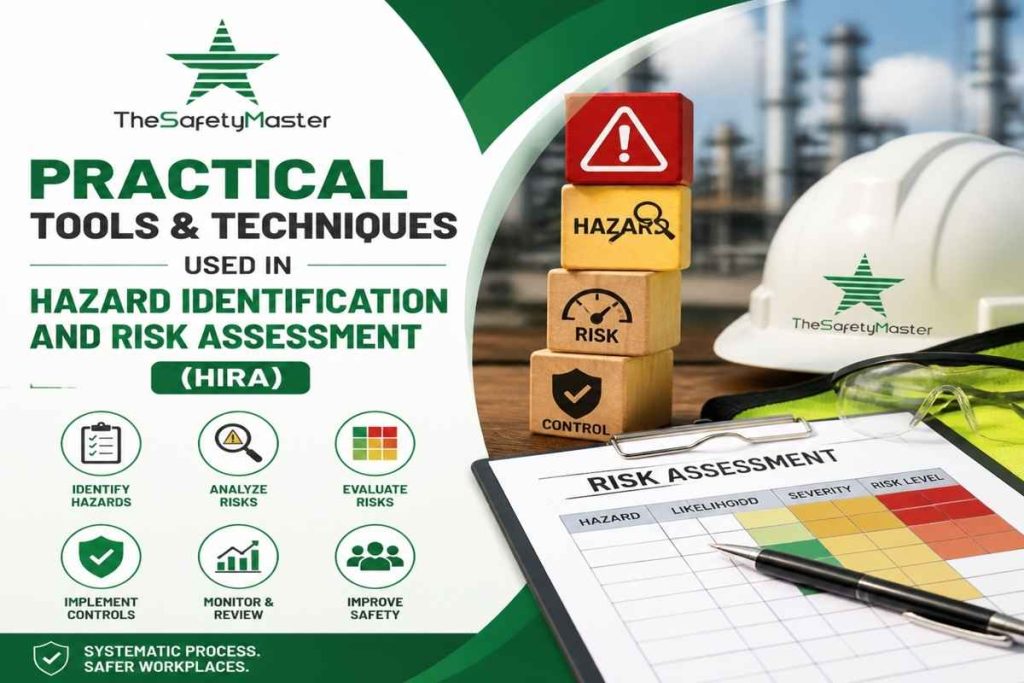
Hazard Identification and Risk Assessment (HIRA) helps organisations identify hazards, evaluate the likelihood and severity of potential incidents, and select appropriate control measures.
A risk assessment may cover routine operations, non-routine activities, maintenance work, contractor activities, and emergency situations.
The Safety Master supports organisations with risk assessment and process safety solutions tailored to their operational needs.
Electrical Safety Audit
Electrical safety assessments help identify risks associated with electrical installations, panels, cables, earthing, equipment, and electrical work practices.
Depending on the agreed scope, specialised assessments may include thermography, arc flash assessment, and lockout/tagout (LOTO) implementation support.
Construction Site Safety Audit
Construction sites involve risks such as falls from height, falling objects, excavation hazards, lifting operations, scaffolding failures, and unsafe electrical connections.
Safety consultants review site arrangements, access routes, equipment, permits, protective systems, and contractor practices to identify areas requiring improvement.
Process Safety Consulting
Process safety consulting is important for chemical, pharmaceutical, petrochemical, oil and gas, and other high-hazard industries.
Services may include Process Safety Management (PSM), Hazard and Operability Study (HAZOP), Layer of Protection Analysis (LOPA), Safety Integrity Level (SIL) studies, and Quantitative Risk Assessment (QRA).
These services help organisations understand major accident hazards and strengthen preventive and protective measures.
EHS Management System Support
Environmental, Health, and Safety (EHS) consulting helps organisations establish and improve systems for managing workplace risks and environmental responsibilities.
Consultants may support safety policies, procedures, incident reporting, inspections, training plans, performance monitoring, and management reviews. Support may also cover ISO 45001 occupational health and safety management systems, where appropriate.
How to Choose the Best Safety Consultants Near Me
Choosing the right consultant requires more than comparing prices. Businesses should evaluate technical expertise, industry experience, service scope, and the quality of the proposed deliverables.
Check Industry Experience
Select a consultant who understands your industry and its specific risks. A chemical plant may require process safety expertise, while a construction project may need support with scaffolding, lifting operations, excavation, and work at height.
Relevant experience helps consultants provide practical recommendations for actual workplace conditions.
Review Qualifications and Technical Expertise
Check the consultant’s qualifications, professional experience, and relevant certifications. For statutory inspections or regulated assessments, verify that the professional or organisation has the specific authorisation required for the assignment.
Understand the Scope of Work
Before appointing a consultant, confirm which activities are included in the service. Ask whether the engagement covers site inspections, document reviews, risk assessments, employee discussions, reporting, and follow-up support.
A clear scope helps avoid misunderstandings and unexpected costs.
Evaluate Reports and Recommendations
A useful safety report should explain the identified hazards, potential consequences, risk priorities, and recommended corrective actions.
Recommendations should be practical and relevant to the workplace rather than limited to general statements.
Check Service Coverage
Local availability may be useful when a project requires frequent inspections or urgent site coordination. For multi-location organisations, a consultant with broader service coverage may be more suitable.
Confirm travel arrangements, expected response times, project timelines, and the availability of technical specialists.
Compare Pricing and Value
Safety consulting costs depend on the size of the facility, the complexity of the risks, the number of locations, and the services required.
Compare proposals based on scope, expertise, deliverables, and follow-up support instead of selecting a provider only because it offers the lowest price.
Safety Consultants for Different Industries
Different industries require different safety solutions. The selected consultant should understand the work processes, equipment, and hazards associated with the facility.
Manufacturing and Engineering
Manufacturing facilities may face machinery hazards, electrical risks, chemical exposure, manual handling issues, and maintenance-related dangers.
Safety consulting can include industrial safety audits, machine safety assessments, risk assessments, and employee training.
Chemical and Pharmaceutical Industries
Chemical and pharmaceutical operations may involve flammable materials, hazardous substances, pressure systems, and process-related risks.
Specialised support may include HAZOP studies, PSM implementation, chemical risk assessments, emergency planning, and fire safety reviews.
Construction and Infrastructure
Construction projects require careful management of working at height, scaffolding, excavation, lifting operations, temporary electrical systems, and contractor safety.
Consultants can help improve site inspections, permit-to-work systems, toolbox talks, and project safety procedures.
Warehousing and Logistics
Warehouses and logistics facilities may experience forklift accidents, falling materials, blocked access routes, manual handling injuries, and vehicle movement hazards.
Safety consultants can review traffic management, storage arrangements, loading areas, equipment inspections, and emergency access.
Hospitals and Commercial Buildings
Hospitals, offices, hotels, and commercial buildings need suitable fire protection, evacuation arrangements, electrical safety, emergency procedures, and general workplace controls.
Consulting services can help identify deficiencies and improve preparedness for emergencies.
Steps Involved in a Professional Safety Consultation
A structured consulting process helps organisations understand their safety gaps and implement suitable improvements.
Step 1: Initial Discussion
The consultant discusses the organisation’s industry, location, activities, workforce, existing safety arrangements, and project objectives.
Step 2: Scope Definition
The consultant defines the areas to be assessed, the required technical expertise, the documents to be reviewed, and the expected deliverables.
Step 3: Site Inspection and Information Review
The assessment may include physical inspections, discussions with employees, equipment reviews, and examination of relevant safety records.
Step 4: Hazard Identification and Risk Evaluation
Identified hazards are evaluated according to their potential consequences and likelihood. The consultant helps prioritise significant risks and determine suitable controls.
Step 5: Reporting and Recommendations
The consultant prepares findings and recommends corrective actions. Depending on the assignment, the report may include risk ratings, photographs, compliance gaps, and action priorities.
Step 6: Corrective Action and Follow-Up
Management assigns responsibilities and target dates for addressing findings. Follow-up reviews help check whether corrective actions have been completed and whether the controls are effective.
Benefits of Hiring The Safety Master
The Safety Master provides safety consulting and technical services designed to help organisations identify risks, strengthen safety systems, and improve workplace safety performance.
Businesses can explore support in the following areas:
- Industrial and workplace safety audits.
- Fire safety audits and fire risk assessments.
- HIRA and other risk assessment services.
- Process safety consulting, including HAZOP, LOPA, SIL, and QRA.
- Electrical safety assessments.
- EHS management system support.
- Safety training and workforce awareness.
- Safety management implementation and digital solutions.
The appropriate service depends on the facility’s risk profile, operational requirements, and applicable standards. The Safety Master can help organisations identify a suitable scope for their safety consulting needs.
For more information, visit the official website: https://www.thesafetymaster.com/
How to Prepare Before Hiring a Safety Consultant
Businesses can make a consultation more effective by preparing basic information before the assessment begins.
Keep the following information ready where applicable:
- A description of the facility and its main activities.
- Existing safety policies and standard operating procedures.
- Previous safety audit reports and open findings.
- Incident, near-miss, and corrective action records.
- Relevant equipment inspection and maintenance records.
- Emergency response plans and training records.
- Details of hazardous substances and high-risk operations.
- Applicable legal or customer safety requirements.
Providing accurate information helps the consultant understand the workplace and plan an appropriate assessment.
Conclusion
Finding reliable safety consultants near me is an important step towards improving workplace safety, managing risks, and strengthening compliance. The right consultant can help identify hazards, review existing controls, recommend practical improvements, and support employee training.
Businesses should choose a provider based on industry experience, relevant qualifications, technical capabilities, clear reporting, and the ability to address their specific requirements.
The Safety Master supports organisations through safety audits, risk assessments, fire safety engineering, process safety consulting, EHS support, and training services. Partner with The Safety Master to identify workplace risks and develop a practical approach to safer operations.