HAZID Study in Oil & Gas: Key Elements, Process, Benefits and Best Practices

How to Drive a Positive Safety Culture Transformation with Behavior-Based Safety Programs
May 29, 2023
Exploring the Different Classes and Zones of Hazardous Area Classification
May 31, 2023
A HAZID Study (Hazard Identification Study) is an important process safety technique used to identify potential hazards associated with an oil and gas project, facility, process, or operation. Because oil and gas facilities involve flammable materials, high pressures, toxic substances, complex equipment, and potentially hazardous operations, identifying risks at an early stage is essential.
A properly conducted HAZID Study helps organizations identify credible hazards, understand their possible consequences, assess risk, and determine suitable safeguards. It can be applied during the conceptual design, engineering, construction, commissioning, modification, and operational stages of a facility.
The Safety Master provides professional safety and process safety solutions that help organizations strengthen hazard identification, risk assessment, and overall process safety performance.
What Is a HAZID Study?
HAZID stands for Hazard Identification. A HAZID Study is a structured team-based examination designed to identify hazards associated with a project, facility, activity, or operation before they result in an accident or loss.
The study generally considers hazards related to process operations, equipment failure, fire and explosion, toxic releases, human factors, external events, environmental conditions, transportation, utilities, and emergency situations.
The primary purpose is not simply to create a list of hazards. The team should understand the causes and consequences of credible hazardous events and recommend appropriate measures to prevent or reduce their impact.
Why Is HAZID Important in the Oil & Gas Industry?
Oil and gas operations involve significant process safety risks. A loss of containment, hydrocarbon release, fire, explosion, or toxic exposure can result in serious consequences for workers, assets, the environment, and business continuity.
A HAZID Study provides an opportunity to identify these hazards early, when changes to design or operating arrangements can generally be made more effectively.
Major objectives of a HAZID Study include:
- Identifying potential hazards at an early stage
- Understanding credible accident scenarios
- Assessing potential consequences
- Identifying existing safeguards
- Recommending additional risk-reduction measures
- Supporting safer project design
- Improving emergency preparedness
- Reducing the likelihood of major accidents
- Supporting informed safety and engineering decisions
Key Elements of a Successful HAZID Study
A successful HAZID process requires proper planning, competent participants, good-quality information, systematic hazard identification, and effective follow-up.
1. Clearly Define the Study Scope
Before beginning the workshop, the scope and objectives should be clearly established.
The team should define:
- Project or facility boundaries
- Equipment and systems included
- Operating phases to be considered
- Study objectives
- Design stage
- Interfaces with other facilities
- Relevant documents and drawings
- Risk criteria to be used
A clearly defined scope prevents important areas from being missed while avoiding unnecessary duplication with other risk studies.
2. Assemble a Multidisciplinary Team
HAZID should not be performed by a single individual. Different disciplines bring different perspectives to hazard identification.
A suitable team may include:
- Process engineers
- Safety or process safety engineers
- Operations personnel
- Mechanical engineers
- Electrical engineers
- Instrumentation and control specialists
- Maintenance representatives
- Environmental specialists
- Project engineers
- Experienced HAZID facilitators
The involvement of experienced personnel is particularly valuable because they can identify realistic operating scenarios that may not be obvious from design documentation alone.
3. Collect Relevant Project Information
The team needs sufficient information before conducting the study. Depending on the project stage, this may include:
- Process flow diagrams
- Plot plans
- Equipment layouts
- Process descriptions
- Piping and instrumentation diagrams
- Operating philosophy
- Material information
- Utility systems
- Emergency response arrangements
- Previous incident information
- Environmental conditions
The quality of the study depends heavily on the quality and completeness of the information available.
4. Identify Potential Hazards
The team systematically identifies hazards that could affect people, assets, the environment, or business operations.
Typical oil and gas hazards include:
- Hydrocarbon release
- Fire
- Explosion
- Toxic gas release
- High pressure
- High temperature
- Loss of containment
- Equipment failure
- Corrosion
- Electrical hazards
- Vehicle impact
- Dropped objects
- Confined spaces
- Natural hazards
- Human error
- Utility failure
The team should consider both normal and abnormal operating conditions.
5. Evaluate Causes and Consequences
After identifying a hazard, the team should examine what could cause the event and what could happen if it occurs.
For example:
Hazard: Hydrocarbon release
Possible causes: Pipe failure, flange leakage, equipment damage, corrosion
Potential consequences: Fire, explosion, personnel exposure, environmental impact, equipment damage, production interruption
This cause-and-consequence approach helps the team understand the significance of each hazard.
HAZID Risk Assessment and Ranking
Once hazards and consequences are identified, the team may assess the risk associated with each scenario using the organization’s approved risk matrix.
Risk assessment commonly considers factors such as:
- Likelihood or frequency
- Consequence severity
- Personnel impact
- Environmental impact
- Asset damage
- Production or business impact
The resulting risk ranking helps the team prioritize actions.
A high-risk scenario may require additional engineering controls, protective systems, procedural controls, or further quantitative analysis.
Identify Existing Safeguards
The team should determine what safeguards are already available to prevent or mitigate the identified hazard.
Examples include:
- Safety instrumented functions
- Pressure relief systems
- Gas detection systems
- Fire detection systems
- Emergency shutdown systems
- Fire protection systems
- Containment systems
- Alarms
- Interlocks
- Operating procedures
- Emergency response plans
- Personal protective equipment
The purpose is to understand whether existing safeguards are adequate for the identified scenario.
Recommend Additional Risk Controls
Where existing controls are insufficient, the HAZID team should recommend additional safeguards.
Controls may include:
Engineering Controls
- Improved equipment design
- Additional isolation
- Pressure protection
- Fire and gas detection
- Emergency shutdown systems
- Secondary containment
Administrative Controls
- Operating procedures
- Inspection programs
- Maintenance procedures
- Training
- Permit-to-work systems
- Emergency response procedures
The preferred approach is to prioritize effective engineering and inherently safer measures before relying heavily on administrative controls or PPE.
HAZID Study Workshop Process
A typical HAZID workshop follows a structured sequence.
Step 1: Define the Scope
Establish what systems, activities, locations, and operating conditions will be reviewed.
Step 2: Review Available Information
Examine relevant drawings, process descriptions, layouts, equipment information, and previous studies.
Step 3: Divide the Facility Into Study Areas
The facility may be divided into manageable areas such as:
- Wellhead area
- Separation area
- Compression area
- Storage area
- Loading and unloading area
- Utilities
- Offsite facilities
Step 4: Identify Hazards
Use structured prompts, checklists, previous incidents, engineering knowledge, and team experience to identify credible hazards.
Step 5: Assess Risk
Evaluate the likelihood and consequences according to the company’s approved risk criteria.
Step 6: Identify Safeguards
Record existing preventive and mitigative controls.
Step 7: Develop Recommendations
Where risk reduction is required, document practical recommendations.
Step 8: Assign Actions
Each recommendation should have a responsible person or discipline and an appropriate target date.
Step 9: Prepare the HAZID Report
The findings, risk rankings, safeguards, recommendations, and action items should be formally documented.
Step 10: Close and Verify Actions
The final step is to track recommendations and confirm that agreed actions have been completed or appropriately resolved.
Common Hazards Considered in Oil & Gas HAZID
A comprehensive study should consider a broad range of hazards.
Process Hazards
These may include high pressure, high temperature, overpressure, loss of containment, and process deviations.
Fire and Explosion Hazards
Hydrocarbon releases can create flammable clouds that may lead to flash fires, pool fires, jet fires, or explosions under suitable conditions.
Toxic Hazards
Facilities may handle toxic substances such as hydrogen sulfide and other hazardous chemicals. The study should consider potential release scenarios and exposure consequences.
Human Factors
Human error, inadequate procedures, poor access, fatigue, communication failures, and insufficient training can contribute to hazardous events.
External and Natural Hazards
The assessment may also consider:
- Earthquakes
- Flooding
- Extreme weather
- Lightning
- Nearby industrial incidents
- Transportation incidents
- Security-related events
Benefits of Conducting a HAZID Study
A properly conducted HAZID Study provides several benefits to oil and gas organizations.
Improved Risk Identification
Potential hazards can be recognized before they develop into incidents.
Better Project Design
HAZID findings can influence design decisions and help engineers incorporate safety considerations at an early stage.
Reduced Accident Potential
Early identification and treatment of hazards can reduce the likelihood and consequences of major incidents.
Improved Process Safety
HAZID contributes to a structured approach to process safety and risk management.
Better Regulatory and Organizational Compliance
A systematic hazard identification process can support an organization’s safety management and risk assessment requirements.
Reduced Business Losses
Preventing major incidents can reduce costs associated with equipment damage, production downtime, environmental remediation, injuries, and reputational damage.
HAZID vs HAZOP: What Is the Difference?
Although both are hazard identification techniques, HAZID and HAZOP have different purposes.
HAZID is generally a broader hazard identification study used to identify major hazards associated with a project, facility, location, or activity.
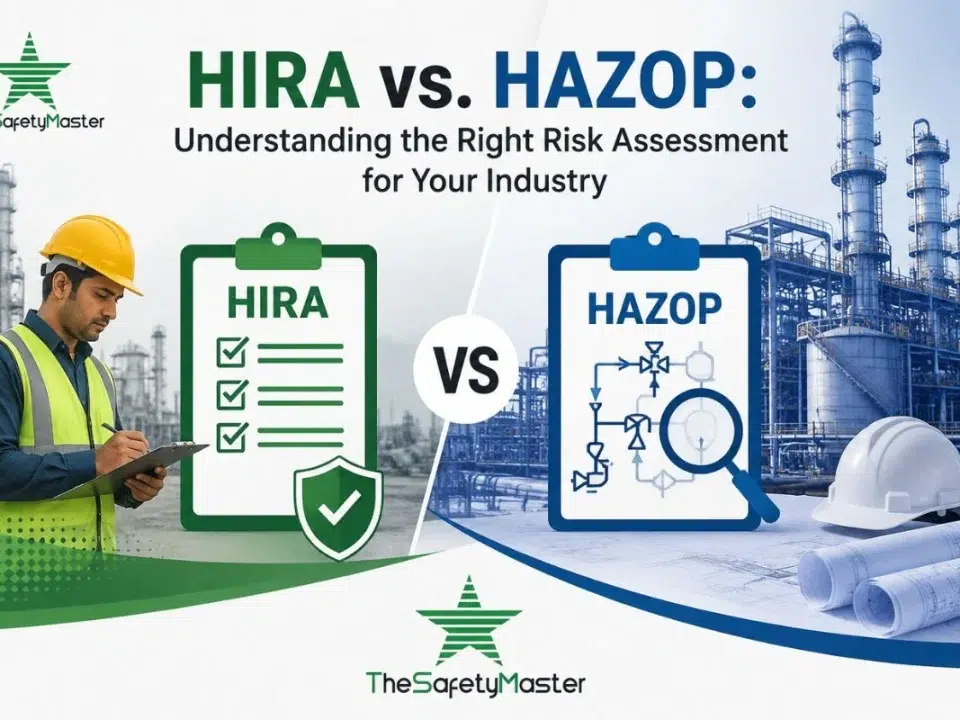
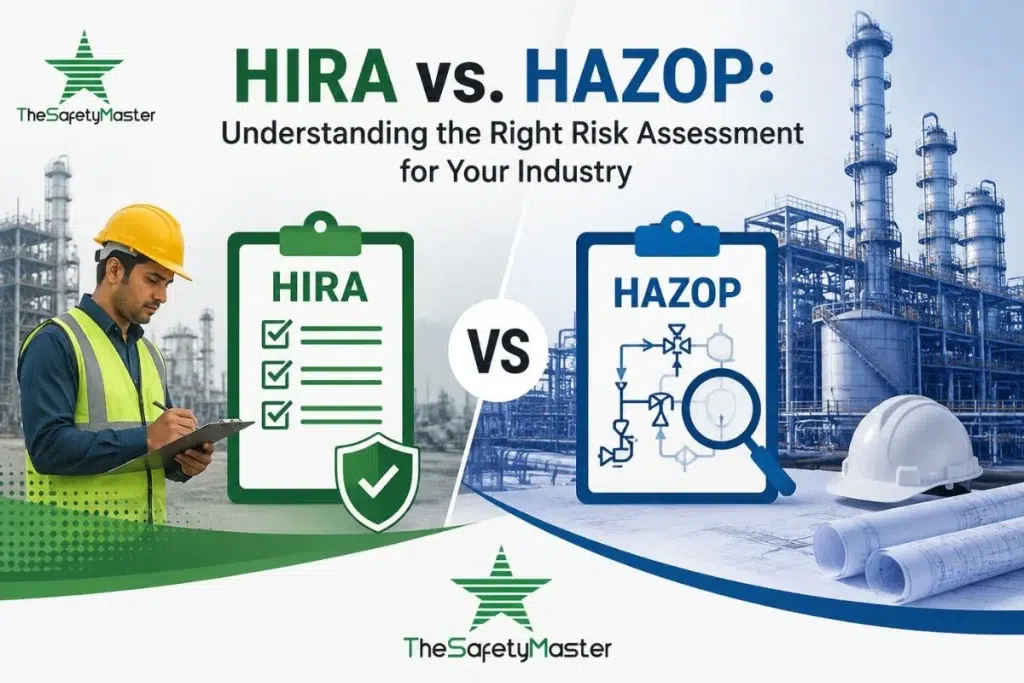
HAZOP (Hazard and Operability Study) is a more detailed and structured examination of process design using parameters and guidewords to identify deviations from design intent.
In many projects, HAZID is performed earlier to identify major hazards, while HAZOP may subsequently provide a more detailed examination of process systems.
How The Safety Master Can Support HAZID Studies
The Safety Master supports organizations in strengthening their hazard identification and process safety management practices.
Professional HAZID support can help organizations:
- Define study scope
- Facilitate multidisciplinary workshops
- Identify credible hazards
- Evaluate risk scenarios
- Review existing safeguards
- Develop recommendations
- Prepare structured HAZID reports
- Track risk-reduction actions
- Integrate findings into broader process safety activities
A professionally managed study can provide an independent perspective and help organizations identify hazards that may otherwise be overlooked.
Best Practices for an Effective HAZID Study
For better results, organizations should follow these practices:
- Define the scope before starting the workshop.
- Use experienced and multidisciplinary participants.
- Ensure relevant design and operational information is available.
- Consider normal, abnormal, startup, shutdown, maintenance, and emergency conditions.
- Focus on credible scenarios rather than theoretical possibilities only.
- Clearly document existing safeguards.
- Use a consistent risk-ranking methodology.
- Assign responsibility for every recommendation.
- Track actions until closure.
- Revisit the study when significant changes are introduced.
Conclusion
A HAZID Study is a valuable tool for identifying and managing hazards in the oil and gas industry. By systematically examining potential hazards, causes, consequences, safeguards, and risk controls, organizations can make better safety decisions and reduce the potential for serious incidents.
The effectiveness of a HAZID depends on clear objectives, reliable project information, experienced multidisciplinary participation, structured risk assessment, practical recommendations, and strong follow-up. The Safety Master can support organizations in developing a more systematic approach to hazard identification and process safety, helping protect people, assets, the environment, and business continuity.
Frequently Asked Questions About HAZID Study
Q-What is a HAZID Study?
A HAZID Study is a structured hazard identification process used to identify potential hazards, evaluate their consequences and risks, review existing safeguards, and recommend additional risk controls.
Q-What is the main purpose of HAZID?
The main purpose of HAZID is to identify credible hazards early and provide recommendations to eliminate, reduce, or control associated risks before they result in an incident.
Q-Why is HAZID important in the oil and gas industry?
HAZID is important because oil and gas operations involve flammable, toxic, pressurized, and hazardous materials. Early identification of hazards can help prevent major accidents and improve process safety.
Q-Who participates in a HAZID Study?
A HAZID team normally includes personnel from multiple disciplines, such as process engineering, operations, mechanical engineering, electrical and instrumentation engineering, maintenance, HSE, and process safety.
Q-When should a HAZID Study be conducted?
HAZID can be conducted during different project stages, including conceptual design, engineering, construction, commissioning, modifications, and operations. The appropriate timing depends on the project’s risk profile and management-of-change requirements.
Q-What are the key steps in HAZID?
The key steps include defining the scope, assembling the team, reviewing information, identifying hazards, evaluating causes and consequences, assessing risk, reviewing safeguards, developing recommendations, documenting findings, and tracking actions to closure.
Q-What is the difference between HAZID and HAZOP?
HAZID provides a broad examination of potential hazards associated with a project or facility, while HAZOP is generally a more detailed process-based study that systematically examines deviations from design intent.
Q-What are common hazards identified during HAZID?
Common hazards include hydrocarbon releases, fire, explosion, toxic releases, equipment failure, overpressure, human error, electrical hazards, dropped objects, natural hazards, and utility failures.
Q-Can HAZID reduce project costs?
Yes. Identifying hazards early can allow organizations to address safety issues before they become expensive design changes, incidents, equipment damage, production losses, or regulatory problems.
Q-Why choose The Safety Master for HAZID support?
The Safety Master provides safety and process safety expertise to help organizations identify hazards, assess risks, evaluate safeguards, and develop practical risk-reduction recommendations. The company’s existing safety portfolio includes HAZID, HIRA, HAZOP, process hazard analysis, and quantitative risk assessment services.