Safety Audit as per Factory Act in India: A Complete Guide for Factory Compliance

Behavior Based Safety Metrics: Measuring Success and Continuous Improvement
August 7, 2023
HAZOP Leadership Training for 2 Days: Build Process Safety Leadership Skills with The Safety Master
August 8, 2023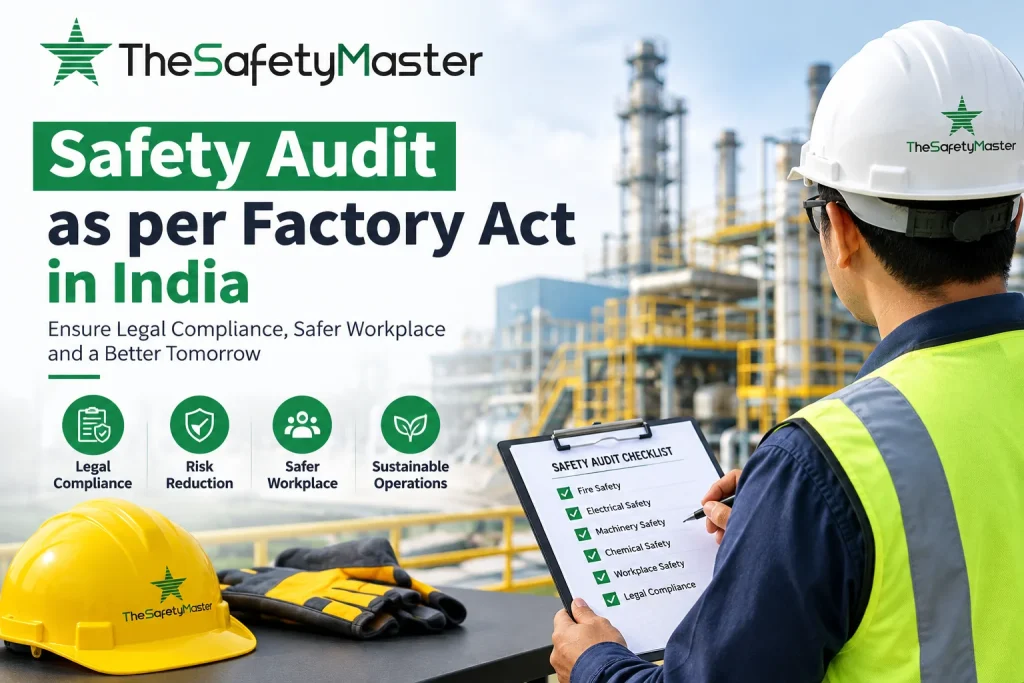
A Safety Audit as per Factory Act in India is a systematic review of workplace safety conditions, equipment, processes, emergency arrangements and legal compliance. It helps factories identify unsafe conditions before they result in accidents, injuries, fires or operational losses.
For many years, the Factories Act, 1948 and state-specific factory rules provided an important legal framework for industrial safety. The Ministry of Labour and Employment notes that factory rules were framed by the respective State Governments. With the implementation of the OSH&WC Code, 2020 from 21 November 2025, factories should keep their safety audit process aligned with the current legal framework and applicable rules.
The Safety Master provides safety audit and EHS consulting support to help organizations identify hazards, check compliance and improve workplace safety.
What Is a Safety Audit in a Factory?
A factory safety audit is a structured examination of workplace conditions and safety management practices.
The audit normally covers:
- Workplace hazards
- Machinery safety
- Electrical safety
- Fire and emergency safety
- Chemical handling
- Personal protective equipment
- Material storage
- Work at height
- Confined spaces
- Pressure equipment
- Lifting equipment
- Occupational health
- Emergency preparedness
- Safety training
- Permit-to-work systems
- Legal compliance
- Safety documentation
The purpose is not only to find non-compliances. A good audit also helps management understand why a risk exists and what corrective action is required.
Why Is Factory Safety Audit Important?
Factories may have machinery, chemicals, electrical systems, boilers, pressure vessels, combustible materials and other sources of risk. A regular audit provides an independent and structured review of these risks.
Key Benefits of a Factory Safety Audit
1. Identifies workplace hazards
An audit can identify unsafe machines, blocked emergency exits, poor housekeeping, unsafe electrical installations and other hazards.
2. Supports legal compliance
Factories must follow applicable occupational safety, health and working-condition requirements. The OSH&WC Code places duties on employers regarding safe workplaces, safe plant and systems of work, safe handling of substances, training, supervision and safe access and egress.
3. Reduces accident risk
Finding hazards early allows management to introduce corrective and preventive measures.
4. Improves emergency preparedness
The audit can examine emergency exits, fire protection, evacuation arrangements, emergency response procedures and employee awareness.
5. Improves safety culture
Regular audits encourage employees and supervisors to treat safety as part of daily operations.
Safety Audit as per Factory Act in India: Major Areas to Check
A comprehensive factory safety audit should consider the complete workplace rather than checking only one safety area.
1. Machinery Safety
The auditor should review:
- Machine guarding
- Emergency stops
- Moving machine parts
- Interlocks
- Safe operating procedures
- Preventive maintenance
- Lockout/tagout practices
- Operator training
- Machine inspection records
Machines should be operated and maintained using suitable safety controls.
2. Electrical Safety
Electrical systems should be checked for conditions that could create shock, fire or equipment hazards.
Important checks include:
- Electrical panels
- Earthing
- Cable condition
- Electrical isolation
- Panel accessibility
- Protection devices
- Temporary wiring
- Electrical equipment inspection
- Electrical work procedures
3. Fire and Emergency Safety
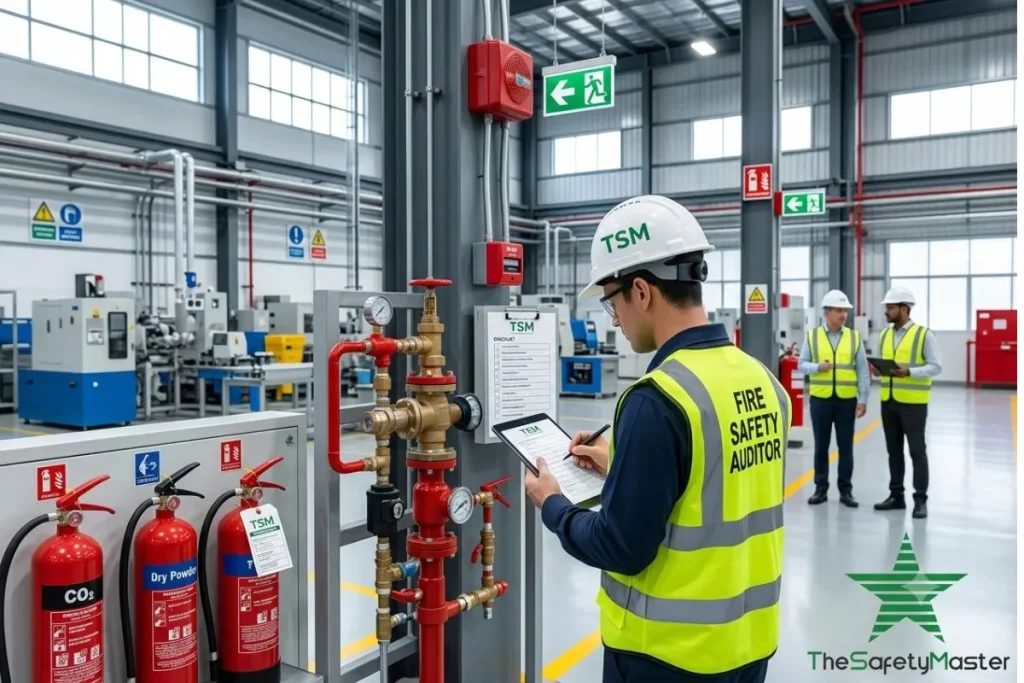
Fire safety is an important part of factory safety.
The audit can examine:
- Fire extinguishers
- Fire hydrant systems
- Fire alarm systems
- Emergency exits
- Escape routes
- Emergency lighting
- Fire pumps
- Fire water storage
- Fire doors
- Emergency response plans
- Fire drills
- Employee training
The exact fire-safety requirements can vary according to the type of facility, process, occupancy, applicable state requirements and other standards.
4. Chemical Safety
Factories handling chemicals should review:
- Chemical identification
- Safety Data Sheets
- Chemical storage
- Chemical compatibility
- Labelling
- Spill control
- Ventilation
- PPE
- Emergency showers and eyewash facilities where applicable
- Chemical handling procedures
- Emergency response arrangements
5. Personal Protective Equipment
The auditor should check whether suitable PPE is provided and properly used.
Depending on the work, PPE may include:
- Safety helmets
- Safety shoes
- Safety glasses
- Face shields
- Gloves
- Respiratory protection
- Hearing protection
- Fall protection equipment
- Chemical-resistant clothing
PPE should not replace engineering or administrative controls where stronger controls are reasonably required.
Factory Safety Audit Checklist
A practical Safety Audit as per Factory Act in India checklist can include the following areas:
| Audit Area | Key Checks |
|---|---|
| Legal Compliance | Applicable laws, licences, registers and records |
| Machinery | Guards, interlocks, emergency stops |
| Electrical | Earthing, panels, cables and protection |
| Fire Safety | Extinguishers, alarms, hydrants and exits |
| Chemicals | Storage, labels, SDS and spill control |
| PPE | Availability, suitability and usage |
| Housekeeping | Cleanliness, access and waste management |
| Material Handling | Lifting equipment and safe handling |
| Work at Height | Platforms, ladders and fall protection |
| Confined Space | Entry procedure, testing and rescue |
| Emergency | Plans, drills and response arrangements |
| Occupational Health | Health monitoring and workplace conditions |
| Training | Safety induction and job-specific training |
| Documentation | Inspection, maintenance and training records |
How Is a Factory Safety Audit Conducted?
A typical audit can be completed through several stages.
Stage 1: Audit Planning
First, the auditor understands the factory’s:
- Process
- Products
- Raw materials
- Number of workers
- Major equipment
- Hazardous operations
- Previous incidents
- Existing safety systems
The audit scope and applicable requirements are then defined.
Stage 2: Document Review
The auditor reviews relevant documents such as:
- Safety policies
- Risk assessments
- SOPs
- Emergency plans
- Inspection reports
- Training records
- Maintenance records
- Incident records
- Statutory records
- Equipment certificates
- Previous audit reports
Stage 3: Site Inspection
The auditor physically visits the factory and observes actual working conditions.
Employees and supervisors may also be interviewed to understand how procedures are followed in practice.
Stage 4: Hazard Identification
Unsafe conditions and unsafe acts are recorded.
Examples include:
- Missing machine guards
- Damaged electrical cables
- Improper chemical storage
- Blocked exits
- Poor housekeeping
- Lack of PPE
- Unsafe lifting practices
- Inadequate signage
Stage 5: Risk Evaluation
Identified hazards can be evaluated according to the organization’s approved risk assessment methodology.
Higher-risk issues should receive appropriate priority and corrective action.
Stage 6: Audit Report
The final report generally includes:
- Audit scope
- Audit methodology
- Observations
- Non-conformities
- Photographic evidence
- Risk classification
- Applicable requirements
- Recommended corrective actions
- Responsibility
- Target completion date
Stage 7: Corrective Action Follow-Up
An audit is more useful when findings are closed properly.
Management should track each action until the responsible person provides evidence that the issue has been corrected.
Safety Audit Report for Factory
A Safety Audit Report should clearly communicate the condition of the workplace.
A professional report may contain:
- Executive summary
- Factory information
- Audit scope
- Audit objectives
- Applicable legal requirements
- Audit methodology
- Site observations
- Risk classification
- Non-compliance details
- Photographs
- Corrective actions
- Action responsibility
- Target completion dates
- Overall observations
- Conclusion
The report should be practical and easy for factory management to use for corrective-action tracking.
Factory Act Safety Compliance and Current Legal Framework
The term “Factory Act” is still widely used when discussing factory safety requirements. However, organizations should be careful when preparing a current compliance programme.
The Government of India states that the OSH&WC Code, 2020 came into force on 21 November 2025, replacing/rationalising several earlier labour laws as part of the labour-code framework. The Ministry’s current website also provides the OSH&WC Code and related rules and notifications.
The Code includes employer duties relating to safe working environments, safe plant and systems of work, safe handling and storage of articles and substances, employee information and training, safe access and egress, and workplace welfare arrangements.
Because factory requirements can also depend on applicable rules and standards, companies should verify the requirements applicable to their specific location, industry and operations.
Role of The Safety Master in Factory Safety Audits
The Safety Master can support organizations with structured safety and EHS assessments.
A safety audit can help your organization:
- Identify major workplace hazards
- Review safety practices
- Check legal compliance requirements
- Examine fire and emergency arrangements
- Review machinery and electrical safety
- Evaluate chemical safety controls
- Identify gaps in existing procedures
- Prepare a detailed audit report
- Develop corrective-action recommendations
- Improve overall workplace safety
The audit approach can be adapted to manufacturing plants, warehouses, process industries, commercial facilities and other workplaces.
Common Factory Safety Audit Findings
Some common observations during industrial safety audits include:
- Inadequate machine guarding
- Poor housekeeping
- Improper chemical storage
- Blocked emergency exits
- Missing safety signs
- Damaged electrical equipment
- Inadequate PPE usage
- Unsafe work-at-height practices
- Incomplete inspection records
- Poor emergency preparedness
- Lack of employee safety training
- Inadequate corrective-action tracking
These findings should be evaluated according to their actual risk and the applicable legal or technical requirement.
How Often Should a Factory Safety Audit Be Conducted?
There is no single frequency that is suitable for every factory. The audit schedule should consider factors such as:
- Nature of operations
- Hazard level
- Legal requirements
- Previous incidents
- Changes in process or equipment
- Previous audit findings
- Regulatory requirements
- Management system requirements
High-risk operations may require more frequent inspections and reviews.
Conclusion
A Safety Audit as per Factory Act in India helps organizations systematically identify hazards, review workplace conditions and strengthen safety controls. For current compliance, factories should also consider the Occupational Safety, Health and Working Conditions Code, 2020, which has been in force since 21 November 2025, along with applicable rules, standards and state requirements.
A well-planned audit should cover machinery, electrical systems, fire safety, chemicals, PPE, emergency preparedness, occupational health, documentation and corrective actions. The Safety Master can help organizations conduct structured safety audits and develop practical recommendations for safer and more compliant workplaces.