Comprehensive Guide to IS 14489: Safety Audit Checklist and Standards

HAZOP vs HAZID Study: A Comparative Guide to Hazard Identification in Industry
June 11, 2025
How to Calculate Fire Load: Formula, Method, and Importance Explained
July 4, 2025
Workplace safety is important for every organization. Industries must identify workplace hazards, follow safety procedures, and protect employees from accidents and injuries. A proper safety audit helps companies check whether their safety systems are working effectively and identify areas that need improvement.
An IS 14489 Safety Audit provides guidance for auditing occupational health and safety systems in workplaces. IS 14489:2018 is the Indian Standard titled Occupational Health and Safety Audit — Code of Practice. It provides guidance for planning, conducting, and documenting safety audits.
The Safety Master supports organizations in improving workplace safety through safety audits, risk assessments, and practical safety recommendations. A well-planned audit helps management understand existing safety gaps, improve compliance, and create a safer working environment.
What Is IS 14489 Safety Audit?
IS 14489 is a standard published by the Bureau of Indian Standards (BIS). It provides a structured approach to evaluating occupational health and safety systems within an organization.
An IS 14489 Safety Audit examines safety policies, workplace conditions, hazard control measures, employee training, emergency preparedness, and other important safety management activities.
The audit helps organizations determine whether safety procedures are properly documented, implemented, and monitored. It also helps identify gaps between written safety requirements and actual workplace practices.
Companies can use this standard as guidance when reviewing their safety management systems and planning improvements.
Importance of IS 14489 Safety Audit for Industries
A safety audit is more than a routine inspection. It helps organizations identify weaknesses before they lead to serious incidents.
Identification of Workplace Hazards
Industrial workplaces may contain machinery hazards, electrical risks, chemical exposure, fire hazards, and unsafe working conditions. A safety audit helps identify these hazards and evaluate existing control measures.
Improvement in Safety Compliance
Organizations must understand the legal requirements and safety standards that apply to their operations. An IS 14489 Safety Audit helps assess relevant safety arrangements and identify areas requiring corrective action.
The applicable legal obligations depend on the industry, location, and nature of operations. The audit should consider these requirements rather than assume that the standard replaces every applicable law.
Reduction of Accidents and Injuries
A systematic audit can reveal unsafe acts, equipment defects, poor housekeeping, and gaps in employee training. Correcting these issues can help reduce workplace incidents and improve employee protection.
Better Safety Management
The audit provides management with documented findings and recommendations. These findings help decision-makers prioritize improvements, assign responsibilities, and monitor progress.
Improved Employee Awareness
Employee interviews and workplace observations help auditors understand whether workers know the safety procedures relevant to their jobs. The findings can guide additional training and communication.
Key Components of an IS 14489 Safety Audit Checklist
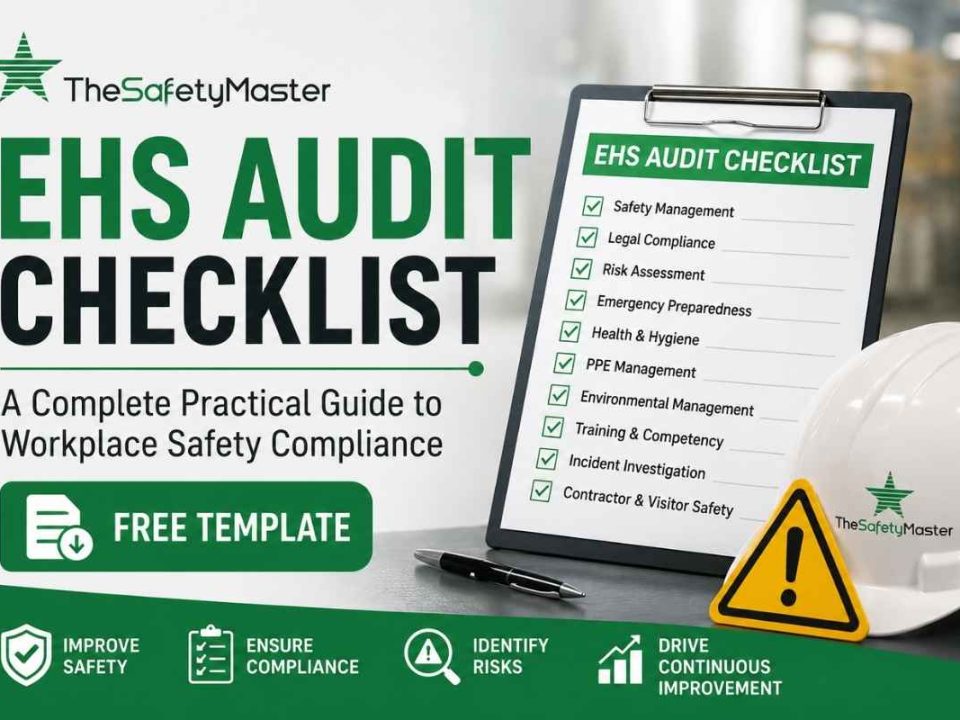
An IS 14489 Safety Audit checklist should be prepared according to the organization’s activities, hazards, and applicable requirements. The following areas provide a practical starting point.
Occupational Health and Safety Management
The audit should examine the organization’s overall approach to workplace safety.
Important checkpoints include:
- Availability of an occupational health and safety policy.
- Clearly defined safety responsibilities.
- Appointment of competent safety personnel.
- Functioning of safety committees, where applicable.
- Allocation of resources for safety activities.
- Periodic management reviews.
- Communication of safety policies to employees.
The auditor should verify whether these arrangements are implemented and supported by appropriate records.
Hazard Identification and Risk Assessment
Hazard identification and risk assessment are important parts of an effective safety management system.
The audit should review whether the organization identifies hazards, evaluates risks, and implements suitable controls.
Key checkpoints include:
- Availability of documented risk assessments.
- Identification of routine and non-routine activities.
- Assessment of machinery, electrical, chemical, and fire hazards.
- Evaluation of contractor and maintenance activities.
- Implementation of risk control measures.
- Periodic review of risk assessments.
- Communication of hazards and controls to workers.
The audit should also check whether identified risks are reviewed when processes, equipment, materials, or working conditions change.
Machinery and Equipment Safety
Unsafe machinery can cause severe injuries, particularly in manufacturing and processing facilities.
The checklist should cover:
- Machine guards and protective devices.
- Emergency stop arrangements.
- Preventive maintenance records.
- Safe operating procedures.
- Inspection of tools and equipment.
- Lockout and tagout arrangements during maintenance.
- Safe access to operating and maintenance areas.
- Competency of machine operators.
Any critical defect that exposes workers to immediate danger should receive prompt attention.
Electrical Safety
Electrical hazards can lead to electric shock, burns, fires, and fatal accidents.
The auditor should examine electrical installations and working practices, including:
- Condition of electrical panels and cables.
- Earthing and protection arrangements.
- Inspection and maintenance records.
- Identification of electrical equipment.
- Access control for electrical rooms.
- Safe isolation procedures.
- Electrical work permits, where required.
- Training and authorization of personnel.
Electrical inspections should be carried out by suitably competent personnel.
Fire and Emergency Preparedness
Every workplace should have appropriate arrangements for responding to foreseeable emergencies.
The audit should check:
- Availability and accessibility of fire extinguishers.
- Condition of fire detection and alarm systems.
- Accessibility of emergency exits.
- Emergency evacuation plans.
- Display of emergency contact information.
- Availability of first-aid arrangements.
- Emergency response team training.
- Records of mock drills.
- Procedures for chemical spills and other relevant emergencies.
The auditor should verify whether emergency arrangements are suitable for the hazards and size of the facility.
Personal Protective Equipment
Personal protective equipment (PPE) helps reduce exposure to workplace hazards when selected and used correctly.
The checklist should include:
- Identification of PPE requirements.
- Availability of suitable protective equipment.
- Inspection and replacement arrangements.
- Employee training on correct use.
- Proper storage and maintenance.
- Monitoring of PPE use.
- Suitability of PPE for identified hazards.
PPE should be considered alongside other risk controls, rather than used as the only measure where stronger controls are reasonably available.
Occupational Health and Industrial Hygiene
The audit should evaluate workplace conditions that may affect employee health.
Important checkpoints include:
- Ventilation and air quality.
- Noise exposure.
- Dust and chemical exposure.
- Workplace lighting.
- Temperature and thermal stress.
- Ergonomic conditions.
- Sanitation and drinking water.
- Health surveillance where required.
- Monitoring records for relevant workplace exposures.
The audit findings should help management identify areas requiring further measurement, engineering controls, or occupational health support.
Employee Training and Safe Work Practices
Employees must understand the hazards associated with their jobs and the procedures required to control them.
The auditor should review:
- Safety induction for new employees.
- Job-specific safety training.
- Contractor safety induction.
- Permit-to-work procedures.
- Working-at-height controls.
- Confined-space entry procedures.
- Safe material handling.
- Incident reporting and communication.
- Training and competency records.
Training should be appropriate to the work being performed and refreshed when necessary.
Incident Reporting and Investigation
Incident investigation helps organizations understand why accidents and near misses occur.
The audit should examine whether the organization maintains incident records, investigates relevant events, identifies root causes, and implements corrective actions.
The auditor should also check whether lessons from incidents are shared with employees and whether corrective actions are reviewed for effectiveness.
How to Conduct an IS 14489 Safety Audit
A structured audit process helps organizations gather reliable evidence and develop practical recommendations.
Step 1: Plan the Audit
Define the audit objectives, scope, locations, processes, and schedule. Identify the applicable legal requirements, standards, and internal procedures.
Select an audit team with suitable qualifications, experience, and knowledge of the operations being assessed.
Step 2: Review Safety Documents
Before visiting the workplace, review relevant records, including:
- Safety policies and procedures.
- Hazard identification and risk assessment documents.
- Previous safety audit reports.
- Incident and accident records.
- Training records.
- Equipment inspection reports.
- Maintenance records.
- Emergency plans and drill records.
- Applicable statutory compliance documents.
This review helps auditors identify areas requiring special attention during the site inspection.
Step 3: Inspect the Workplace
Conduct a systematic inspection of the selected work areas. Observe actual working conditions and compare them with documented procedures.
Speak with employees and supervisors to understand how safety procedures are followed in daily operations.
Record objective evidence, including observations, documents, measurements, and relevant statements.
Step 4: Identify and Classify Findings
Document the safety gaps identified during the audit. Prioritize findings according to the severity of potential harm, exposure, applicable requirements, and the effectiveness of existing controls.
Where an immediate danger is identified, inform the responsible management team promptly and recommend appropriate interim controls.
Step 5: Prepare the Audit Report
The report should explain the audit scope, methodology, findings, supporting evidence, and recommended actions.
Each finding should be clear enough for the responsible department to understand the issue and determine what must be corrected.
Step 6: Implement Corrective Actions
Management should assign a responsible person and target date for every corrective action.
Actions may include repairing equipment, improving procedures, providing training, installing engineering controls, or updating risk assessments.
Step 7: Verify and Close Findings
Conduct follow-up reviews to confirm that corrective actions have been completed and are effective.
A finding should not be considered closed simply because an action was reported as completed. The auditor or responsible reviewer should verify the result using suitable evidence.
IS 14489 Safety Audit Report: What Should It Include?
A clear audit report helps management understand the organization’s safety performance and decide where improvements are needed.
A typical report may include:
- Organization and site details.
- Audit date and scope.
- Audit team details.
- Audit criteria and methodology.
- Documents and records reviewed.
- Workplace observations.
- Identified hazards and non-conformities.
- Risk significance and priority of findings.
- Recommended corrective actions.
- Responsible departments and target dates.
- Photographic evidence, where appropriate.
- Summary of major safety gaps.
- Follow-up and closure status.
The report format should be adapted to the applicable audit requirements and the organization’s operational needs.
Who Needs an IS 14489 Safety Audit?
IS 14489 provides guidance that can be adapted to different workplace environments. Its relevance depends on the activities, hazards, and safety obligations of the organization.
Industries that may benefit from this audit approach include:
- Manufacturing and engineering facilities.
- Chemical and petrochemical plants.
- Warehouses and logistics facilities.
- Construction and infrastructure projects.
- Power generation and utility facilities.
- Pharmaceutical and process industries.
- Other workplaces with occupational health and safety risks.
Certain industries or facilities may have additional legal, regulatory, or contractual requirements for safety audits. Organizations should verify which requirements apply to their operations.
Common Mistakes to Avoid During a Safety Audit
An audit may provide limited value if it focuses only on paperwork or does not lead to corrective action.
Common mistakes include:
- Using a generic checklist without considering site-specific hazards.
- Reviewing documents without inspecting actual working conditions.
- Ignoring employee feedback.
- Failing to investigate repeated incidents.
- Recording findings without supporting evidence.
- Assigning corrective actions without clear ownership.
- Setting unrealistic completion dates.
- Closing findings without verification.
- Failing to review the effectiveness of safety improvements.
Avoiding these mistakes helps organizations turn audit findings into meaningful workplace improvements.
How The Safety Master Supports Workplace Safety Audits
The Safety Master helps organizations strengthen their occupational health and safety practices through safety consultancy, audits, and risk management support.
A practical safety audit approach can help businesses identify workplace hazards, assess safety management arrangements, review documentation, and prioritize corrective measures.
The scope of support can be tailored to the organization’s operations, industry risks, and applicable requirements. Depending on the engagement, this may include workplace inspections, review of safety procedures, risk assessment support, audit reporting, and corrective action recommendations.
Organizations should confirm the required auditor qualifications and any applicable accreditation or authorization requirements before appointing an external audit provider.
Working with an experienced safety consultancy can help management gain a clearer understanding of safety gaps and establish a structured plan for improvement.
Conclusion
An IS 14489 Safety Audit provides a systematic approach to evaluating occupational health and safety systems. It helps organizations review safety management, identify hazards, assess workplace practices, document findings, and monitor corrective actions.
A successful audit requires more than completing a checklist. It involves examining actual working conditions, reviewing objective evidence, consulting employees, and ensuring that safety improvements are implemented and verified.
The Safety Master supports organizations in developing safer workplaces through practical safety audits, risk assessment, and safety management guidance. By applying a structured audit process and addressing identified gaps, organizations can improve safety performance, strengthen compliance, and better protect their employees.