
How Behavior-Based Safety Programs Improve Safety Culture and Reduce Workplace Incidents

Why Every High-Risk Industry in India Needs a Behavior-Based Safety Consultant in 2026
June 19, 2026
Risk-Based Inspection (RBI) Implementation: A Complete Guide
June 25, 2026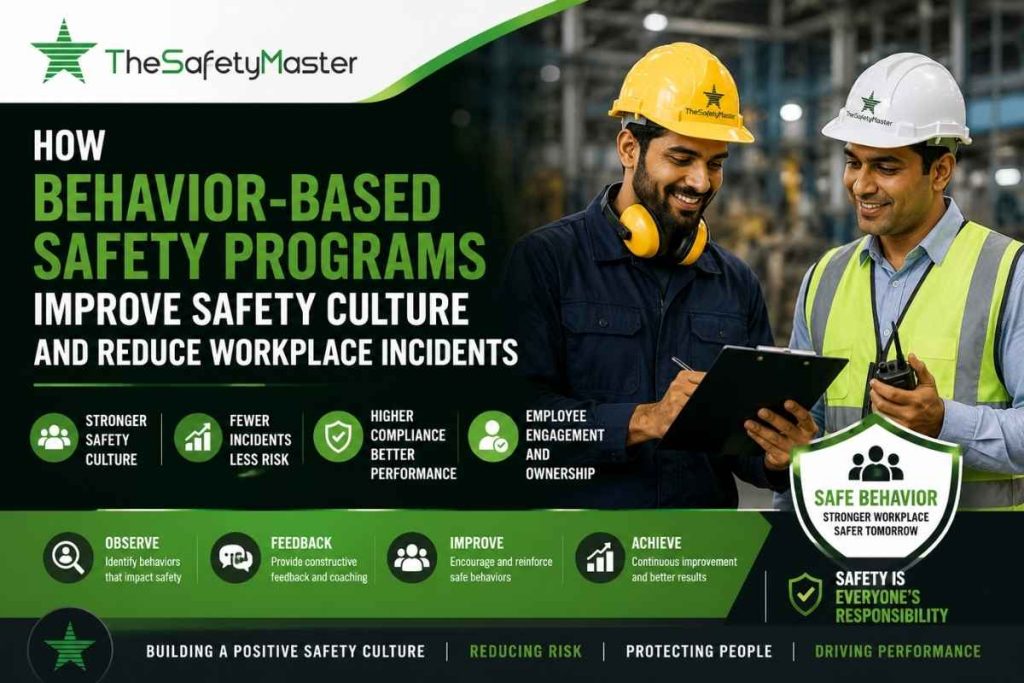
Workplace safety is a top priority for organizations operating in high-risk industries. Despite having safety procedures, equipment, and compliance programs in place, many incidents continue to occur due to unsafe behaviors. This is where Behavior-Based Safety (BBS) programs make a significant difference.
Behavior-Based Safety focuses on understanding, observing, and improving employee behaviors that influence workplace safety. Instead of only reacting to incidents after they happen, BBS helps organizations proactively identify risky behaviors and encourage safer work practices. As a result, companies can strengthen their safety culture and significantly reduce workplace incidents.
What Is Behavior-Based Safety?
Behavior-Based Safety is a systematic approach that focuses on the actions and decisions employees make while performing their work. The objective is to identify unsafe behaviors, understand why they occur, and implement measures to encourage safer alternatives.
BBS is based on the belief that many workplace incidents can be prevented when employees consistently follow safe work practices. By promoting positive behaviors and providing continuous feedback, organizations can create a culture where safety becomes part of everyday operations.
Unlike traditional safety programs that focus primarily on policies and procedures, BBS emphasizes employee involvement and behavioral improvement.
Understanding the Connection Between Behavior and Workplace Incidents
Most workplace incidents are not caused solely by equipment failure or unsafe conditions. Human behavior often plays a major role.
Examples of unsafe behaviors include:
- Ignoring safety procedures
- Taking shortcuts to save time
- Improper use of personal protective equipment (PPE)
- Failure to report hazards
- Lack of attention during critical tasks
- Poor communication among workers
Even small unsafe actions can lead to serious consequences when combined with workplace hazards. Behavior-Based Safety programs help organizations identify these patterns before they result in injuries, property damage, or operational disruptions.
By addressing behaviors directly, organizations can reduce risks at their source.
How BBS Programs Strengthen Safety Culture
Safety culture refers to the shared attitudes, beliefs, and behaviors that influence how safety is managed within an organization. A strong safety culture ensures that employees actively participate in maintaining a safe work environment.
Behavior-Based Safety programs contribute to safety culture in several ways.
Encouraging Employee Ownership
One of the key strengths of BBS is that it involves employees at every level of the organization. Workers are encouraged to observe behaviors, provide feedback, and participate in safety discussions.
This involvement creates a sense of ownership and responsibility toward workplace safety.
Promoting Open Communication
Many incidents occur because employees hesitate to report unsafe conditions or behaviors. BBS programs create a positive environment where workers feel comfortable discussing safety concerns without fear of blame.
Open communication helps organizations identify risks early and take corrective action before incidents occur.
Reinforcing Positive Behaviors
Rather than focusing only on mistakes, BBS programs recognize and reinforce safe behaviors. Positive reinforcement motivates employees to continue following safe practices and encourages others to do the same.
Over time, these behaviors become part of the organization’s culture.
Building Trust Between Management and Employees
Successful BBS programs require active leadership involvement. When managers and supervisors participate in safety initiatives, employees see that safety is a genuine priority.
This strengthens trust and improves overall engagement in safety programs.
Reducing Workplace Incidents Through Behavioral Change
One of the primary goals of Behavior-Based Safety is reducing workplace incidents. Organizations that successfully implement BBS programs often experience measurable improvements in safety performance.
Early Identification of Risky Behaviors
Regular observations allow organizations to identify unsafe behaviors before they lead to accidents. Corrective actions can then be implemented immediately.
Improved Hazard Awareness
Employees become more aware of workplace risks and learn how their actions can influence safety outcomes. Increased awareness often leads to better decision-making on the job.
Fewer Near Misses
BBS programs help organizations identify and address behaviors that contribute to near misses. By learning from these events, companies can prevent more serious incidents in the future.
Lower Injury Rates
Organizations with strong behavioral safety programs frequently report reductions in workplace injuries and lost-time incidents because employees consistently follow safer work practices.
The Role of Training in Behavior-Based Safety
Training is essential for the success of any BBS program. Employees need to understand what safe behavior looks like and why it matters.
Effective Behavior-Based Safety Training helps workers recognize hazards, improve safety awareness, and develop the skills needed to make safer decisions. Training also equips supervisors and managers with the tools to provide constructive feedback and support behavioral improvements across the workforce.
When employees receive ongoing training and coaching, behavioral changes become more sustainable and impactful.
Integrating BBS with Existing Safety Systems
Behavior-Based Safety works best when integrated with other workplace safety initiatives rather than functioning as a standalone program.
Organizations often combine BBS with:
- Hazard identification programs
- Risk assessments
- Incident investigations
- Compliance inspections
- Emergency preparedness planning
- Safety management systems
For example, a comprehensive Safety Audit Service can identify operational risks and compliance gaps, while a BBS program focuses on improving the behaviors that contribute to those risks.
Together, these approaches create a more effective and comprehensive safety strategy.
Why High-Risk Industries Benefit Most from BBS
Industries such as manufacturing, construction, oil & gas, chemical processing, mining, logistics, and power generation face significant workplace hazards every day.
In these environments, even a small mistake can result in serious consequences.
Behavior-Based Safety programs help high-risk industries by:
- Reducing unsafe acts
- Improving compliance with procedures
- Increasing employee engagement
- Strengthening leadership involvement
- Enhancing operational reliability
- Supporting long-term safety performance
Because these industries depend heavily on human interaction with equipment, processes, and hazardous environments, behavioral safety becomes a critical component of risk management.
Supporting Safety Through Audits and Assessments
Behavioral safety initiatives become even more effective when supported by regular audits and assessments.
For instance, a Fire Safety Audit helps organizations evaluate fire risks, emergency preparedness, and compliance with fire safety requirements. While audits identify technical and procedural gaps, Behavior-Based Safety ensures that employees consistently follow safe practices that reduce the likelihood of fire-related incidents.
This combination of technical controls and behavioral improvement creates a stronger and more resilient safety system.
Conclusion
Behavior-Based Safety programs are transforming the way organizations approach workplace safety. By focusing on employee behaviors, organizations can move beyond compliance and create a culture where safety becomes a shared responsibility.
A strong BBS program improves communication, increases employee engagement, reinforces positive behaviors, and helps prevent workplace incidents before they occur. When combined with training, audits, and other safety initiatives, behavioral safety becomes a powerful tool for building a safer and more productive workplace.
As organizations continue to prioritize employee well-being and operational excellence, Behavior-Based Safety will remain one of the most effective strategies for strengthening safety culture and reducing workplace incidents.