HAZOP – Complete Guide to Hazard and Operability Study

Reasons Why Workplace Safety Training is Importan
April 28, 2023
Quantitative Risk Assessment
May 3, 2023
What Is HAZOP?
HAZOP, or Hazard and Operability Study, is a structured and systematic technique used to identify potential hazards, operational problems, and process deviations in industrial facilities. It examines whether a process can operate safely by comparing actual or possible operating conditions with the intended design.
A HAZOP Study is particularly important for industries that handle hazardous chemicals, flammable materials, high pressures, high temperatures, or complex process systems. Industries such as oil and gas, petrochemicals, chemicals, pharmaceuticals, power generation, and manufacturing commonly use HAZOP as part of their process safety activities.
The Safety Master provides process safety expertise and supports organizations with HAZOP, risk assessment, and other industrial safety solutions designed to identify risks and improve process safety performance.
Why Is HAZOP Important?
Industrial processes can contain many interconnected systems and operating conditions. A small deviation in flow, pressure, temperature, level, or composition can sometimes create a chain of events that results in equipment damage, fire, explosion, toxic release, environmental impact, or production loss.
HAZOP provides a structured way to identify these deviations before they develop into serious incidents.
Major Benefits of HAZOP
A properly conducted HAZOP Study can help organizations:
- Identify potential process hazards
- Detect deviations from design intent
- Understand possible causes of deviations
- Evaluate potential consequences
- Review existing safeguards
- Identify gaps in protection
- Recommend additional risk-control measures
- Improve operating procedures
- Support safer plant design
- Strengthen process safety management
- Reduce the likelihood of major incidents
- Improve operational reliability
How Does a HAZOP Study Work?
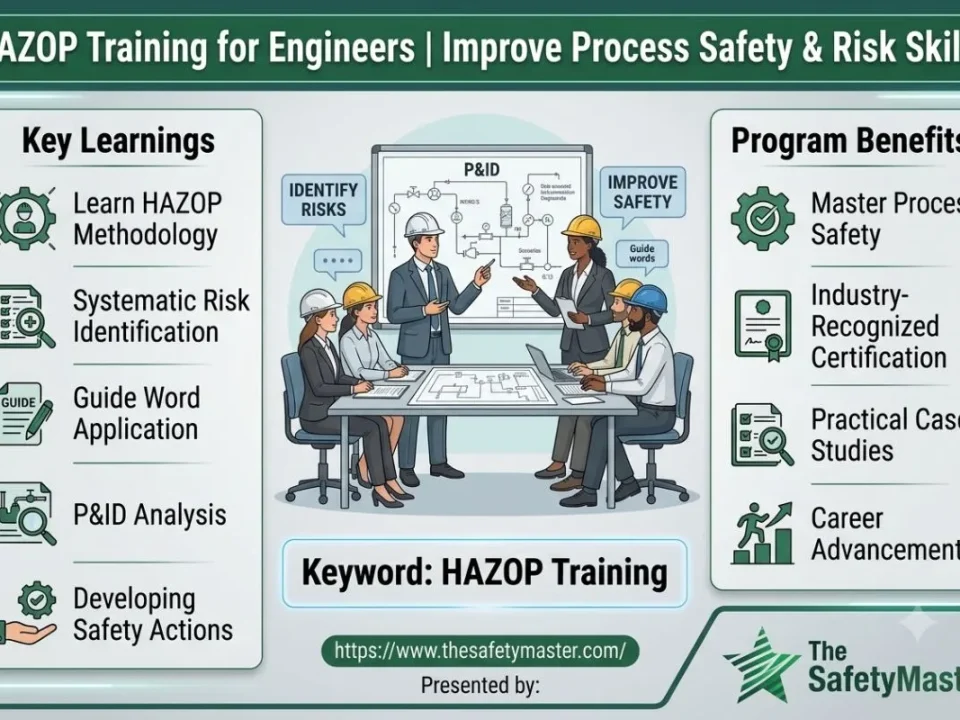
A HAZOP Study is normally performed by a multidisciplinary team. The team divides the process into manageable sections called nodes and examines each node using process parameters and guide words.
The team asks what could happen if the process does not operate as intended.
HAZOP Nodes
A node is a defined section of a process that is examined during the HAZOP Study. A node may represent a pipeline, vessel, reactor, pump system, heat exchanger, or another specific part of the process.
Defining appropriate nodes helps the HAZOP team perform a systematic and detailed examination.
HAZOP Parameters
Common process parameters include:
- Flow
- Pressure
- Temperature
- Level
- Composition
- Concentration
- Speed
- Voltage
- Time
The appropriate parameters depend on the process and equipment being studied.
HAZOP Guide Words
Guide words are applied to process parameters to identify possible deviations from design intent.
Common HAZOP guide words include:
- No/Not – complete absence of the intended action
- More – quantitative increase
- Less – quantitative decrease
- As Well As – additional component or condition
- Part Of – incomplete composition or activity
- Reverse – opposite of the intended condition
- Other Than – something different from the intended condition
The use of guide words makes the HAZOP process systematic rather than dependent only on individual experience.
Key Elements of a HAZOP Study
Design Intent
The team first needs to understand what the process or equipment is designed to do under normal operating conditions.
Deviation
A deviation represents a departure from the intended design or operating condition, such as No Flow, High Pressure, or Low Temperature.
Causes
The team identifies credible reasons why a deviation could occur. Causes may include equipment failure, human error, utility failure, control-system malfunction, blockage, or incorrect operation.
Consequences
The team then determines what could happen if the deviation occurs.
Consequences may include:
- Equipment damage
- Fire
- Explosion
- Toxic exposure
- Environmental release
- Production interruption
- Personnel injury
Safeguards
Existing safeguards are reviewed to determine how effectively they prevent or mitigate the identified scenario.
Safeguards can include alarms, trips, interlocks, relief systems, procedures, detection systems, emergency shutdown systems, and other protective measures.
Recommendations
If existing safeguards are not sufficient, the HAZOP team develops recommendations to reduce the identified risk.
HAZOP Study Process: Step-by-Step
Step 1: Define the Scope
Clearly establish the process, plant area, equipment, project phase, and objectives that will be covered.
Step 2: Collect Process Information
Relevant documents may include:
- P&IDs
- Process flow diagrams
- Equipment specifications
- Operating procedures
- Control narratives
- Cause-and-effect diagrams
- Process data
- Safety documentation
Step 3: Select the HAZOP Team
A multidisciplinary team generally provides better results because different specialists bring different perspectives.
Typical participants may include:
- Process engineers
- Operations personnel
- Instrumentation and control engineers
- Mechanical engineers
- Maintenance professionals
- HSE professionals
- Process safety specialists
Step 4: Divide the Process Into Nodes
The process is divided into manageable sections so each part can be examined systematically.
Step 5: Apply Guide Words
The team applies appropriate guide words to process parameters to identify possible deviations.
Step 6: Identify Causes and Consequences
Each significant deviation is examined to determine credible causes and potential consequences.
Step 7: Review Safeguards
Existing preventive and mitigative safeguards are identified and evaluated.
Step 8: Develop Recommendations
Where additional controls are required, recommendations are recorded with appropriate responsibility and priority.
Step 9: Document the Results
HAZOP findings, causes, consequences, safeguards, recommendations, and action owners should be properly documented.
Step 10: Track Action Closure
The HAZOP process should not end when the workshop finishes. Recommendations should be assigned, tracked, reviewed, and closed effectively.
Where Is HAZOP Used?
HAZOP is widely applicable to process-intensive and high-hazard industries.
Oil and Gas
HAZOP can be used for refineries, gas processing facilities, pipelines, terminals, offshore facilities, and other oil and gas operations.
Chemical Industry
Chemical plants can use HAZOP to evaluate risks associated with hazardous chemicals, reactions, storage, transfer, and process operations.
Pharmaceutical Industry
HAZOP can support the identification of process and operational risks in pharmaceutical manufacturing and associated utility systems.
Power Plants
Power generation facilities can use HAZOP to examine process systems, utilities, fuel systems, steam systems, and other critical operations.
Manufacturing
Complex manufacturing processes can benefit from HAZOP when they involve hazardous materials, automated systems, high energy, or significant process risks.
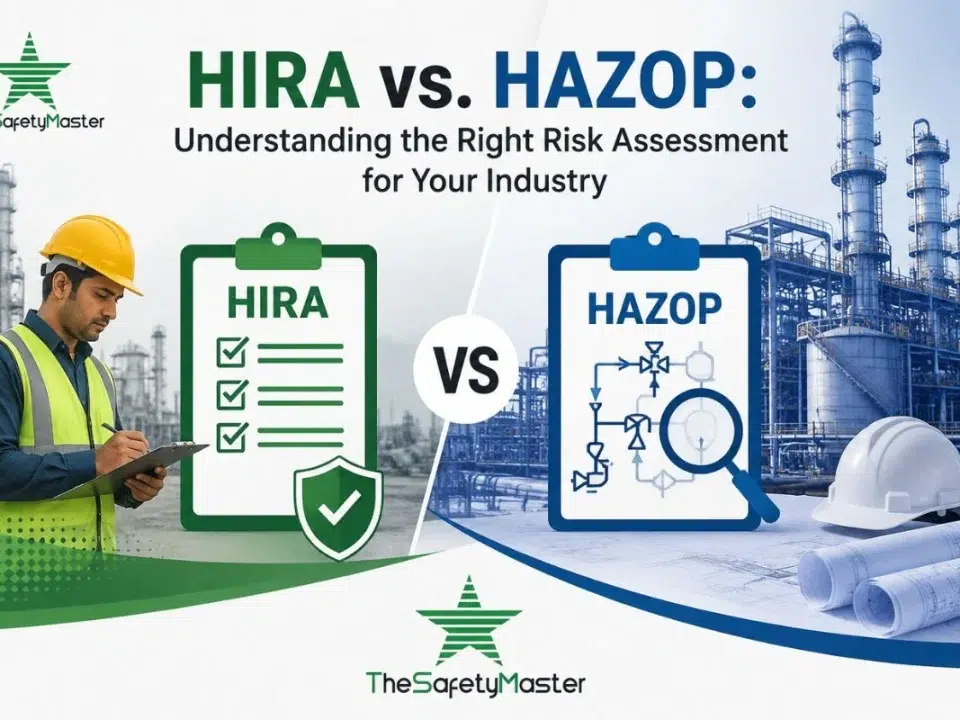
HAZOP vs HIRA
HAZOP and HIRA are both important risk assessment techniques, but they have different purposes.
HIRA focuses on identifying hazards and assessing associated risks, while HAZOP systematically examines process deviations from design intent.
HAZOP is particularly useful for detailed process hazard analysis, whereas HIRA can be applied more broadly across workplace activities and operations.
HAZOP vs HAZID
HAZID and HAZOP are complementary techniques.
HAZID is generally used for broader and earlier hazard identification, while HAZOP provides a detailed examination of process deviations using guide words, parameters, causes, consequences, and safeguards.
The selection of the technique depends on the project stage, process complexity, and assessment objectives.
HAZOP vs LOPA
HAZOP identifies hazardous scenarios and helps determine whether additional safeguards may be required.
LOPA (Layer of Protection Analysis) can subsequently be used for selected scenarios to evaluate the adequacy and independence of protection layers.
Therefore, HAZOP and LOPA can work together within a broader process safety management framework.
Who Should Conduct a HAZOP Study?
A HAZOP Study should be conducted by a competent multidisciplinary team with appropriate technical and process knowledge.
Depending on the project, the team may include:
- Process safety engineers
- Process engineers
- HSE professionals
- Operations engineers
- Instrumentation engineers
- Mechanical engineers
- Electrical engineers
- Maintenance specialists
- Project engineers
- Experienced HAZOP facilitators
An experienced facilitator is important for keeping the workshop structured, encouraging effective discussion, and ensuring that findings are properly documented.
Common HAZOP Mistakes to Avoid
Poorly Defined Scope
An unclear scope can result in important systems being missed or unnecessary areas being examined.
Incomplete Documentation
The quality of the HAZOP depends heavily on the accuracy and completeness of the information provided to the team.
Inexperienced Team
A team without adequate process knowledge may overlook credible scenarios.
Ignoring Human Factors
Operator actions, maintenance activities, procedures, and human errors can contribute to process deviations and should be considered.
Weak Recommendation Management
Identifying a hazard is not enough. Recommendations need responsible owners, appropriate priorities, and effective closure.
How The Safety Master Can Help With HAZOP
The Safety Master provides industrial safety and process safety solutions for organizations dealing with complex and high-risk operations.
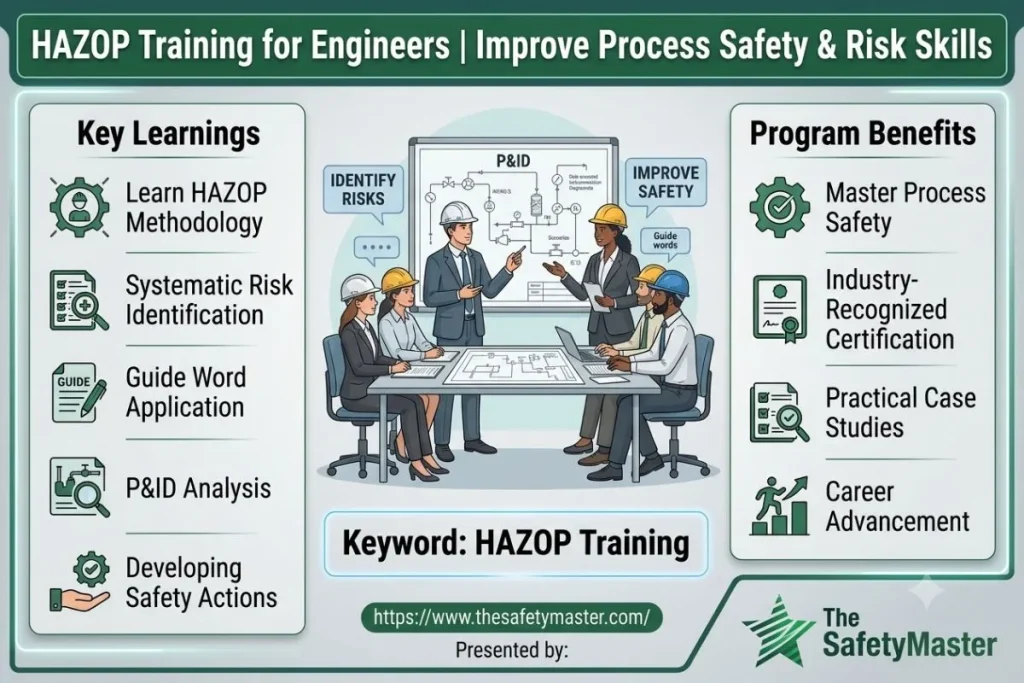
Its process safety services include HAZOP and related risk assessment activities, supporting organizations in identifying hazards, evaluating process risks, reviewing safeguards, and developing practical risk-reduction measures. The company also offers HAZOP training and digital solutions for managing HAZOP studies and recommendations.
Organizations can use these services to strengthen process safety, improve risk management, and build more reliable safety systems.
Frequently Asked Questions About HAZOP
Q-What does HAZOP stand for?
HAZOP stands for Hazard and Operability Study. It is a systematic, team-based technique used to identify hazards, operational problems, and deviations from intended process conditions.
Q-What is the main purpose of HAZOP?
The main purpose of HAZOP is to systematically identify credible process deviations, determine their causes and consequences, review existing safeguards, and recommend measures to reduce risk.
Q-What are the 7 HAZOP guide words?
Common HAZOP guide words include No/Not, More, Less, As Well As, Part Of, Reverse, and Other Than. The appropriate guide words depend on the process and parameters being examined.
Q-What are the main stages of a HAZOP Study?
The main stages include preparation, defining the scope, selecting the team, collecting process information, dividing the process into nodes, applying guide words, identifying causes and consequences, reviewing safeguards, developing recommendations, and documenting and closing actions.
Q-What is the difference between HAZOP and HIRA?
HAZOP is a structured process hazard analysis technique that focuses on deviations from design intent. HIRA is a broader hazard identification and risk assessment methodology used to identify hazards and evaluate their associated risks.
Q-Which industries use HAZOP?
HAZOP is commonly used in oil and gas, petrochemical, chemical, pharmaceutical, power generation, manufacturing, fertilizer, and other process industries.
Q-Who participates in a HAZOP Study?
A HAZOP team generally includes representatives from process engineering, operations, instrumentation and control, maintenance, mechanical engineering, HSE, and process safety, depending on the project.
Q-When should a HAZOP Study be conducted?
HAZOP is commonly performed during the design and engineering stages before commissioning, but it can also be used for existing facilities, modifications, process changes, and periodic process safety reviews.
Q-How much does a HAZOP Study cost?
The cost depends on the size and complexity of the facility, number of P&IDs or nodes, project duration, team requirements, industry, and scope of work. A customized assessment is generally required to determine the actual cost.
Q-Why choose The Safety Master for HAZOP services?
The Safety Master combines process safety expertise with HAZOP, risk assessment, training, and digital safety solutions. Its broader safety portfolio includes HAZOP, QRA, SIL, LOPA, PSSR, and other process safety services.
Conclusion
HAZOP is an important process safety technique for identifying potential hazards and operational problems before they result in serious incidents. By systematically examining process deviations, causes, consequences, and safeguards, organizations can identify weaknesses and implement practical risk-reduction measures.
For organizations looking to strengthen process safety and conduct structured HAZOP Studies, The Safety Master can provide professional process safety support, training, and related risk management solutions.