Process Safety Audit

Fire Load Calculation and Fire Risk Assessment
September 11, 2023
Employee Safety Training at Various Levels Changing Safety Culture and Mindsets
September 12, 2023
What Is a Process Safety Audit?
A Process Safety Audit is a systematic review of an industrial facility’s process safety systems, procedures, equipment, controls, and management practices. It helps organizations identify gaps that could contribute to fires, explosions, toxic releases, equipment failures, or other major process incidents.
Unlike a general workplace safety inspection, a process safety audit focuses strongly on hazards associated with industrial processes, hazardous chemicals, operating conditions, process equipment, and safety-critical systems.
A proper audit reviews both documentation and actual field practices. This is important because having a written procedure does not always mean that the procedure is being followed effectively.
The Safety Master provides process safety and industrial risk-management solutions designed to help organizations identify hazards, strengthen controls, and improve process safety performance.
Why Is Process Safety Audit Important?
Industrial facilities may involve high pressure, high temperature, flammable materials, toxic chemicals, combustible dust, rotating equipment, and complex process systems. A failure in one part of the system can sometimes affect multiple areas of a facility.
A Process Safety Audit helps management identify weaknesses before they contribute to a serious event.
Important objectives include:
- Identifying process safety hazards
- Reviewing existing safety controls
- Checking implementation of safety procedures
- Evaluating process safety documentation
- Identifying gaps in compliance
- Reviewing safety-critical equipment
- Checking Management of Change systems
- Evaluating emergency preparedness
- Tracking corrective actions
- Supporting continuous safety improvement
The audit should not be treated only as a fault-finding activity. Its purpose is to identify risks and provide practical opportunities for improvement.
Key Areas Covered in a Process Safety Audit
The exact scope depends on the industry, process, facility size, hazards, and audit objectives. However, several areas are commonly important.
Process Safety Information
Process Safety Information provides the technical foundation for understanding process hazards.
An audit may review:
- Chemical information
- Process flow diagrams
- Piping and instrumentation diagrams
- Equipment specifications
- Operating limits
- Safety-system information
- Material properties
- Process design information
- Hazardous chemical inventories
Accurate process information helps safety teams understand what can go wrong and what controls are available.
Process Hazard Analysis
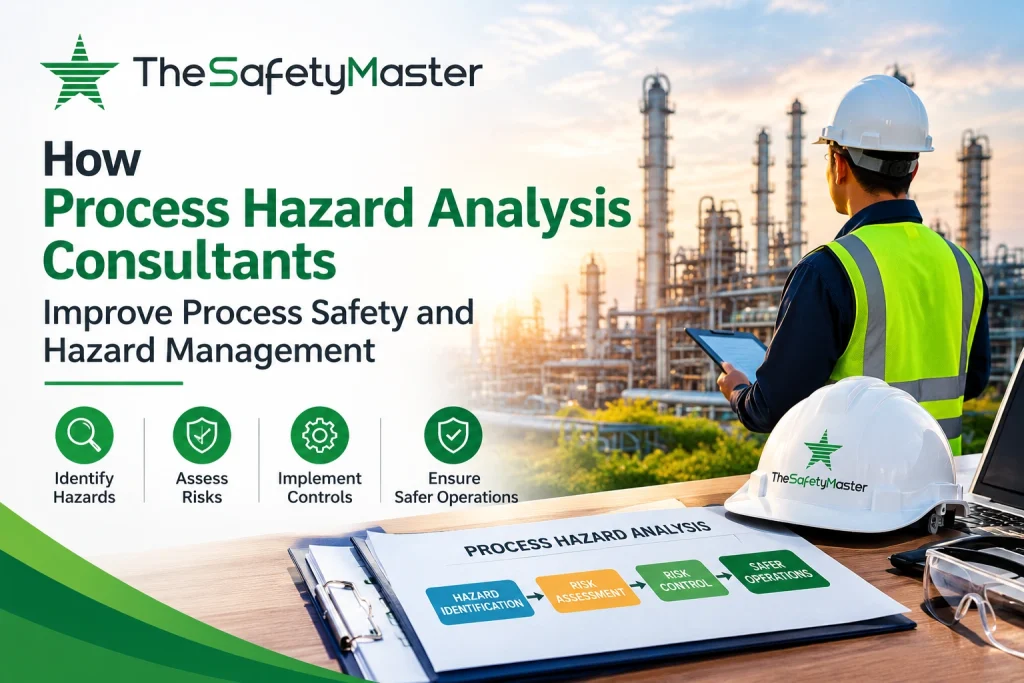
Process Hazard Analysis (PHA) is an important part of process safety management. It systematically examines process hazards, deviations, consequences, safeguards, and recommendations.
A Process Safety Audit may check whether:
- PHA studies have been completed
- Appropriate methodologies were used
- Recommendations were documented
- Recommendations were assigned to responsible persons
- Actions were completed
- PHA studies are reviewed when significant changes occur
PHA techniques may include HAZOP, What-If Analysis, FMEA, LOPA, and other structured risk-analysis methods.
HAZOP Study Review
HAZOP is commonly used in process industries to identify deviations from intended operating conditions and evaluate their possible consequences.
During an audit, the organization may review whether HAZOP recommendations have been properly documented, assigned, implemented, and closed.
This helps connect the findings of the original study with actual plant conditions.
Operating Procedures
Operating procedures should address normal as well as abnormal operating conditions.
The audit may examine procedures for:
- Startup
- Normal operation
- Shutdown
- Emergency shutdown
- Temporary operations
- Maintenance activities
- Abnormal conditions
- Emergency situations
The auditor may also verify whether workers understand and follow the procedures in actual operations.
Mechanical Integrity and Safety-Critical Equipment
Equipment failure can create significant process safety risks. Mechanical integrity programs help organizations maintain equipment in a safe operating condition.
A Process Safety Audit may examine inspection, testing, maintenance, and records associated with:
- Pressure vessels
- Storage tanks
- Piping systems
- Relief and vent systems
- Pumps
- Compressors
- Safety instrumented systems
- Fire protection systems
- Emergency shutdown systems
- Other safety-critical equipment
The audit should consider whether inspection and maintenance activities are performed according to defined requirements and whether identified defects are properly addressed.
Management of Change in Process Safety
Management of Change (MOC) is an important process safety control.
Changes to equipment, chemicals, technology, operating procedures, process conditions, or organizational arrangements can introduce new hazards.
A Process Safety Audit may review whether the organization has a structured process for:
- Identifying proposed changes
- Assessing hazards
- Reviewing technical requirements
- Updating documents
- Updating procedures
- Training affected employees
- Obtaining required approvals
- Completing actions before implementation
A strong MOC system helps prevent unintended risks from being introduced during modifications.
Pre-Startup Safety Review
A Pre-Startup Safety Review, or PSSR, helps confirm that important safety requirements have been addressed before a new or modified process is placed into operation.
An audit may verify whether:
- Equipment is installed according to design
- Safety systems are available
- Operating procedures are ready
- Training has been completed
- PHA recommendations have been addressed where required
- Emergency arrangements are established
- Required documentation is available
This provides an additional safety check before startup.
Emergency Preparedness and Response
Process incidents can develop quickly, particularly in facilities handling hazardous materials or high-energy processes.
The audit may evaluate:
- Emergency response procedures
- Emergency shutdown systems
- Alarm systems
- Evacuation arrangements
- Emergency communication
- Fire protection systems
- Spill response
- Chemical release response
- Emergency drills
- Availability of emergency equipment
The objective is to determine whether the organization is prepared to respond effectively to credible emergency scenarios.
Process Safety Audit Checklist
A Process Safety Audit checklist should be customized according to the facility and its hazards.
Typical checklist points may include:
- Process Safety Information
- Process Hazard Analysis
- HAZOP studies
- Operating procedures
- Employee training
- Contractor safety
- Mechanical integrity
- Inspection and testing
- Management of Change
- PSSR
- Incident investigation
- Emergency planning
- Safety-critical equipment
- Permit-to-work systems
- Corrective action management
- Process safety performance indicators
- Compliance requirements
- Field implementation
A checklist should support the audit rather than replace professional judgment. The audit team should also verify actual conditions in the field.
Process Safety Audit Process
A structured audit generally involves several stages.
1. Audit Planning
Define the audit scope, objectives, facility areas, applicable requirements, audit team, and schedule.
2. Document Review
Review relevant process safety documents, procedures, previous audit reports, PHA studies, inspection records, MOC records, training records, and corrective actions.
3. Site Inspection
The audit team visits the facility to compare documented systems with actual operating conditions.
4. Employee and Management Discussions
Discussions with employees, operators, engineers, maintenance personnel, and managers can provide useful information about how process safety systems operate in practice.
5. Gap Identification
Observed gaps are documented and evaluated according to their potential safety significance.
6. Corrective Action Recommendations
Practical recommendations are developed to address identified deficiencies.
7. Final Audit Report
The final report should clearly present observations, evidence, risk areas, recommendations, responsible persons, and proposed corrective actions.
8. Follow-Up
Corrective actions should be monitored until appropriate closure. The value of an audit is significantly reduced if important findings remain unresolved.
Benefits of a Process Safety Audit
A well-planned Process Safety Audit can support organizations in several ways.
Better Hazard Identification
Audits can reveal gaps in hazard identification and existing process safety controls.
Stronger Safety Management
The audit provides management with information about how process safety systems are functioning.
Improved Compliance
A systematic review can identify areas where procedures, records, or implementation may not meet applicable requirements.
Reduced Process Risk
Identifying weaknesses and strengthening controls can help reduce the likelihood and potential consequences of major process incidents.
Improved Operational Reliability
Effective inspection, maintenance, procedures, and management systems can support safer and more reliable operations.
Continuous Improvement
Audit findings can become inputs for corrective actions, management reviews, training, and improvements to the process safety management system.
Process Safety Audit vs General Safety Audit
A general safety audit may cover workplace hazards such as machinery, PPE, housekeeping, electrical safety, fire safety, occupational health, and emergency preparedness.
A Process Safety Audit focuses more deeply on hazards associated with industrial processes and major accident scenarios.
For example, a process safety audit may examine:
- Process deviations
- Chemical hazards
- PHA and HAZOP
- Safety instrumented systems
- Mechanical integrity
- Operating limits
- MOC
- PSSR
- Relief systems
- Process emergency scenarios
Both types of audits can be valuable, but their scope and objectives are different.
How The Safety Master Supports Process Safety Improvement
The Safety Master provides process safety consultancy, risk assessment, auditing, training, and related industrial safety solutions.
Its process safety capabilities include areas such as PHA, HAZOP, SIL, LOPA, QRA, PSSR, and process safety management.
Organizations can use professional process safety support to evaluate existing systems, identify gaps, prioritize improvements, and strengthen controls across high-hazard operations.
The Safety Master also works across industries such as chemical, petrochemical, pharmaceutical, manufacturing, oil and gas, power and energy, and other industrial sectors.
Frequently Asked Questions About Process Safety Audit
Q-What is a Process Safety Audit?
A Process Safety Audit is a systematic evaluation of process safety systems, procedures, equipment, documentation, controls, and implementation within an industrial facility.
Q-What does a Process Safety Audit check?
It can check Process Safety Information, PHA, HAZOP, operating procedures, training, mechanical integrity, MOC, PSSR, emergency response, incident investigation, safety-critical equipment, and corrective actions.
Q-What is the difference between a safety audit and a Process Safety Audit?
A general safety audit may cover broad workplace safety issues, while a Process Safety Audit concentrates on process hazards, major accident prevention, process safety management systems, safety-critical equipment, and controls associated with hazardous processes.
Q-Why is HAZOP important in a Process Safety Audit?
HAZOP provides a structured method for identifying process deviations and their potential consequences. During an audit, HAZOP studies and their recommendations can be reviewed to determine whether identified actions have been properly addressed.
Q-How often should a Process Safety Audit be conducted?
The appropriate frequency depends on applicable regulations, industry requirements, process hazards, organizational procedures, previous findings, incidents, and significant changes to the facility. Organizations should establish an audit schedule appropriate to their risk profile.
Q-Who should conduct a Process Safety Audit?
The audit should be conducted by competent professionals with suitable knowledge of process safety, industrial processes, risk assessment, applicable standards, and audit techniques. Depending on the scope, a multidisciplinary team may be appropriate.
Q-What is included in a Process Safety Audit report?
A report commonly includes the audit scope, methodology, observations, evidence, identified gaps, risk significance, recommendations, responsible persons, target dates, and corrective-action status.
Conclusion
A Process Safety Audit provides organizations with a structured way to examine whether process safety systems are properly designed, implemented, maintained, and continuously improved. From Process Hazard Analysis and HAZOP to mechanical integrity, Management of Change, PSSR, emergency response, and corrective actions, each area contributes to stronger process safety management.
For organizations operating high-hazard processes, a systematic audit can provide valuable information for identifying weaknesses and strengthening preventive and protective controls. The Safety Master supports organizations with process safety consultancy, audits, risk assessment, training, and specialized process safety services designed around their operational requirements.