How Process Safety Management Training Protects Your Facility from Catastrophic Incidents

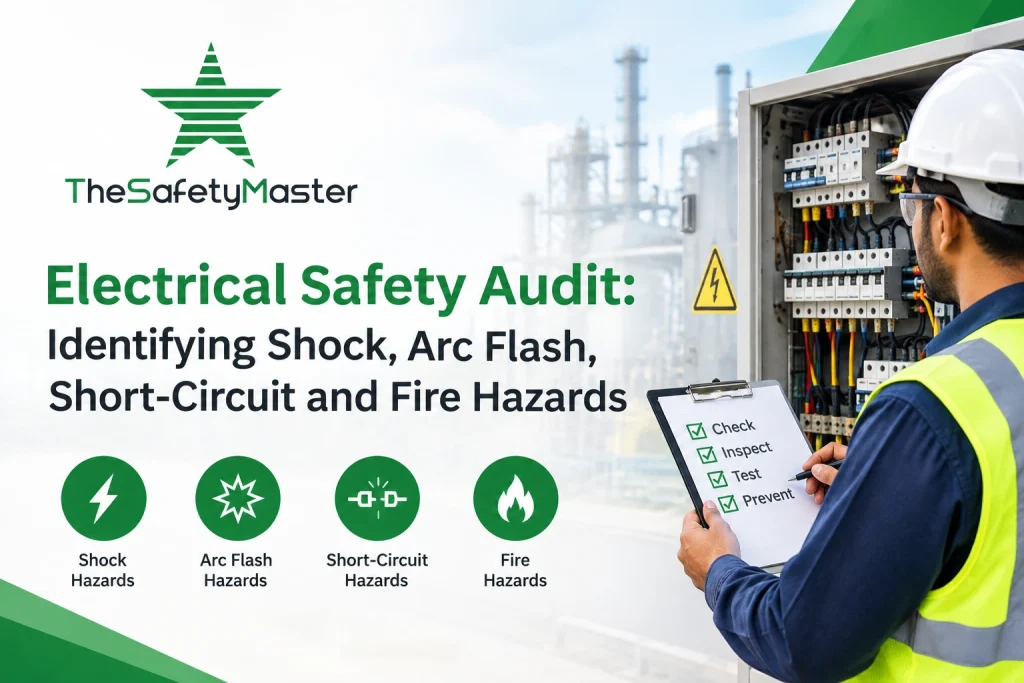
Electrical Safety Audit: Identifying Shock, Arc Flash, Short-Circuit and Fire Hazards
September 17, 2026
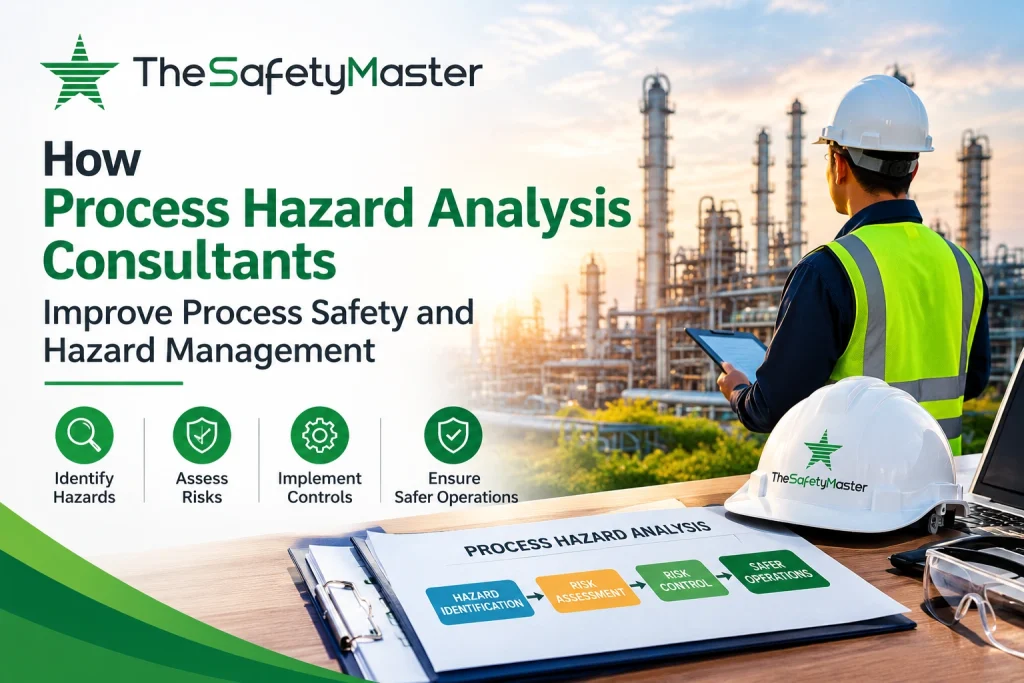
How Process Hazard Analysis Consultants Improve Process Safety and Hazard Management
September 21, 2026Process safety is essential for facilities that handle hazardous chemicals, flammable materials, toxic substances, high pressure, or other dangerous processes. A small mistake in a process can sometimes lead to fire, explosion, toxic release, equipment failure, or serious injuries. Process Safety Management Training helps employees and safety professionals understand process hazards and take appropriate preventive actions.
The Safety Master provides safety-focused training that helps organizations build better process safety awareness, improve hazard identification, and strengthen their overall safety management approach. Proper training can also support activities such as safety audit, risk assessment, emergency planning, and process safety improvement.
What Is Process Safety Management?
Process Safety Management (PSM) is a systematic approach used to prevent major incidents involving hazardous processes and materials. It combines technical knowledge, operating procedures, employee training, equipment controls, risk management, emergency planning, and continuous improvement.
Process Safety Management is not only about responding to an incident after it happens. Its main purpose is to identify and control hazards before they result in an unwanted event.
A strong PSM system helps organizations manage risks throughout the lifecycle of a process, including design, operation, maintenance, modification, and shutdown.
What Is the Main Goal of Process Safety Management?
The main goal of Process Safety Management is to prevent catastrophic incidents by controlling hazards associated with highly hazardous processes and materials.
A PSM program focuses on preventing events such as:
- Fires and explosions
- Toxic or hazardous chemical releases
- Major equipment failures
- Loss of containment
- Uncontrolled chemical reactions
- Serious workplace injuries
- Environmental releases
- Damage to critical process equipment
Effective Process Safety Management Training helps workers understand their responsibilities and recognize how their actions can affect process safety.
What Is the Purpose of Safety Training in the Workplace?
The purpose of safety training is to give employees the knowledge and skills needed to perform their jobs safely and respond appropriately to hazards and emergencies.
Workplace safety training can help employees:
- Identify workplace hazards
- Follow safe operating procedures
- Understand emergency procedures
- Use equipment correctly
- Apply appropriate control measures
- Report unsafe conditions
- Understand their safety responsibilities
- Reduce human error
- Improve communication between teams
For process industries, general safety training may not be enough. Employees involved with hazardous processes need specialized Process Safety Management Training that explains process hazards, operating limits, procedures, management of change, emergency planning, and other PSM requirements.
How Process Safety Management Training Protects Your Facility
1. Improves Hazard Awareness
Employees who understand process hazards are better prepared to recognize abnormal conditions. Training can explain how pressure, temperature, chemicals, energy sources, equipment conditions, and operating deviations can contribute to major incidents.
2. Reduces Human Error
Human error can contribute to unsafe process conditions. Training helps employees understand procedures and the consequences of bypassing established controls.
3. Strengthens Operating Procedures
Employees need clear procedures for starting, operating, monitoring, and shutting down processes. Training helps workers understand why these procedures are important rather than simply asking them to follow instructions.
4. Supports Emergency Preparedness
Process incidents can develop quickly. Training helps employees understand alarms, emergency procedures, evacuation requirements, communication systems, and their responsibilities during abnormal situations.
5. Supports Process Safety Audits
Regular review and safety audit activities can identify gaps in procedures, training, equipment, documentation, and compliance. Employees trained in PSM can participate more effectively in these activities.
6. Improves Use of Safety Software
Modern facilities may use Safety Software for incident reporting, inspections, corrective actions, risk assessments, audits, document management, and other safety activities. Training helps teams understand how digital safety systems can support—not replace—sound process safety practices.
What Are the Six Pillars of Process Safety?
There are different frameworks for describing the pillars of process safety. A commonly used approach groups process safety around six broad areas:
1. Process Safety Leadership
Management commitment is important for establishing process safety priorities, responsibilities, resources, and accountability.
2. Hazard Identification and Risk Assessment
Organizations need to identify hazards and understand the risks associated with their processes. Techniques can include HAZOP, HAZID, What-If Analysis, and other process hazard analysis methods.
3. Process Safety Information
Accurate information about chemicals, equipment, process technology, operating limits, and hazards provides the foundation for safe operation.
4. Operational Control
Safe operating procedures, training, inspections, maintenance, and operational discipline help keep processes within defined limits.
5. Emergency Preparedness and Response
Facilities need appropriate plans and resources for responding to fires, explosions, releases, equipment failures, and other emergencies.
6. Learning and Continuous Improvement
Organizations should learn from incidents, near misses, audits, inspections, and performance data and use those findings to improve process safety.
What Are the 14 Key Elements of Process Safety Management?
The U.S. OSHA Process Safety Management standard, 29 CFR 1910.119, identifies 14 elements for covered processes involving highly hazardous chemicals. These are:
1. Employee Participation
Employees and their representatives participate in the development and implementation of PSM activities.
2. Process Safety Information
Organizations maintain information about the hazards of chemicals, process technology, and process equipment.
3. Process Hazard Analysis
A structured analysis is used to identify, evaluate, and control hazards associated with covered processes.
4. Operating Procedures
Written procedures provide instructions for safely operating processes, including operating limits and consequences of deviations.
5. Training
Employees receive training relevant to their job responsibilities and the processes they operate.
6. Contractors
Organizations evaluate contractor safety performance and communicate relevant process hazards and requirements.
7. Pre-Startup Safety Review
A pre-startup review helps verify that new or modified facilities are ready to operate safely.
8. Mechanical Integrity
Inspection, testing, maintenance, and quality assurance activities help ensure that critical process equipment remains fit for service.
9. Hot Work Permit
A permit system controls hot work activities that could create ignition hazards near covered processes.
10. Management of Change
Changes to chemicals, technology, equipment, procedures, and facilities are reviewed and managed before implementation.
11. Incident Investigation
Incidents and near-misses that could have resulted in a catastrophic release are investigated to identify causes and corrective actions.
12. Emergency Planning and Response
Facilities establish appropriate procedures for handling emergencies associated with covered processes.
13. Compliance Audits
Organizations periodically review their PSM systems to identify compliance gaps and opportunities for improvement.
14. Trade Secrets
Necessary information is made available to appropriate personnel while allowing legitimate protection of trade-secret information.
These elements work together rather than functioning as separate activities. Effective Process Safety Management Training helps employees understand how the elements connect throughout the process lifecycle.
Process Safety Management OSHA Requirements
Process safety management OSHA requirements are primarily associated with OSHA’s Process Safety Management of Highly Hazardous Chemicals standard, 29 CFR 1910.119, in the United States.
Organizations covered by the standard need to establish systems addressing the applicable PSM requirements, including process safety information, process hazard analysis, operating procedures, training, mechanical integrity, management of change, incident investigation, emergency planning, and compliance audits.
For organizations operating outside the United States, applicable local laws and regulatory requirements should also be considered.
Why Process Safety Management Training Is Important for Safety Professionals
Safety professionals often coordinate several activities across a facility. PSM training can help them understand how process hazards connect with:
- HIRA and risk assessment
- HAZOP and process hazard analysis
- Mechanical integrity
- Management of change
- Permit-to-work systems
- Emergency response
- Incident investigation
- Safety audits
- Contractor safety
- Safety performance monitoring
This broader understanding can help safety teams identify gaps before they develop into serious problems.
How to Build an Effective PSM Training Program
Identify Training Needs
Start by identifying employees who work with hazardous processes and determine the knowledge required for each role.
Cover Process-Specific Hazards
Training should address the actual hazards associated with the facility instead of relying only on generic examples.
Include Practical Examples
Case studies, scenarios, process deviations, incident investigations, and exercises can help employees understand how PSM concepts apply to their work.
Evaluate Employee Understanding
Organizations can use assessments, discussions, practical exercises, and competency checks to determine whether employees understand the training.
Refresh Training Regularly
Refresher training should be provided as required by applicable standards, organizational procedures, changes in processes, or identified competency gaps.
Process Safety Management Training and The Safety Master
The Safety Master focuses on practical safety knowledge that can help organizations and safety professionals strengthen their understanding of process hazards and risk controls.
A structured Process Safety Management Training program can help participants understand PSM principles, the 14 elements, hazard identification, operating procedures, mechanical integrity, management of change, incident investigation, emergency response, and compliance auditing.
Training should always be combined with effective procedures, competent personnel, appropriate engineering controls, equipment maintenance, management commitment, and continuous improvement.
Frequently Asked Questions
Q-What is Process Safety Management 14 elements PPT?
A Process Safety Management 14 elements PPT is a presentation covering the fourteen elements of the OSHA PSM framework. It may be used as a training or awareness resource to explain subjects such as employee participation, process safety information, process hazard analysis, operating procedures, training, mechanical integrity, management of change, incident investigation, emergency planning, and compliance audits.
Q-What is Process Safety Management?
Process Safety Management is a systematic approach for identifying and controlling hazards associated with processes involving hazardous materials and conditions. Its objective is to prevent major incidents such as fires, explosions, and hazardous releases.
Q-What is Process Safety Management PDF?
A Process Safety Management PDF is a digital document containing information about PSM principles, requirements, elements, procedures, or training material. Organizations should use current and appropriate regulatory information when preparing PSM documentation.
Q-What is a PSM program?
A PSM program is an organized system of policies, procedures, responsibilities, technical information, training, hazard analysis, maintenance, management of change, emergency planning, audits, and other controls used to manage process safety risks.
Q-What are the 14 elements of Process Safety Management?
The 14 OSHA PSM elements are employee participation, process safety information, process hazard analysis, operating procedures, training, contractors, pre-startup safety review, mechanical integrity, hot work permit, management of change, incident investigation, emergency planning and response, compliance audits, and trade secrets.
Q-What is Process Safety Management OSHA?
Process safety management OSHA refers primarily to OSHA’s Process Safety Management standard, 29 CFR 1910.119, which establishes requirements for managing certain processes involving highly hazardous chemicals in covered workplaces.
Q-Where can I find the 14 elements of PSM PDF?
A 14 elements of PSM PDF may be used as a quick-reference or training resource. For regulatory requirements, organizations should refer to the current official OSHA standard and applicable local regulations rather than relying solely on an unofficial PDF.
Q-What is Process Safety Management PPT?
A Process Safety Management PPT is a presentation used to teach PSM concepts. It can include the 14 elements, process hazards, PHA, operating procedures, mechanical integrity, MOC, incident investigation, emergency response, and compliance auditing.
Q-What is the difference between process safety and occupational safety?
Occupational safety generally focuses on preventing workplace injuries and exposures, while process safety focuses heavily on preventing major incidents resulting from failures in hazardous processes, containment, equipment, procedures, or process controls. Both are important parts of an effective safety management system.
Q-How can Process Safety Management Training prevent catastrophic incidents?
Training improves employee understanding of process hazards, operating procedures, emergency actions, risk controls, and PSM responsibilities. When combined with appropriate engineering and administrative controls, effective training can contribute to preventing major process safety incidents.
Conclusion
Process Safety Management Training plays an important role in developing the knowledge and skills needed to manage hazardous processes safely. Understanding the 14 PSM elements, recognizing process hazards, following operating procedures, maintaining equipment, managing changes, investigating incidents, and preparing for emergencies can strengthen a facility’s overall process safety system.
For organizations looking to improve process safety knowledge, The Safety Master can support learning and awareness around process safety, risk management, audits, and related safety practices.