Training for Fire Safety: The Safety Master’s Expert Recommendations
Creating a Fire-Safe Workplace Culture: Practical Fire Safety Tips from The Safety Master
July 31, 2023
Creating Effective Fire Emergency Response Plans
August 3, 2023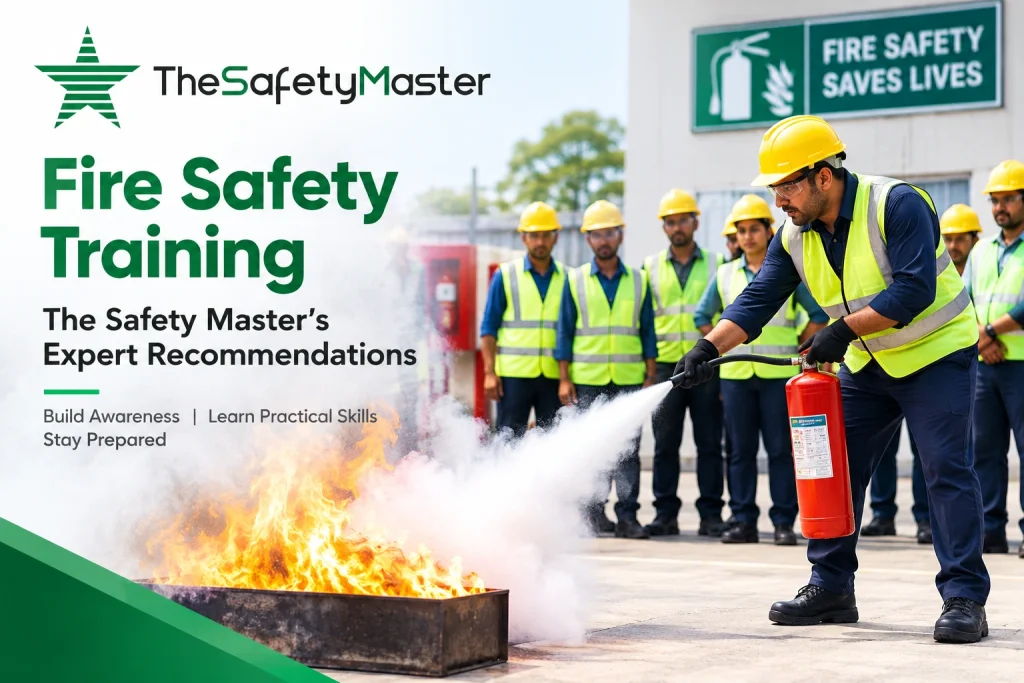
Fire can become a serious workplace emergency within a very short time. Employees need to know how to identify fire hazards, respond quickly, use fire-fighting equipment correctly, and evacuate safely. Fire Safety Training helps employees develop the knowledge and practical skills needed to respond during a fire emergency.
The Safety Master provides practical fire safety and fire-fighting training programs designed to improve workplace preparedness. Its training includes fire prevention, extinguisher demonstrations, emergency evacuation procedures, fire-fighting equipment, and mock drills.
Why Fire Safety Training Is Important
A workplace can have many potential fire hazards, including electrical equipment, combustible materials, hot work, flammable chemicals, machinery, and improper storage. Employees who understand these hazards can take preventive action and respond more effectively during an emergency.
Good Fire Safety Training also helps employees understand their responsibilities during evacuation. Training should not only explain fire safety rules but also provide practical experience through demonstrations and drills.
The Safety Master focuses on helping organizations develop better safety awareness and emergency preparedness through professional training programs.
What Employees Learn in Fire Safety Training
A complete fire safety program can cover several important areas.
Understanding Common Fire Hazards
Employees should learn how fires can start and what conditions can increase fire risk. Common hazards may include:
- Electrical faults
- Flammable liquids and gases
- Combustible materials
- Hot work activities
- Poor housekeeping
- Improper storage
- Smoking-related hazards
- Overheated equipment
Understanding these hazards helps employees identify unsafe conditions before they result in an emergency.
Fire Prevention Measures
Prevention is an important part of workplace fire safety. Employees can be trained to maintain good housekeeping, control ignition sources, store combustible materials correctly, report unsafe conditions, and follow workplace procedures.
Fire Extinguisher Awareness
Employees should understand the basic purpose and correct application of different fire extinguishers. The Safety Master provides practical demonstrations involving different extinguisher types as part of its fire-fighting training.
Training should also explain when an employee should attempt to use an extinguisher and when immediate evacuation is the safer response.
Fire Emergency Response Training
What to Do When a Fire Is Discovered
Employees should know the basic emergency sequence established by their organization, such as raising the alarm, notifying the appropriate emergency team, moving away from danger, and following the site emergency plan.
The exact response should always follow the organization’s emergency procedures and the nature of the incident.
Emergency Evacuation Procedures
Evacuation training helps employees understand:
- Emergency exits
- Evacuation routes
- Assembly points
- Alarm signals
- Emergency communication
- Responsibilities of fire wardens
- Procedures for assisting people who may need additional support
Regular drills can help identify problems with evacuation routes, communication, or emergency coordination.
Practical Fire Fighting Training
Classroom learning is useful, but practical training allows employees to understand how emergency equipment works.
Fire Extinguisher Demonstration
A practical demonstration can help employees become familiar with the operation and limitations of fire extinguishers.
Fire Hydrant and Fire Protection Equipment
Depending on the workplace, training may introduce employees to fire hydrants, hose reels, sprinklers, detection systems, and other fire protection equipment.
The Safety Master states that its fire-fighting training can include demonstrations involving fire extinguishers and fire hydrant systems.
Live Fire Mock Drill
Mock drills provide employees with an opportunity to practice emergency response in a controlled environment. The Safety Master offers fire mock drills as part of its training program, with its listed program specifying a maximum of 50 participants for the drill.
Role of Fire Wardens and Emergency Teams
Fire wardens and emergency response teams can have important responsibilities during a workplace emergency.
Key Responsibilities
Depending on the organization’s emergency plan, responsibilities may include:
- Raising or confirming the emergency alarm
- Guiding employees toward safe exits
- Helping control evacuation
- Checking designated areas when safe to do so
- Reporting to the emergency coordinator
- Supporting emergency communication
- Helping maintain order at assembly points
Employees should clearly understand who has emergency responsibilities before an incident occurs.
Fire Safety Training for Different Industries
Fire hazards vary between workplaces, so training should be relevant to the actual work environment.
Manufacturing Facilities
Manufacturing facilities may have machinery, electrical systems, combustible materials, hot work, chemicals, and production processes that require specific fire safety controls.
Chemical and Process Industries
Chemical facilities may handle flammable or hazardous materials. Training should therefore address site-specific hazards, emergency procedures, chemical storage, ignition sources, and emergency response.
Offices and Commercial Buildings
Office employees should understand alarm procedures, evacuation routes, emergency exits, assembly points, and basic fire prevention practices.
Warehouses
Warehouses may contain large quantities of packaging, combustible products, pallets, and other stored materials. Training should emphasize housekeeping, storage practices, emergency access, and evacuation.
How to Make Fire Safety Training Effective
Use Practical Examples
Real workplace scenarios can make training easier to understand. Trainers can discuss common fire hazards and explain how employees should respond.
Conduct Regular Drills
A single training session may not be enough. Regular drills help employees become familiar with emergency routes and responsibilities.
Keep Training Relevant
Training should reflect the actual hazards, equipment, processes, and emergency arrangements at the facility.
Review Training Results
After a drill, organizations can review what worked well and identify areas requiring improvement.
The Safety Master’s Approach to Fire Safety Training
The Safety Master provides customized safety training programs for organizations and offers fire safety training that combines awareness with practical activities. Its listed fire-fighting program includes expert trainers, training material, multilingual sessions with videos and case studies, equipment demonstrations, and fire mock drills.
The company also provides a wider range of safety training topics, including emergency response, electrical safety, hazardous chemical safety, HIRA, HAZOP, process safety management, and fire risk assessment training.
This broader training approach can help organizations connect fire preparedness with their overall workplace safety management system.
Benefits of Professional Fire Safety Training
Professional training can help organizations:
- Improve employee fire awareness
- Strengthen emergency preparedness
- Improve evacuation practices
- Increase familiarity with fire-fighting equipment
- Identify weaknesses through mock drills
- Develop better emergency response coordination
- Support workplace safety objectives
- Build a stronger safety culture
The exact benefits depend on the organization’s hazards, workforce, training frequency, and emergency arrangements.
Fire Safety Training Checklist
Before conducting a training program, organizations can consider the following:
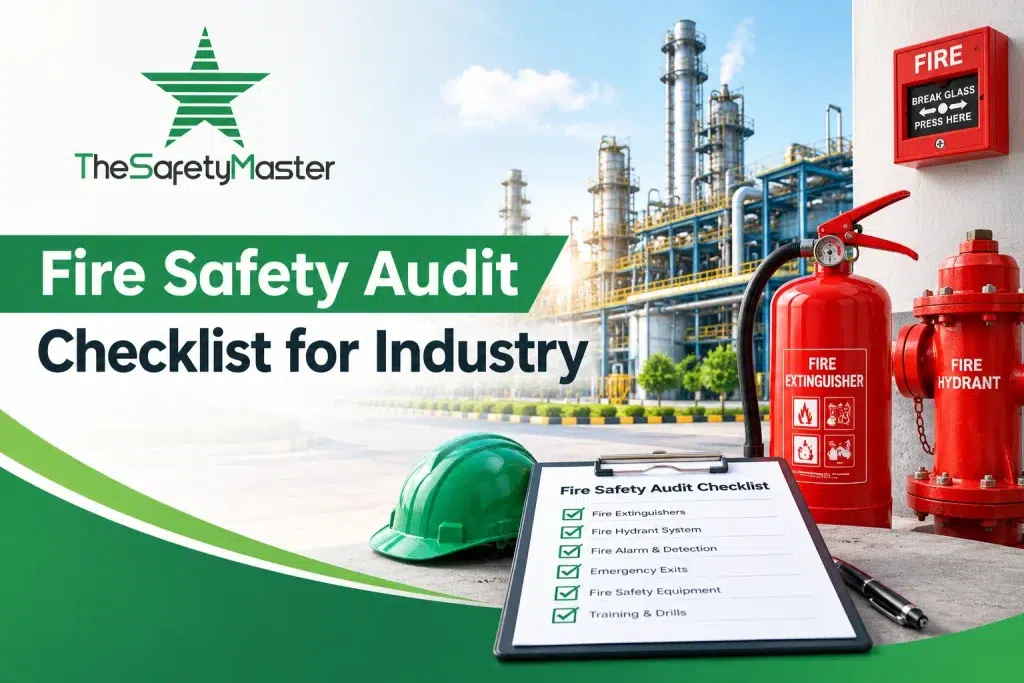
- Identify workplace fire hazards
- Review the emergency response plan
- Check emergency exits and evacuation routes
- Identify fire-fighting equipment
- Train employees on alarm procedures
- Explain assembly points
- Assign emergency responsibilities
- Demonstrate suitable fire-fighting equipment
- Conduct a mock drill where appropriate
- Review drill performance
- Correct identified gaps
- Schedule refresher training
FAQs About Fire Safety Training
Q-What is Fire Safety Training?
Fire Safety Training teaches employees how to recognize fire hazards, prevent fires, respond to emergencies, use appropriate fire-fighting equipment, and evacuate safely.
Q-Why is Fire Safety Training important?
It helps employees understand workplace fire risks and emergency procedures. Practical training and drills can also improve preparedness for fire emergencies.
Q-What topics are covered in Fire Safety Training?
Topics may include fire prevention, fire hazards, fire extinguishers, emergency alarms, evacuation procedures, fire-fighting equipment, emergency response, and mock drills.
Q-Does The Safety Master provide practical fire training?
Yes. The Safety Master lists practical demonstrations involving fire extinguishers and fire hydrant systems, along with fire mock drills as part of its fire-fighting training program.
Q-Who should attend Fire Safety Training?
Training can be provided to employees, supervisors, emergency response teams, fire wardens, and other personnel based on the organization’s risk profile and emergency plan.
Q-How often should Fire Safety Training be conducted?
The appropriate frequency depends on workplace hazards, organizational requirements, changes in processes or personnel, and applicable regulations. Organizations should establish a suitable training and drill schedule and provide refresher training when required.
Conclusion
Fire Safety Training is an important part of workplace emergency preparedness. Employees need more than theoretical knowledge; they should understand workplace fire hazards, emergency procedures, evacuation arrangements, and the correct use of available fire-fighting equipment.
The Safety Master provides practical fire safety and fire-fighting training designed around workplace needs, including demonstrations and mock drills. Organizations can use professional training to strengthen employee awareness, improve emergency preparedness, and build a stronger workplace safety culture.