How Cloud-Based Safety Software Streamlines EHS Compliance and Incident Reporting

Complete Guide to Developing an ISO-Compliant Process Safety Management Framework
September 25, 2026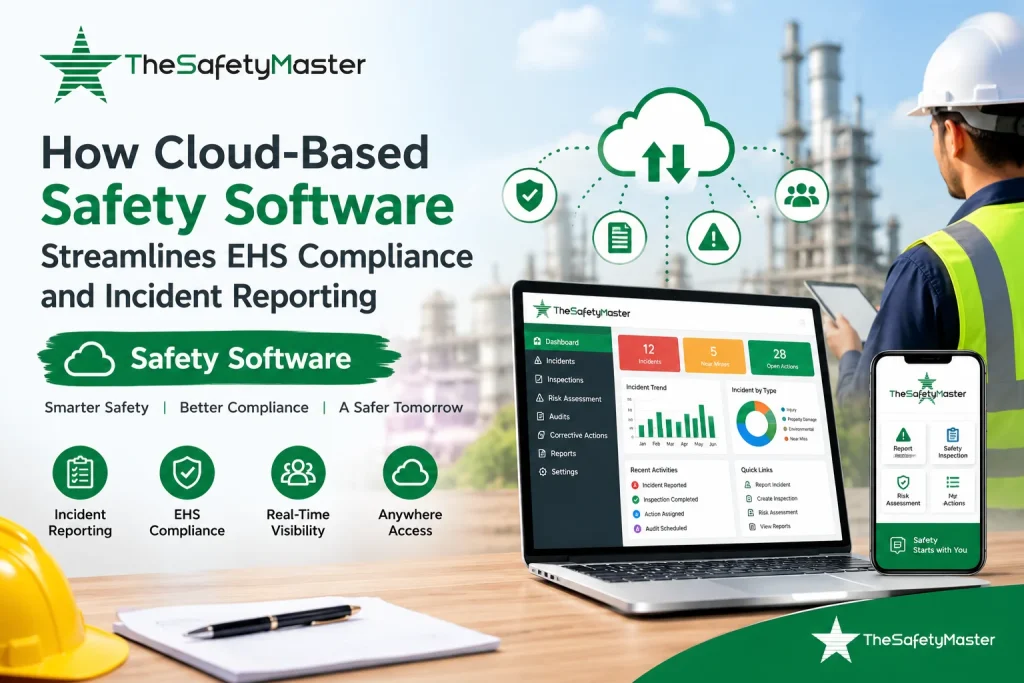
Managing workplace safety with spreadsheets, paper forms, and separate systems can make EHS work slow and difficult to track. Safety teams need quick access to safety information, incident records, inspections, corrective actions, and compliance documents.
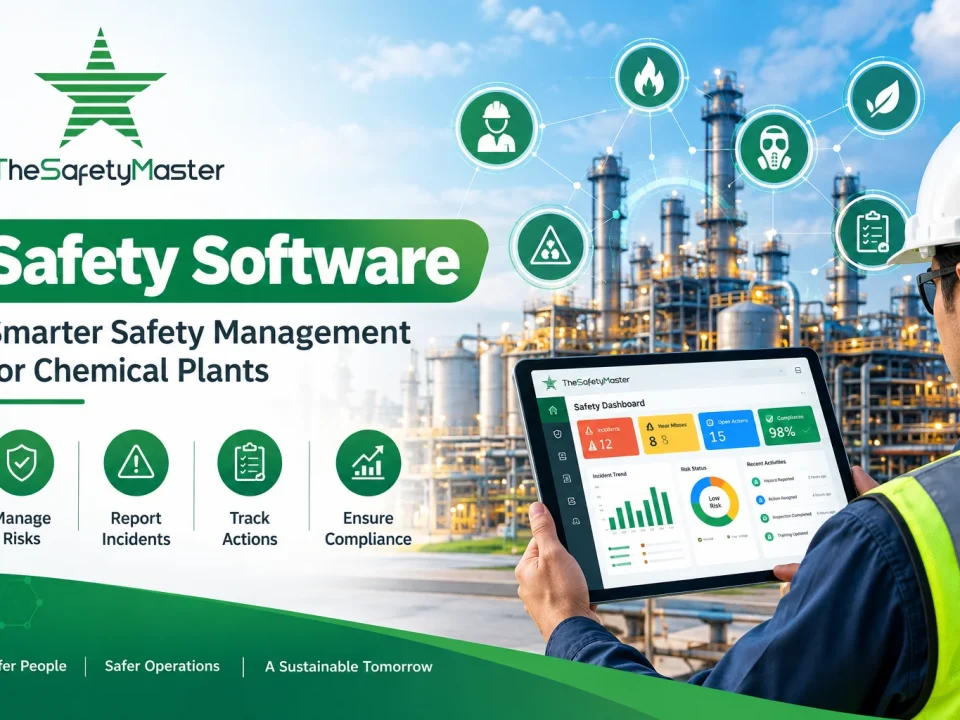
Cloud-based Safety Software provides a centralized digital platform where safety teams can manage important EHS activities from one place. Employees can report incidents, safety professionals can track corrective actions, and managers can monitor safety performance using real-time information.
The Safety Master helps organizations use digital safety solutions to improve safety management, simplify reporting, and support better EHS compliance.
What Is Cloud-Based Safety Software?
Cloud-based Safety Software is a digital system that stores and manages workplace safety information through an online platform. Instead of keeping records on individual computers or paper files, organizations can access safety data through a secure system.
It can support activities such as:
- Incident reporting
- Near-miss reporting
- Safety inspections
- Risk assessments
- Corrective action tracking
- Audit management
- Compliance monitoring
- Permit management
- Training records
- Safety observations
- EHS performance reporting
Because information is centralized, safety teams can find records more easily and maintain better visibility across different departments or locations.
How Safety Software Supports EHS Compliance
Centralized EHS Records
A cloud-based system can bring safety documents and records together. Teams can maintain information about incidents, inspections, audits, corrective actions, training, and other EHS activities in one location.
This reduces dependence on multiple spreadsheets and paper-based records.
Better Compliance Tracking
EHS teams often need to monitor safety requirements, inspections, action items, and documentation. Digital Safety Software can help assign responsibilities, set deadlines, and track completion.
Compliance Information at One Place
Organizations can maintain relevant compliance records and review their status more efficiently. Managers can also identify overdue activities and follow up with responsible employees.
Standardized Safety Processes
Different departments may follow different methods when safety activities are managed manually. Software can provide standardized forms and workflows for reporting and inspections.
This can make safety processes more consistent across an organization.
How Cloud-Based Software Improves Incident Reporting
Incident reporting is an important part of workplace safety management. Delayed or incomplete reporting can make it harder to understand what happened and take corrective action.
Faster Incident Reporting
Employees can use a digital system to report incidents and near misses. Depending on the software and configuration, reports may include:
- Date and time
- Location
- Incident type
- People involved
- Description of the event
- Photographs or attachments
- Immediate actions
- Witness information
Digital reporting can reduce the time required to move information from the workplace to the safety team.
Better Incident Investigation
After an incident is reported, safety professionals can collect additional information and investigate the event.
A digital workflow can help teams document:
- Immediate causes
- Root causes
- Contributing factors
- Investigation findings
- Corrective actions
- Responsible persons
- Target completion dates
Near-Miss Reporting
Near misses provide valuable information about potential hazards before they result in an injury or major incident.
Safety Software can make it easier for employees to report near misses and for safety teams to analyze recurring issues.
Key Features of Cloud-Based Safety Software
Incident and Near-Miss Management
The system can provide structured workflows for recording, investigating, and closing incidents and near misses.
Safety Inspection Management
Safety teams can create inspection checklists, record findings, assign actions, and monitor completion.
Risk Assessment
Digital risk assessment tools can help teams identify hazards, evaluate risks, and record control measures.
Corrective and Preventive Actions
Actions identified during incidents, audits, inspections, and assessments can be assigned to responsible employees with due dates.
Audit Management
Organizations can manage audit schedules, findings, evidence, action plans, and closure status digitally.
Dashboard and Reporting
Dashboards can help managers review safety information such as incident trends, open actions, inspection results, and other selected EHS indicators.
Benefits of Using Safety Software
Saves Time
Automating repetitive documentation and reporting activities can reduce manual administrative work.
Improves Data Visibility
Managers can access centralized safety information instead of searching through different files and spreadsheets.
Supports Faster Corrective Actions
Digital assignment and tracking can make it easier to identify overdue actions and follow up with responsible teams.
Improves Communication
Safety information can move more quickly between employees, supervisors, safety professionals, and management.
Supports Data-Driven Safety Management
Historical safety data can help organizations identify recurring problems, trends, and areas that require attention.
Safety Software for Multiple Locations
Organizations with several plants, offices, warehouses, construction sites, or other facilities may have difficulty maintaining consistent EHS records.
Cloud-based systems can provide a common platform for different locations while allowing organizations to organize information by site, department, activity, or responsibility.
Centralized Management
Corporate EHS teams can review information from multiple locations through a common system.
Location-Based Reporting
Safety information can be analyzed according to individual facilities or departments, depending on the system’s reporting capabilities.
How to Choose the Right Safety Software
Before selecting an EHS platform, organizations should identify their actual safety management requirements.
Identify Your EHS Requirements
Consider whether you need software for:
- Incident management
- Near-miss reporting
- Risk assessment
- Safety inspections
- Audits
- Corrective actions
- Training management
- Permit-to-work
- Compliance management
- Safety observations
Check Ease of Use
Employees are more likely to use a system when reporting and accessing information is straightforward.
Review Reporting Features
Look for dashboards and reports that provide useful information for safety professionals and management.
Consider Scalability
The system should be able to support organizational growth, additional users, and multiple locations when required.
Review Security and Access Controls
Organizations should understand how the software protects safety information and manages user access.
The Role of The Safety Master in Digital Safety Management
The Safety Master focuses on practical safety management solutions that can help organizations improve their EHS processes. Safety Software can support organizations by bringing incident reporting, inspections, risk management, corrective actions, and safety information into a structured digital environment.
A well-designed digital safety system can help safety teams move from manual recordkeeping toward more organized and measurable EHS management.
Conclusion
Cloud-based Safety Software can simplify many workplace safety activities by bringing EHS information into one digital platform. From incident and near-miss reporting to inspections, risk assessments, audits, and corrective action tracking, digital tools can help organizations improve visibility and manage safety activities more efficiently.
For organizations looking to modernize their EHS processes, The Safety Master provides safety-focused digital solutions designed to support structured safety management and reporting.
FAQs
1. What is the best software for incident reporting?
The right incident reporting software depends on an organization’s size, industry, reporting requirements, number of locations, workflow needs, and integration requirements. Important features include mobile reporting, near-miss reporting, investigation workflows, corrective action tracking, dashboards, attachments, and reporting capabilities.
2. What are the best EHS management software solutions?
EHS management software solutions commonly provide features such as incident management, risk assessment, inspections, audits, corrective actions, compliance tracking, training management, and reporting. Organizations should compare solutions based on their specific EHS requirements, usability, scalability, security, and available integrations.
3. Which EHS software is considered the best?
There is no single EHS software that is suitable for every organization. The appropriate choice depends on factors such as industry, company size, number of sites, required modules, reporting needs, budget, and implementation requirements. A practical evaluation should focus on how well the software matches the organization’s safety processes.
4. What are the top 10 incident management tools?
Incident management tools can include platforms designed for workplace incident reporting, EHS management, corrective action management, investigation, and safety analytics. When comparing tools, organizations should consider incident reporting, mobile access, investigation workflows, root-cause analysis, corrective action tracking, dashboards, integrations, and scalability.