Scaffolding Erector and Inspector Training

The Importance of Electrical Safety Audits: Protecting Your Employees and Business
June 6, 2023
Ensuring Safe Work Environments: The Critical Role of Contractor Safety Audits
June 7, 2023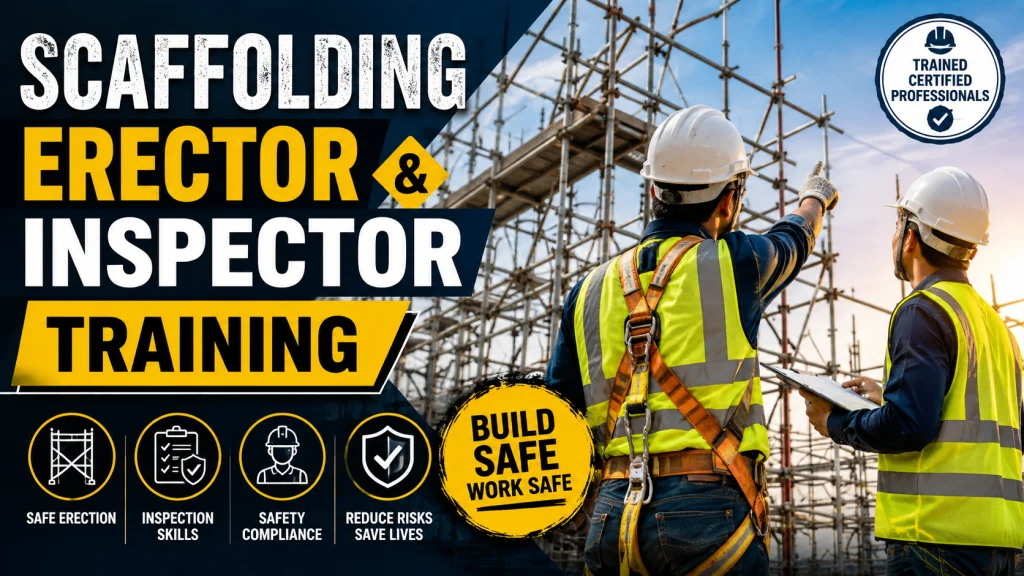
In construction and maintenance work, scaffolding provides workers with safe access to elevated areas and supports tools and materials. However, when scaffolding is improperly installed, damaged, overloaded, or poorly maintained, it can become a serious workplace hazard. A structured inspection process, supported by safety-focused practices such as those promoted by the safety master, can help identify problems before they result in injuries, falls, or structural failure. Regular inspections also help employers maintain safer worksites, meet applicable requirements, and protect both workers and business operations.
Introduction
Construction is widely recognized as a high-risk industry because workers often operate around heavy equipment, elevated structures, electrical systems, machinery, and hazardous materials. Among these risks, working at height is particularly important because a failure involving scaffolding can lead to severe injuries or fatalities.
Scaffolding is designed to provide workers with a stable platform while they perform construction, repair, maintenance, painting, installation, and other activities. However, the safety of a scaffold depends on its design, installation, condition, use, and regular inspection. Even a seemingly minor defect can create a significant hazard when workers are operating several metres above the ground.
For this reason, scaffolding inspection should be treated as an essential part of every workplace safety program.
What Is Scaffolding?
Scaffolding is a temporary structure erected to provide workers with access to elevated areas and to support materials during construction, maintenance, renovation, or repair activities. It commonly consists of frames or tubes, couplers, platforms, guardrails, braces, access systems, and other components assembled according to a specific design.
Scaffolding allows workers to perform tasks at height without relying solely on ladders or other temporary access methods. It can make activities such as bricklaying, plastering, painting, window installation, equipment maintenance, and façade work more efficient.
However, scaffolding must be properly designed, erected, inspected, maintained, and used. A scaffold that appears stable may still contain hidden defects or installation problems that could compromise worker safety.
Importance of Scaffolding in Construction
Scaffolding plays an important role in construction because it provides a working platform and controlled access to areas that may otherwise be difficult or dangerous to reach.
Properly installed scaffolding can help workers:
- Access elevated work areas safely.
- Maintain better balance while performing tasks.
- Transport tools and materials to working levels.
- Work more efficiently at height.
- Reduce dependence on unsuitable access equipment.
- Establish appropriate edge protection around elevated platforms.
Scaffolding can also support better organization on construction sites. When platforms, access points, guardrails, and working levels are properly arranged, workers can perform their responsibilities more effectively.
Nevertheless, scaffolding should never be considered safe simply because it has been installed. Its condition can change due to weather, heavy use, unauthorized modifications, impact, overloading, or deterioration. This makes inspection essential.
Why Is Scaffolding Inspection Necessary?
Regular scaffolding inspection helps identify unsafe conditions before they become accidents. Components can become loose, damaged, displaced, corroded, or improperly positioned during normal construction activities.
Some common problems that inspections may identify include:
- Missing or damaged guardrails.
- Unstable or uneven foundations.
- Loose couplers or connections.
- Damaged platforms or boards.
- Missing braces or structural components.
- Inadequate access arrangements.
- Excessive loading.
- Unauthorized alterations.
- Gaps in working platforms.
- Insufficient protection against falling objects.
- Damage caused by vehicles, equipment, or severe weather.
A small defect can have serious consequences when workers are working at height. For example, a damaged platform could fail under load, while a missing guardrail could increase the likelihood of a fall.
Inspections therefore provide an opportunity to identify hazards, correct deficiencies, restrict access where necessary, and confirm that the scaffold remains suitable for its intended use.
What Should a Scaffold Inspection Check?
A competent inspection should consider the overall condition and stability of the scaffold rather than focusing on only one component.
Important inspection points may include the foundation, standards, ledgers, transoms, braces, couplers, platforms, guardrails, toe boards, access ladders or stairways, and connections. The inspector should also consider whether the scaffold has been modified or subjected to conditions that could affect its stability.
The surrounding work environment should also be assessed. Nearby construction activities, moving equipment, electrical hazards, weather conditions, falling-object risks, and changes in site conditions can all influence scaffold safety.
If a serious defect is discovered, the scaffold should not be used until the issue has been appropriately addressed and its safety has been confirmed.
Importance of Documenting Scaffold Inspections
Documentation is an important part of an effective scaffolding safety program. An inspection record provides evidence that appropriate checks have been performed and helps organizations track identified problems and corrective actions.
Inspection records should generally contain relevant information such as:
- Date and time of inspection.
- Identification or location of the scaffold.
- Name or identification of the competent inspector.
- Conditions observed during inspection.
- Defects or hazards identified.
- Corrective measures required or completed.
- Date of follow-up inspection, where applicable.
Proper records can improve accountability and help safety teams identify recurring issues. Documentation can also support internal audits, safety reviews, training programs, and compliance activities.
Legal and Safety Requirements
Scaffolding inspection requirements vary depending on the country, jurisdiction, type of project, and applicable workplace safety regulations. In the United States, for example, OSHA requirements include inspection of scaffolds by a competent person before each work shift and after events that could affect their structural integrity.
Organizations operating elsewhere should follow the applicable national and local regulations, standards, and project requirements. Employers should also ensure that inspections are conducted by appropriately trained and competent personnel.
Legal compliance should not be viewed merely as a paperwork requirement. The underlying purpose of scaffold inspection requirements is to reduce preventable risks and provide workers with safer conditions.
Benefits of a Regular Scaffolding Maintenance Program
Inspection and maintenance should work together. An inspection identifies problems, while maintenance and corrective action address them.
A regular maintenance program can help organizations:
- Reduce the likelihood of scaffold-related accidents.
- Detect deterioration at an early stage.
- Extend the useful life of scaffold components.
- Improve workplace organization.
- Support regulatory compliance.
- Reduce downtime caused by unexpected failures.
- Demonstrate commitment to worker safety.
Workers should also be encouraged to report damaged components, unsafe conditions, or unauthorized modifications immediately. Safety is most effective when employers, supervisors, inspectors, and workers share responsibility for identifying hazards.
Conclusion
Scaffolding inspection is a critical element of workplace safety, particularly on construction and maintenance projects involving work at height. Proper inspections can identify damaged components, structural weaknesses, missing safety features, overloading, and other hazards before they contribute to an accident.
Employers should establish appropriate inspection, maintenance, documentation, and corrective-action procedures based on applicable regulations and site-specific risks. Scaffolding should only be used when it has been properly erected, inspected, maintained, and confirmed to be suitable for the intended work.
A proactive approach to scaffold safety protects workers, supports productivity, and helps organizations build a stronger safety culture. Ultimately, ensuring a safe working environment is not simply a regulatory obligation—it is a fundamental responsibility toward every person working on the site.