Annual Safety Programs Built for Zero-Disruption Operations

End-to-End Safety Management: The Power of Single-Source Accountability
February 14, 2026
Safety Governance That Works Even When Consultants Leave
February 17, 2026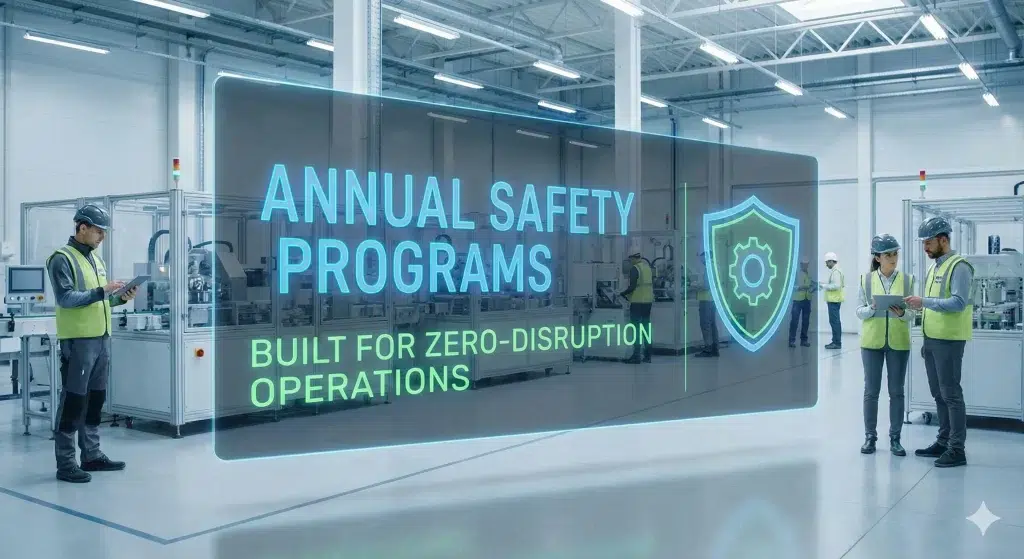
In today’s industrial environment, downtime is expensive, unpredictable, and often avoidable. One accident, one regulatory notice, or one equipment failure can bring operations to a halt. This is why leading organizations no longer treat safety as a reactive function. They invest in structured annual safety programs designed specifically to support zero-disruption operations. At the center of this approach is The Safety Master, helping industries move from firefighting to foresight.
What Zero-Disruption Operations Really Mean
Zero-disruption does not mean zero risk. Every industrial operation carries inherent risk. The difference lies in how that risk is managed. Zero-disruption operations are built on systems that anticipate problems, control hazards, and respond quickly without stopping production.
Unplanned shutdowns usually come from predictable failures. Unsafe practices, delayed maintenance, lack of training, or ignored audit findings slowly build pressure until something breaks. Annual safety programs are designed to release that pressure in a controlled way, before it turns into disruption.
Why Annual Safety Programs Matter
Many organizations still rely on scattered safety activities. A training here, an inspection there, and an audit just before regulatory visits. This approach creates blind spots. Safety becomes seasonal instead of continuous.
An annual safety program brings everything together under one roadmap. It defines what will be done, when it will be done, who is responsible, and how success will be measured. This structure is what allows safety efforts to support operations instead of interrupting them.
Moving from Reactive to Predictive Safety
Reactive safety responds after incidents occur. Predictive safety focuses on identifying trends and weak signals before accidents happen. Annual safety programs are the foundation of predictive safety.
By scheduling regular audits, inspections, training, and reviews, organizations can spot patterns such as repeated near misses, equipment failures, or unsafe behaviors. Addressing these early prevents breakdowns that cause downtime.
Aligning Safety with Operational Goals
One common mistake is treating safety as separate from operations. In reality, safety failures directly affect productivity, quality, and delivery timelines. Annual safety programs work best when they are aligned with operational objectives.
For example, if a plant aims to increase output, the safety program must address increased workload, equipment stress, and workforce fatigue. When safety planning runs parallel to production planning, growth does not create instability.
Risk Identification as a Continuous Process
Zero-disruption operations depend on knowing where things can go wrong. Annual safety programs formalize risk identification through scheduled assessments and reviews.
Process risks, machine hazards, material handling issues, and human factors are evaluated regularly instead of only after incidents. This keeps risk controls relevant as operations evolve.
Role of Audits in Preventing Disruptions
Audits are often misunderstood as fault-finding exercises. In reality, they are stability tools. A well-executed safety audit identifies small gaps before they become major failures.
Annual safety programs define the frequency and scope of audits so that critical areas are reviewed systematically. Findings are tracked, corrected, and verified. This prevents the accumulation of unresolved issues that eventually force shutdowns.
Fire and Emergency Preparedness
Fire incidents are among the fastest ways to disrupt operations. Beyond damage and injury, fires trigger investigations, insurance claims, and regulatory action.
Annual safety programs ensure that fire prevention systems, emergency plans, and evacuation procedures are not only installed but maintained and practiced. Regular drills and inspections reduce response time and minimize operational impact if an incident occurs.
Training That Supports Continuity
Untrained or undertrained workers are a major source of operational disruption. Mistakes, unsafe shortcuts, and improper handling of equipment often lead to incidents that stop work.
An annual safety program includes a structured training calendar based on roles and risks. Induction training, refresher sessions, toolbox talks, and emergency drills are planned in advance. This avoids last-minute training that disrupts production schedules.
Contractor and Workforce Management
Many industries rely heavily on contract labor. These workers often change frequently and may not be familiar with site-specific risks. Poor contractor safety management is a common cause of accidents and stoppages.
Annual safety programs include contractor safety induction, supervision requirements, and performance monitoring. Clear expectations and consistent enforcement reduce incidents caused by unfamiliarity or miscommunication.
Equipment Reliability and Maintenance
Unsafe equipment is unreliable equipment. Mechanical failures often begin as safety issues such as missing guards, poor lubrication, or ignored warning signs.
By integrating safety inspections with maintenance planning, annual safety programs improve equipment reliability. This reduces breakdowns that interrupt production and require emergency repairs.
Incident Management Without Shutdowns
Not every incident needs to stop operations, but poor incident handling often does. Annual safety programs establish clear procedures for reporting, investigating, and correcting incidents and near misses.
When teams know exactly what to do, incidents are handled quickly and systematically. Root causes are addressed without panic, and operations resume with minimal disruption.
Compliance Without Last-Minute Panic
Regulatory inspections are a major source of disruption for many organizations. Scrambling to prepare documents or fix issues at the last moment leads to stress and mistakes.
Annual safety programs include compliance tracking throughout the year. Licenses, inspections, tests, and reports are scheduled and monitored. This steady approach avoids sudden stoppages due to non-compliance.
Management Involvement and Accountability
Zero-disruption operations require leadership involvement. Annual safety programs define roles and responsibilities at every level, including management.
Regular review meetings ensure that safety performance is discussed alongside production and quality. When leadership is involved, corrective actions move faster and resources are allocated proactively.
Measuring What Matters
What gets measured gets managed. Annual safety programs define key performance indicators such as audit closure rates, training completion, incident trends, and compliance scores.
Tracking these indicators helps organizations understand whether safety controls are working. Adjustments can be made before problems escalate into disruptions.
Long-Term Cultural Impact
The biggest benefit of an annual safety program is cultural. Over time, workers begin to see safety as part of how work is done, not as an obstacle.
This mindset reduces resistance, improves reporting, and encourages proactive behavior. A strong safety culture is one of the most effective ways to ensure stable, uninterrupted operations.
Why Structured Programs Outperform Ad Hoc Efforts
Ad hoc safety efforts depend on individuals. When those individuals leave or priorities change, safety weakens. Structured annual programs depend on systems, not personalities.
This consistency is what supports zero-disruption operations year after year, even as teams, processes, and technologies change.
How The Safety Master Builds Zero-Disruption Safety Programs
The Safety Master focuses on building programs that work on real sites, not just on paper. Each annual safety program is customized based on industry type, risk level, workforce structure, and operational goals.
The emphasis is on practical controls, realistic timelines, and measurable improvement. Safety activities are planned to support operations, not interrupt them.
Final Thoughts
Zero-disruption operations are not achieved by luck or slogans. They are built through disciplined planning, consistent execution, and continuous improvement. Annual safety programs provide the structure needed to manage risk without slowing down business.